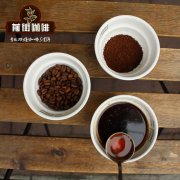
Harar Coffee Variety Cultivation Introduction_Harar Coffee Flavor Aroma Taste Acidity Aftertaste

Professional coffee knowledge exchange. For more coffee bean information, follow Coffee Workshop (WeChat public account: cafe_style).
Harar Coffee Variety Overview
Harar is a conventional variety from the Harar region of western Ethiopia. The trees are vigorous and known for high yields, but they are highly susceptible to disease.
Product Name: Harar (Harar-4)
Origin: Ethiopia
Processing: Natural (sun-dried)
Roasting: Recommended roast level: City roast or dark city roast
Cupping Notes: Medium to light acidity, full body, intense mocha flavor with signature blueberry notes
Harar Coffee Characteristics
As a conventional variety from the Harar region of western Ethiopia, Harar produces vigorous trees with high yields, though they are highly susceptible to disease. The green beans are processed by the dry method, which preserves the original mocha flavor and gives the coffee its wild character.
Among Ethiopian coffees, Harar has the most complex and varied flavor. Different roasting conditions produce different tastes and aromas. Harar has a complex, rich fragrance, sometimes with blueberry notes, and a medium-dark roast brings out chocolate flavors. The acidity is fresh and pleasant, with a mellow body that leaves you wanting more and an aftertaste that lingers.
This is the birthplace of coffee, and that fact alone is exciting. On top of that, Ethiopian coffee is a highly regarded specialty coffee.
Ethiopian coffee is mostly grown on small farms or in semi-wild and wild conditions, using organic farming methods. Combined with suitable altitude and rainfall, this is what creates the high quality of Ethiopian coffee.
Ethiopia's main coffee producing regions include Harar, Kaffa -- legend has it that this is where coffee was discovered -- Sidamo, and others. Today we look at one of the famous varieties among them: Harar coffee.
Harar: The Historic City
Harar is an important Ethiopian city. It is one of the four holy cities of Islam, and it was once the capital of Ethiopia. It is an ancient city with a long history. The Harar region has the altitude most suitable for Arabica coffee and is Ethiopia's highest-altitude coffee production area. What is it about Harar coffee that makes it famous far and wide, with a large following even without any brand packaging to sell it?
Distinctive Features of Harar Coffee
Harar's Wonderful Aroma
This seems to be a common trait of African coffee. Whether you are drinking Kenyan or Ethiopian coffee, you will smell fruit aromas, light or strong, as though you were standing in a room full of fruit -- an intoxicating experience.
Harar's Mellow Taste and Subtle Acidity
Harar coffee seems to carry the entire history of Ethiopia within it. A single sip gives you the rich sensation of a thick liquid flowing between your lips and teeth. The subtle acidity is exactly right, leaving you wanting more and stretching out the aftertaste.
Harar's Long Aftertaste and Pleasant Sweet Finish
Harar coffee is balanced, with no single trait that dominates, but its aftertaste is very long and its sweet finish is pleasant. After you finish the cup, the coffee aroma stays in your mouth for a long time, holding you in the pleasure of the drink, much as tasting history makes you reluctant to return to reality too quickly. Harar coffee will bring back thoughts of that legendary coffee country and some very beautiful memories.
About FrontStreet Coffee
FrontStreet Coffee: A roastery in Guangzhou with a small shop but a diverse range of coffee beans, where you can find both famous and lesser-known varieties. Online store services are also available. https://shop104210103.taobao.com
FrontStreet Coffee Recommendation
Harar's wild, dry-processed character is best matched by other natural Ethiopian coffees, and FrontStreet's lineup has a few strong options. The FrontStreet Dry-Process Red Cherry is a full-red-cherry natural from the same Yirgacheffe area: only fully ripe, sound fruit is picked, dried on raised beds with frequent turning through the first days, then hulled after three to five weeks. Because the fruit is dried with the pulp still on the bean, it keeps the classic Yirgacheffe profile while gaining a tropical fruit lift -- citrus-like acidity, a juicy berry quality, honey sweetness, and a creamy texture.
If you want a bigger, more fruit-forward cup close to Harar's blueberry side, try FrontStreet Flower Queen from the Hambella area of Guji Sidamo. It is a traditional natural processed on raised beds for 21 days across a 200-hectare farm, with turning to dry evenly and hand sorting every three to five days. Roasted light-medium, it shows a light fermented-wine aroma, floral notes, citrus, and mango, with a dense body and a long finish.
For contrast within Ethiopia, FrontStreet's washed Yirgacheffe is the cleanest expression of the region, with jasmine-like white florals, bright citrus and lemon acidity, and a tea-like mouthfeel that shows what the wet mill can do alongside Harar's dry method.
Important Notice :
FrontStreet Coffee is a long-established specialty coffee roaster in Guangzhou China, selling freshly roasted beans from its own farm in Yunnan as well as dozens of carefully selected single-origin beans from around the world for both pour-over and espresso. The products deliver consistently excellent quality and great value, with shipping within 24 hours. Guangzhou's FrontStreet Coffee shop is recommended by many coffee lovers, and the beans are now available online at the Tmall 。
FrontStreet Coffee has moved to a new address:
FrontStreet Coffee Address: 315,Donghua East Road,GuangZhou
Tel:020 38364473
 Scan and follow the En Gafei WeChat official account. Please indicate that the reprint comes from "En Gafei".