How to Drink Freshly Ground Coffee: Equipment Introduction and Recommended Ground Coffee Brands
Introduction
Today I won't introduce coffee powder or coffee beans, but rather several ways to enjoy freshly ground coffee without buying a fully automatic coffee machine. After all, not every office has a coffee machine, and not everyone thinks it's worth buying a fully automatic machine for home.
Coffee Powder vs. Coffee Beans
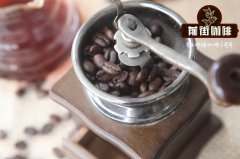
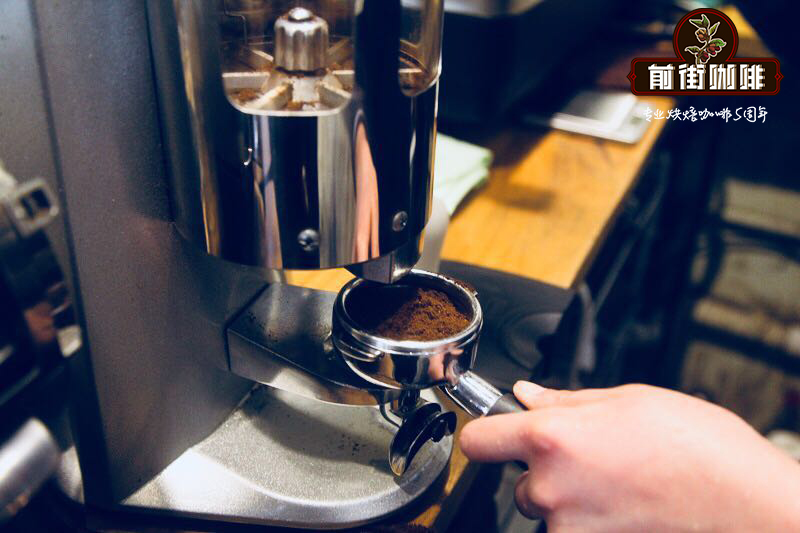
Before the methods, let's talk about powder and beans. For convenience, I usually buy pre-ground coffee powder directly. The drawback is that the quality of coffee powder is inversely proportional to how long it sits after grinding, so it's best to buy small packages to keep the flavor. If you're more particular, you can buy beans and simply need a grinder - both electric and manual are available. Some places that sell beans also grind them for you, like Starbucks. But since I'm so lazy, I skip the tedious task of grinding.
Drip Coffee Bags
If you want freshly ground coffee, the most direct approach is to buy drip coffee bags. It's a simplified pour-over, and making a proper cup takes only three minutes. Drip bags are most recommended for office use - after all, holding a pour-over kettle in the break room might seem a bit much.
Many Japanese brands offer drip coffee bags, priced from a few yuan to over ten yuan. Japanese Starbucks and MUJI both make them, as do UCC, Blendy, AGF, MONCAFE, Sumida River, and others. Some domestic coffee shops offer them too, and Taobao has many original brands. I suggest buying small quantities to sample first, then repurchasing once you find one you like.
There are also empty drip bags sold separately, which you fill with your own coffee powder. That's the method I use most often myself.
Pour-Over Kettle
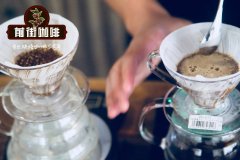
Actually, the drip bags mentioned earlier are a simplified version of pour-over coffee. The complete version uses a pour-over kettle, which looks like a funnel placed on top of a cup, needing only one filter paper each time. This method extracts coffee more thoroughly than drip bags, where the coffee drips through quite quickly. But as a rough-and-ready person, I still find drip bags more convenient, so I use this method very rarely.
By the way, pour-over coffee pairs well with a narrow-spout pouring kettle. I personally use a small 320ml one, just the right capacity for one person. They're widely available on Taobao, so simply choose one that looks good to you.
French Press
Broadly speaking, coffee preparation falls into two categories: immersion or filtration. Pour-over belongs to the latter, while the French press belongs to the former. Put simply, it's quite similar to brewing tea. The pot I show above is from IKEA, which describes it as a coffee pot/tea pot. Its use is also similar to brewing tea - add coffee powder first, then pour hot water, extract fully, then press the mesh to the bottom, and finally pour out the coffee to drink.
Doesn't it look even simpler than pour-over? But there's actually a lot of knowledge involved. The coarseness of the powder, the water temperature, and the extraction time - any slight variation results in a different flavor. So although many people find French press coffee full-bodied and rich, I still prefer pour-over for its simplicity and directness.
This method is very convenient. Whether at home or in the office, just keep a French press handy. IKEA sells them for just 59 yuan, and Taobao has plenty of options. Oh, and if you feel you can't control the brewing well and the coffee doesn't taste good, it won't go to waste - you can still use it to brew tea.
Wacaco Minipresso
This device represents a series of "portable coffee machines." Similar products include the AeroPress, but since I bought this one, I'll use it as an example. It comes in both coffee powder and capsule versions - I bought the powder version.
I wouldn't exactly recommend it, but neither pour-over nor French press can make espresso, the concentrated coffee we commonly call Italian-style. Those who have used drip bags and French presses have surely noticed: why does the Americano bought outside have a layer of "foam" on top, while the one you brew yourself doesn't? That layer is coffee crema, which can only be extracted under high pressure. Neither pour-over nor French press can achieve it. Generally only fully automatic and semi-automatic machines can extract crema, with home models typically costing several thousand yuan. These portable models, however, can be had for just a few hundred yuan.
This device has 8 bar of pressure. The recognized golden rule for espresso on the market is "9 bar pressure," so while this can't compare to a fully automatic machine, it can, to some extent, satisfy your daydreaming.
Personally, though, I feel this type of machine requires too much arm strength for many people. I'm the type who can't manage more than two or three presses. To drink one cup, I feel like I've burned off all the calories from breakfast. So while the device is convenient, I expect it will sit unused by me for quite a while.
FrontStreet Coffee Recommendation
However you brew, the equipment works best with the right beans. The V60 - released by Hario, a Tokyo glassmaker founded in 1921 and redesigned in 2004 to its familiar 60-degree cone shape - is the classic choice for showcasing a coffee's aromatics and lively acidity. For the fruit-forward beans that suit it best, FrontStreet's Yirgacheffe Guodingding Cooperative coffee is a great start, with bright citrus and berry notes, florality, and a green-tea aftertaste; FrontStreet's Ethiopia Hana Asako brings intense tropical fruit and very low bitterness.
If you prefer the medium-dark side, FrontStreet's PWN Golden Mandheling delivers low acidity and a thick, lingering body with herbal and dark-chocolate aromas touched by a faint earthy note. FrontStreet's Brazil Queen's Estate is another mellow option: low acidity, a balanced body, intense nut and cocoa aromas, and clear caramel sweetness, smooth and easy whether you brew it as pour-over, espresso, or in a moka pot.
Important Notice :
FrontStreet Coffee is a long-established specialty coffee roaster in Guangzhou China, selling freshly roasted beans from its own farm in Yunnan as well as dozens of carefully selected single-origin beans from around the world for both pour-over and espresso. The products deliver consistently excellent quality and great value, with shipping within 24 hours. Guangzhou's FrontStreet Coffee shop is recommended by many coffee lovers, and the beans are now available online at the Tmall 。
FrontStreet Coffee has moved to a new address:
FrontStreet Coffee Address: 315,Donghua East Road,GuangZhou
Tel:020 38364473
 Scan and follow the En Gafei WeChat official account. Please indicate that the reprint comes from "En Gafei".