How to Choose Fresh-Ground Coffee Grind Size? Tips for Brewing Ground Coffee
The ideal moment to grind coffee is right before brewing. Ground coffee oxidizes quickly and sheds its aroma, especially when stored carelessly, and freshly ground coffee changes flavor easily — leaving you unable to brew a fragrant, mellow cup. Some people, to avoid the hassle or the cost of a grinder, buy pre-ground coffee for home use; in that case, storage deserves special attention. Once opened, grounds should not sit at room temperature. The better approach is to keep them in airtight containers. Because freshly ground coffee absorbs odors readily, one careless moment can leave you with strangely flavored coffee that ruins even the finest beans. Some people dry used grounds — in the sun or in a microwave — and place them in the refrigerator as deodorizers, which is an excellent way to put them to full use.
Grinding Principles
When grinding beans, let the brewing method dictate the coarseness of the grind. As a rule, the shorter the brewing time, the finer the grind; the longer the brewing time, the coarser the grind.
In practical terms: espresso machines brew very quickly, so the grind should be the finest of all, with grounds as fine as flour; siphon brewing takes about 1-3 minutes and calls for a medium-coarse grind; American drip pots and pour-over filtering generally want a coarseness like granulated sugar. Getting the grind size right is crucial, because the extraction of water-soluble compounds from coffee grounds has an ideal window. If the grounds are very fine and the brew runs long, over-extraction can make the coffee bitter and strip away its aroma; conversely, if the grounds are very coarse and the brew finishes too fast, under-extraction leaves the coffee flat and flavorless, since there was not enough time to dissolve the water-soluble compounds.
Coffee grinders come in many brands and types, and the better ones let you adjust the coarseness. Never use a blade-style grinder: it produces an uneven grind, leaving coarse particles under-extracted while fine particles are already over-extracted. As you can imagine, coffee brewed from such a grind turns out bitter, astringent, and full of jumbled flavors.
When using a grinder, don't grind more than you need — just enough for one serving. The longer a grinder runs continuously, the more heat it generates, warming the beans as they grind and driving their aromas off prematurely, which undermines the flavor of the finished cup. Fresh coffee beans are emerald green; they must first be roasted, then ground, and finally brewed to become the coffee sold in shops. As experts put it, good coffee must excel in color, aroma, and taste.
The Three Elements of Good Coffee
Color — The best brewed coffee shows a deep coffee brown with amber-golden undertones, a sign the beans were roasted with perfect timing.
Aroma — Coffee's signature fragrance; the stronger and more lingering the aroma, the higher the quality.
Taste — Good coffee lands in the mouth with balance and richness and a persistent, distinct aftertaste. Whether the taste is mellow and full, however, depends closely on the brewing method; brewed improperly, the effect is the opposite.
Principles for Fragrant and Delicious Coffee
1. Brew with fresh water (it must be filtered) and bring it to a full boil.
When grounds meet boiling water, the temperature drops to about 90°C, and by the time the coffee is filtered into the pot it sits at about 85°C. After sugar and milk are added, the ideal drinking temperature is about 60°C — the temperature at which coffee tastes its best. To hold that temperature, pre-warm both the pot and the cups.
2. Brew within roughly three minutes.
In American-style drip pots, a filtering time that is too long or too short hurts the taste. Too short, and the flavor never extracts; too long, and the coffee turns astringent with a heavy powdery taste. Don't brew more than you will drink right away and reheat later. Once brewed, coffee keeps its good flavor in an insulated container for about twenty minutes.
3. The right dose of single-origin coffee for one serving is 15 grams.
Too much coffee powder makes the brew sour and bitter at the expense of sweetness; too much water makes it thin and flavorless. One serving uses 15 grams of grounds with 120cc of water; for three servings, use 50 grams with 360cc of water.
Water Quality for Coffee Brewing
Once boiled, fresh water carries just enough carbon dioxide to lift coffee's aroma, but prolonged boiling drives that carbon dioxide off as it evaporates. The optimal water temperature is 92°C. Water that is too cold will not release coffee's flavors fully, while water that is too hot alters its components — both excess and deficiency do harm.
Coffee Insulation and Storage
To keep coffee hot, warm the cup and saucer first. For leftover coffee, keep the pot warm by setting it in hot water; sitting in hot water holds the coffee at its optimal temperature. If you heat the pot directly on a gas stove, be careful not to let it boil — once coffee boils, certain components change chemically, acidity climbs, and the original aroma suffers.
FrontStreet Coffee Recommendation
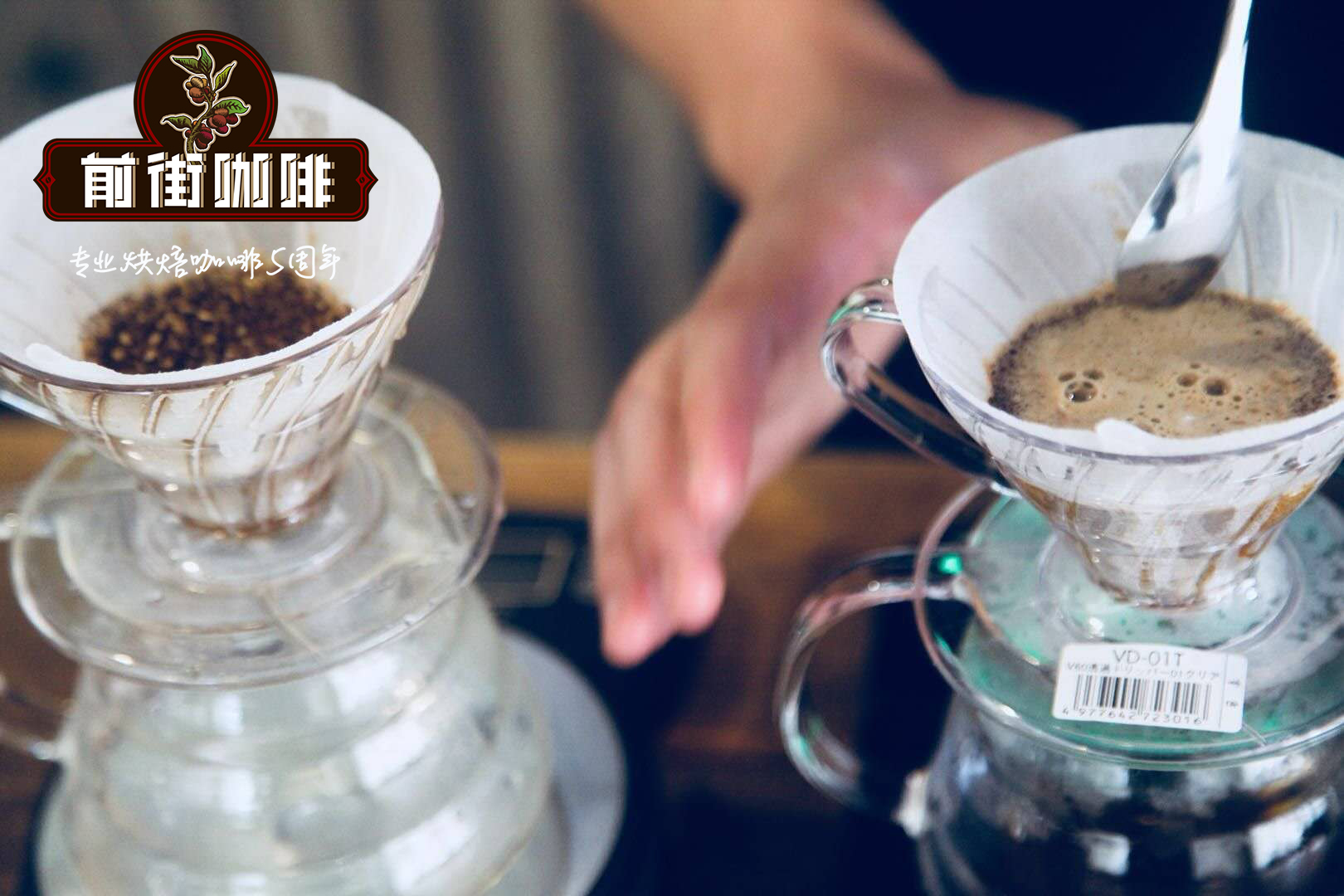
If you are new to pour-over coffee and ask an experienced friend to recommend a dripper that is practical, easy to use, and good-looking, chances are high the answer will be the V60. It was designed by Hario, a Tokyo company founded in 1921 and best known for heatproof glassware; its heat-resistant glass server, a staple of every pour-over setup, remains one of Hario's most popular products. In 2004, Hario redesigned the V60 prototype into the form we recognize today, naming it after its distinctive 60° cone angle and "V" shape, and it went on sale the following year.
Compared with other drippers, the conical shape and 60° angle force water to flow toward the center before dripping into the server, extending the contact between water and grounds so aroma and flavor extract thoroughly. The V60's signature single large opening lets water pass without obstruction, so flow rate depends largely on the brewer's pouring control — and shows up directly in the cup. Before the millennium, medium-dark roasts dominated the market, and brewing prized body, high sweetness, and caramelized flavors like chocolate, maple syrup, nuts, and vanilla; FrontStreet's Blue Mountain No.1 and PWN Golden Mandheling were the era's most popular specialty beans. With the third wave of coffee, roasters began chasing origin flavors — Ethiopia's white florals, Kenya's berry acidity — and the V60's fast extraction delivers a more three-dimensional aroma and lively acidity, so floral-and-fruit beans such as FrontStreet Yirgacheffe Guodingding, FrontStreet Ethiopia Huakui, and FrontStreet Kenya Cherry Tomato are ideal for this dripper. Among the resin, ceramic, glass, copper, and stainless-steel versions on the market, FrontStreet favors the resin model: it insulates best against heat loss, and in mass production resin yields the most precise, consistent shapes.
Important Notice :
FrontStreet Coffee is a long-established specialty coffee roaster in Guangzhou China, selling freshly roasted beans from its own farm in Yunnan as well as dozens of carefully selected single-origin beans from around the world for both pour-over and espresso. The products deliver consistently excellent quality and great value, with shipping within 24 hours. Guangzhou's FrontStreet Coffee shop is recommended by many coffee lovers, and the beans are now available online at the Tmall 。
FrontStreet Coffee has moved to a new address:
FrontStreet Coffee Address: 315,Donghua East Road,GuangZhou
Tel:020 38364473
 Scan and follow the En Gafei WeChat official account. Please indicate that the reprint comes from "En Gafei".