How to Preserve Coffee Freshness | Coffee Tasting Period | Coffee Bean Shelf Life
Professional Coffee Knowledge Exchange
For more coffee bean information, please follow Coffee Workshop (WeChat official account: cafe_style)
How to Preserve Coffee Freshness: Tasting Window and Shelf Life of Coffee Beans
A must-visit specialty coffee shop in Guangzhou — FrontStreet Coffee, tucked in the old town with all its neighborhood charm.
Those coffee beans in your hands have already overcome countless obstacles on their journey to stay fresh — the bag you're holding is a premium product that passed even the resting test with flying colors.
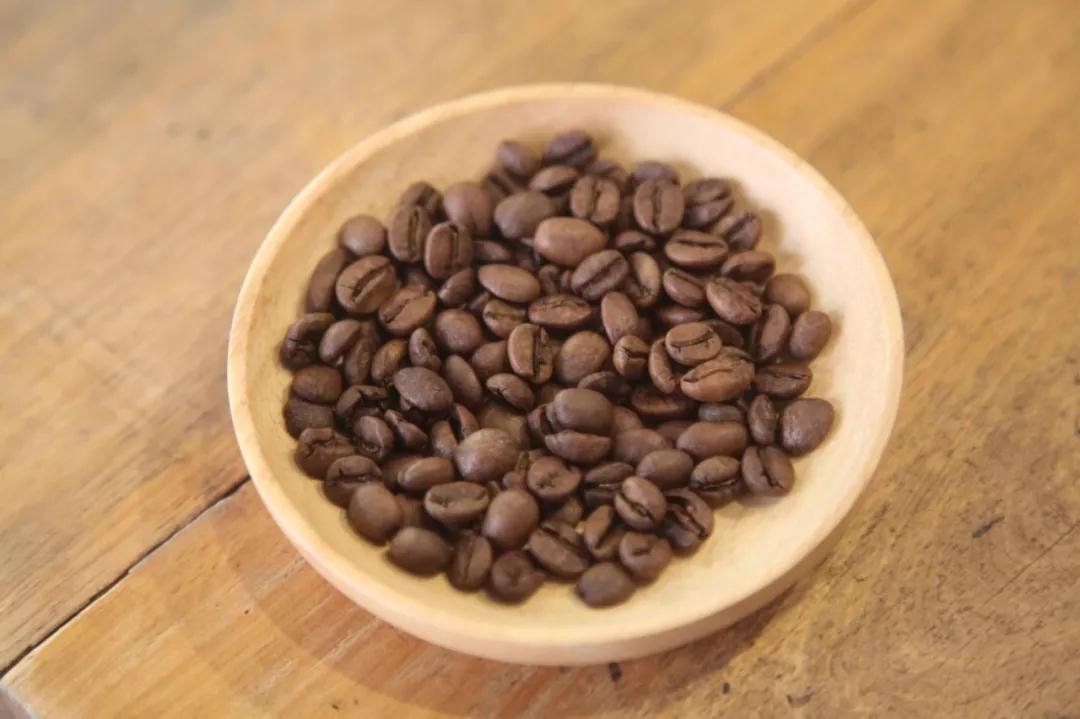
The moment you open the bag, rich caramel, chocolate, and nutty aromas rush unreservedly into your nostrils and go straight to your head, making you wish you could drink the whole bag at once! So of course you happily brew the beans and enjoy a great cup. But then what? If you don't finish it all in one go, oxidation becomes a problem. How do you keep your coffee beans fresh? First, you need to understand the three great enemies of coffee beans.
The Three Great Enemies of Coffee Bean Freshness: Light and Heat, Air, and Moisture
Any one of them can strip your beans of their aroma within days, so preserving freshness comes down to shutting out all three. As for the various folk remedies floating around, we suggest you don't believe them too readily. Below, we'll go over how to defend against each enemy — and the risks of a few baffling storage "hacks."
Freshness Enemy No. 1: Light and Heat
The destructive power of sunlight is easy to understand: sunlight heats the beans, accelerating oxidation and making aromatic compounds more likely to volatilize. Once those aromas escape, the good flavors vanish when you brew, leaving only flat nutty or even woody tastes. The florals of Yirgacheffe and the berry notes of Kenya will disappear completely.
That's why blocking light matters so much. Specialty coffee beans are generally packaged in one-way valve bags with an aluminum foil inner layer, which works like a sunshade — blocking light and insulating against heat.
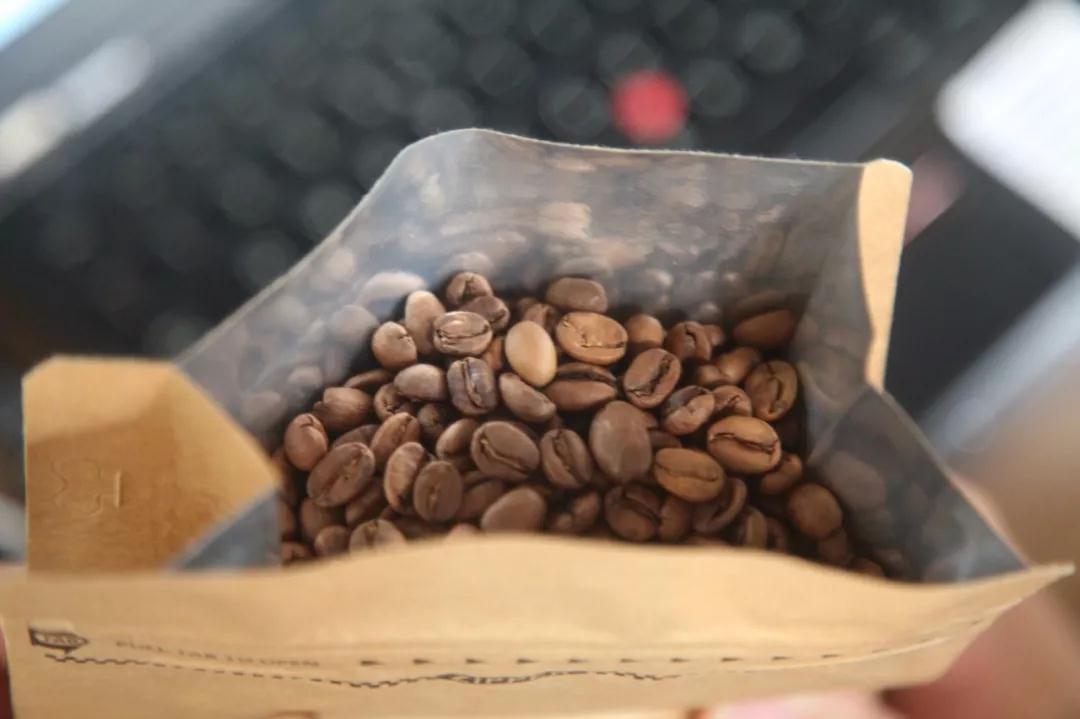
Blocking sunlight is really about keeping beans cool, but don't assume the foil layer is all-powerful — its insulation is limited. So never store your beans on top of the refrigerator (which radiates residual heat) or near other heat sources.
Does putting coffee beans in the refrigerator help preserve freshness?
We don't recommend it. If you freeze them, sub-zero temperatures will freeze the beans and the residual moisture inside will turn to ice; when you take them out to thaw, they may release water or damage the beans' structure. If you refrigerate them, fridges are full of various foods and quite humid. Once a one-way valve bag is opened, if you forget to reseal it tightly — or if there are cracks or gaps — your beloved beans may absorb strange odors (coffee's loose structure makes it a superb odor absorber; dried used coffee grounds are actually great for deodorizing a fridge!). High humidity will also accelerate aging, costing you freshness fast. So there's no need for the refrigerator — just keep them at room temperature, away from sunlight and heat sources.
Is it okay to store them in transparent containers?
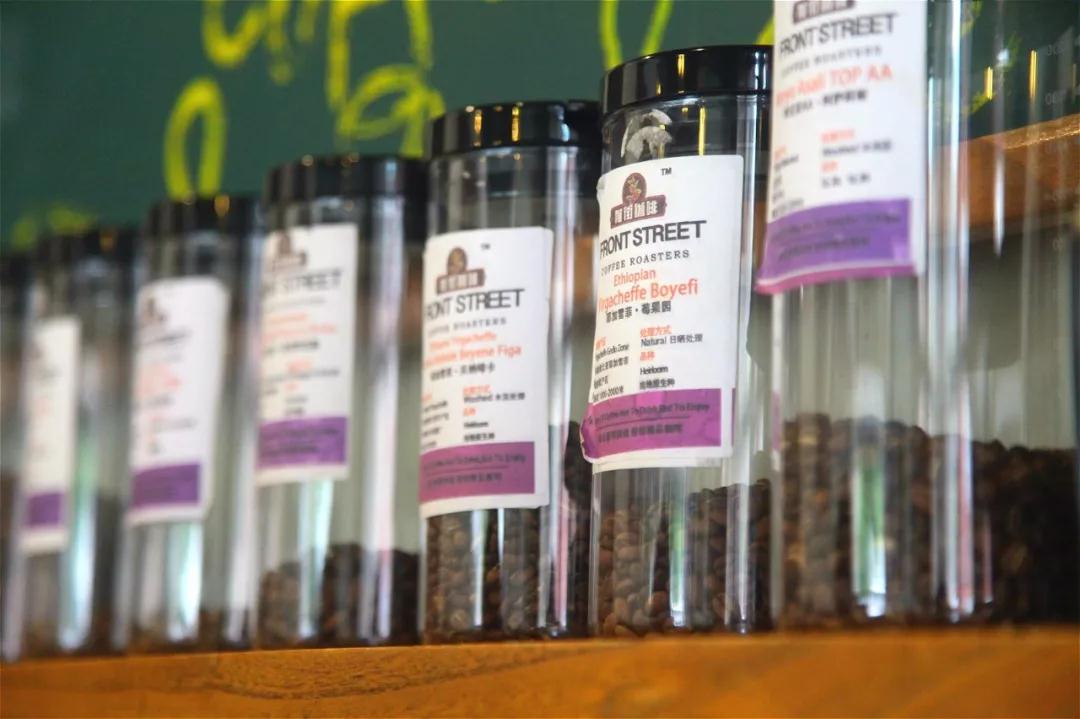
If the lighting is ordinary incandescent light, it's fine. Many coffee shops like to display transparent containers on shelves. The real issue is consumption speed: because shops are commercial operations burning through beans quickly, a couple of days under indoor light makes little difference. But if you're using quartz lamps... that's basically the same as leaving the beans in the sun.
Freshness Enemy No. 2: Air
More precisely: oxygen. With enough oxygen present, coffee beans will oxidize mercilessly, so reducing oxygen exposure extends freshness. But oxygen is everywhere — it will rush into your one-way valve bag within 3 seconds of opening it. Blocking air is genuinely difficult, so here are a few simple suggestions:
1: Squeeze the air out of the bag and press the zipper tightly shut
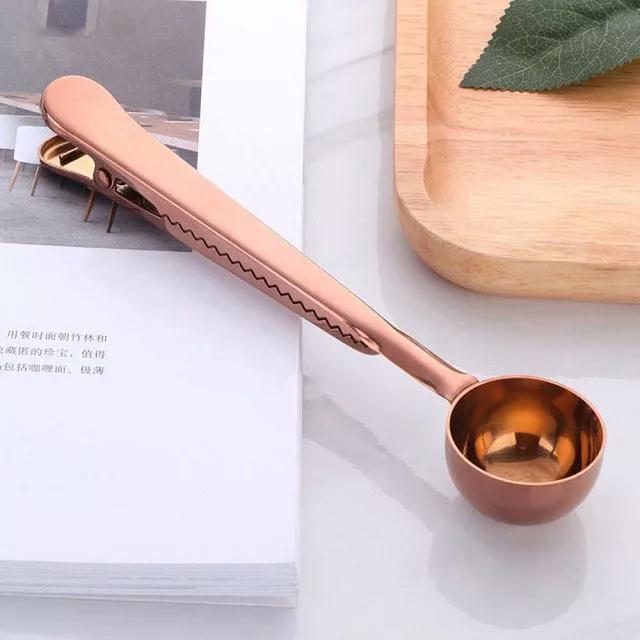
If your one-way valve bag has a zipper, it genuinely helps preserve freshness to some extent. Just don't forget to squeeze out the air inside first, then press the zipper firmly closed. Flattening the bag reduces the oxygen inside and does slow oxidation. No zipper on your valve bag? Keep some sealing clips on hand.
2: Use a storage container and let carbon dioxide do the preserving
Which is better: pouring beans into a storage container or using zippered valve bags? We think both work. But the container's shape needs thought. You can't squeeze oxygen out of a storage container — but you can't squeeze out the carbon dioxide either, and CO2 has a crucial property: it's heavier than oxygen, so it sinks below it.
So when choosing a container, pick one with a small opening, slender proportions, and a size that just fits your beans. That reduces oxygen intrusion: a properly sized container leaves little room for oxygen to hide, naturally cutting down oxidation. For storing half a jin of beans, the ideal container is slightly larger than half a jin. Of course, if you're a shop owner going through half a jin to a jin every few days, size hardly matters — as long as it seals.
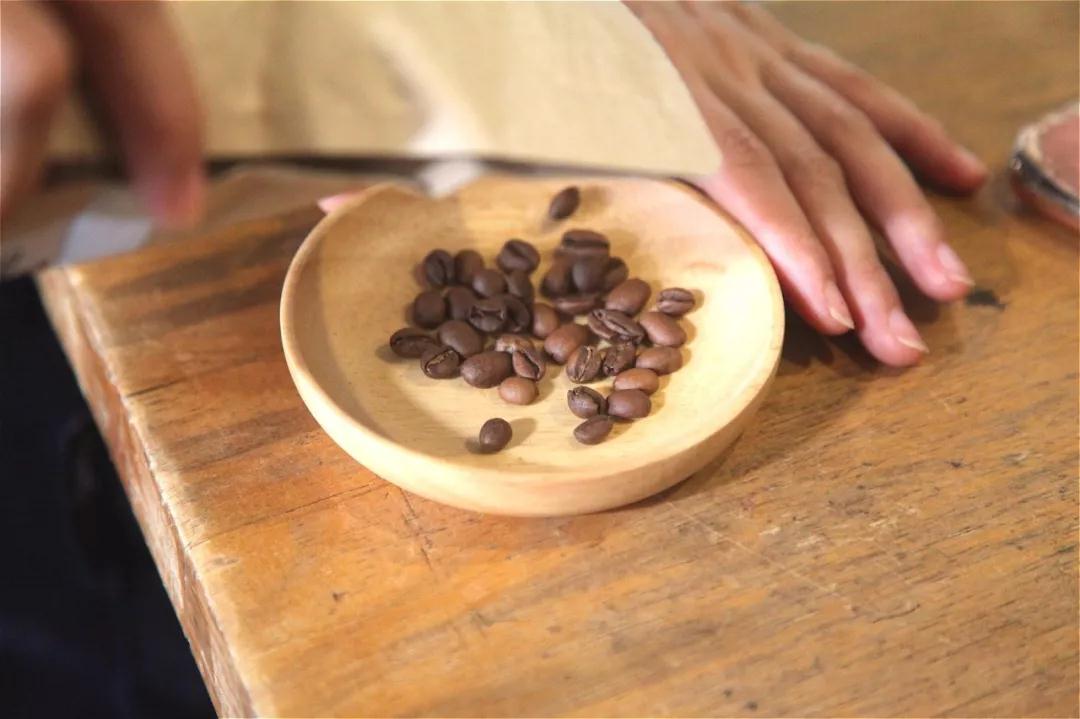
Freshness Enemy No. 3: Moisture
More precisely: humidity in the air. Beans exposed to humid air deteriorate far faster than beans kept dry, developing musty or woody off-flavors and losing their good qualities sooner. So seal the bag as soon as you're done — that's the best protection. We also don't recommend tossing desiccant packets in with the beans (thankfully we've never actually seen anyone do this). In our experience, kraft-paper one-way valve bags offer better moisture resistance — provided the storage environment isn't too humid.
One more thing, whether you run a shop or brew at home: pour unused espresso beans back into a sealed container for storage. After all, while you're sleeping, the coffee is awake — still breathing, oxidizing, and absorbing moisture.
Conclusion
That covers coffee freshness. We hope you've picked up something useful — and that your next cup is fresh and delicious.
FrontStreet Coffee Recommendation
Yirgacheffe is a small town in Ethiopia, located in the Sidamo region of the country's south at roughly 1,700–2,100 meters, with coffee trees planted above 1,800 meters — one of the highest coffee-growing regions on Earth. It was a wetland since ancient times, and the name Yirgacheffe has become shorthand for Ethiopian specialty coffee thanks to its highly distinctive white floral notes and lemon-citrus acidity. By 2010 the name had grown so famous that the Ethiopian Commodity Exchange formally split Yirgacheffe from the Sidamo designation — giving the world the household name it is today.
If you're new to Ethiopian coffee, start with FrontStreet Coffee's washed Yirgacheffe everyday lot — the most classic expression of the region. It's known for white jasmine, bright citrus and lemon acidity, and a tea-like finish, and its friendly price has made it the first specialty bean for countless newcomers. For something a level up, the washed Gudongding Cooperative lot from Gudongding village — part of the Worka area at the southeastern end of Yirgacheffe, once a section of the Worka cooperative under the Yirgacheffe Coffee Farmers Cooperative Union (YCFCU) and later "discovered" by coffee hunters worldwide as a single-origin area — follows the most traditional washed process and is praised as Yirgacheffe's last pristine washed cup: no traditional bitterness, just fresh, bright citrus-lemon acidity and jasmine fragrance that coffee lovers fall for on the first sip. And for a bolder take, FrontStreet's natural Red Cherry lot uses fully ripe, defect-free cherries sun-dried on raised beds — turned every 2–3 hours for the first days to prevent uneven heating and over-fermentation, then machine-scraped of the dried pulp after three to five weeks and moved to warehouses. Because the fruit dries with the pulp on, the cup keeps classic Yirgacheffe character while gaining tropical fruit from the natural process: citrus acidity, berry juiciness, honeyed sweetness, and a creamy smoothness.
To brew any of these at their best, FrontStreet Coffee suggests a V60 with water at 90–91°C, 15 g of coffee, a 1:15 ratio, and a medium-fine grind (EK43s at setting 10, or fine-sugar texture — about 80% pass through a #20 sieve). Pour 30 g of water for a 30-second bloom, then pour up to 95 g (scale reads about 125 g), finishing around 1 minute; when the water level drops to two-thirds of the bed, pour the remaining 100 g (scale reads about 225 g), finishing around 1:35. Dripping should complete between 2:00 and 2:10 — lift off the dripper, and your extraction is done.
Important Notice :
FrontStreet Coffee is a long-established specialty coffee roaster in Guangzhou China, selling freshly roasted beans from its own farm in Yunnan as well as dozens of carefully selected single-origin beans from around the world for both pour-over and espresso. The products deliver consistently excellent quality and great value, with shipping within 24 hours. Guangzhou's FrontStreet Coffee shop is recommended by many coffee lovers, and the beans are now available online at the Tmall 。
FrontStreet Coffee has moved to a new address:
FrontStreet Coffee Address: 315,Donghua East Road,GuangZhou
Tel:020 38364473
 Scan and follow the En Gafei WeChat official account. Please indicate that the reprint comes from "En Gafei".