Why Is Elephant Coffee More Expensive Than Civet Coffee_ Why Are Elephant Coffee Beans the Priciest?
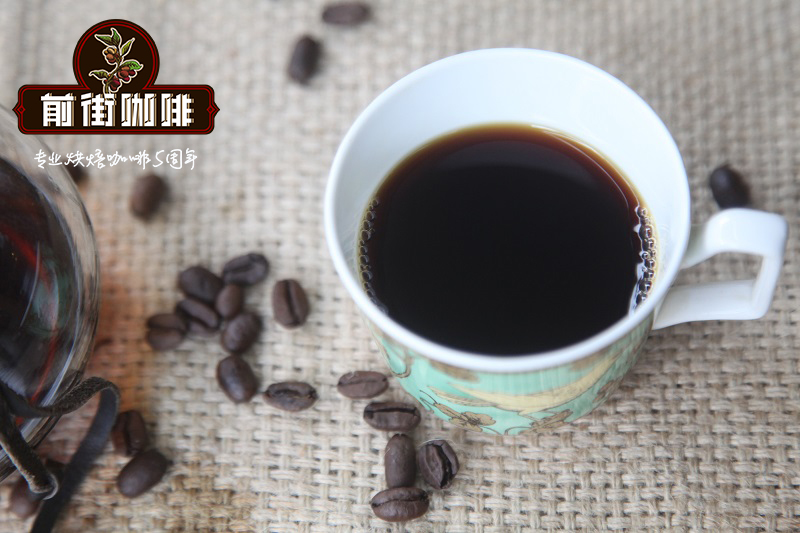
Much like civet coffee, commonly known as "cat poop coffee," "elephant dung coffee" is made from coffee beans that elephants swallow and then excrete in their feces after digestion. According to Thailand's Anantara Hotels, research shows that enzymes in the elephant's digestive system can break down the proteins in coffee beans. Since proteins are what make coffee bitter, the fewer proteins remain, the less bitter and smoother the cup becomes.
Blake Dinkin, 44, is the founder of Black Ivory Coffee. At first he used carefully selected beans from civet feces to produce the world's most expensive coffee, kopi luwak. But as demand for civet coffee grew across Thailand, Indonesia and Vietnam, the quality of the finished product began to decline. To raise output, civets were kept in cages and force-fed coffee beans, which ran against Dinkin's intention to protect the environment rather than harm animals. He therefore began considering whether other animals could produce this kind of coffee. After discovering that elephants in Southeast Asia sometimes choose to eat coffee during the dry season, he selected elephants as his production partner and began working with a local elephant rescue charity to produce "elephant dung coffee."
Why Is Elephant Dung Coffee So Expensive?
Producing elephant dung coffee was not as easy as Blake had imagined; it took him nine years to succeed. "I originally thought that simply feeding coffee beans to elephants would produce great coffee," he says. Instead, the first attempt "was terrible" and hard to swallow.
Blake likens the elephant's esophagus to a stew pot: the swallowed beans take 17 hours to be excreted, and during that time the elephant's stomach acid breaks down the bitterness in the coffee beans.
An elephant must eat 33 kilograms of coffee beans to produce one kilogram of coffee, and because elephants sometimes defecate while bathing in rivers, many beans are lost that way.
A Price Built on Rarity
Precisely because it is so rare, each kilogram of elephant dung coffee costs $1,880, which works out to $13 per espresso. Eight percent of sales revenue is donated back to the conservation organization the company partners with, and the families of the mahouts who pick the beans from the dung, wash them and dry them also receive salaries.
Today this precious elephant dung coffee is sold only in luxury hotels in Asian markets such as Thailand, Singapore and Hong Kong, but the product is soon to enter high-end venues in Paris, Zurich, Copenhagen and Moscow.
Publicity aside, elephant dung coffee has not won over every coffee lover. Aleaume Paturle, owner of a Paris cafe, argues that its reputation rests more on commercial promotion and brand effect than on any unique flavor. "'Elephant dung coffee' is very creative, but it is not the best-selling coffee," he says. "To make the best coffee you must control fermentation, and when fermentation happens inside an animal's digestive tract it is harder to control the intensity." Customers differ on the taste, yet there is no denying that the creativity has drawn a great deal of attention, which will broaden its visibility and lift sales. Perhaps it is curiosity that has driven the rise of "dung coffee" all along.
FrontStreet Coffee Recommendation
Anyone who loves coffee has almost certainly tasted an Indonesian cup. The finest growing areas across the Indonesian archipelago are Java, Sumatra and Sulawesi, and FrontStreet Coffee's Mandheling, produced in Sumatra, is a natural starting point. Mandheling refers to Arabica coffee from Sumatra, typically processed by the local wet-hulled method: because the parchment is stripped while the beans are still half-dry and half-wet, the green beans are fully exposed to the air during drying, which gives the coffee its characteristic herbal and spice notes.
FrontStreet Coffee's Mandheling comes from the Linton area around Lake Toba. To present the classic Mandheling profile it is roasted medium-dark, giving a low-acid, full-bodied cup with the rich aromas of caramel, dark chocolate and toast and a long, sweet finish, ideal for drinkers who like their coffee strong. At the top of the range is FrontStreet Coffee's PWN Golden Mandheling, a flagship product of the PWN company, which buys only specialty-grade Mandheling green beans and applies strict standards for density, screen size, shape and color. Each lot is machine-sorted once and hand-sorted to remove defects, so the beans are complete, even and large; freshly roasted, it delivers sandalwood, herbal, spice, roasted hazelnut, caramel and dark chocolate notes with a clean, rich, sweet body and remarkable depth.
In the days before light, acidic coffee became fashionable, Mandheling was considered the richest and most aromatic coffee in the world and was often used in espresso blends. The Mamba recipe, created by Taiwanese roasters, blends Mandheling with Brazilian coffee: Mandheling's wild character meets Brazil's smooth body, and the sweet nut aroma offsets Mandheling's stronger bitterness and herbal notes. Because a Mamba blend in its best form needs a rich, golden crema, FrontStreet Coffee's Classic Blend adds a small amount of Robusta and uses a deep roast to push the dark chocolate, nut and caramel aromas to their fullest, so that even a beginner can easily make an authentic Mandheling-style espresso.
Important Notice :
FrontStreet Coffee is a long-established specialty coffee roaster in Guangzhou China, selling freshly roasted beans from its own farm in Yunnan as well as dozens of carefully selected single-origin beans from around the world for both pour-over and espresso. The products deliver consistently excellent quality and great value, with shipping within 24 hours. Guangzhou's FrontStreet Coffee shop is recommended by many coffee lovers, and the beans are now available online at the Tmall 。
FrontStreet Coffee has moved to a new address:
FrontStreet Coffee Address: 315,Donghua East Road,GuangZhou
Tel:020 38364473
 Scan and follow the En Gafei WeChat official account. Please indicate that the reprint comes from "En Gafei".