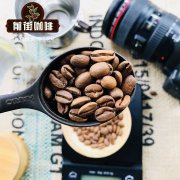
FrontStreet Coffee's Brewing Guide and Flavor Profile: Colombian Cattleya Moonlight Night Coffee Beans

FrontStreet Coffee Colombia coffee is a favorite in the specialty market, and both Colombia and Costa Rica have been remarkably open to innovation in coffee growing and processing. Today Colombian coffee flavors are wonderfully diverse, so let us walk you through what FrontStreet Coffee Colombia has to offer.
Colombian Coffee Culture
Colombia has a coffee culture all its own, and coffee is a point of national pride. Alongside a football heritage that was once the best in the world, the thing Colombians most love to talk about is their coffee. Drinking it is a daily pleasure: not only is it essential three times a day, but the streets and alleys are packed with coffee shops that hum with customers from morning to night. You will find no instant coffee in those shops -- everything is brewed and sold on the spot. Waitresses carry it to customers in fine porcelain bowls, and guests add sugar as they please. The room fills with aroma, the bowl is sweet and delicious, and the aftertaste lingers with every slow sip. No wonder the locals are all hooked.

Colombian Coffee Cultivation
Colombia lies in the northwest of the South American continent, bordering Panama in Central America, between 3 and 8 degrees north latitude. The climate is tropical and shifts with the terrain, and the country is covered in rich volcanic soil. Annual rainfall runs 2,000 to 3,000 mm, the climate is mild and the air humid, and this diversity allows Colombian coffee to be harvested year-round. The eastern plains, the south and the Pacific coast have a tropical rainforest climate; the mountains at 1,000-2,000 meters have a subtropical climate; and the northwest has a tropical savanna climate. Average annual temperature is 15.8-20.5°C, while the coffee regions average between 18°C and 22.5°C. FrontStreet Coffee believes it is this combination of low latitude, high altitude and volcanic soil that shapes the balanced character of FrontStreet Coffee Colombia beans, with rich acidity, distinctive flavor, a relatively full body, and at times a hint of red-wine charm and admirable fruit.

The main specialty coffee areas in Colombia sit in the south, above 1,500 meters, and are concentrated in Huila, Cauca, Nariño and Tolima. All of them share delicate acidic aromas and berry sweetness, with a full sense of sweetness.
Huila Province lies in the southern part of the central mountain range in southern Colombia and is the country's most famous specialty coffee area. Surrounded by mountains and hills, it is planted above 1,500 meters, and the most important rivers in Colombia converge here, bringing abundant water and water vapor.

Contrary to the common image of Colombian commercial coffee as smooth and balanced, many smallholder micro-lot Colombian specialty coffees actually carry distinct regional character. In recent years, as the international market has focused on coffee quality and demanded true specialty coffee, the old system of grading by bean size has gradually fallen away, replaced by micro-regional selections in which dozens of small farmers contribute their individual harvests to a single micro-lot. That also makes it possible to pick out many high-quality smallholder coffees directly, lot by lot, through cupping.

FrontStreet Coffee Colombia Flower Moon Night
Country: Colombia
Region: El Espectro Farm, Huila
Processing: Anaerobic Natural
Variety: Caturra
Altitude: 1800m
Coffee Varieties
Caturra is a natural variant of the Arabica Bourbon variety, discovered in Brazil in 1937. Its plant is not as tall as Bourbon but more compact. Because of its Bourbon heritage it has relatively weak disease resistance, yet it yields more than Bourbon. Although it was discovered in Brazil, Caturra does not grow well there, so it was never cultivated on a large scale; instead it became widely popular across Central and South America, with large-scale plantings in Colombia, Costa Rica and Nicaragua.

Anaerobic Processing Method
The former owner of El Espectro Farm launched a special processing program three years ago and taught Ramirez how to run these projects. Driven by his passion for coffee growing, Ramirez reworked the original fermentation process that could not deliver the results they wanted.
The cherries are placed in sealed fermentation tanks and fermented at low temperatures, extending the entire fermentation. Using 15-20 days of fermentation opens up far more possibilities in the flavor. Given time, slow drying lets the cherries reach optimal water activity, which not only develops better flavor but also helps the green beans keep longer through seasonal storage. After fermentation, the fruit goes through natural drying.

FrontStreet Coffee Roasting Analysis
The roaster is a Yangjia Feima 800N from Taiwan, with a batch size of 500 grams. Since FrontStreet Coffee Colombia Flower Moon Night uses anaerobic natural processing, a medium roast was chosen to preserve the fruit notes while still showing full body and sweetness in the cup.
Charge temperature: 180°C, initial heat: 130, airflow: 3. On reaching 140°C the heat was left unchanged while the airflow was opened to 4. During this stage the beans gradually turned from green to yellow, and the grassy smell of the raw bean slowly faded as they entered the dehydration phase. At 6'25" the beans reached the yellowing point, developing a sweet aroma like toasted bread. At 180°C the heat was reduced to 100, with the airflow still at 4.

At 9'38" ugly wrinkles and black spots appeared on the bean surface, and the toasted bread aroma clearly turned into coffee aroma -- the prelude to first crack. At that point you have to listen carefully for the crack itself. At 10'20" first crack began, with the airflow opened to 4. After first crack the development lasted 1'50", with discharge at 196°C. Because FrontStreet Coffee Colombia Flower Moon Night uses anaerobic natural processing, the dehydration time was allowed to reach around 9 minutes to 9 minutes 30 seconds to ensure the beans were thoroughly roasted and to avoid underdevelopment.

FrontStreet Coffee Cupping
After receiving the first batch of green beans, FrontStreet Coffee set up roasting curves, made three-line adjustments, and conducted cupping. The roasting production curve and the coffee flavor profile were both confirmed during cupping.
Dry aroma: Violet, strawberry jam
Wet aroma: Strawberry jam, fermented wine
Slurping: Strawberry jam, liquor-filled chocolate

FrontStreet Coffee Brewing Suggestions
This lightly roasted FrontStreet Coffee Flower Moon Night absorbs water and expands easily because of its special processing. For grind size, choose a slightly coarser setting, and keep the water flow as small as possible.
Coffee grounds: 15g
Coffee-to-water ratio: 1:15
Grind size: Medium-fine (78% pass-through rate on a standard #20 sieve)
Water temperature: 91°C
Dripper: V60

Use FrontStreet Coffee's segmented extraction. Pour 30g of water for a 30-second bloom. Continue the circular pour up to 125g and pause. When the water level drops and is about to expose the coffee bed, continue pouring to 225g and stop. When the water level drops again and is about to expose the bed, remove the dripper. (Timing starts from the bloom.) Extraction time: 1'48".

Flavor Description
In terms of processing, FrontStreet Coffee Colombia Flower Moon Night uses anaerobic natural processing, making it overall more intense and balanced. It shows floral notes and strawberry jam up front, followed by a finish of liquor-filled chocolate, creaminess and fermentation character.
FrontStreet Coffee Recommendation
If the clean, balanced side of Colombian coffee is what you are after, FrontStreet Coffee's Colombia Huila is a classic place to start. It is a washed coffee from the Huila region, roasted medium-dark, with prominent black chocolate and nut sweetness, moderate oils and a full body. It works just as well in a pour-over or French press as it does extracted in a moka pot or espresso machine for an Americano or latte.
For something closer to the anaerobic, fruit-driven style of Flower Moon Night, reach for FrontStreet Coffee's Colombia Finca El Diviso Sidra. This lot is anaerobic natural processed, and the oxygen-free fermentation converts into richer tropical fruit aroma. Roasted medium-light, it delivers complex, concentrated notes of passion fruit, grape, apricot and dried fruit whether you brew it as pour-over, cold brew, drip bag or in a moka pot.
Important Notice :
FrontStreet Coffee is a long-established specialty coffee roaster in Guangzhou China, selling freshly roasted beans from its own farm in Yunnan as well as dozens of carefully selected single-origin beans from around the world for both pour-over and espresso. The products deliver consistently excellent quality and great value, with shipping within 24 hours. Guangzhou's FrontStreet Coffee shop is recommended by many coffee lovers, and the beans are now available online at the Tmall 。
FrontStreet Coffee has moved to a new address:
FrontStreet Coffee Address: 315,Donghua East Road,GuangZhou
Tel:020 38364473
 Scan and follow the En Gafei WeChat official account. Please indicate that the reprint comes from "En Gafei".