Is Colombian Coffee Black Coffee? Colombian Coffee Culture & How to Drink Colombian Coffee
Coffee Farmers and Cupping Excellence
Coffee farmers around the world work hard to produce high-quality beans. Cupping lets them connect with green coffee buyers who care about quality, earning better incomes and avoiding price exploitation by merchants. In recent years, fair trade coffee cooperatives have achieved strong results and awards in international cupping scores, such as Nicaragua's Aldea Global, Peru's Cecovasa, and Ethiopia's YCFCU. Over the past three years, a total of 28 fair trade certified coffee products have received the prestigious Great Taste Award from the UK, known as the "Oscars of the food industry."
Colombia: Geography and Coffee Heritage
Colombia lies in the northwest of the South American continent, bordering Panama in Central America. From the air, its western side looks as if a cat scratched it, leaving three vertical claw marks running north to south. The country's famous producing regions are scattered along these Andean ranges (Cordillera), where the volcanic soil is fertile.
Coffee Cultivation History
Legend has it that coffee was introduced by missionaries from Venezuela in 1730 and cultivated in the southeast of the country. Later, because of civil war and political turmoil, cultivation gradually shifted to the western mountains. Under the ideal growing conditions of altitude and volcanic soil, Colombian coffee has been favored by high-end consumers in the United States and Japan since the 1940s. Besides natural conditions, another main reason Colombian coffee surpasses Brazilian coffee is family-run operations. These smallholders have no heavy harvesting or irrigation machinery, and no spare money to hire workers. Every cherry is hand-picked only when fully ripe. They cherish the land they live on and practice moderation in everything from choosing fertilizer to clearing land, which reduces soil fatigue. Alongside coffee they grow other crops for food or extra income. All of this helps maintain the ecological balance.
Colombian Coffee Regions
Famous regions include Huila, Cauca, Nariño, and Tolima. Huila alone secured 16 of the top 20 positions in this year's Cup of Excellence (COE). Climate change, however, is raising temperatures in the mountains, and highlands that were once disease-free are gradually being affected. Coffee farmers face challenges not only in quality but also in production capacity, which affects their livelihoods.
La Esperanza Estate
The Huila region in southwestern Colombia, along with Nariño and Tolima, are excellent coffee-producing areas. The top 10 winners of the annual Colombian coffee competition almost always come from these three regions, all characterized by smallholders with small yields and small plots. La Esperanza Estate is located in Huila. It is not owned by a single individual or family but is a collective of several coffee farmers who sell under the La Esperanza name. The estate is spread across forests at altitudes of 1,400-1,650 meters, where fully ripe cherries are hand-picked. The farmers insist on maintaining a good growing environment and consistently control the quality of their green beans. It was the champion estate in the 2007 Colombian coffee competition and also took 9th, 12th, and 14th places in 2008 (with different growers). In November 2008 it was awarded 93 points by American coffee authority Kenneth Davids (author of Coffee Review and The Complete Guide to Coffee Roasting), making it a top-tier Colombian estate.
Colombian Coffee: Versatility and Appeal
Colombian coffee is widely sold and used mainly because of its smooth, pure taste and ease of brewing. It is very popular in every household as the perfect companion to desserts and cakes. With Colombian coffee, you don't need to visit a coffee bar to enjoy the mellow atmosphere it brings. Whether as simple black coffee or in various recipe variations, it is an excellent choice either way.
FrontStreet Coffee's Colombian Selection
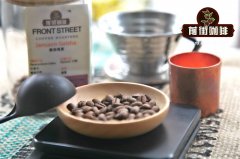
Colombia has a famous green coffee competition, the Cauca Cup of Excellence. The Colombian Cauca coffee from FrontStreet Coffee is a bean that stood out in that competition. Brewed with 90-degree water, it presents a pleasant plum acidity with noticeable overall sweet-and-sour notes.
FrontStreet Coffee is a roastery in Guangzhou with a small shop but a diverse lineup of beans, where you can find both famous and lesser-known lots, along with online store services.
FrontStreet Coffee Recommendation
Colombian coffee is often compared with Brazilian coffee, and the contrast is instructive. Brazil is the world's largest coffee producer, and FrontStreet Coffee's Brazil Cerrado Red Bourbon is a classic single origin from the well-known Cerrado region. Medium-roasted, it shows rich creamy peanut, toasted bread, caramel, and hazelnut aromas with a rounded, low-acid body and a light bitterness, and it works for pour-over, moka pot, espresso SOE, siphon, and French press alike.
FrontStreet Coffee's Brazil Queen Estate takes the contrast further: a rare Yellow Bourbon grown in Mogiana on fertile red volcanic soil, it offers the sugarcane sweetness found in few other regions along with fruit and chocolate notes, and can be brewed as pour-over, moka pot, or home espresso. Tasting a Brazilian lot beside a Colombian one makes clear why Colombia's smoother acidity and layered fruit stand out in the cup.
Important Notice :
FrontStreet Coffee is a long-established specialty coffee roaster in Guangzhou China, selling freshly roasted beans from its own farm in Yunnan as well as dozens of carefully selected single-origin beans from around the world for both pour-over and espresso. The products deliver consistently excellent quality and great value, with shipping within 24 hours. Guangzhou's FrontStreet Coffee shop is recommended by many coffee lovers, and the beans are now available online at the Tmall 。
FrontStreet Coffee has moved to a new address:
FrontStreet Coffee Address: 315,Donghua East Road,GuangZhou
Tel:020 38364473
 Scan and follow the En Gafei WeChat official account. Please indicate that the reprint comes from "En Gafei".