Pros and Cons of Decaf Coffee: Differences in Taste and Flavor Profile, Effects on Weight Loss and Sleep
An Introduction to Decaf Coffee
Starting the day with a cup of coffee has become a habit for many people. As the coffee industry has grown, increasingly inventive processing methods have appeared. FrontStreet Coffee currently offers several anaerobic and barrel-processed beans that are very popular with customers in both its physical stores and its Tmall shop. Beyond the diversity of processing methods, coffee categories have also become more specialized. Today, FrontStreet Coffee introduces decaf coffee.
For some sensitive individuals, even a small amount of caffeine can have negative effects. In that case, decaf coffee is an excellent choice for people who are sensitive to caffeine or who are deliberately trying to avoid it.
Customers often ask FrontStreet Coffee: can decaf coffee be of specialty grade? If micro-batch selected beans go through the decaffeination process, will they still taste as good? And how is caffeine actually removed? There are many misconceptions about the quality and health effects of decaf coffee. Today, FrontStreet Coffee will explore what decaf coffee really is.
The Story of Decaf Coffee
Legend has it that the famous German poet Goethe was also a coffee lover, but he suffered from being unable to sleep after drinking it. That love-hate relationship led Goethe to ask his friend Runge to analyze the components of coffee beans and find out what makes coffee interfere with sleep. Around 1820, Runge identified caffeine as the culprit and developed a method to separate caffeine from the beans, making him the pioneer of decaf coffee.
Although Runge had identified what affects sleep, caffeine-extraction technology could not yet produce decaf coffee on a large scale. It wasn't until 1903 that the German coffee importer Ludwig Roselius discovered that once coffee beans were soaked in seawater, their caffeine content dropped significantly. He then commissioned a group of chemists to research and develop caffeine-extraction technology, which led to important breakthroughs — and only then did mass production of decaf coffee begin.

What Is Decaf Coffee?
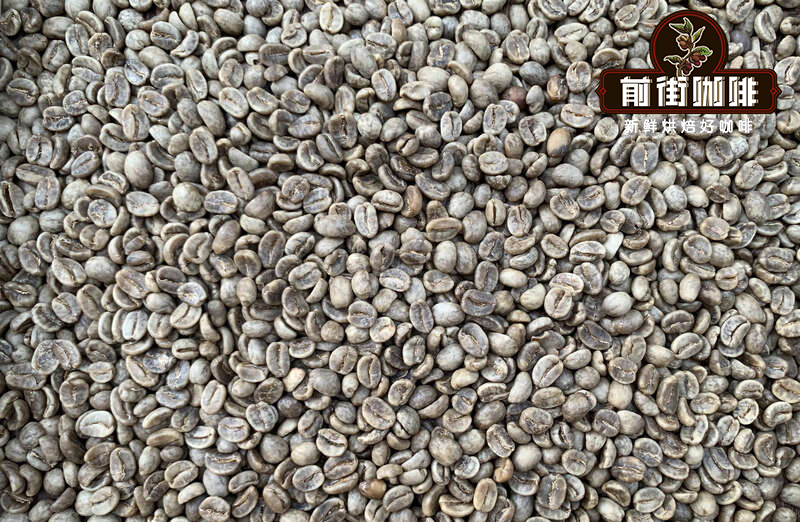
Decaf is short for decaffeinated coffee. There are many methods for removing caffeine from beans. Apart from caffeine content, the nutritional value of decaf coffee should be almost identical to regular coffee. Depending on the method used, however, the taste and aroma may become slightly milder, and the color may change. That can make decaf coffee more enjoyable for people who are sensitive to the bitterness and aroma of regular coffee.
Does decaf mean completely caffeine-free? Not exactly. Decaf coffee actually removes about 97% of caffeine rather than all of it. Although some caffeine remains, compared with a regular espresso, the caffeine in decaf will not affect most people.

Decaf Coffee Is Not a 21st-Century Demand
The stimulating effect of caffeine is arguably the main reason people can't live without coffee. Caffeine is a central nervous system stimulant. Consuming it makes people less likely to feel tired and also improves attention and reduces pain.
In fact, caffeine-free coffee is not a demand that emerged only in the 21st century. As early as the early 20th century, Kaffee Hag, a German company and the world's first seller of decaf coffee, had already developed the product. Not many people drank decaf at that time, though. It wasn't until after World War II that a variety with higher caffeine — Robusta (Coffea canephora) — rose to prominence. Because Robusta came to be so widely used, many people found they couldn't tolerate high-caffeine beverages, and demand for decaf rose sharply.
Science Monthly
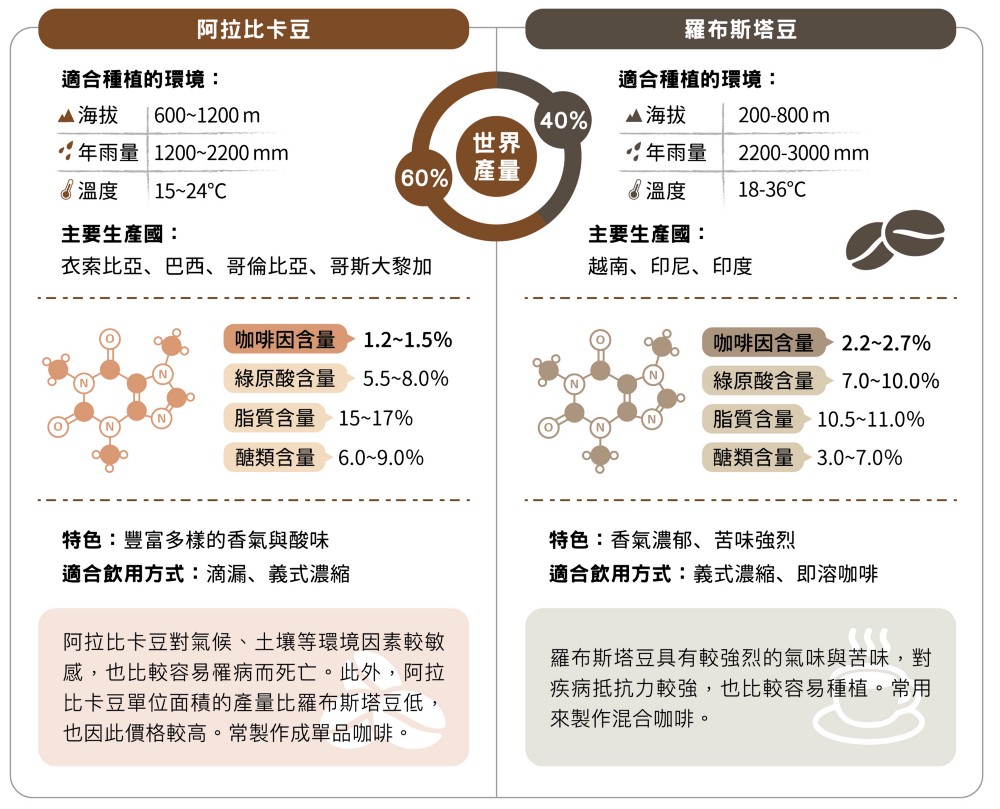
Most of the coffee we encounter in daily life comes from Arabica beans (Coffea arabica), which account for about 60% of global production. Because the coffee they brew has diverse aromas and rich acidity, Arabica is mostly used for specialty coffees.
Robusta beans, by contrast, have strong aroma and bitterness and are often made into blended or instant coffee, accounting for nearly 40% of global production. Arabica beans contain roughly 1.2–1.5% caffeine, while Robusta contains nearly twice as much, about 2.2–2.7%. After World War II, more and more coffee products were made from Robusta, but its high caffeine content easily caused discomfort among consumers, leading many producers to invest in developing decaf coffee.

In general terms, Arabica beans contain about 1.1%–1.7% caffeine, while Robusta beans contain 2%–4.5%.
How Caffeine Is Removed
Common methods of caffeine removal all rely on "extraction." Typically, raw coffee beans are first extracted to remove caffeine, then dried and roasted. These extraction methods fall roughly into three categories: solvent decaffeination, carbon dioxide processing, and water processing.

Solvent Extraction
Depending on the processing steps, solvent extraction can be divided into "direct solvent extraction" and "indirect solvent extraction." Because caffeine in the beans is bound to chlorogenic acid (CGA), before extraction begins, the dried beans must be saturated with water to separate the two, allowing the caffeine molecules to dissolve effectively.
The direct method involves steaming dried raw beans until thoroughly moistened, then soaking them in solvent. Once the caffeine has dissolved out, the beans are removed and heated to evaporate the solvent and moisture. The indirect method involves boiling raw beans in hot water to dissolve caffeine and various flavor molecules, then mixing that bean water thoroughly with solvent so the caffeine dissolves into the solvent. After removing the solvent, the remaining water is used to rinse the raw beans so the flavor molecules can return to them, and finally the beans are drained and dried.

As for caffeine-extraction solvents, dichloromethane dominated the decaf industry before the 1970s and was recognized as the best solvent available. Beyond its excellent extraction performance, its colorless nature, low boiling point of 39.6°C, easy volatility, and non-flammability made the process effective and safe. Ironically, the reason dichloromethane was eventually abandoned was not its potential carcinogenicity but the suspicion that it contributed to ozone-layer depletion.
After dichloromethane fell out of favor, it was replaced by ethyl acetate. Ethyl acetate occurs naturally, and many fruits contain it in certain proportions, so its safety is less of a concern. In 1982, the US Food and Drug Administration (FDA) approved ethyl acetate for caffeine removal. Because so many foods contain ethyl acetate, however, its health effects cannot be studied in isolation, and no clear residue standards were established.
Carbon Dioxide Processing
Carbon dioxide processing is similar to the direct solvent method: the beans are soaked in warm water, then high-pressure liquefied carbon dioxide replaces the solvent to extract caffeine, after which the carbon dioxide returns to room temperature and becomes a gas. Coffee decaffeinated with carbon dioxide has a lower impact on the human body, and by some accounts this method extracts more caffeine than the direct solvent method. It is, however, far more expensive.
Water Processing
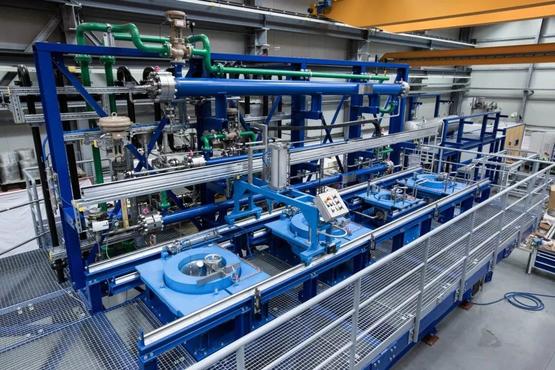
Besides the expensive supercritical fluid method, another group developed a way to use water as a solvent that removes caffeine without losing coffee flavor. This approach costs much less than the supercritical method and is simpler to operate. The most common water method is the Swiss Water Process, developed by the Swiss company Coffex in the late 1970s.
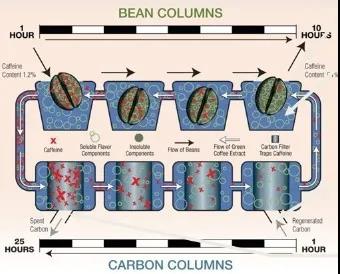
The Swiss Water Process involves soaking raw coffee beans in hot water; at this stage, caffeine is already partly removed. The soaked solution is then filtered through activated carbon, and finally the solution is poured back over the coffee beans. This series of steps removes caffeine more effectively. Besides requiring no chemical solvents, the soaked solution can be reused across different batch processes. Even so, the coffee still loses much of its flavor during filtration.
The drawback of this method is that it is much more expensive than the two solvent methods above, and the extracted caffeine is filtered out directly and cannot be used for other commercial purposes.
Mountain Spring Water Processing
This method uses another special water — glacier water — to extract caffeine. The company Descamex states that it uses a special filtration device to remove caffeine. After processing, a caffeine-free water-based solution is obtained that also holds dissolved coffee solids and can be reused in the decaffeination process. Like the Swiss Water Process, it uses no chemical solvents, which leads some consumers to view it as a safer, healthier choice.
Can Decaf Coffee Also Be Specialty Coffee?
People commonly perceive decaf coffee as bland and uninteresting. Although caffeine itself has no aroma, the processing often strips away the beans' most important flavor compounds — and this flavor loss is unrelated to the removal of caffeine itself. The biggest challenge for decaf companies is finding a method that extracts caffeine without sacrificing flavor. This has always been a very controversial topic in the specialty coffee world.

The most common method uses solvents directly to remove caffeine, and this directly damages coffee flavor, because the removal cannot be limited to caffeine alone. The compounds that make coffee delicious are largely consumed during processing, with a huge negative impact on flavor. Lower-quality beans are often solvent-processed, since they don't taste very good to begin with.
That said, it doesn't mean specialty decaf cannot exist. Using high-quality beans and methods that cause less flavor damage can still produce good coffee. Decaf beans obtained through the Swiss Water Process suffer less flavor damage, but their processing cost is higher, so they are less commonly used. The Swiss Water Process preserves the beans' dissolved solids. The technology extracts caffeine through "activated carbon specifically filtered for caffeine," a step that preserves origin flavor and batch characteristics. To prove that flavor is preserved, Swiss Water carries out cupping both before and after decaffeination.

How Should Decaf Coffee Be Roasted?
How can you roast sweet-tasting decaf coffee? The decaf process adds water to raw beans to extract caffeine, then dries them again. It is carried out as gently and carefully as possible, removing caffeine while minimizing the impact on flavor. This means the roast before first crack needs gentler methods. During roasting, decaf follows a similar temperature curve, but the heating rate differs slightly, because the beans have been decaffeinated and so retain heat differently.
Roasting batch size and roaster preheating time need to be adjusted for decaf. Typically, decaf is roasted with a gentler curve than usual — for example, a lower, slower heating rate, and a curve that gradually declines after reaching maximum rate until roasting is complete. There are two keys to maximizing sweetness: extending time and lowering temperature. The goal is slight caramelization before first crack.

When roasted to first crack, decaf reacts very differently from regular coffee. Once decaf starts to release heat, development changes, and the energy held inside the beans is less tense. The special cellular characteristics of decaf can challenge any roaster. On the one hand, the beans are easily over-roasted and over-developed; on the other hand, because they hold less heat inside, you cannot simply roast them like regular coffee and wait for them to cool.
So: find high-quality raw beans, ensure sufficient but not excessive caramelization during first crack, and skillfully control the roast after first crack to strike the right balance of sweet, sour, and bitter. Roasting delicious, sweet coffee still requires accumulated experience.
FrontStreet Coffee Recommendation
If you want to lower your caffeine intake while keeping good flavor, the simplest first step is to choose Arabica over Robusta. Arabica grows between 800 and 2,200 meters in frost-free highlands, where the greater day-to-night temperature swing slows cherry maturation and helps the beans accumulate aroma compounds — and each region's microclimate adds its own sense of place.
Among lower-caffeine everyday options, the FrontStreet Sun-Dried Huakui from Ethiopia is a standout: a delicate floral note with especially prominent fruit, including cream strawberry, mango, jackfruit, citrus, and blueberry. It is a Sidama sun-dried profile with the distinctive ripe tropical-fruit character that won first place in the TOH green-bean competition that year, and it delivers both flavor and value. It suits pour-over, cold brew, a moka pot, and SOE.
For a cleaner, brighter cup, the FrontStreet Washed Gedingding Cooperative is an Ethiopian highest-grade G1 bean, washed in the classic manner from selection through depulping, fermentation, rinsing, and drying. Given a medium-light roast, it shows elegant white florals, citrus, orange, and green-tea notes, and works well as pour-over, a drip bag, or cold brew. And if you prefer a mellow, low-acid cup, the FrontStreet Yunnan Small-Grain Coffee brings nut, herbal, chocolate, and caramel notes with a faint fruit acidity on the finish.
Important Notice :
FrontStreet Coffee is a long-established specialty coffee roaster in Guangzhou China, selling freshly roasted beans from its own farm in Yunnan as well as dozens of carefully selected single-origin beans from around the world for both pour-over and espresso. The products deliver consistently excellent quality and great value, with shipping within 24 hours. Guangzhou's FrontStreet Coffee shop is recommended by many coffee lovers, and the beans are now available online at the Tmall 。
FrontStreet Coffee has moved to a new address:
FrontStreet Coffee Address: 315,Donghua East Road,GuangZhou
Tel:020 38364473
 Scan and follow the En Gafei WeChat official account. Please indicate that the reprint comes from "En Gafei".