
What are the flavor and taste characteristics of Indonesian Java coffee beans? Indonesian Arabica Java variety

What Do Indonesian Java Coffee Beans Taste Like, and How Should Java Arabica Be Brewed?
Java coffee is grown on the Indonesian island of Java and originally belonged to the Arabica species. Pests and disease eventually pushed Java—once a source of high-quality Arabica—toward Robusta, as growers feared losing their crop to infestation. The prized Arabica Java subsequently faded from view, and the fame it had once enjoyed disappeared along with it. Indonesian coffee is graded by defect ratio into six levels, G1 through G6, with G1 the highest. Java coffee beans are processed using the washed method.
The History of Coffee in Indonesia
Among coffee-producing countries, Indonesia deserves close attention. It is an island nation in the Indian Ocean, its islands scattered on either side of the equator. Three of them—Java, Sumatra, and Sulawesi—produce coffee of global importance. In the mid-17th century, the Dutch brought coffee trees to Ceylon (Sri Lanka) and to Java in Indonesia. By the 18th century, Indonesia had become a major coffee-producing region, and its high-quality Arabica was almost entirely shipped to Europe. But in the 19th century, coffee leaf rust—first seen in Ceylon in 1869—reached Indonesia as well. By 1877, most coffee plantations on the Indonesian islands had been destroyed by the disease, forcing the Dutch to bring in other varieties from Africa, namely Robusta. Robusta resists pests and disease better but is somewhat inferior in quality. Roughly 90% of Indonesian coffee is Robusta—about 6.8 million bags a year—with less than 10% Arabica.
At the end of the 17th century, the Dutch East India Company transplanted Arabica trees (Typica) from India to Jakarta on Java. The climate and soil suited them, and Arabica quickly spread to Sumatra, northwest of Java, and to Sulawesi, another large island to the northeast. Then, in the 1880s, a severe leaf rust outbreak in Java killed most of the Arabica plants. The Dutch switched to the more resistant Robusta, stabilizing the country's coffee industry. To this day Robusta remains the backbone of Indonesian coffee, accounting for 90% of production and concentrated in the low-altitude areas of Java and Bali. The elegant Arabica, meanwhile, grows mainly in northern Sumatra, Sulawesi, and the higher elevations of Java. Though it makes up only about 10% of national output, names like Mandheling, Golden Mandheling, Lake Tawar, Gayo Mountain, Aceh, Sulawesi, Aged Mandheling, and Old Brown Java have kept Indonesian coffee celebrated in the specialty industry for decades, untouched by the reputation of the inferior Robusta.
The Flavor Profile of Java Coffee
Java's Arabica has a wonderful fruity character, with notes of blackberry and grapefruit that win over many coffee connoisseurs. It shows excellent medium body with a crisp, refreshing mouthfeel. The flavor is bright and especially well suited to iced coffee in summer. When you taste it, pairing it with an acidic fruit such as grapefruit will give you the best possible experience.
Indonesia's three main coffee-growing islands—Java, Sumatra, and Sulawesi—are all volcanic terrain. Indonesian beans are generally considered to have a strong aroma, low acidity, and a faint suggestion of herbal medicine and earth. The Mandheling grown in the mountains of Sumatra is world-famous for its rich body. Robusta from Java has a distinctive aroma and, thanks to its high oil content, is often used as a component of espresso blends. Coffee from Sulawesi is rated for its particular herbal aroma—deep and clean. Indonesia is also home to a remarkable animal, the civet cat, which makes possible what is almost the most expensive coffee in the world: civet coffee. The cat eats coffee cherries, and the hard beans, being indigestible, are eventually excreted. As they pass through the digestive tract they ferment, developing a unique and complex aroma that many enthusiasts prize. Production, however, is extremely limited, and the price is correspondingly high—reaching hundreds of dollars per pound.
The bitterness and richness of Java coffee, set against the sweet intensity of chocolate syrup, make it even more mellow and smooth.
Coffee Information
Name: Java Arabica
Country: Indonesia
Region: Java
Grade: G1
Processing Method: Washed
Variety: Arabica
Cupping Notes
Dry Aroma: Rich and full-bodied, with nutty sweetness
Wet Aroma: Nutty fragrance, with a distinctive tobacco aroma
Flavor: Blackberry, chocolate syrup, and grape sweetness, with clear, balanced acidity and bitterness
FrontStreet Coffee's Recommended Brewing Method:
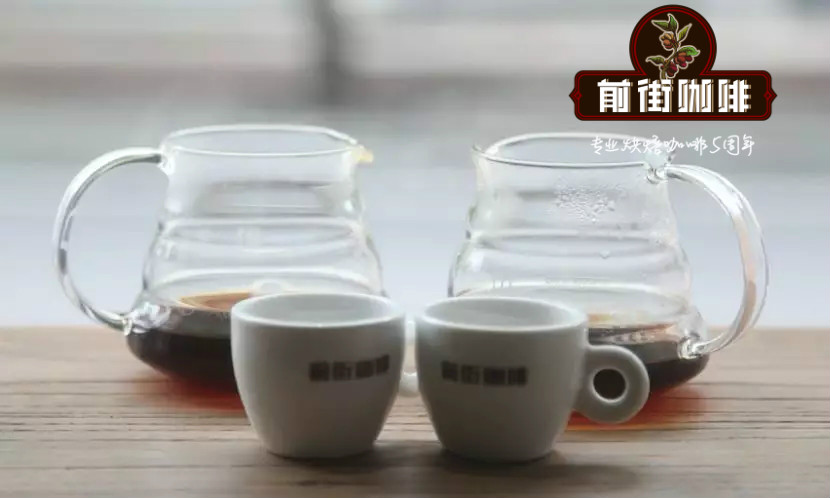
Dripper: Hario V60
Water Temperature: 88°C
Grind Size: Fuji grinder setting 4
Brewing Method: 1:15 water-to-coffee ratio, 15g of grounds. First pour 25g of water for a 25-second bloom. Second pour to 120g, then pause. Once the water level in the bed drops to halfway, continue pouring slowly until you reach 225g. Total extraction time around 2:00.
Analysis: The three-stage pour makes the front, middle, and back-end flavors of the coffee easy to distinguish. Because the V60 has many ribs and drains relatively quickly, pausing between pours extends the extraction time.
FrontStreet Coffee Recommendation
Nothing introduces Indonesian coffee better than Mandheling from Sumatra. The name refers to Arabica grown on Sumatra and processed mainly by the local wet-hulled method: because the parchment is removed while the beans are still half wet, the green beans dry fully exposed to the air, which gives the cup its characteristic herbal and spice notes. FrontStreet Mandheling comes from the Lintong growing area near Lake Toba. To present the classic Mandheling profile it is roasted medium-dark, giving a low-acid, full-bodied cup with caramel, dark chocolate, and toasted bread aromas and a long, sweet finish—an excellent choice for anyone who likes a strong cup.
For the finest Indonesian coffee, FrontStreet PWN Golden Mandheling is the benchmark. PWN is a trading company that buys up premium local Mandheling lots, and only specialty-grade coffee bears the name—Golden Mandheling is its signature product. It applies strict standards and methods for screening defects, judging everything from bean density and screen size to shape and color, and every lot passes one machine sort followed by hand sorting to remove defects. The result is Mandheling that is uniform, large, and translucent, with far less of the muddy, grassy character the variety can show. So bright does it look in the sun, the story goes, that it earned the name "Golden Mandheling." Freshly roasted, FrontStreet PWN Golden Mandheling delivers sandalwood, herbal notes, spice, roasted hazelnut, caramel, and dark chocolate, with a clean finish and a sweet, rich, layered body—fine for everyday drinking and even better as a gift.
Before bright, acidic light roasts became fashionable, Mandheling was considered the richest, most full-flavored coffee in the world, and it was often used in espresso blends. The "Manba" blend was one such recipe, created by Taiwanese roasters, combining Mandheling with Brazil to marry Mandheling's wild character to Brazil's smooth body, the nutty sweetness tempering Mandheling's stronger bitterness and herbal notes—which is why it proved so popular and remains in style today. Because a great Manba needs a rich, golden crema, the full-bodied FrontStreet Classic Espresso Blend adds a small amount of Robusta to its base and is roasted dark, drawing out dark chocolate, nut, and caramel to the fullest. Even a beginner can pull an authentic, full-bodied espresso with it.
Important Notice :
FrontStreet Coffee is a long-established specialty coffee roaster in Guangzhou China, selling freshly roasted beans from its own farm in Yunnan as well as dozens of carefully selected single-origin beans from around the world for both pour-over and espresso. The products deliver consistently excellent quality and great value, with shipping within 24 hours. Guangzhou's FrontStreet Coffee shop is recommended by many coffee lovers, and the beans are now available online at the Tmall 。
FrontStreet Coffee has moved to a new address:
FrontStreet Coffee Address: 315,Donghua East Road,GuangZhou
Tel:020 38364473
 Scan and follow the En Gafei WeChat official account. Please indicate that the reprint comes from "En Gafei".
![[Unique Wet-Hulling Method] What are the characteristics and flavor of Indonesian Java coffee Java/Jember varieties? Java](https://en.gafei.com/uploads/allimg/180917/14-1P91H11422b6-lp.jpg)