Is Brazil Mogiana Coffee Flavor Good? What are Brazil's Main Coffee Growing Regions?
Is Brazilian Mogiana Coffee Good? What Are Brazil's Main Coffee Growing Regions?
Mogiana coffee grows at elevations of 1,100-1,250 meters, which sets it clearly apart from typical Brazilian coffee. Its oil aroma is steady and rich, with a slightly fuller body than most Brazilian beans. Although the bitterness is more pronounced than in typical Brazilian coffee, the fruit acidity is correspondingly lower — which makes it a perfect choice for drinkers who don't care for acidic coffee!
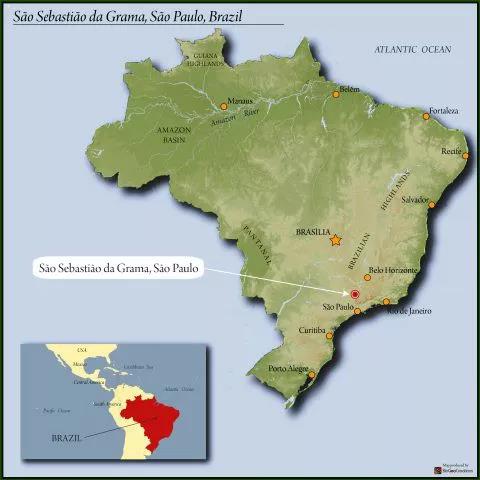
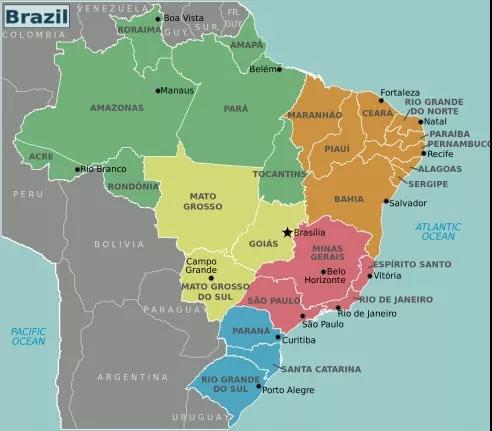
Brazil's main coffee-producing regions include Sul de Minas (Southern Minas), Matas de Minas (the southeastern forests of Minas), Cerrado, Chapadas de Minas (the north-central plateau of Minas), Mogiana, Paraná, and Bahia. Both traditional and newer varietals are grown there, such as Bourbon, Mundo Novo, Icatú, Catuaí, Iapar, and Catimor.
Brazil is the world's largest coffee producer, accounting for roughly 30% of global output. Yet because much of the country lies in tropical lowlands with relatively flat terrain and few high mountains, most coffee is grown at low altitudes in non-volcanic soils with little shade canopy. The result is beans that develop quickly and grow large, but with a soft density and limited flavor complexity. Combined with large-scale mechanical harvesting — which strips cherries of every ripeness level at once — Brazilian beans have long hovered in the commercial-grade category rather than standing out for quality.

After 2000, spurred on by coffee competitions, the quality of beans from the higher-altitude southern regions finally gained recognition. The Minas highlands in particular produce some of the best coffee in Brazil and also the largest volume of it: Cerrado in western Minas, Matas in eastern Minas, northern Bahia, and the small farms of southern Minas have made "Minas" almost synonymous with Brazilian specialty coffee. In recent years, competitions have also sharpened the distinction between processing methods (washed, semi-washed, honey, and natural), coaxing out flavors, textures, and finishes entirely different from traditional Brazilian profiles. Honey-processed and natural lots perform especially well, adding a clean, low-acidity fruit character while dialing back the heavy chocolate notes.
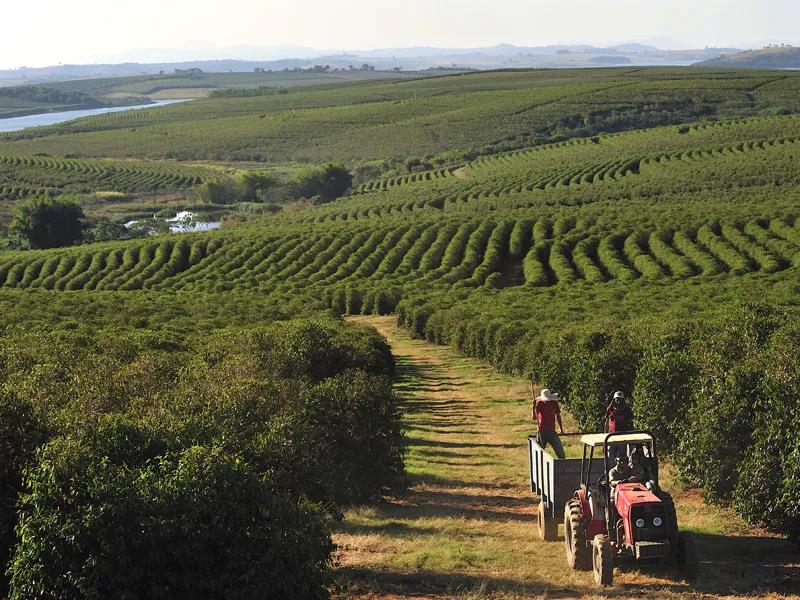
On this farm the harvest is done entirely by hand, with pickers taking only fully ripe cherries rather than relying on machines. The dry fragrance carries citrus and fruit-tea notes, while the wet aroma offers the fresh scent of black tea. In the cup you find elegant jasmine and herbal-tea aromas with a lingering oolong-tea finish. It tastes remarkably fresh and gentle — a rare, stunning achievement among Brazilian coffees.

Bourbon is also a variety of Coffea arabica. It was first discovered on Bourbon Island (today's Réunion) and takes its name from the island. Bourbon trees yield less than other Arabica varieties (though slightly more than Typica), placing it in the medium-to-low yield category, and its resistance to wind and rain also falls short of some newer hybrids. However, when Bourbon is grown at high altitude — above 1,000 meters, say — it develops fuller, more elevated flavors. That is why a number of specialty estates in Central and South America, such as in El Salvador and Brazil, and even Rwanda in East Africa, have been enthusiastically championing this low-yield, high-quality variety in recent years.
Bourbon grown at high altitude typically shows better aroma, brighter acidity, and can even lean wine-like in the cup, with a sweetness that is generally very distinct.
Flavor description: balanced sweetness, a cream-like smoothness, fruit notes of orange and apricot, plus chocolate and caramel aromas.

Coffee Details
Country: Brazil
Region: Media Mogiana
Estate: Queen's Estate
Variety: Yellow Bourbon
Processing: Pulped Natural
Elevation: 1,100-1,300m
Flavor: Sesame, almond, roasted peanuts, chocolate, cream
Overall impression: This is a sweet, highly balanced coffee well suited to drinkers who dislike acidity. Nut and chocolate flavors lead the way, with a full-bodied texture and slightly lower complexity.

FrontStreet Coffee's Recommended Brewing:
Dripper: Hario V60
Water Temperature: 88°C
Grind Size: Fuji grinder, setting 4
Brewing Method: Water-to-coffee ratio 1:15 with 15g of ground coffee. Pour 25g of water for the first infusion and bloom for 25 seconds. Pour up to 120g, then pause. Once the water level drops halfway, continue pouring slowly until you reach 225g in total. Total extraction time is approximately 2:00.
Analysis: The three-pour method clearly separates the front, middle, and back-end flavors of the coffee. Because the V60's deep ribs drain quickly, pausing between pours helps extend the extraction time.
Other Brewing Suggestions:
French Press: Medium grind, water-to-coffee ratio 1:15, water temperature 87-89°C
Siphon: Medium-fine grind, water-to-coffee ratio 1:15, water temperature 87-89°C
FrontStreet Coffee Recommendation
As the world's largest coffee producer, Brazil offers an enormous range of coffees, and FrontStreet's Brazilian shelf captures that variety well. Brazilian beans in general carry moderate acidity with an excellent balance of sweetness, bitterness, and body, which makes them ideal for medium roasting — expect a wave of nutty aroma and a mellow, gently tart cup that works both as a single origin and in blends.
If you simply want a first taste of what Brazil can do, go for FrontStreet Brazil Cerrado Red Bourbon, a classic pulped-natural (semi-washed) single origin from the celebrated Cerrado region. At a medium roast it shows rich notes of creamed peanuts, toast, caramel, and hazelnut, with a round, non-acidic body and just a touch of bitterness. It is versatile enough for pour-over, moka pot, espresso SOE, siphon, or French press.
For something more distinctive, try FrontStreet Brazil Queen Estate Yellow Bourbon, grown in Mogiana near the Sul de Minas border, where fertile red volcanic soil feeds the cherries and builds their full aroma. Yellow Bourbon is a rare natural mutation of Red Bourbon with a cleaner fruit character; brewed by hand or in a moka pot or home espresso machine, it delivers a sugarcane sweetness you won't find in other Brazilian origins, alongside fruity and chocolate notes.
Brazilian beans are also the backbone of many espresso blends thanks to their low acidity, balance, and friendly price. FrontStreet's espresso lineup — the crema-rich Classic Blend, the nutty Premium Blend, the well-balanced Black Cocoa Blend favored by many baristas, and the cafe-oriented Commercial Blend — all include Brazilian components, which contribute chocolate and cream aromas, soften the overall acidity and bitterness, and add a steadiness that makes extraction more consistent.
Important Notice :
FrontStreet Coffee is a long-established specialty coffee roaster in Guangzhou China, selling freshly roasted beans from its own farm in Yunnan as well as dozens of carefully selected single-origin beans from around the world for both pour-over and espresso. The products deliver consistently excellent quality and great value, with shipping within 24 hours. Guangzhou's FrontStreet Coffee shop is recommended by many coffee lovers, and the beans are now available online at the Tmall 。
FrontStreet Coffee has moved to a new address:
FrontStreet Coffee Address: 315,Donghua East Road,GuangZhou
Tel:020 38364473
 Scan and follow the En Gafei WeChat official account. Please indicate that the reprint comes from "En Gafei".