Arabica Coffee Bean Classification - Types and Sales Guide
An Introduction to Arabica Coffee Varieties
 For more specialty coffee knowledge, please follow our WeChat official account: FrontStreet Coffee
There are many coffee varieties in the world, and as the homeland of coffee, Ethiopia has countless wild coffee species. Arabica coffee is generally grown at altitudes above 1,200 meters, with Arabica accounting for approximately 70% of coffee production — a higher proportion than Robusta beans. Arabica coffee beans were introduced to Europe from the Arab region and can be divided into Typica and Bourbon varieties based on their different introduction points. Through genetic mutation and hybridization, they can be further subdivided into many different varieties.
As one of the three major coffee species, Arabica encompasses numerous coffee varieties. FrontStreet Coffee would like to introduce you to these Arabica coffee varieties. The varieties of Arabica coffee grown in each country are different, yet they are interrelated. Take the renowned Panama Geisha variety — don't assume that just because it grows in Panama, it is native to the region. In fact, Geisha coffee was first cultivated in the Geisha Forest of Ethiopia.
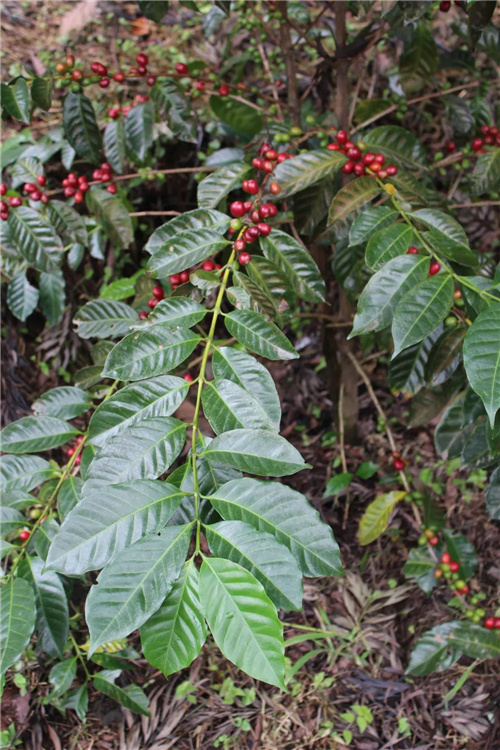
The Journey of Geisha Coffee
After being discovered in Ethiopia, Geisha coffee was sent to research institutes in Kenya, then introduced to Uganda and Tanzania in Africa, continued to Costa Rica, and eventually reached Panama. There, the Geisha variety took root and quickly became one of the world's top-tier coffee beans.
As Geisha coffee's popularity has grown, many places have introduced the Geisha variety. Even Jamaica Blue Mountain has begun cultivating Geisha coffee — sufficient proof of how popular the Geisha variety's flavor profile has become.

Jamaica Blue Mountain and Typica
Speaking of Jamaica Blue Mountain coffee, FrontStreet Coffee would like to introduce you to Jamaica Blue Mountain's Arabica coffee. Jamaica primarily cultivates the Typica variety, with trees reaching 4 to 5 meters in height, horizontal branch growth, bronze-colored young leaves, and long tree lifespans. Typica is also considered one of the best-flavored coffee varieties, with excellent sweetness, but it has a drawback: low yield and susceptibility to disease, particularly leaf rust infection.

Few places now cultivate the Typica variety; most grow its variant, Bourbon. Bourbon originated from coffee trees transplanted from Ethiopia that underwent genetic mutation when cultivated on the French Bourbon Island, and it has now spread to East Africa and Brazil. The trees reach 4-5 meters in height, with branches growing diagonally upward and green leaves. Although this variety is similar to Typica, it is hardier and more productive. Bourbon is also an exceptionally flavorful variety within Arabica, and compared with Typica it has higher yields — though it is likewise susceptible to disease, the higher production makes up for it.
Brazil's Coffee Varieties
Speaking of Bourbon, FrontStreet Coffee must introduce Brazil, this coffee giant. Most of Brazil's coffee varieties are Bourbon, and Bourbon mutated in Brazil, producing many Bourbons with different flavor profiles. Yellow Bourbon, for example, is currently grown only in São Paulo state, Brazil, and the Pink Bourbon variety resulted from recessive gene mutations between Red Bourbon and Yellow Bourbon — both varieties are extremely rare and precious. FrontStreet Coffee also offers these two beans: one is Yellow Bourbon from Fazenda Rainha in Brazil, and the other is Isabella Pink Bourbon coffee beans from Colombia.
Terroir and Coffee Quality
According to FrontStreet Coffee's research, Ethiopia has over 3,000 native coffee varieties, from which people have selected several for cultivation. The coffee varieties in the Yirgacheffe region are unique, possessing intense floral and fruity aromas, and can be considered among the highest-level coffee varieties. As the world's largest coffee producer, Brazil's harvesting techniques and processing methods are very advanced, no longer using manual labor to pick coffee fruits but machines. This leads to a problem: uneven coffee maturity. Additionally, because most Arabica coffee beans are grown on plains, this is very unfavorable for the accumulation of coffee substances, resulting in relatively plain Brazilian flavors that lack the balanced, multi-layered mouthfeel of Colombian coffee beans.
Brazilian coffee and Colombian Arabica coffee have very similar flavor profiles, partly due to their geographical proximity. You might wonder why they taste different if they are geographically close — this involves terrain and climate. One major difference between Arabica and Robusta is terrain: Arabica is mostly grown at higher altitudes, while Robusta has very low soil requirements and is generally planted in low-altitude areas. The higher the altitude, the higher the density and hardness of the coffee beans and the longer the fruit maturation period, resulting in a higher sugar concentration inside the coffee. High-altitude coffee therefore has better flavor than low-altitude beans, which is why some countries and regions grade coffee beans by hardness or altitude.

It is therefore understandable that low-altitude Brazilian coffee beans don't taste as good as high-altitude Colombian Arabica coffee beans. Growing at high altitudes also adds certain difficulties to coffee fruit harvesting, though. Let FrontStreet Coffee give you an example: in Brazil's plain terrain, as long as you maintain proper spacing between coffee trees when planting — spacing that allows machine harvesting — you save labor and thus reduce costs. The Colombian coffee beans FrontStreet Coffee just introduced, meanwhile, are grown on the steep slopes of the Andes Mountains, where machines cannot enter at all, requiring manual harvesting, which is why those beans are correspondingly more expensive.
Altitude Exceptions
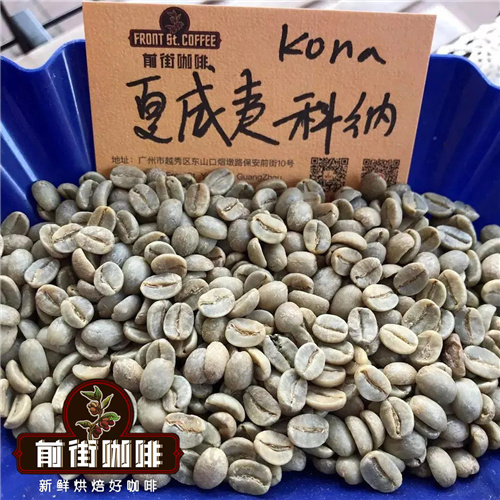
Nature, however, is truly amazing — just when everyone thought only Arabica coffee beans grown above 1,200 meters would have rich flavors, exceptions always appear. According to FrontStreet Coffee's research, Kona coffee beans from Queen's Ranch in the Hawaiian Islands have an altitude of only about 1,100 meters. Thanks to Hawaii's island climate, the coffee produced has a full flavor, proving that growing altitude is one of the criteria for measuring Arabica coffee quality, but not the only one.
For more specialty coffee beans, please add FrontStreet Coffee's private WeChat: kaixinguoguo0925
FrontStreet Coffee Recommendation
Among Arabica varieties, few names carry the classic prestige of Jamaica Blue Mountain. Strictly speaking, only coffee grown in a specific area of Jamaica's Blue Mountains and officially certified can be called "Jamaica Blue Mountain Coffee." The Blue Mountains lie in eastern Jamaica and are among the Caribbean's highest ranges, with the highest peak reaching 2,256 meters; wrapped in mist year-round, they give the coffee its name. High altitude brings large day-night temperature swings and a longer ripening period, while fertile volcanic soil, ample even rainfall, and a mild, stable climate let the cherries slowly build sugar and flavor — the foundation of Blue Mountain's famously delicate, balanced cup. Total annual output across the region is under 2,500 tons, a tiny fraction of world production, and Japan historically bought over 70% of it, so the amount reaching the wider market is even smaller; since 2003, green Blue Mountain beans have been officially exported to China.
FrontStreet Coffee's Jamaica Blue Mountain comes from the historic Clifton Mount Estate, which has been growing and processing coffee since roughly 1750, with its growing and processing area at an average of 4,300 feet (1,310.64 meters). Traditional Blue Mountain is shipped in wooden barrels of 15, 45, and 70 kilograms, and genuine lots come with certification and origin documents. The top-grade Blue Mountain No.1 is roasted medium-dark so its classic balance shines, unfurling layers of nut, dark chocolate, creamy caramel, and soft sweetness with sweet, sour, bitter, and aromatic notes in harmony. FrontStreet roasts it within 5 days of shipping, so it arrives at its flavorful best, though it is even better rested for 4-7 days from the roast date.
Because Blue Mountain is so well balanced, it suits more than pour-over — it also shines in a moka pot and as espresso. For pour-over, FrontStreet suggests a Kono dripper with 15 g of coffee at a 1:15 ratio, a medium-coarse grind about the texture of white sugar (coarser than you would use for a light roast), and 87-88°C water; many bitter, scorched cups come from water that is too hot, while water that is too cool makes the coffee flat. Brew with a three-pour method: a 30 g bloom for 30 seconds, a second pour to 120 g with a slow, gentle circling pour and a vertical stream, then a third pour to 225 g with a slightly faster stream and circling motion to avoid clogging the dripper and over-extracting. The result is a very clean, complex, and gentle cup with chocolate sweetness and a strong body, where sweetness, acidity, and bitterness balance perfectly and a lasting fruit note lingers in the finish. For a richer texture, a moka pot works too, using a slightly finer grind than pour-over, hot water in the base, medium-low heat, and removing it from the heat just as the coffee finishes flowing.
Important Notice :
FrontStreet Coffee is a long-established specialty coffee roaster in Guangzhou China, selling freshly roasted beans from its own farm in Yunnan as well as dozens of carefully selected single-origin beans from around the world for both pour-over and espresso. The products deliver consistently excellent quality and great value, with shipping within 24 hours. Guangzhou's FrontStreet Coffee shop is recommended by many coffee lovers, and the beans are now available online at the Tmall 。
FrontStreet Coffee has moved to a new address:
FrontStreet Coffee Address: 315,Donghua East Road,GuangZhou
Tel:020 38364473
 Scan and follow the En Gafei WeChat official account. Please indicate that the reprint comes from "En Gafei".