What Grade Are Arabica Coffee Bean Varieties - Complete Guide to Main Origins, Flavors and Taste Profiles of Arabica Coffee
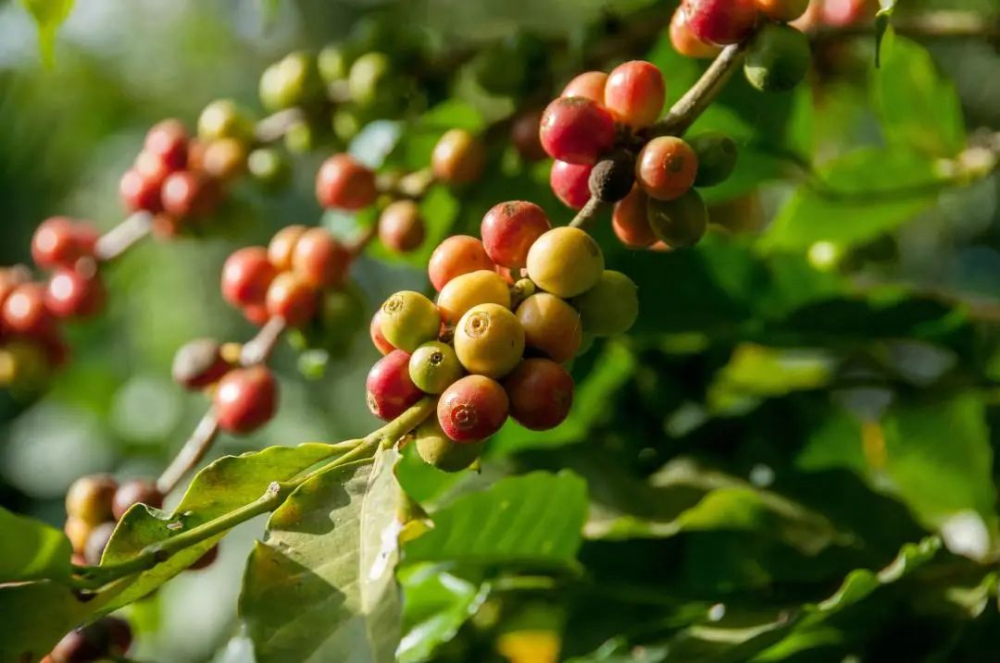
Coffee Is a Tropical Crop
Coffee is an agricultural crop, a tropical plant that needs a cool, comfortable climate and above all no frost. Which countries and regions can grow it? This guide walks through the main producing regions of Arabica coffee.
Arabica Grows in the Coffee Belt
The main coffee-growing areas are distributed between 25° south latitude and 25° north latitude, centered on the equator — the region known as the "Coffee Belt."
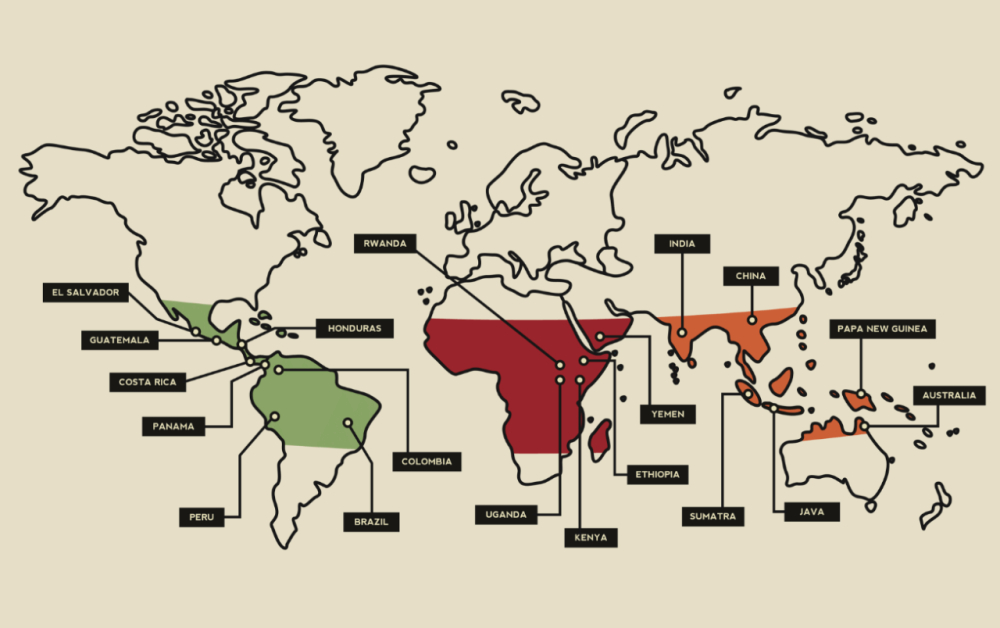
Both Robusta and Arabica can be grown inside the Coffee Belt. Robusta tolerates low altitudes, while Arabica trees are mostly planted between 900 and 2000 meters, preferring calm winds, cool temperatures and shade. As a tropical cash crop, coffee needs fairly high and stable temperatures, abundant and evenly distributed annual rainfall, and fertile, well-drained soil. The Coffee Belt covers more than 70 countries and regions worldwide, and roughly 50 of them have the climate and other conditions to grow coffee beans commercially. China's Yunnan and Hainan provinces also fall inside the Coffee Belt, which is why both are well suited to coffee cultivation.
Arabica: The Premium Variety
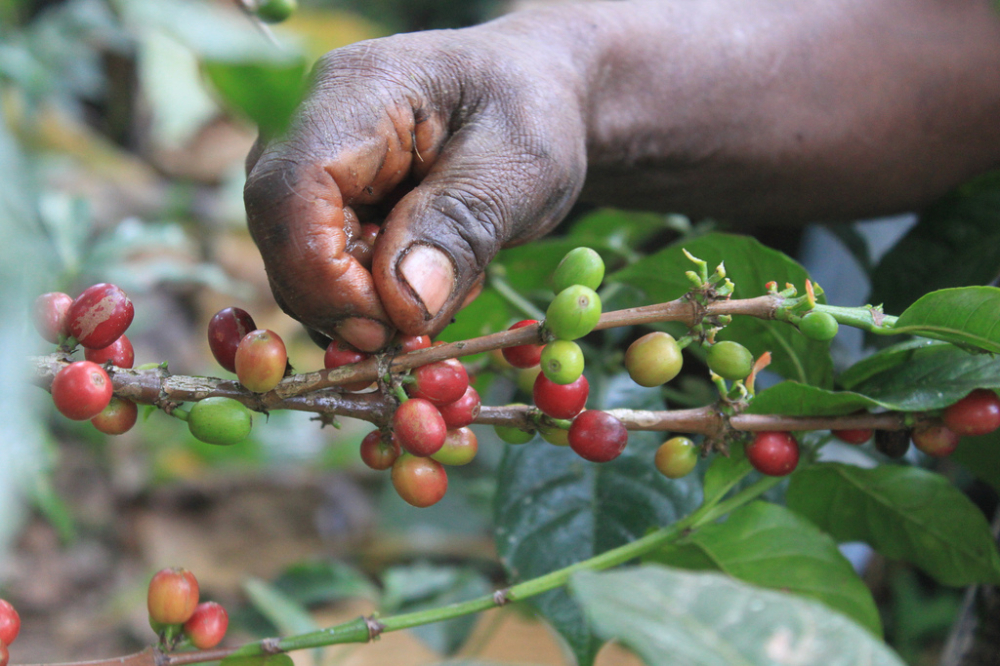
Arabica is a representative variety originating in Ethiopia and accounts for 70-75% of world coffee production. It is demanding about its conditions and has high soil requirements. Arabica needs altitudes between 800 and 2200 meters without frost. The higher the altitude, the bigger the day-to-night temperature swing, which slows the maturation of the cherries and gives the trees more time to accumulate flavor compounds and build a fuller aromatic profile. The microclimates of each coffee region give Arabica a wide range of growing conditions, and with them a wide range of unique flavors.
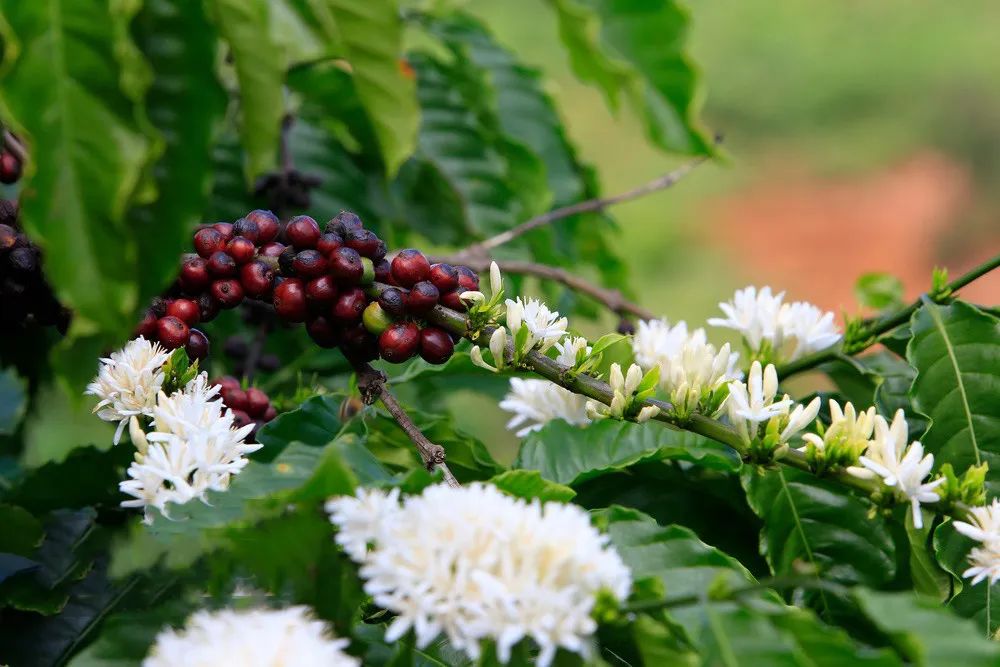
Arabica has low caffeine content, roughly 0.9% to 1.2%. Its fat content is 60% higher than Robusta, and its sugar content is twice as high. As a result, Arabica tastes relatively sweet and smooth, with some fruity acidity. Most of the coffee we drink in shops is made from Arabica beans. Because of its rich aroma and diverse flavor, it works across espresso, pour-over and cold brew alike.
The Major Arabica Producing Regions
There are three main coffee-growing regions worldwide: Latin America, Africa, and Asia-Pacific. Coffee from each carries distinct flavor characteristics.
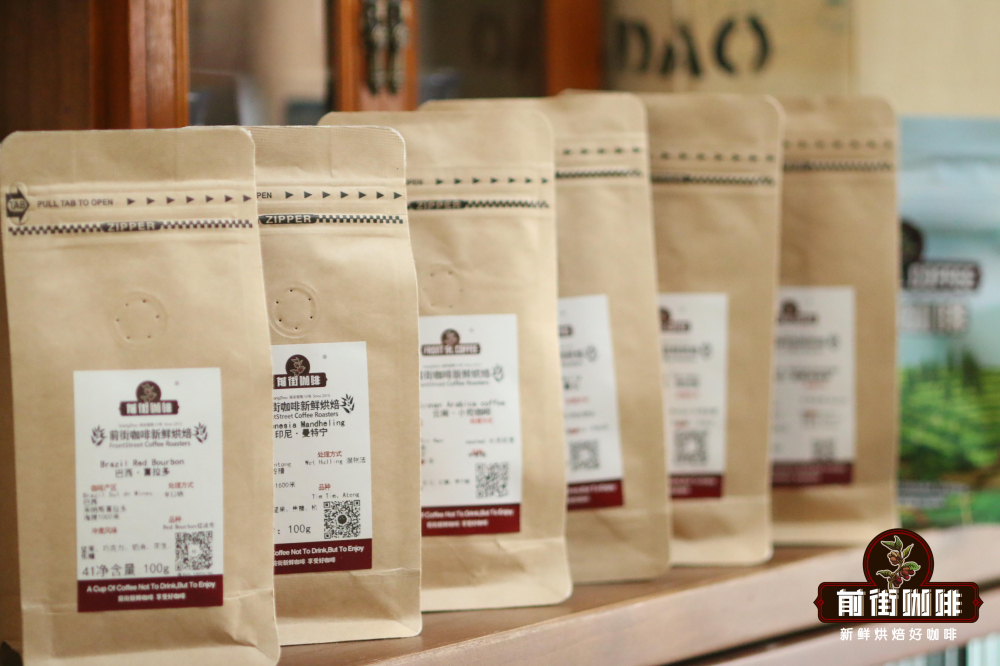
FrontStreet Coffee's shelf features a value-focused "daily bean" series that selects seven excellent producing regions from those three areas, covering a range of representative varieties and processing methods. "Daily beans," as the name suggests, are meant to be drunk every day without strain — affordable in price and approachable in flavor. FrontStreet chose several flagship representatives to help drinkers learn the basic taste of each major region: washed Yirgacheffe from Ethiopia, washed Huehuetenango from Guatemala, washed Huila from Colombia, semi-natural Cerrado from Brazil, washed Tarrazú from Costa Rica, wet-hulled Mandheling from Indonesia, and washed Baoshan from China's Yunnan.
Latin American Representatives
Brazil Cerrado
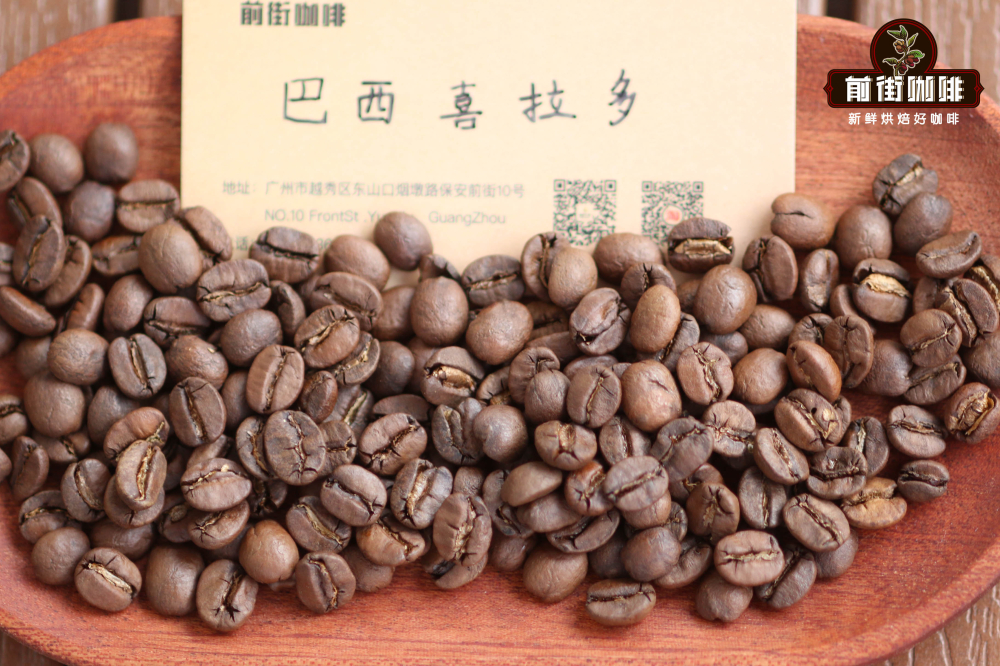
Brazilian coffee does not have the high altitudes found in Africa or other South American origins. Most local land is flat plains only a few hundred meters high. Growers chasing volume largely rely on large-scale, open-sun cultivation. As a result, Brazilian cherries ripen quickly and lack the rich fruit acidity of high-altitude coffee; the flavors lean toward sweetness and balance. Brazil has as many as 14 coffee-producing regions, with Cerrado and South Minas in Minas Gerais, and Mogiana in São Paulo, the most famous.
Cerrado was the first Brazilian coffee region to receive "Designation of Origin" certification. With elevations between 800 and 1300 meters and clearly divided seasons — humid summers, dry winters — the mineral-rich soil here produces coffee with nutty and creamy smoothness, balanced flavor and very classic Brazilian character.
Colombia Huila
Colombia's coffee areas are spread across three majestic highlands of the Andes in the west of the country. Along these mountain ranges, terraced slopes create diverse climates and allow coffee to be harvested year-round. The higher-quality regions are concentrated in the southwest, at altitudes above 1500 meters. High altitude creates large temperature swings, slowing the maturation of the cherries and giving them ample time to absorb nutrients and convert them into refined flavors.
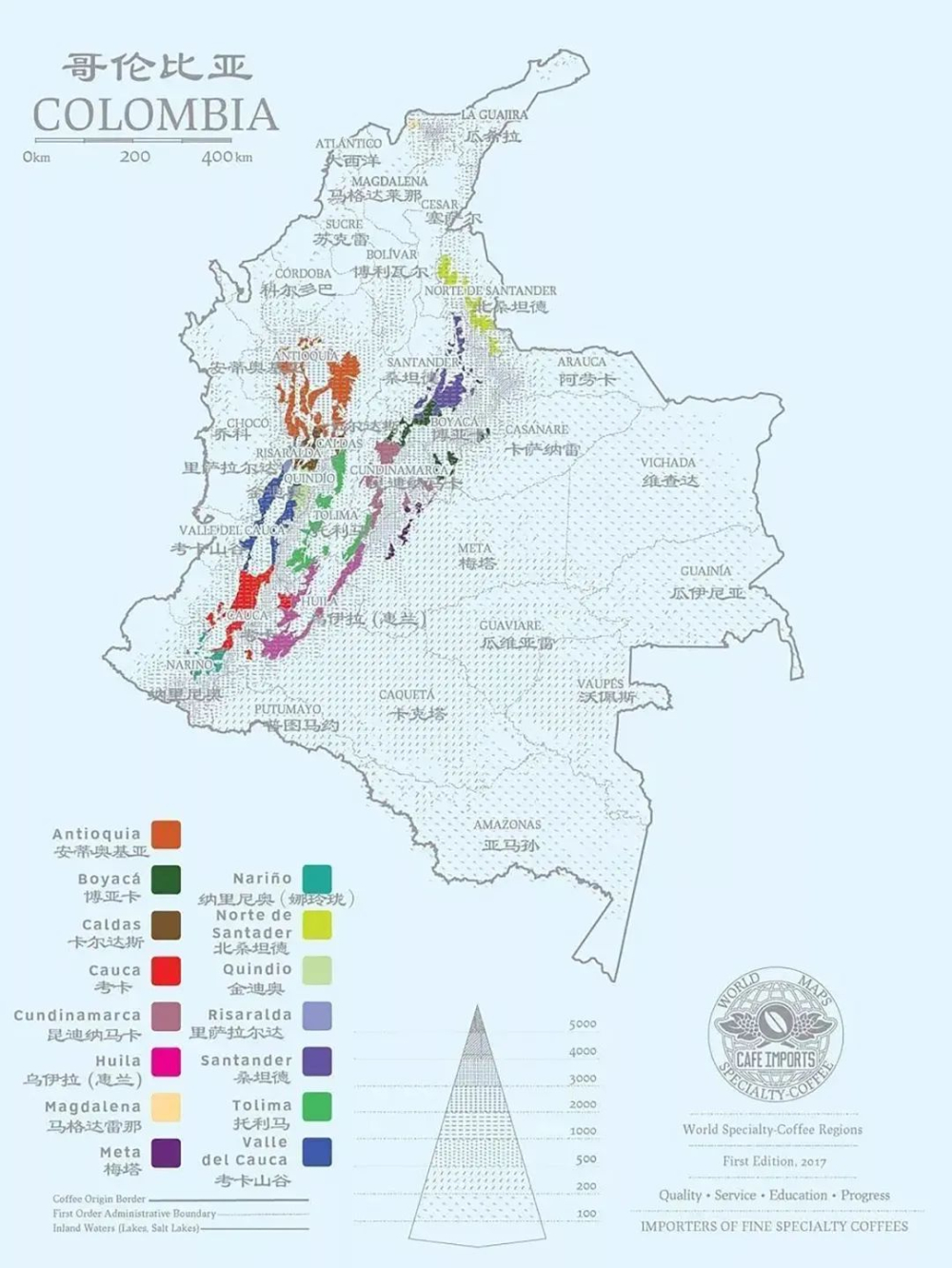
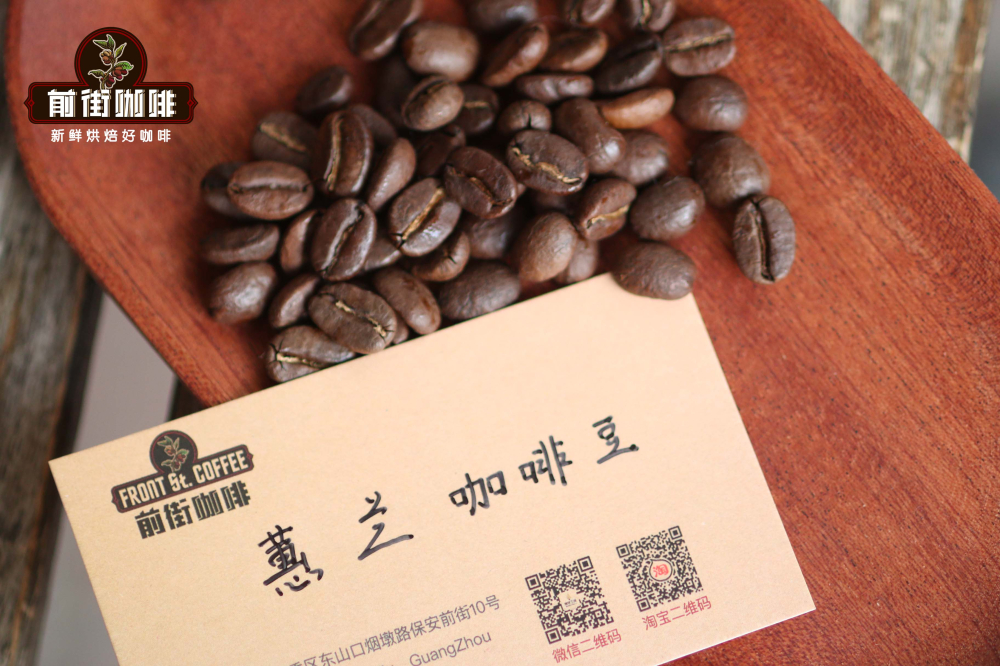
Huila, in the southern part of the Central Mountain Range, has become one of Colombia's most important specialty coffee regions in recent years. Surrounded by hills and valleys where the Magdalena River converges, it enjoys abundant water and moisture and plenty of rainfall. Combined with black soil from volcanic ash, the coffee here marries full nutty and chocolate aromas with bright, pleasant fruit acidity. Huila is recognized as a representative of Colombia's top specialty coffee for its refined flavor, which is why FrontStreet Coffee lists it as Colombia's flagship: selected from the locally popular Caturra variety and processed with Colombia's traditional washed method.
Guatemala Huehuetenango
The Huehuetenango highlands lie in Guatemala's western non-volcanic region, the driest and highest part of the country. Because the area sits at the edge of active tectonic plate boundaries, the variable terroir of the mountain basin produces diverse, rich coffee flavors. Like Antigua, it has rich volcanic soil, with altitudes reaching up to 2000 meters. Dry hot winds from Mexico to the northwest let coffee trees grow on slightly elevated plateaus at 2000 meters.
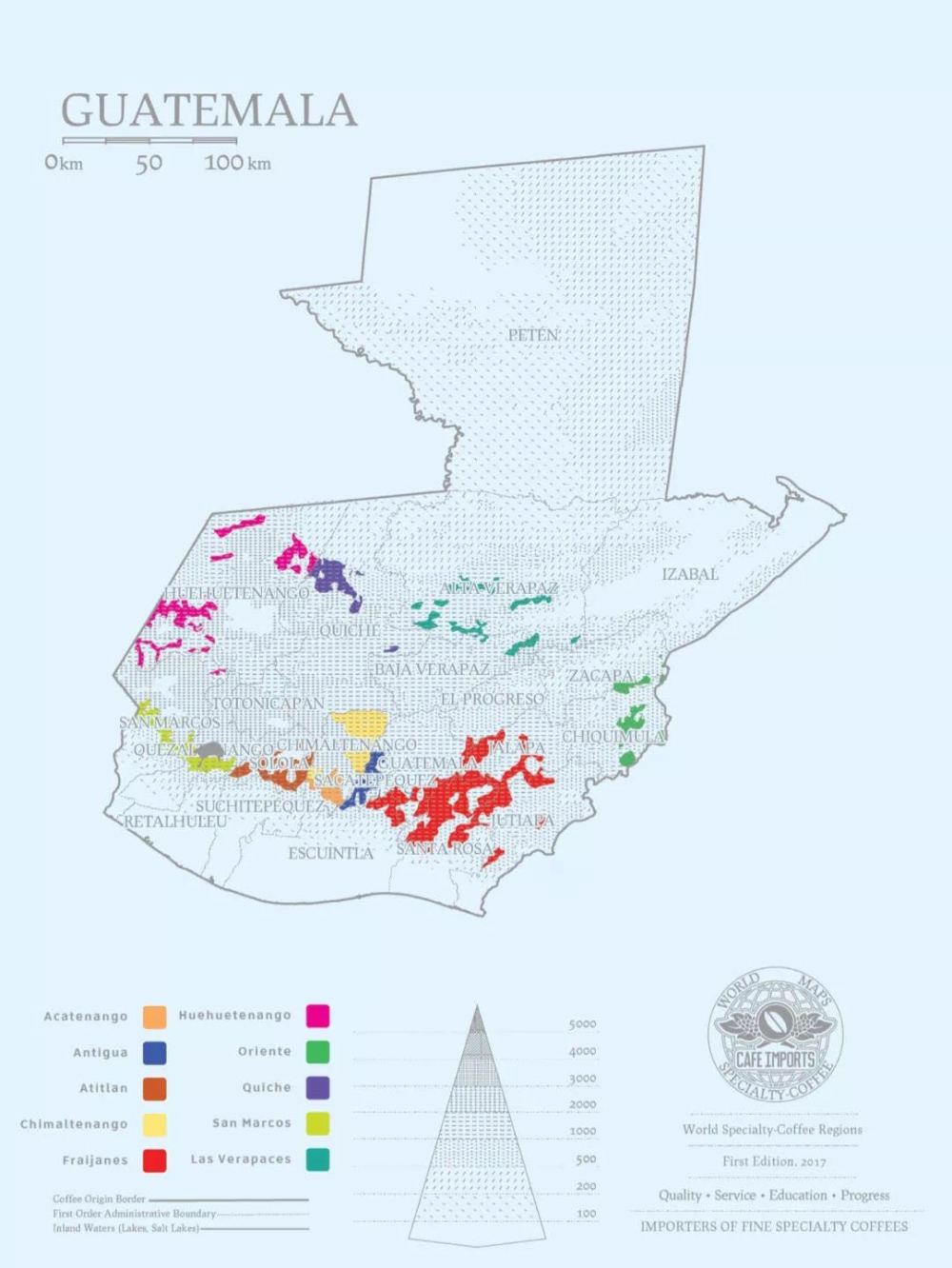
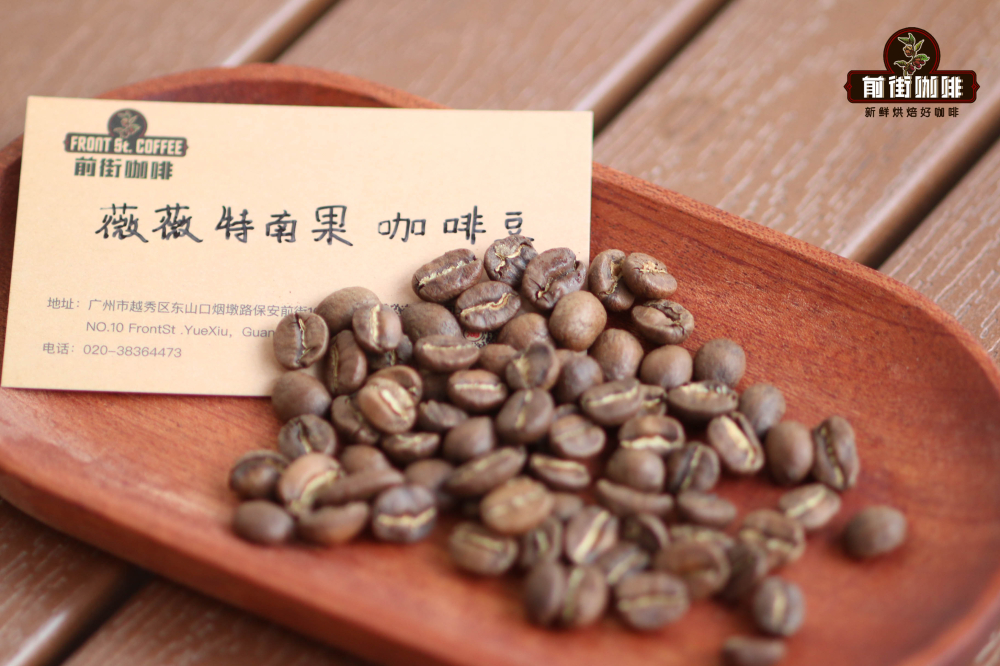
Every country has its own grading standard. Guatemalan green beans are graded mainly by altitude — the higher the altitude, the denser the bean and the higher the grade. The vast majority of coffee from Huehuetenango falls into the SHB (Strictly Hard Bean) category, the highest grade in Guatemala's green coffee classification. Washed Huehuetenango shows high cleanliness, subtle floral and tea aromas, berry acidity and a sweet, honey-like aftertaste, with very rich layering.
Costa Rica Tarrazú
The Tarrazú region lies in the volcanic area south of San José, Costa Rica's capital. Fertile soil, mild and suitable temperatures, stable and abundant rainfall, and high altitudes averaging over 1500 meters give coffee trees excellent growing conditions and require no artificial fertilizer or pesticide. As a result, more than 95% of the beans in this highland region fall into the SHB (Strictly Hard Bean) category.
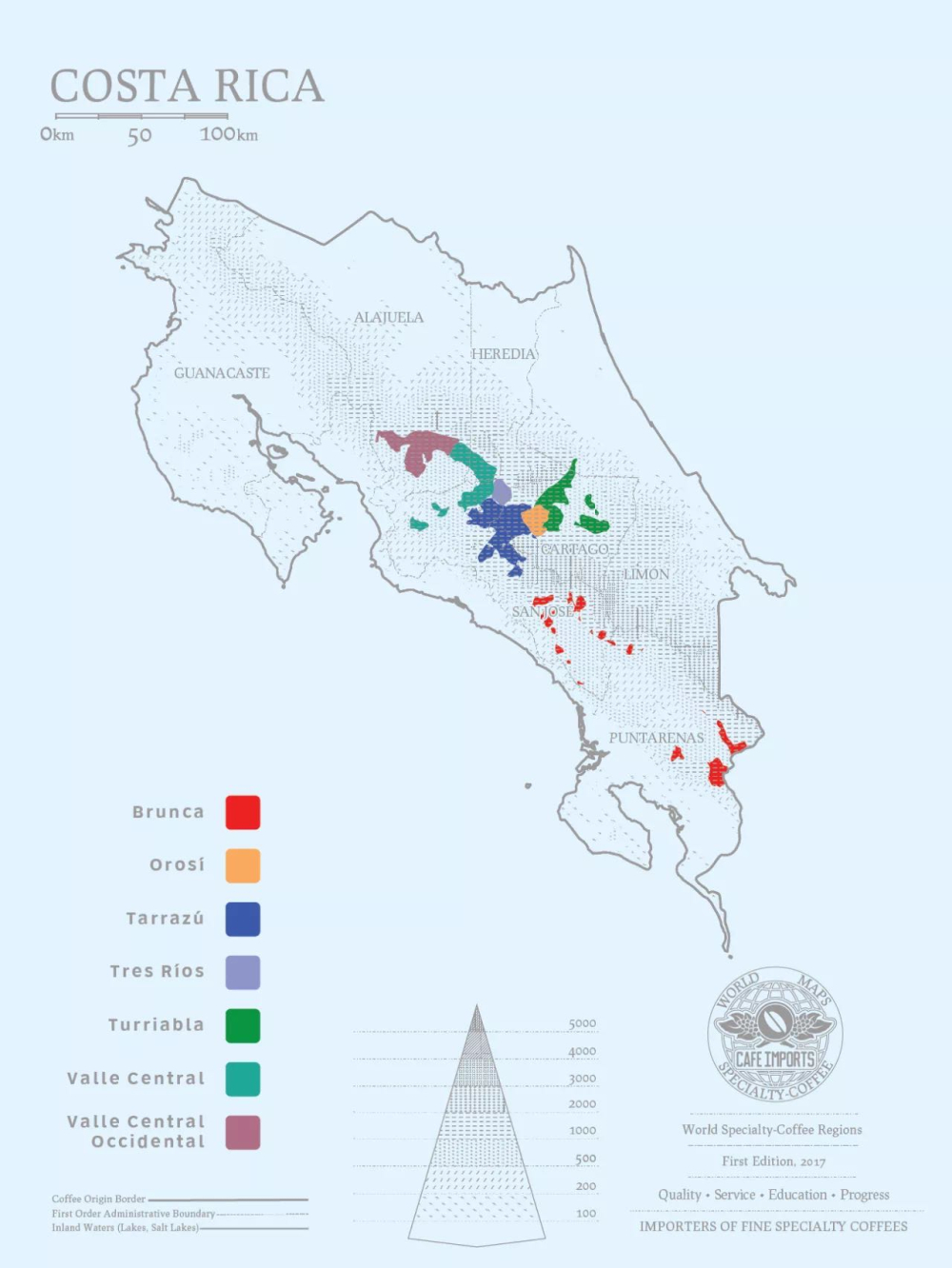
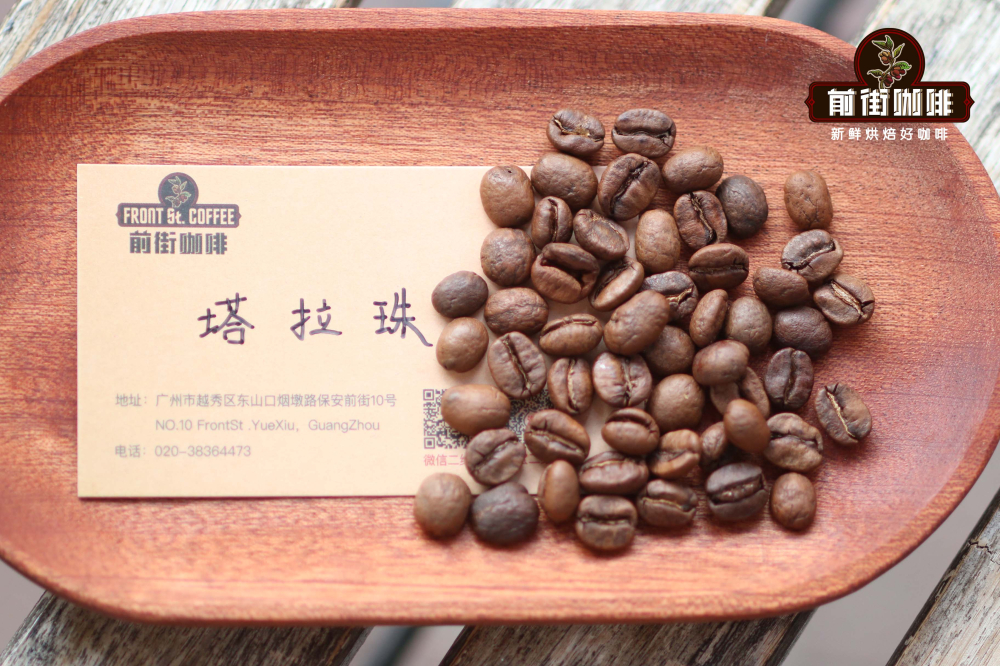
Beyond the natural advantages, Tarrazú's coffee craft is sophisticated, with breeding, cultivation and post-processing techniques that lead the industry. Local cherries are all hand-picked and hand-selected, producing full-bodied beans with balanced flavor and elegant acidity. FrontStreet Coffee's Tarrazú daily beans are selected from a blend of the Caturra and Catuai varieties. Catuai is a hybrid of Mundo Novo and Caturra; it has strong disease resistance but a more monotonous flavor than Caturra, mainly nutty and without Caturra's rich layering. Blending the two makes Tarrazú more balanced and smooth, presenting nutty, creamy and sweet orange flavors.
Asia Representatives
Indonesia Sumatra
Indonesia is the world's largest archipelagic country. Coffee was introduced to Java by Dutch colonizers as early as the 18th century and later spread to other islands. The elegant Arabica variety is concentrated on several higher-altitude islands: northern Sumatra, Sulawesi and Java. Sumatra is one of the world's earliest large-scale coffee cultivation areas, and most of its coffee comes from Aceh Province in the north and North Sumatra Province to the south of Aceh. The two main producing areas surround the region's famous volcanic lakes: Lake Toba and Lake Tawar, traditionally known as the Mandheling and Aceh regions. Volcanoes brought fertile soil to Sumatra, and the coffee here typically carries deep, heavy flavors.
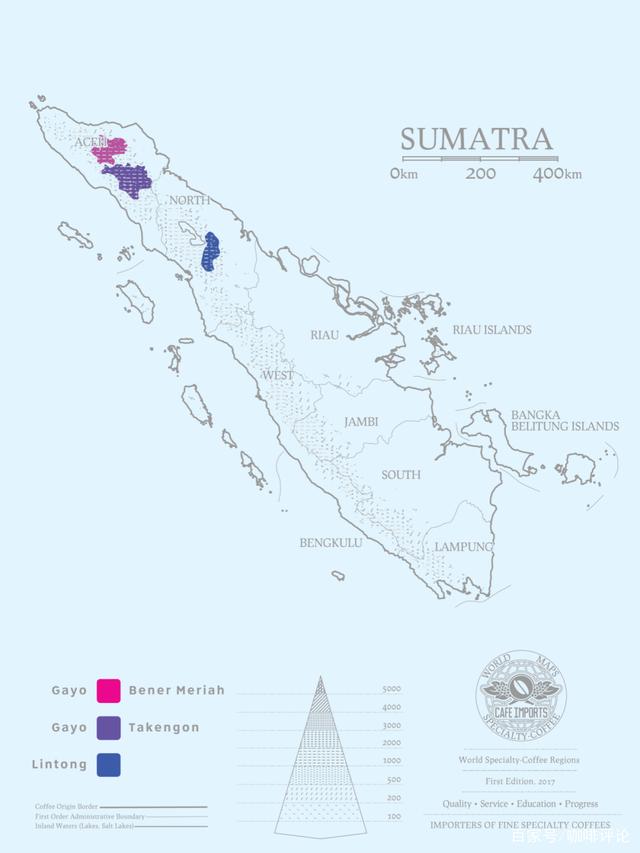
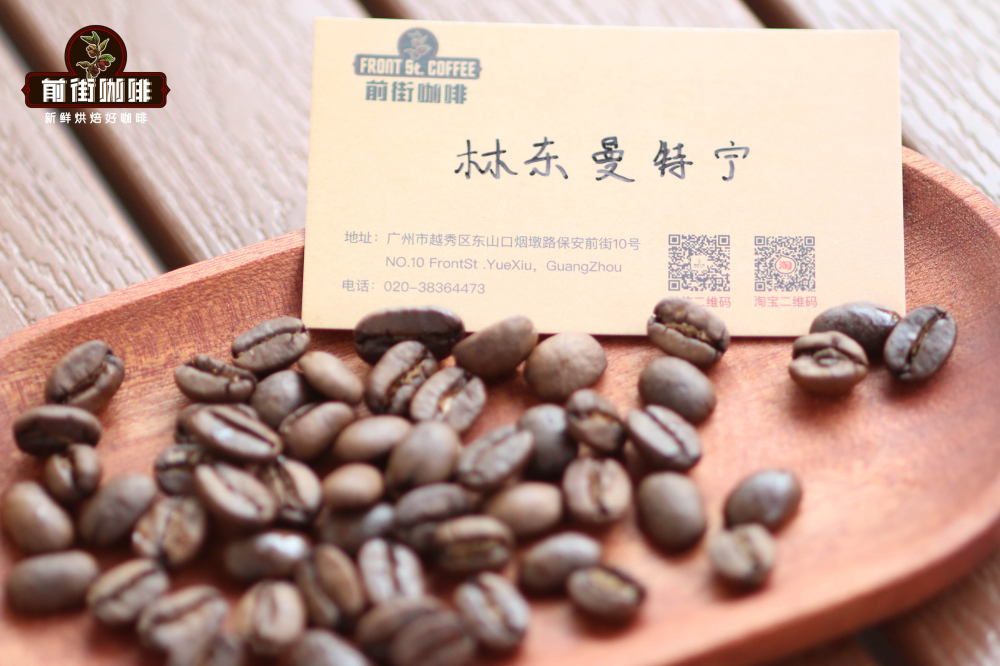
Sumatra has a typical tropical rainforest climate: rain and humidity year-round, frequent typhoons and scarce fresh water. Local people cannot use traditional washed processing on large quantities of beans, nor can they dry them through prolonged sun exposure. So farmers there invented the wet-hulled method, which needs only 4 days of processing, sharply cutting both fermentation and sun-drying time and saving considerable labor. It also gives Sumatra's Mandheling coffee its unique Southeast Asian character, with herbal, spice and woody notes. FrontStreet Coffee selected wet-hulled Mandheling from the Mandheling region and used a medium-dark roast to highlight the coffee's rich dark chocolate, nutty and caramel aromas.
China Yunnan
Yunnan's coffee cultivation has spread across 9 prefectures and 35 counties, including Pu'er City, Baoshan City, Dehong Prefecture, Lincang City, Wenshan Prefecture and Xishuangbanna. FrontStreet Coffee's Yunnan selection comes from the Baoshan and Lincang producing regions. Baoshan's year-round frost-free warm climate suits Arabica well, especially the Lujiang Dam area, whose unique dry-hot valley climate has small annual temperature differences but large day-night differences — the source of Baoshan Arabica's distinctive sweet aftertaste. The reasonably low rainfall is another advantage for cherry production.
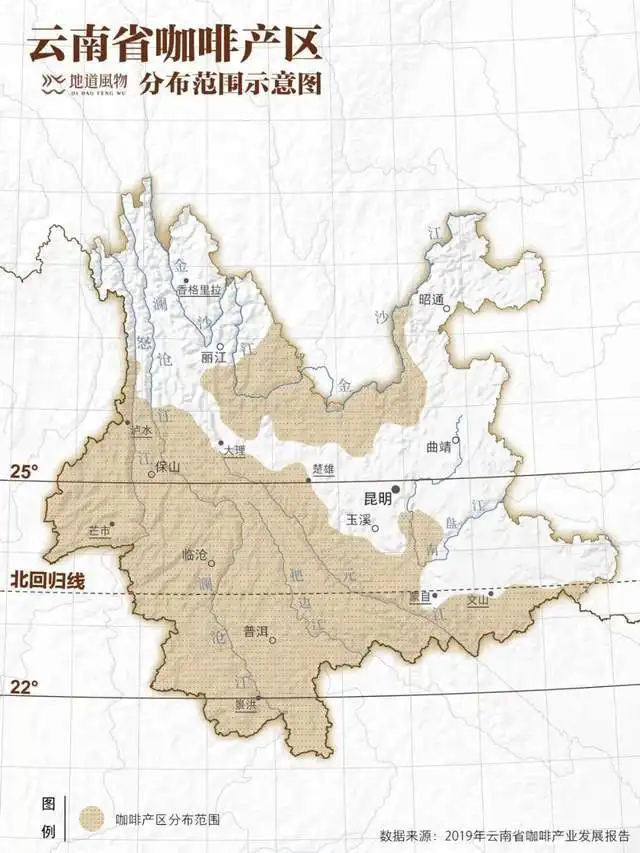
Baoshan is one of Yunnan's larger and earlier coffee regions. Compared with Lujiang Dam Farm and other areas such as Pu'er and Menglian, Baoshan's most significant climatic feature is relatively less rainfall and higher altitude, which produces beans with less pulp but higher sweetness. As China's own coffee region, FrontStreet naturally includes it in the daily bean series. FrontStreet's Yunnan Baoshan Arabica daily beans are selected from the most commonly planted local variety, Catimor, and processed with a washed method, presenting a balanced profile of nuts, chocolate and brown sugar after roasting.
Africa Representative: Ethiopia Yirgacheffe
As the birthplace of coffee, Ethiopia preserves tens of thousands of native Arabica varieties, making it a natural coffee museum. Yirgacheffe town lies in Ethiopia's Sidamo region at altitudes reaching over 2000 meters, one of the country's highest producing areas. Coffee trees are mostly planted in farmers' backyards or intercropped in fields, with each household producing limited quantities — typical garden coffee. These mountain villages are wrapped in mist, with spring-like weather all year: summers bring gentle cool breezes, rainy but not humid, while winters avoid frost damage. That is what nurtures this region's signature citrus and floral notes.
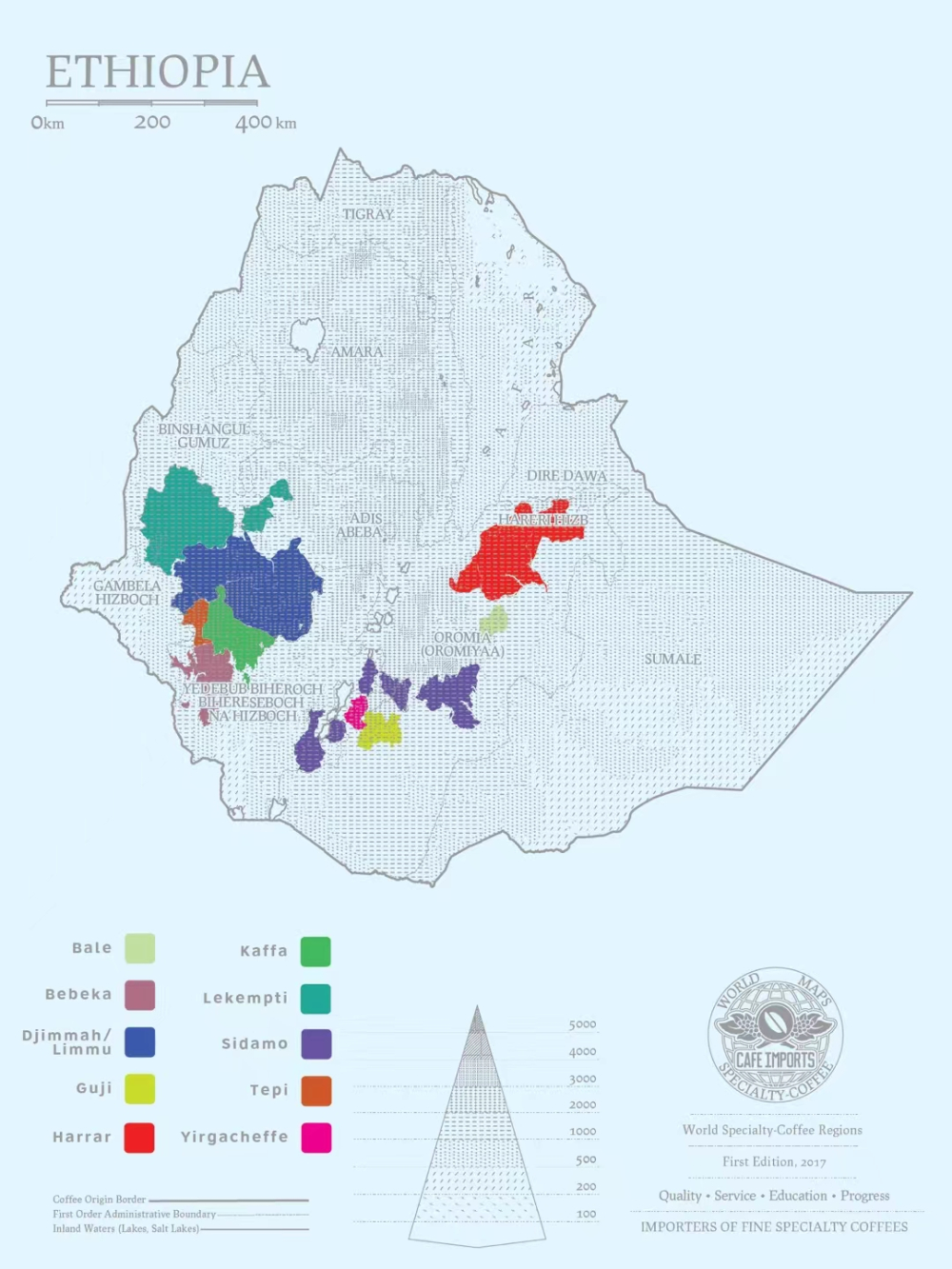
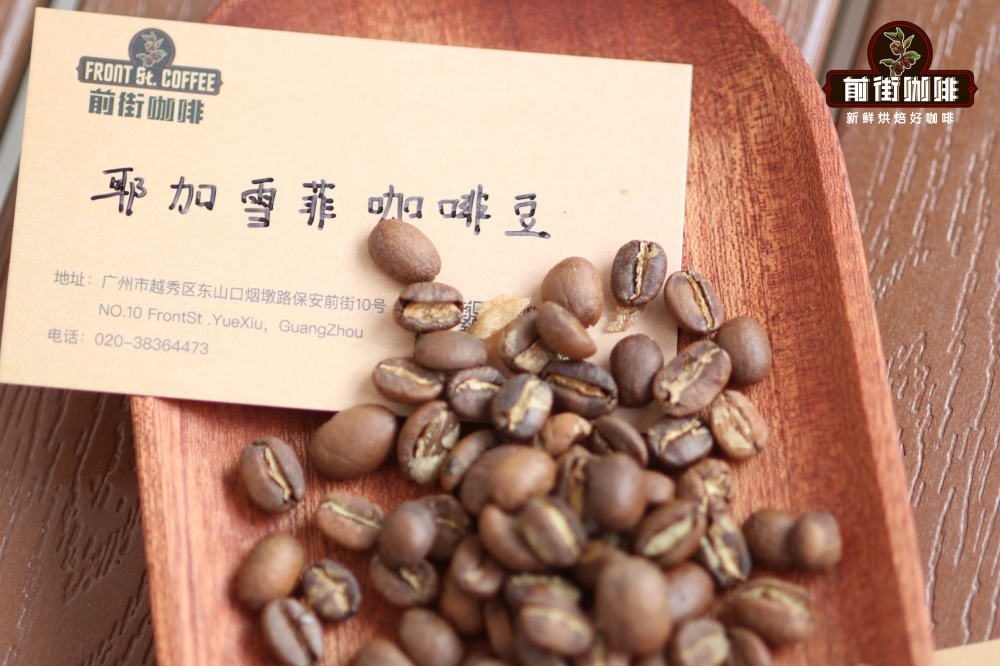
FrontStreet Coffee's Yirgacheffe daily beans are also selected from washed batches. Washing reduces the defect rate and lets Yirgacheffe's flavor show fresh citrus tones and elegant white florals, bright and delicate. That is why Yirgacheffe became independent from the Sidamo region and grew into the celebrated producing area it is today.
FrontStreet Coffee Recommendation
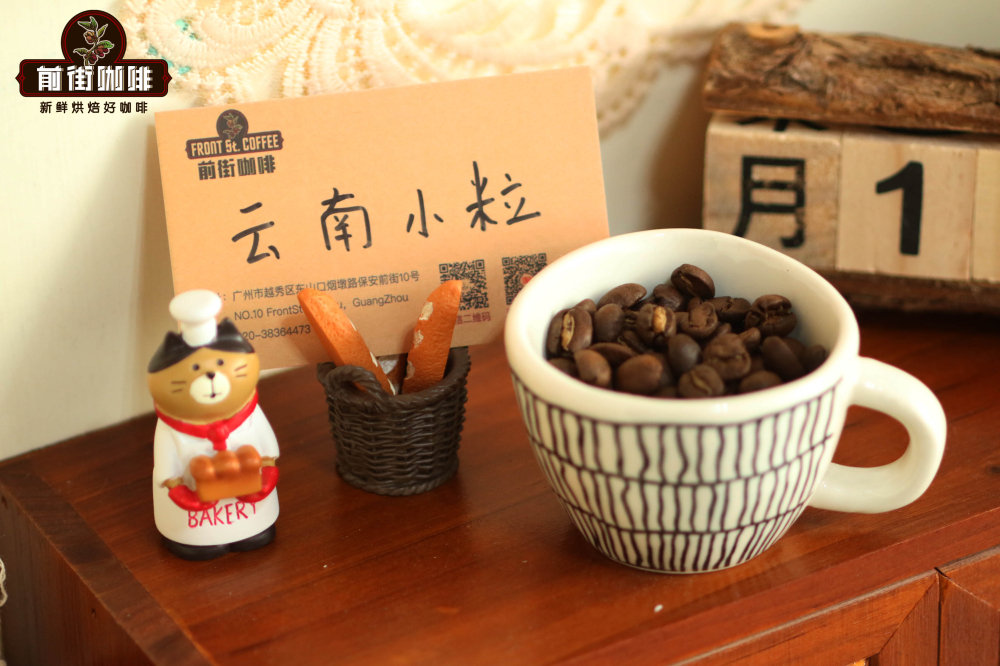
If you want to taste what Yunnan Arabica can do, FrontStreet Yunnan Baoshan Small-Bean is the approachable entry point. FrontStreet's Yunnan small-bean coffee comes from the Baoshan region, processed washed and roasted medium, so it shows soft nut and chocolate sweetness with a light plum acidity. It is how many drinkers first get to know Yunnan coffee, at a friendly price.
For a clearer, more advanced expression of the region, FrontStreet 2013 Yunnan Natural Typica is grown at FrontStreet's own estate, planted in 2013 from Typica — the oldest and one of the purest Arabica varieties. Only fully ripe red cherries are used, dried naturally, then roasted medium so the cup is more balanced with stronger sweet-tart structure: dark berry notes, caramel sweetness, chocolate and a hint of dried apricot, finishing with a black-tea aftertaste.
To drink Yunnan as the base of an espresso, try FrontStreet Black Cocoa Blend, which combines Yunnan small-bean with Brazil Cerrado. The Brazil supplies mixed-nut aroma and a balanced body, while the Yunnan contributes chocolate and citrus. The result is an Americano with balanced sour, sweet and bitter notes and a nutty, brown-sugar sweetness, and a latte with an almond and cream smoothness — very forgiving for beginners.
Important Notice :
FrontStreet Coffee is a long-established specialty coffee roaster in Guangzhou China, selling freshly roasted beans from its own farm in Yunnan as well as dozens of carefully selected single-origin beans from around the world for both pour-over and espresso. The products deliver consistently excellent quality and great value, with shipping within 24 hours. Guangzhou's FrontStreet Coffee shop is recommended by many coffee lovers, and the beans are now available online at the Tmall 。
FrontStreet Coffee has moved to a new address:
FrontStreet Coffee Address: 315,Donghua East Road,GuangZhou
Tel:020 38364473
 Scan and follow the En Gafei WeChat official account. Please indicate that the reprint comes from "En Gafei".