How to Differentiate Natural Coffee Beans_A Guide to the Appearance and Flavor Characteristics of Natural Coffee Beans

Professional coffee knowledge exchange | For more coffee bean information, please follow Coffee Workshop (WeChat official account: cafe_style)
Understanding Natural Process Coffee Beans
On coffee packaging and in tasting notes, you'll constantly run into processing method names like "Natural," "Washed," "Semi-Washed," and "Honey." As a coffee lover, do you actually know what these methods involve—and how they differ? Today, let's start with natural process coffee beans.
I. Processing Steps
1) Harvesting. This can be done by hand or by machine, but specialty coffee relies exclusively on ripe coffee cherries picked by hand.
2) Sorting. The cherries are poured into large water tanks for flotation sorting (ripe fruit sinks, unripe fruit floats and is skimmed off), or sorted by hand.
3) Drying. The whole cherries are laid out on cement patios or raised African beds to dry for roughly one month,
until the juicy coffee cherries become dried cherries with a moisture content of around 12%.
4) Removal of the dried fruit pulp and parchment.
5) Hand sorting of green beans to remove defects and grading by size and quality. This is the most time-consuming and labor-intensive step in the natural method.
Tools used for grading beans by size
II. Appearance
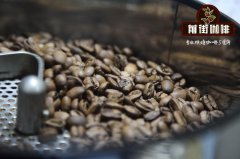
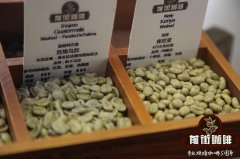
Unroasted natural process beans tend to be a slightly yellowish-brown color, and the center cut of the roasted bean is usually not distinct. Compare that with washed beans: washed green coffee leans more greenish, and washed roasted beans show a clear, well-defined center line.
III. Flavor Profile
The natural method is the oldest way of processing coffee. Historically, natural coffees weren't carefully selected—cherries were simply spread out to dry on gravel-strewn ground—so problems like insufficient sunlight, inadequate turning, improper fermentation, and poor ventilation frequently led to mold, foreign matter, and uneven moisture content, all fatal to the cup. That's why many coffee professionals long believed natural process coffee could never qualify as specialty coffee. But as the method has evolved—manual harvesting, drying on African beds, careful monitoring and turning, meticulous hand sorting—every stage has improved, and the quality of natural process beans has been transformed.
Among the specialty coffees available today, the standout flavors of a great natural process coffee are often beyond what a washed coffee can match. Beyond more elegant fermented aromatics, naturals generally deliver higher sweetness and more body than their washed counterparts. The catch is that a clean, excellent flavor profile demands far more labor than washing. That's why you'll often notice that natural coffee from the same origin, grade, and harvest season tends to cost more than the washed version.
It helps to understand the contrast. Washed processing is the traditional water-based method: the steps include flotation, depulping, soaking and fermenting to remove the mucilage, washing or further soaking, drying, and finally hulling. Because washed beans spend so long in water, chemical changes occur inside the bean that consume much of its simple sugars (fructose and glucose), lowering sugar content while raising various organic acids. Washed coffee therefore preserves more of the bean's own character—bright fruit acidity, clean and fresh in the cup—while naturals trade some of that clarity for sweetness, body, and fruity intensity.
FrontStreet Coffee Recommendation
For everyday value, FrontStreet Coffee's freshly roasted single-origin naturals—such as Natural Yirgacheffe and Natural Sidamo—carry solid guarantees on both brand and quality and brew beautifully across equipment. They are also outstanding value: a half-pound (227g) bag costs only around 70-90 yuan. At 200ml per cup with a 1:15 coffee-to-water ratio, one bag yields 15 cups of specialty coffee, working out to roughly 5-6 yuan per cup—exceptional value next to café prices that often run to dozens of yuan for a single cup.
If you'd like to explore what washed coffee does best, FrontStreet Coffee's Yirgacheffe Worka (Guodingding) Cooperative lot is a great place to start. Because local farmers harvest in small quantities, cherries from the village are processed and sold through a cooperative, and the Guodingding team has become known for exceptionally refined, clean processing. The washed method lets this lot show maximum jasmine florals and bright citrus acidity, and at a medium-light roast it opens up green tea and honey tones. It's versatile, too—equally happy in a pour-over, a cold brew, or as espresso.
For a bolder washed profile, FrontStreet Coffee's Kenya "Cherry Tomato" is one of the most celebrated examples, built on Kenya's signature double fermentation washed process, with an extra washing pass that flushes and soaks the beans repeatedly to express an almost juice-like fruitiness. Expect aromas of cherry tomato, dried dark plum, snow pear, black plum, and yellow sugar, with a sweet-tart, juicy mouthfeel—a longtime favorite of coffee enthusiasts. And if balance is what you're after, FrontStreet Coffee's Jamaica Blue Mountain No.1 shows why washing was born on that island: shortened sunshine hours made drying whole cherries risky, so removing skin, pulp, and mucilage before drying cut drying time and produced beans with a bright color and low defect rate. The result is richly aromatic coffee with pure notes of hazelnut, cream, chocolate, and caramel—so balanced that no single flavor ever dominates or falls short.
Important Notice :
FrontStreet Coffee is a long-established specialty coffee roaster in Guangzhou China, selling freshly roasted beans from its own farm in Yunnan as well as dozens of carefully selected single-origin beans from around the world for both pour-over and espresso. The products deliver consistently excellent quality and great value, with shipping within 24 hours. Guangzhou's FrontStreet Coffee shop is recommended by many coffee lovers, and the beans are now available online at the Tmall 。
FrontStreet Coffee has moved to a new address:
FrontStreet Coffee Address: 315,Donghua East Road,GuangZhou
Tel:020 38364473
 Scan and follow the En Gafei WeChat official account. Please indicate that the reprint comes from "En Gafei".