How to Taste a Pour-Over Coffee? How to Generally Drink Pour-Over Coffee_Coffee Beans Recommended for Pour-Over
Is Pour-Over Really More Sophisticated?
Customers who drink milk-based coffee often joke that their friends look down on them. Those friends have moved from caramel macchiatos to lattes, from milk coffee to Americanos, and now to pour-over. Every time they buy coffee together, someone gets teased for being "too basic" to understand coffee. It happens often enough that I wonder whether you have experienced the same thing.
My answer is simple: setting health aside for a moment, drinking pour-over is not inherently more sophisticated than drinking milk coffee. When we say milk coffee, the first thing that comes to mind is the latte. More and more consumers are making lattes at home, but most still buy them from cafés.
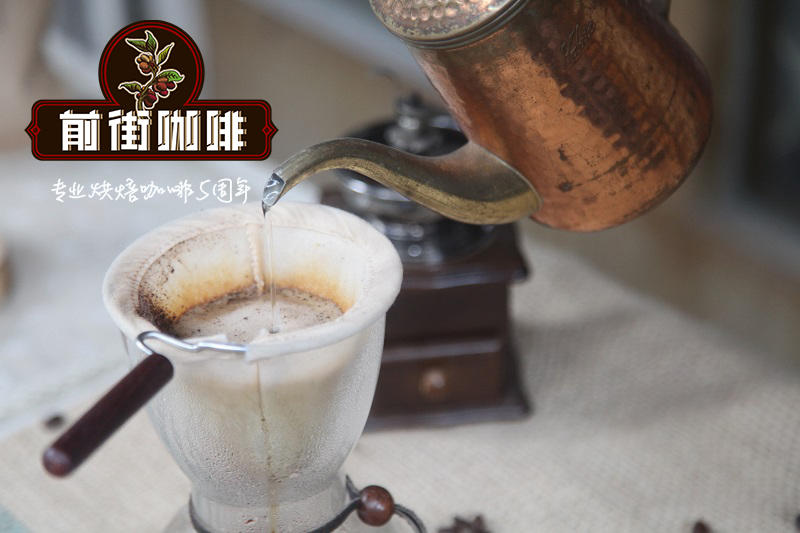
Pour-over is different. It is a way of drinking coffee that is genuinely easy to prepare and enjoy at home. Seen that way, neither pour-over nor milk coffee is more refined — they are simply different preferences and habits.
Which Way of Drinking Is Healthier?
If you ask me how to drink coffee healthily, though, I would point you toward pour-over. When we order a pour-over in a café today, we are usually after specialty coffee.
The concept of "specialty coffee" was first introduced in 1978 by Ms. Erna Knutsen of the United States at an international coffee conference in France. The original definition was simple: coffee beans with unique aromas produced under special climatic and geographical conditions. Over more than thirty years that definition has grown into something far more detailed.
First, the Traceability of Pour-Over Beans
Which country the green beans come from, which growing region, which estate, which variety, the growing altitude, how they were harvested, how they were processed — all of it matters. Traceability sits at the heart of specialization, because whether the green beans farmers supply are good or bad directly affects later pricing and sales. When consumers drink something they like, they reorder; when they drink something they don't, they walk away.
Second, Quality Can Be Quantified
Every year when harvest season arrives, it is also the season for evaluating coffee from each region. Much like food tasting, coffee quality assessment relies mainly on sensory evaluation beyond appearance — what we call cupping.
During cupping, the coffee's taste, mouthfeel and flavor are described, and a unified scoring system rates each coffee, separating the good from the poor. High-scoring coffee sells for higher prices; low-scoring coffee can only be moved cheaply to large commercial buyers. That, in turn, pushes farmers to pay closer attention to field management, processing, picking and hand-sorting, and variety selection.
Driven by this specialty philosophy, we all hope to taste flavors unique to an origin or a variety. So when good green beans reach the roaster, the roaster designs a roasting curve around the beans' characteristics to bring out their inherent qualities; when brewing, the barista works hard to present the best version of those beans.
Today roughly 99% of specialty coffee on the market is Arabica. Arabica has higher sugar content, which produces stronger sweetness and more pleasant acidity after roasting, with a smoother mouthfeel and better flavor. Compared with Robusta, Arabica also has lower caffeine and lower chlorogenic acid. Add the filtering effect of paper on cholesterol on top, and a cup of pour-over drunk without sugar, milk or other flavorings is arguably the healthiest way to drink coffee.
So Is the Pour-Over I'm Drinking Actually Good?
Many people say that when it comes to coffee there is only personal preference, not good or bad. I don't quite agree.
Personal preference means one person likes bitterness, another prefers strong acidity, another wants milk in their cup, another enjoys chocolate sauce. Preference is tied to lifestyle habits and personal health alike. But whether coffee is good or bad does have standards.
For example: no matter how you drink it, if the green beans are moldy, insect-damaged or contaminated, it cannot be considered good. If the beans were not roasted properly and the flavors and textures are underdeveloped, it cannot be considered good. If mistakes during brewing make it taste like dishwater, it cannot be considered good. You may not be able to detect the moldy taste — that still does not make it a good cup.
How to Judge a Pour-Over
When you drink a pour-over, try to experience it through taste, touch and smell.
Taste is the four basic flavors coffee brings: sour, sweet, bitter and salty. Touch is the weight and smoothness you feel in your mouth while the coffee is there. Smell covers the aroma before you drink, the flavors while you drink, and the aroma that lingers in your mouth after you swallow.
Smell is a complex sense, and many untrained consumers or newcomers to coffee cannot easily separate its layers. Taste and touch, though, are accessible to almost everyone. So I suggest focusing your evaluation on those two senses.
Start With Taste
Sweetness in coffee is the primary element. Our love of sweetness is innate, because sweetness feels good. The sweetness I mean is not added flavoring but the sweetness the coffee itself provides — think of slowly chewing plain rice or a steamed bun; can you taste sweetness? Coffee's sweetness comes from the chemical reactions that occur when compounds in the green beans are roasted at high temperature, creating aromas that give us that sensation. Strong sweetness creates pleasure for the drinker, and that is a good thing.
Then Acidity
Every drinker has a different tolerance for acidity. Some love bright acidity, some prefer it subtle, some cannot accept it at all. But without acidity, coffee loses its aesthetic appeal. Good acidity comes with sweetness and with aroma. In my view, whether the acidity in a coffee is good depends not on how sour it is but on the balance between sweet, sour and bitter, and on the quality of the acidity itself.
Then Bitterness
If the coffee you drink leaves a lingering bitterness in your throat or at the back of your tongue, something may be wrong — with the green beans, the roast or the brewing. If the bitterness appears on the surface of the tongue instead, look at its intensity: a slight bitterness can enhance balance, but excessive bitterness is off-putting.
Next, an Important Point: Mouthfeel
Mouthfeel is the sensation the liquid creates in your mouth, including the weight of the coffee on the surface of the tongue — heavier is not automatically better — and the tactile quality of the liquid. Good coffee should feel smooth, not astringent.
Then there is the aftertaste: the aroma that lingers in the mouth after swallowing. Aftertaste is judged mainly by how long the aroma lasts; good aromas that persist longer earn higher ratings. Finally there is flavor — and as I said earlier, not every drinker can distinguish the flavors in coffee, so requiring ordinary consumers to evaluate a pour-over by flavor is asking too much.
Final Thoughts
A good cup of pour-over is the result of years of careful cultivation by farmers, careful selection of green beans, dedication from the roaster and precision from the brewer. It brings you pleasure, health and a better daily life. If you are willing to take an interest in it, you will feel what makes pour-over special. May everyone drink a pour-over every day that makes them feel good.
FrontStreet Coffee Recommendation
To train your palate, it helps to start with a clean, well-defined bean. FrontStreet Yirgacheffe Gudingding is a fully washed Ethiopian coffee from the Yirgacheffe region: bright citrus and berry, a floral lift and a green-tea finish, with an acidity gentle enough that beginners can taste each layer clearly. It brews well at 90-91°C with a 1:15 ratio.
To work on sweetness and body, FrontStreet Ethiopia Huakui is naturally processed and high in tropical fruit — strawberry, passion fruit and jackfruit — with very low bitterness and a juicy, syrupy texture. It is an easy way to recognize what "sweetness" means in coffee without any added flavoring.
For acidity with real precision, FrontStreet Kenya Little Tomato, from Kenya's Thika region at 1550-1750 meters, uses the SL28 and SL34 varieties and a 72-hour double wash. It shows cherry tomato and dark plum, a bright, solid acidity and a clean finish with brown sugar sweetness and a light green-tea note — a textbook example of good, well-balanced acidity.
If you want to compare processing styles side by side, add FrontStreet PWN Golden Mandheling. This wet-hulled Sumatran bean is medium-dark roasted and low in acidity, with heavy body and herbal, dark chocolate and caramel notes — a good contrast for understanding how bitterness and body can still stay in balance.
Important Notice :
FrontStreet Coffee is a long-established specialty coffee roaster in Guangzhou China, selling freshly roasted beans from its own farm in Yunnan as well as dozens of carefully selected single-origin beans from around the world for both pour-over and espresso. The products deliver consistently excellent quality and great value, with shipping within 24 hours. Guangzhou's FrontStreet Coffee shop is recommended by many coffee lovers, and the beans are now available online at the Tmall 。
FrontStreet Coffee has moved to a new address:
FrontStreet Coffee Address: 315,Donghua East Road,GuangZhou
Tel:020 38364473
 Scan and follow the En Gafei WeChat official account. Please indicate that the reprint comes from "En Gafei".