What is Pour-Over Coffee? What Does Pour-Over Coffee Mean? What Coffee Beans to Use for Pour-Over Coffee
The Growing Popularity of Pour-Over Coffee
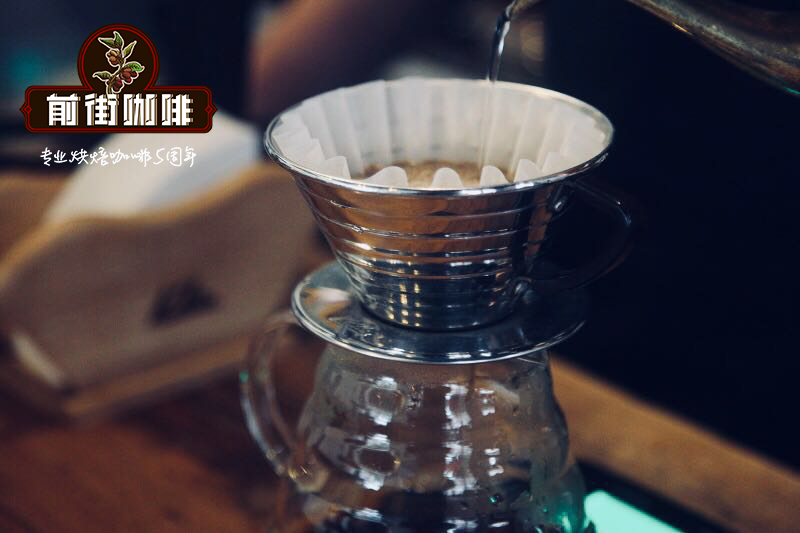
Holding a pour-over kettle, a delicate stream of water flows slowly from the spout, wetting the coffee grounds in circles. White foam rises from between the grounds, sinking and floating again after a few seconds, and the aroma of coffee spreads to every corner of the air. Pour-over coffee has become increasingly popular in recent years. Its charm, and the relaxing process of brewing it, have deeply captivated coffee lovers.
15% Growth in the Pour-Over Coffee Market
Over the past year or two, pour-over enthusiasts have sprung up like bamboo shoots after spring rain. More and more coffee lovers keep a complete set of tools at home, ready to brew fresh coffee anytime, anywhere. Some even buy pour-over equipment from around the world while traveling.
These years have been an explosive period for pour-over coffee. Specialty coffee shops were once few and far between, growing slowly until they reached a high-speed development phase last year. In the market, drip bag coffee has also appeared in large quantities, a simplified travel version of pour-over.
According to data, from 1998 to 2012 China's coffee consumption rose from 199,000 bags to 1.1 million bags, an annual growth rate of roughly 12.8%. Especially between 2012 and 2015, the growth rate of the instant coffee market lagged behind that of pour-over coffee. Pour-over maintained growth above 15%, and that figure has continued to rise in recent years. Meanwhile, the growth rate of instant coffee slowed, now falling below 10% and approaching 5%.
Why Pour-Over Coffee Has Become Popular
Single-Origin Coffee Beans Offer Purer Flavor
Why have coffee lovers fallen for pour-over coffee? Taste is the biggest reason. Sun, a woman born in the late 1980s, was still drinking instant coffee four or five years ago. Chancing on pour-over coffee at a friend's cafe, she fell in love at first sight and became completely hooked. Whenever she had time she would go to coffee shops, later tried brewing it herself, and then fell for the joy of the process. Today she keeps a complete set of pour-over tools at home, ready to enjoy a cup whenever she likes.
Pour-over coffee is always brewed by hand from single-variety, single-origin beans. Connoisseurs may even roast and grind their own. Sun loves pour-over coffee and says it is much gentler and more layered than machine-brewed or instant coffee, and that one cup can reveal several different flavors. Most interestingly, pour-over is full of variety: even with the same beans, different people brew different flavors, and the same person brewing at different times will produce different results. Pour-over coffee changes with the brewer's mood at that moment. "It is not monotonous; change gives it vitality." Pour-over lets people taste rich flavors such as floral, fruity and nutty notes, because a single variety removes interference in a way that "quick" coffee made from mixed beans cannot.
Pour-Over Coffee Provides Brief Mental Relaxation
For many busy urbanites, pour-over coffee is a form of relaxation. Brewing a cup takes more time than drinking instant coffee: the cup must be preheated, the filter paper wetted, the water poured slowly, and you must wait for the grounds to absorb water and release carbon dioxide before pouring again and waiting for the slow drip, repeating the process several times. Enthusiast Echo says she needs moments when she can be alone, quiet and completely relaxed to take a breath before working, which makes her far more efficient. Another enthusiast, Miss Huang, also enjoys the process greatly: "Holding the pour-over kettle, water flows slowly from the long, thin spout, poured clockwise, and I watch the small vortex form on the coffee's surface. At that moment the whole body is relaxed and comfortable."
Some enthusiasts also believe the entire pour-over process is under their own control, with nothing added that they need to worry about. What also draws them to pour-over is that it is healthy and reassuring.
A Complete Pour-Over Set for 300-500 Yuan
A basic pour-over setup includes at least eight items: filter paper, thermometer, dripper, pour-over kettle, timer, scale, server and grinder. The equipment can be very affordable, costing 380-500 yuan, or very high-end; an unremarkable electronic scale can sell for over 1,000 yuan, a grinder can cost as much as 40,000-50,000 yuan, and a good manual grinder that preserves the coffee's original flavor also costs several thousand yuan. Filter paper matters too; high-quality filter paper has a better texture. How much to spend depends on the enthusiast's means. Some hardcore enthusiasts even buy a roaster to roast beans at home, with a machine costing approximately 7,500 yuan.
Each enthusiast buys tools according to personal preference and budget. Sun loves uniquely designed, cute-looking utensils. Most of her tools are imported from Japan, with each individual item priced above 150 yuan. Even the filter paper is imported from Japan, and the entire set costs nearly a thousand yuan.
"Drip Bag Coffee" Concentrates the Essence of Pour-Over
Coffee lovers generally cannot go a day without coffee, and even crave it when away from home. Carrying a "set of eight items" is impossible, which gave birth to drip bag coffee. Drip bags have at least two ears, and some now have three, so the bag hangs easily on the cup. The cup directly replaces the function of a server, and the drip bag itself acts as filter paper. All you need is a pot of warm water. Drip bag coffee is, without question, a simplified version of pour-over.
Drip bag coffee was invented by the Japanese and has become widely popular in China over the past two years. Some coffee shops have launched their own versions. Some hardcore players even grind beans themselves and ask a familiar coffee shop to portion the grounds into drip bags, one bag to a serving.
Helpful Tips: Manual Grinding Better Preserves Original Flavor
Beans ground by hand versus by machine, including beans ground by different machines, all differ in flavor. Manual grinding preserves the original flavor of the coffee beans relatively better. Machine grinding depends on the burrs: there are ghost-tooth and flat burrs, and different burrs produce grounds of different shapes. Flat-burr grounds are uniform and flaky, brewing into high sweetness with rich aroma but relatively low complexity. Ghost-tooth grinding produces diamond-shaped particles, and their unevenness leads to relatively uneven extraction, which instead increases the coffee's complexity.
FrontStreet Coffee Recommendation
FrontStreet Coffee's roasted single-origin pour-over beans offer complete assurance in both brand and quality. More importantly, they represent excellent value: a half-pound (227g) package averages around 80-90 yuan. At 15g per cup, one package yields 15 cups, so each cup costs only about 6 yuan. Set against coffee shops that often charge dozens of yuan a cup, that is exceptional value.
The V60 dripper is a natural companion for these beans. Hario, the company that designed the V60, was founded in Tokyo in 1921 and was originally known for heat-resistant glassware for scientific institutions. In 2004 Hario redesigned the V60's prototype into the form we know today, named after its distinctive 60-degree cone angle and "V" shape, and released it to the market a year later. The cone and the 60-degree angle force the water toward the center before it drips into the server, extending contact between water and grounds so that aroma and flavor can be fully extracted. The single large hole lets water flow without obstruction, so the flow rate depends largely on the brewer's control and directly shapes the flavor of the cup.
For pour-over, beginners will find it easy to start with FrontStreet Coffee's Yirgacheffe Gendingding, whose bright citrus, berry and floral notes come with a green-tea-like sweetness, or with the Ethiopia Huakui, whose tropical fruit aromas of strawberry, passion fruit, jackfruit and even lychee are so pronounced and its bitterness so low that many describe it as "the coffee that does not taste like coffee." For something more refined, the Panama Esmeralda Red Label Geisha brings elegant jasmine, citrus, bergamot and black tea notes with a clean, transparent body and a long finish, while the Kenya Little Tomato, a washed Kenyan lot with bright cherry-tomato and dark-plum acidity and a full, juicy body, is a favorite among lovers of vivid fruit acidity.
Important Notice :
FrontStreet Coffee is a long-established specialty coffee roaster in Guangzhou China, selling freshly roasted beans from its own farm in Yunnan as well as dozens of carefully selected single-origin beans from around the world for both pour-over and espresso. The products deliver consistently excellent quality and great value, with shipping within 24 hours. Guangzhou's FrontStreet Coffee shop is recommended by many coffee lovers, and the beans are now available online at the Tmall 。
FrontStreet Coffee has moved to a new address:
FrontStreet Coffee Address: 315,Donghua East Road,GuangZhou
Tel:020 38364473
 Scan and follow the En Gafei WeChat official account. Please indicate that the reprint comes from "En Gafei".