What Coffee Beans Are Best for Pour-Over Coffee_9 Common Mistakes in Pour-Over Coffee Brewing
Understanding the Art of Pour-Over Coffee
A perfect cup of pour-over coffee reveals layers of acidity, aroma, and sweetness. Once you discover these delicate flavor nuances, you develop a deep appreciation for this brewing method that is hard to forget.
Pour-over coffee, however, is highly individual. Even subtle differences in a brewer's technique produce distinctly different flavors, and many enthusiasts hit technical walls when learning. Despite following every step correctly, why can't they achieve that ideal cup?
Here we analyze nine common pour-over mistakes from three key perspectives.
The Impact of Coffee Beans
Grind Size: 5/5
Freshness: 4/5
Coffee Bed Distribution: 3/5
Common Issue: Inappropriate Grind Size
Every brew begins with grinding the beans, and your grinder determines the quality of your grounds. Grounds should be uniform in size, with particles suited to your brewing method.
The ideal grind for pour-over is medium, similar to granulated sugar.
Too coarse, and the water's contact time becomes insufficient, making it hard to extract the coffee's aromatic compounds fully.
Too fine, and the grounds clog the filter paper's pores, prolonging the soak in hot water and pushing the brew into over-extraction and bitterness.
Common Issue: Fresh Grinding
Many home and office brewers buy pre-ground coffee or grind large batches at once to save time, then simply brew whenever they want a cup. This habit significantly damages flavor.
Once ground, coffee oxidizes much faster. After about 40 seconds, aromatic compounds begin dissipating into the air, so coffee brewed from stale grounds loses much of its aroma.
Common Issue: Coffee Ground Distribution
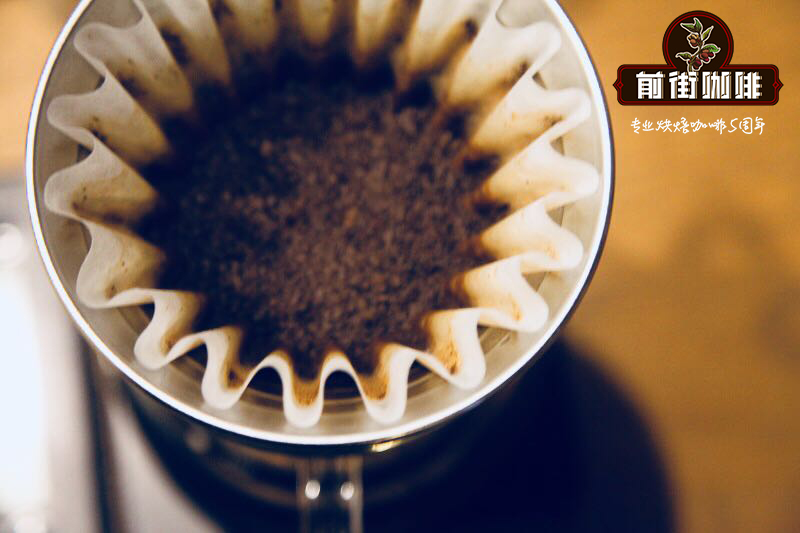
When you pour grounds into the filter paper, one step is often overlooked: gently shaking the dripper so the grounds settle evenly and flatly. This determines how uniformly the bloom and extraction proceed.
Watch your shaking technique: too much force or excessive shaking disturbs the water-coffee interaction. Finding your ideal gentle shake takes a little experimentation.
The Impact of Water
Water Quality: 5/5
Water Temperature: 5/5
Water Flow: 4/5
Water Volume: 4/5
Common Issue: Don't Use Pure Water
Water carries coffee's flavors, yet it is the most easily overlooked factor. Most people cannot distinguish water quality by taste alone—but pour-over contains no milk, sugar, or creamer, only coffee and water. The recommended standard: total dissolved solids (TDS) ideally between 100-250ppm.
Coffee made with pure (distilled) water lacks complexity and richness. Use mineral water instead.
Choose a well-known brand, because any off-flavor in the water becomes more pronounced in the cup.
Common Issue: Temperature Control
Water that is too hot makes coffee bitter; water that is too cool exaggerates acidity.
Recommendation: 80-85°C for dark roasts, 90-92°C for medium-light roasts.
Common Issue: Water Flow Control
In pour-over brewing, the moment you hold the kettle and pour embodies the essence of the method—the pour is the extraction, and the coffee's aroma and complexity emerge during those brief tens of seconds.
Commonly overlooked faults: water flow that is too fast or too heavy, or a tilted pouring direction, which carves depressions into the coffee bed and leaves "holes" where water runs straight through the paper into the cup, badly under-extracting the coffee.
Holding the kettle too high creates a violent flow that churns air into the grounds and extracts unevenly; it also lengthens the water column's exposure to air, dropping the temperature quickly. Keep the spout as close to the coffee surface as possible, pour at a steady speed, and avoid interruptions.
Common Issue: Water Volume Affects Mouthfeel
Remember, there is no single "correct" flavor—only the one that suits you.
Every drinker prefers a different strength.
The Golden Cup extraction concentration range is 1.15%-1.35%, corresponding to a water ratio of roughly 1:13 to 1:15.
Chasing intensity by using very little water will not get you there.
And pouring too much water simply dilutes the brew. Extraction has an upper limit, so don't be greedy!
The Impact of Equipment
Filter Paper: 4/5
Pour-Over Kettle Spout: 3/5
Thermometer: 3/5
Heat Retention: 4/5
Common Issue: Use Quality Filter Paper
Proper filter paper should be odorless and permeate water well.
Cheap paper is unreliable—often too thin and prone to leaks.
Paper that filters poorly drains too slowly: you keep pouring but little coffee emerges, producing an over-extracted brew of poor flavor and wasting perfectly good beans.
Common Issue: A Professional Pour-Over Kettle
Do not underestimate the kettle. Its long, slender spout and elegant curves are not just for show.
A professional kettle's long narrow spout gives you finer control of the flow, ensuring a smooth, uninterrupted stream. More advanced models include built-in thermometers, so you can master water temperature and flow at once!
Recommended Pour-Over Coffee Beans
FrontStreet Coffee's freshly roasted single-origin pour-over beans are a dependable choice in both brand and quality, with a wide range to suit every roast preference.
FrontStreet Coffee Recommendation
For V60 pour-over, the dripper's 60-degree cone and single large outlet reward light roasts: its fast extraction draws out three-dimensional aroma and lively acidity, so floral-and-fruit coffees shine. FrontStreet Coffee recommends its Ethiopia Yirgacheffe Worka Cooperative (Gorodinkding) for bright citrus, berry, and jasmine over a green-tea finish; the sun-dried Ethiopia Hua Kui for bold tropical fruit—strawberry, passion fruit, jackfruit, even lychee—with almost no bitterness; and the Panama Esmeralda Red Label Geisha for jasmine florals with citrus, bergamot, and black tea in a clean, layered cup.
If you prefer a mellower, low-acid cup, choose a medium-dark roast instead: the FrontStreet PWN Indonesia Golden Mandheling offers a thick, lingering body with herbaceous notes, dark chocolate, and a whisper of earth, while the FrontStreet Jamaica Blue Mountain No. 1 delivers near-perfect balance—cream, caramel, chocolate, nuts, and honey with none of the extremes—making both excellent choices for pouring over a V60 at 90-92°C for lighter roasts or 80-85°C for darker ones.
Important Notice :
FrontStreet Coffee is a long-established specialty coffee roaster in Guangzhou China, selling freshly roasted beans from its own farm in Yunnan as well as dozens of carefully selected single-origin beans from around the world for both pour-over and espresso. The products deliver consistently excellent quality and great value, with shipping within 24 hours. Guangzhou's FrontStreet Coffee shop is recommended by many coffee lovers, and the beans are now available online at the Tmall 。
FrontStreet Coffee has moved to a new address:
FrontStreet Coffee Address: 315,Donghua East Road,GuangZhou
Tel:020 38364473
 Scan and follow the En Gafei WeChat official account. Please indicate that the reprint comes from "En Gafei".