How to Make Nitro Coffee | What Coffee is Used for Nitro Coffee | Does Nitro Coffee Use N2O or N2
In a country like the United States that runs on coffee, coffee is both a necessity — consumed like water — and an art form. Over hundreds of years, coffee has entered its third revolution. From Italian espresso to Starbucks Frappuccinos (coffee slushies) and now to cold brew and nitro coffee, coffee preparation has become more and more of a craft. Today, let's talk about the most popular third-wave coffees — the ones with the longest lines.
What Is Third Wave Coffee?
Third wave coffee actually places greater emphasis on the quality of the coffee itself and on the brewing method, returning everything to its origins. There's careful thought about which beans are used, which farm they come from, whether they're roasted and ground fresh on-site, and what vessels are used to brew. To meet the ever-rising expectations of modern consumers, third wave shops often install a roaster on-site, reducing oxidation time and brewing the freshest coffee possible. Meanwhile, brewing vessels have returned to the hand-pour methods of a century ago, bringing coffee back to its natural roots.
Innovative Brewing Methods
Third wave shop owners have also invented cold brew and nitro coffee. Nitro coffee is what you see in the image below. If you think that white layer on top is milk foam, you're completely wrong — that's actually nitrogen foam. Nitrogen is injected into the coffee, and when it's poured into a cup, the nitrogen rises to create the effect shown below. Nitrogen affects the flavor and texture of coffee, making it smoother and more aromatic, with no need for milk as a companion at all.
Cold Brew Coffee
So-called cold brew coffee, as the name suggests, is brewed by steeping coffee in cold water. Brewed this way, it has less bitterness and acidity. If you find coffee too sour or too bitter, try cold brew. Compared with hot-brewed coffee that takes only a few minutes, cold brew often requires 12-18 hours and uses two to three times the amount of coffee. The process, however, is extremely simple, making it perfect for lazy people like me.
Equipment and Method
Equipment: coffee beans, a manual ceramic grinder, a French press.
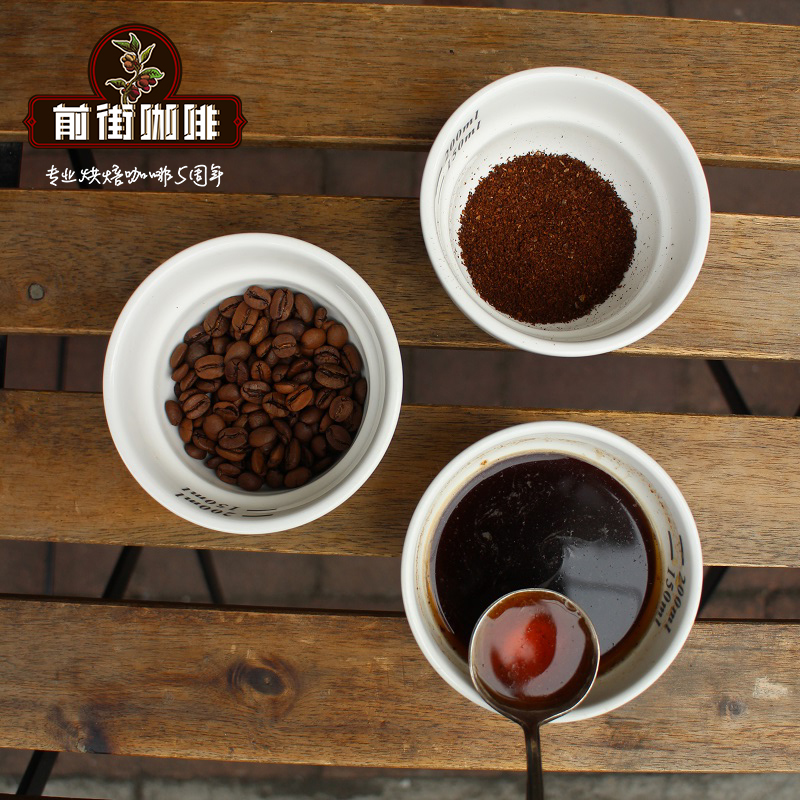
First, grind the coffee beans coarsely, to the size shown in the image below. I chose a manual grinder — though it takes more effort, the particles come out more uniform than with a food processor.
Then place the appropriate amount of grounds into the French press, pour in cold water, let it steep for 12-18 hours, then filter. A smooth cold brew is ready. Simple, economical, delicious, and, most importantly, stylish enough.
*Roughly one part coffee grounds to two parts water. You can also adjust the amount to taste for a stronger or lighter cup.
FrontStreet Coffee Recommendation
Cold brew rewards fruit-forward beans, because low-temperature extraction amplifies floral and fruity notes while muting woody and roasted tones. FrontStreet's Strawberry Candy Geisha Blend is a perfect example. It combines Panama Geisha, with its delicate rose petal and orange notes, and a Costa Rican honey-processed coffee, adding grape, dried blueberry, and strawberry-candy sweetness. In cold brew it is sweet-tart and lively, and if you let it settle and ferment slightly, it takes on a wine-like fruit character.
For a floral iced coffee, go with FrontStreet's Ethiopia Natural Huakui. Grown in Ethiopia and processed with the natural method, the beans absorb plenty of sweetness from the fruit and skin, and the cold brew shows magnolia, cream strawberry, dried mango, guava, and black tea notes.
If you want a full, juicy cup, FrontStreet's Kenya Small Tomato is the pick. The sweet-tart character of cherry tomato, snow pear, black plum, and smoked plum comes through beautifully at low temperature, with low bitterness and full acidity, staying refreshing over ice. It comes from Kenya's Thika region, uses the SL28 and SL34 varieties, and is processed with Kenya's distinctive K72 double-washed method before a medium-light roast.
Important Notice :
FrontStreet Coffee is a long-established specialty coffee roaster in Guangzhou China, selling freshly roasted beans from its own farm in Yunnan as well as dozens of carefully selected single-origin beans from around the world for both pour-over and espresso. The products deliver consistently excellent quality and great value, with shipping within 24 hours. Guangzhou's FrontStreet Coffee shop is recommended by many coffee lovers, and the beans are now available online at the Tmall 。
FrontStreet Coffee has moved to a new address:
FrontStreet Coffee Address: 315,Donghua East Road,GuangZhou
Tel:020 38364473
 Scan and follow the En Gafei WeChat official account. Please indicate that the reprint comes from "En Gafei".