What Does Yirgacheffe Taste Like? How is the Flavor of Washed Yirgacheffe G1? Why is Yirgacheffe So Popular?
The Origin and Meaning of Yirgacheffe
Yirgacheffe is a small town in Ethiopia sitting at 1700-2100 meters above sea level, and its name has become practically synonymous with Ethiopian specialty coffee. The area has been wetland since ancient times: in the local language, "Yirga" means "to settle down" and "Cheffe" means "wetland," so the name essentially translates to "let us settle and make a living by this wetland."
Where It Sits — and Why It Matters
Strictly speaking, Yirgacheffe is a sub-region within Ethiopia's Sidamo province, tucked into Sidamo's northwestern corner. Ringed by mountains and lakes, it ranks among the highest-altitude coffee-growing regions in Ethiopia. Yet its processing methods and flavor profile are so distinctive that Ethiopian farmers take pride in coffee showing classic Yirgacheffe character. In time it broke away from the broader Sidamo designation to establish its own identity, and today it stands as Africa's most celebrated coffee origin.
Yirgacheffe's coffee trees were first cultivated by European monks — not unlike Belgian monks growing wheat for brewing beer — before farming passed to local growers and cooperatives. The zone is really a patchwork of coffee communities and cooperatives: Idido near Misty Valley, Harfusa, Hama, and Beloya, among others. Nearly all of them wash their coffee, though a small quantity of exceptional lots is deliberately natural-processed to heighten the fruit aroma and body. The mountain villages here sit wrapped in mist, enjoying spring-like weather year-round: cool rather than hot summer breezes, rain without oppressive humidity, and winters free of frost. The result is a unmistakable regional character built on citrus and florals. Most coffee trees grow in farmers' backyards or are intercropped with other food crops, so each household's harvest is modest — true pastoral coffee. Virtually every award-winning Yirgacheffe lot traces back to these villages and communities.
The Signature Flavor Profile
"Yirgacheffe flavor" means intense jasmine florals, bright lemon or lime acidity, peach and almond sweetness, and a delicate tea-like finish. In the current harvest, the dry fragrance leans heavily into blueberry — grind a dose and the whole room fills with the scent.
The phrase "one sip, and a hundred flowers bloom" captures the experience perfectly: flowers stimulating both the taste buds and the olfactory system all at once. Beyond the aromatics, the silky body glides across the palate like a silk cloth. Small wonder that coffee chemists have begun studying Yirgacheffe's microclimate, soils, and water sources, hoping to build a cultivation model for specialty coffee.
Processing Methods and Grading
Yirgacheffe coffees fall into two broad categories by processing method:
Class A is washed, graded under standards set by the Specialty Coffee Association of America (SCAA) as Gr-1 and Gr-2 — the smaller the Arabic numeral, the higher the grade. Washed G1 Yirgacheffe has an unmistakable style: citrus and floral notes woven straight through the cup, a flavor virtually no one can resist.
Class B is natural-processed, graded Gr-1, Gr-3, Gr-4, and Gr-5. The top-scoring G1 natural Yirgacheffe bursts with fruit aroma — opening a bag of freshly roasted G1 natural will upend everything you thought you knew about coffee. Only after tasting a top-grade natural Yirgacheffe do you truly believe that coffee is, at heart, a fruit.
FrontStreet Coffee Recommendation
If you are new to Ethiopian coffee, start with FrontStreet Coffee's washed Yirgacheffe — their house go-to bean. It is known for white jasmine florals, bright citrus and lemon acidity, and a clean tea-like finish, and its friendly price has made it many people's first step into specialty coffee.
For something a step up, look for FrontStreet Coffee's washed lot from the Guodingding Cooperative in the Worka area at Yirgacheffe's southeastern edge. Once part of the Worka cooperative under the Yirgacheffe Coffee Farmers Cooperative Union (YCFCU), it now sells as a traceable single sub-origin. Processed in the traditional washed style, it carries none of the old "traditional bitterness" — just crisp citrus and lemon acidity layered with jasmine fragrance.
Natural-process fans should try FrontStreet Coffee's Red Cherry Yirgacheffe. Only fully ripe, defect-free cherries are picked, screened at the washing station, then dried on raised beds for three to five weeks, with the fruit turned every two to three hours during the first days to prevent uneven heating and over-fermentation. Because the beans dry in the fruit, the cup keeps the classic Yirgacheffe profile while adding tropical fruit: citrus-like acidity, a juicy berry character, honeyed sweetness, and a creamy smoothness.
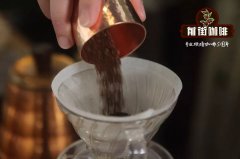
For brewing any of these, FrontStreet suggests a V60 with 15 g of coffee at a 1:15 ratio, water at 90-91°C, and a medium-fine grind (EK43s at setting 10, about the texture of fine granulated sugar; 80% passing a #20 sieve). Pour 30 g of water for a 30-second bloom, then pour to 95 g (about 125 g on the scale) within one minute; once the water level drops to two-thirds of the coffee bed, pour the remaining 100 g to reach about 225 g by 1:35. The drawdown finishes between 2:00 and 2:10 — remove the dripper and enjoy.
Important Notice :
FrontStreet Coffee is a long-established specialty coffee roaster in Guangzhou China, selling freshly roasted beans from its own farm in Yunnan as well as dozens of carefully selected single-origin beans from around the world for both pour-over and espresso. The products deliver consistently excellent quality and great value, with shipping within 24 hours. Guangzhou's FrontStreet Coffee shop is recommended by many coffee lovers, and the beans are now available online at the Tmall 。
FrontStreet Coffee has moved to a new address:
FrontStreet Coffee Address: 315,Donghua East Road,GuangZhou
Tel:020 38364473
 Scan and follow the En Gafei WeChat official account. Please indicate that the reprint comes from "En Gafei".