How many defect beans in Yirgacheffe G1_What does Yirgacheffe taste like_How to brew Yirgacheffe coffee
Professional coffee knowledge exchange, more coffee bean information, please follow Coffee Workshop (WeChat public account: cafe_style)
The Federal Democratic Republic of Ethiopia, commonly called "Ethiopia," sits in northeastern Africa. It borders Djibouti and Somalia to the east, Sudan and South Sudan to the west, Kenya to the south, and Eritrea to the north. Plateaus cover two-thirds of the country at an average elevation of nearly 3,000 meters, earning it the nickname "Roof of Africa." The capital is Addis Ababa.
Ethiopia is Africa's largest Arabica producer. Every one of the roughly two thousand Arabica varieties traces back to Ethiopia's ancient Typica stock, which was carried to Central and South America and Asia and mutated into new forms there. Ethiopia is a genetic treasure trove of Arabica, with an estimated 2,000 or more varieties—yet according to Ethiopian authorities, fewer than 5% of the varieties within the country have been studied in depth and confirmed for their morphology and habits.
The Chelelektu Coffee Story
Chelelektu lies in the Kochere region of Yirgacheffe, about eighteen kilometers southwest of Yirgacheffe town. Heading south from town, the road climbs continuously; at a three-way junction, the right fork leads toward Chelelektu, while the left fork runs southeast toward Gedeb and Worka.
The coffee cherries come from roughly 500 local smallholder family farmers, each cultivating an average of less than 2 hectares at elevations of approximately 1,800 to 2,050 meters. The varieties are mainly a mix of Typica and Heirloom (local native varieties). Graded G1—the highest level under the ECX (Ethiopian Commodity Exchange)—these beans excel in appearance, consistency, freshness, dry aroma, and flavor. They show the rich aromatic signature typical of the Yirgacheffe origin: delicate, perfume-like florals, bright citrus acidity, lemon, berries, and honey-like sweet-and-sour notes. (Excerpt from China Coffee Network)
Ethiopia has five specialty coffee-producing regions—Yirgacheffe, Sidamo, Harar, Limu, and Lekempti (or Gimbi)—as well as four general commercial-bean regions: Djimmah, Illubabor, Teppi, and Bebeka.
Ethiopian Coffee Map
Ethiopia's Nine Major Producing Regions
Chelelektu Basic Information
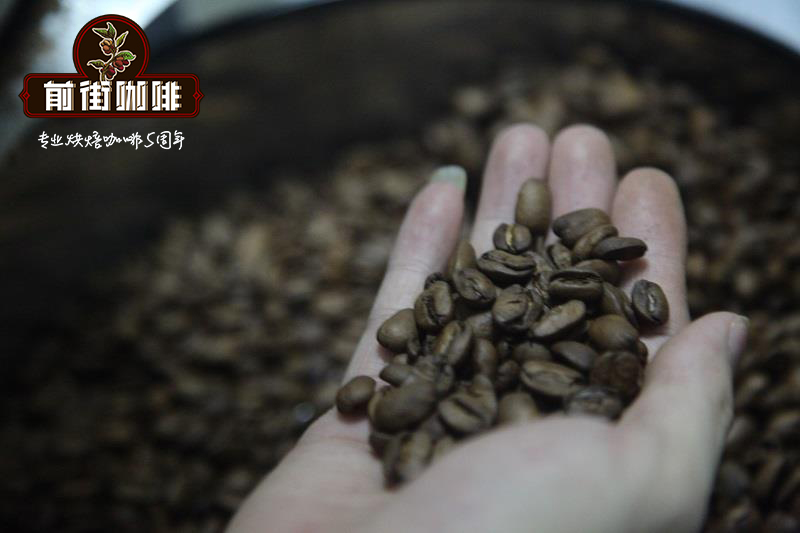
The image above is an unfiltered photograph of the actual Chelelektu coffee beans; lighting may cause slight differences.
Origin: Africa · Ethiopia · Yirgacheffe · Kochere
Elevation: 1,800–2,050 meters
Varieties: Heirloom, Ethiopian native varieties
Acidity: Low
Body: Medium
Flavor: Lavender-like aroma, with strawberry, orange, and caramel-like flavors
Processing Method: Natural processing. Chelelektu takes great pride in its natural process, which stands out impressively on the cupping table. The thickness of coffee cherries stacked on the drying racks is carefully controlled; different breathable materials serve as the base layer of the racks at different drying stages; and extensive hand labor picks out defects and unripe beans during drying. Movable racks can be shifted to follow the sun and the weather. Under 15–21 days of continuous careful attention, attractively uniform dried cherries emerge, along with the clear jasmine fragrance of high altitude and rich fruit flavors.
Ethiopian Coffee Bean Grading System
Ethiopian coffee beans are divided into five grades. Grades 1 and 2 are reserved for washed beans: Grade 1 washed beans allow 0–3 defective beans per 300g of raw beans, and Grade 2 allows 4–12 defective beans per 300g. Natural processed beans are graded sequentially as Grade 3, Grade 4, and Grade 5—so Chelelektu's naturally processed G1 quality is immediately evident.
Cupping
The left and right cups formed two parallel control groups, both using 10g of coffee with 90°C water.
Dry Aroma: A distinct roasted, caramel-like aroma accompanied by floral and fruit notes.
Wet Aroma: Floral and fermented-fruit aromas layered over roasted and caramel tones.
Slurping: Clear berry flavor, soft citrus acidity, a relatively dark roast, prominent creamy-sugar sweetness, and a chocolate-like mouthfeel.
Six-Cup Chemex
30g of coffee, a 16:1 water-to-coffee ratio, 60g of water for the bloom (bloom timed from the start of pouring, 36 seconds), a second pour to 360g, wait 30 seconds, a third pour to 480g, and a total time cut off at 2 minutes 20 seconds.
Compared with the cupping, the fruit acidity is livelier, with a thoroughly likeable strawberry character, long-lasting caramel sweetness, and a smooth mouthfeel.
Staresso
7g of coffee on the Ditting at grind setting 2.5, a 9:1 water-to-coffee ratio, water at 91°C.
With hot milk at 1:3, the texture is smooth and the milk aroma blends well with the coffee. That said, tightening the ratio to 8:1 and slightly reducing the milk will raise the coffee's concentration and give a richer, fuller body.
FrontStreet Coffee Recommendation
If Chelelektu's jasmine-and-strawberry profile has you craving more of Yirgacheffe, FrontStreet's washed Yirgacheffe is the classic starting point—white jasmine, bright citrus and lemon acidity, and a tea-like finish at an everyday price, which is why so many people make it their first specialty bean. Yirgacheffe is a small town in Ethiopia's southern Sidamo zone at roughly 1,700–2,100 meters, with coffee grown above 1,800 meters; its reputation grew so great that in 2010 the Ethiopian Commodity Exchange separated it from Sidamo as a distinct designation. For a step up in traceability, try FrontStreet's coffee from the Gotiti cooperative in the Worka zone at Yirgacheffe's southeastern edge—once part of the Worka cooperative under the Yirgacheffe Union (YCFCU), later discovered by coffee hunters worldwide as a "single-origin" station in its own right. Its traditional washed processing delivers clean, bright citrus and lemon acidity with jasmine fragrance and none of the old bitterness. And on the natural side, FrontStreet's Red Cherry uses only fully ripe, defect-free cherries sun-dried three to five weeks on raised beds, pairing classic Yirgacheffe character with tropical fruit: citrus acidity, berry juiciness, honeyed sweetness, and a silky, cream-smooth finish.
Important Notice :
FrontStreet Coffee is a long-established specialty coffee roaster in Guangzhou China, selling freshly roasted beans from its own farm in Yunnan as well as dozens of carefully selected single-origin beans from around the world for both pour-over and espresso. The products deliver consistently excellent quality and great value, with shipping within 24 hours. Guangzhou's FrontStreet Coffee shop is recommended by many coffee lovers, and the beans are now available online at the Tmall 。
FrontStreet Coffee has moved to a new address:
FrontStreet Coffee Address: 315,Donghua East Road,GuangZhou
Tel:020 38364473
 Scan and follow the En Gafei WeChat official account. Please indicate that the reprint comes from "En Gafei".