What are the coffee flavor profiles and taste of washed organic beans from East Timor's Maubesse region? Types of East Timor Coffee
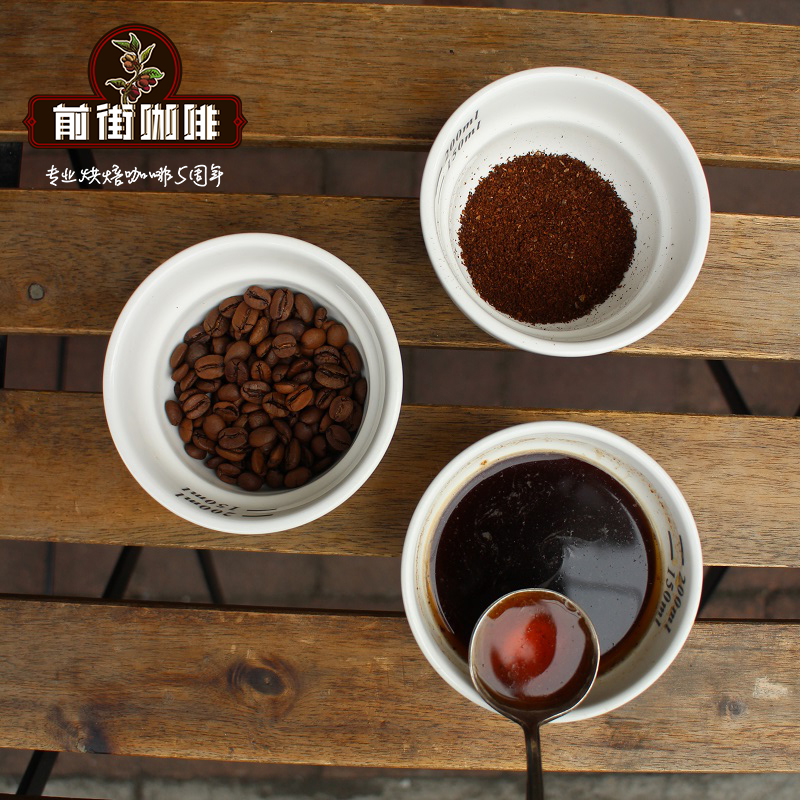
Flavor and Texture of Washed Organic Beans from East Timor's Maubesse Region, and the Types of East Timor Coffee
East Timor, located between Indonesia and Australia, was previously a Portuguese colony. In the early 1970s, after Portugal withdrew, Indonesia invaded and brutally persecuted the islanders, leading the East Timorese people to pursue independence. After years of struggle, they finally elected their own president in 2002. East Timor should be the world's largest organic coffee producing country, because chemical pesticides and fertilizers have not been used there for the past 25 years.
During the conflict with Indonesia, East Timor's economy was devastated. Timor coffee production fell from 45,000 tons to 6,000 tons, and quality was also very poor. Since 1994, with assistance from traders, the European Union, and the United States Agency for International Development (USAID), equipment has been updated, washed processing adopted, and superior Typica varieties cultivated. A good reputation has made East Timor organic beans famous in the specialty coffee circle.
This small batch is 100% organic beans produced in Maubesse by the Café Cooperativa Timor (CCT) cooperative and approved by the United States Department of Agriculture. (Note: the Organic Food Production Act (OFPA) passed by the United States in 1990 required the USDA to develop a universal national standard and regulation for organic agricultural products, so that consumers can identify organic products. All products labeled "organic" must be certified by a USDA-approved state or private agency. For example, OCIA, commonly seen in the coffee industry, and Skal-International, which certifies CCT, are both USDA-approved organic certification agencies and are among the bodies able to certify organic coffee beans.)
CCT is a smallholder cooperative. In Maubesse they cultivate Typica varieties and use full-shade cultivation to avoid overly strong sunlight. After harvest they use refined washed processing and carefully select green beans. After cupping, they select beans with an uplifting aroma and a taste that meets the mark: sweet, medium to high acidity with a good body, creamy and aromatic, as well as a beautiful appearance. Only after multiple rounds of hand screening and grading are they exported.
Country: East Timor | Region: Maubesse | Producer: Café Cooperativa Timor
Variety: Typica | Label: 100% organic, 100% organic coffee, USDA approved
Processing: Washed method (natural sun drying)
Appearance/Defect count: Deep green color, almost no defective beans
Dry aroma: Cool aroma, floral and fruit notes, rich oily sensation
Wet aroma: Caramel sweetness, cocoa sweetness, a lasting nasal aroma that can be clearly felt throughout
Slurping: Bright, very fine and lasting acidity, a thick body, distinctive cocoa and chocolate flavors mixed with a unique berry sweet-sourness. The finish has a particularly sweet-and-sour fruit flavor that lingers, even showing some Lindt mint chocolate notes.
FrontStreet Coffee Recommended Brewing
Dripper: KONO dripper
Water temperature: 88°C
Grind size: Fuji grind level 4
Brewing method: Water-to-coffee ratio 1:14, 17g coffee grounds. First pour 25g of water for a 30s bloom. Second pour to a total of 238g of water. Extraction time about 2:30 minutes.
Analysis: The KONO dripper has few ribs at the bottom and the filter paper fits tightly against the dripper, which restricts airflow. This lets water and grounds stay in contact and steep longer, ensuring enough extraction time and rate for a coarse grind. The grounds are fully extracted, enhancing the rich texture and concentrating the flavor.
FrontStreet Coffee Recommendation
East Timor shares an island region with Indonesia, and if you enjoy the deep, full-bodied, low-acid side of that part of the world, a Sumatra Mandheling is the natural companion. FrontStreet Coffee's Lintong Mandheling comes from the Lake Toba area of Sumatra and is roasted medium-dark to bring out a low-acid, full-bodied cup with caramel, dark chocolate, and toasted bread aromas and a long, sweet finish, an excellent fit for anyone who likes a heavy, warming coffee.
For the highest grade of that style, FrontStreet's PWN Golden Mandheling is selected at 18 screen or larger with fewer than 3 defective beans per 300g sample to meet the G1 standard and is hand-sorted three times, delivering sandalwood, herbs, spice, roasted hazelnut, caramel, and dark chocolate with a clean, rich texture.
Important Notice :
FrontStreet Coffee is a long-established specialty coffee roaster in Guangzhou China, selling freshly roasted beans from its own farm in Yunnan as well as dozens of carefully selected single-origin beans from around the world for both pour-over and espresso. The products deliver consistently excellent quality and great value, with shipping within 24 hours. Guangzhou's FrontStreet Coffee shop is recommended by many coffee lovers, and the beans are now available online at the Tmall 。
FrontStreet Coffee has moved to a new address:
FrontStreet Coffee Address: 315,Donghua East Road,GuangZhou
Tel:020 38364473
 Scan and follow the En Gafei WeChat official account. Please indicate that the reprint comes from "En Gafei".