Two Major Hawaiian Coffee Brands: The Differences Between Kona and Ka'u - Which Hawaiian Coffee is Better?
Professional coffee knowledge exchange, more coffee bean information, please follow Coffee Workshop (WeChat official account: cafe_style)
Hawaiian Coffee: Island Paradise of Premium Beans
There are countless islands formed by volcanic peaks rising above the Pacific Ocean surface. Among them, the remote and romantic Hawaiian Islands represent a maritime jewel of the United States.
Hawaii not only possesses unique culture and folk customs distinct from the American mainland, attracting tourists from around the world, but it also lies within the coffee growing belt. With fertile volcanic soil and a tropical maritime climate that creates year-round cloud-covered, misty conditions, it provides an ideal environment for coffee tree growth and development. These factors particularly influence the flavor profile of mature coffee, making coffee from Hawaii's Kona and Kauai islands gradually familiar to the world.
Climate and Geography
Kau and Kona are located on the island of Hawaii (commonly known as the Big Island), the largest island at the southernmost end of the archipelago. The world's largest volcano, Mauna Loa, is situated on the Big Island. The climate patterns are extremely diverse, with experts noting that of the thirteen global climate types, eleven can be found around Kona and Kau. The Big Island features desert, jade forest, tropical, temperate, monsoon, and alpine climate patterns that influence each other, creating frequent cloud formation and light drizzle. Temperature drops sharply at night and rises again during noon, creating significant day-night temperature differences.
The Big Island's most distinctive feature is the clear separation between dry and wet seasons. After a brief dry season, it enters the rainy season. Coincidentally, rainfall increases as coffee cherries gradually mature, and when it's time for harvesting, rainfall decreases and the dry season returns. This rainfall pattern is optimal for enhancing coffee aroma and flavor, nurturing the Big Island's unique coffee character.
Kona and Kau are located on the western and southern sides of Mauna Loa volcano respectively. Although the growing elevation ranges only from 200-800 meters, the annual average temperature is below 20°C, and thick clouds drift in during afternoons, providing optimal shade for coffee trees. It is likely these favorable natural conditions that enable Hawaiian Kona to achieve exceptionally high average yields of 2,240 kilograms per hectare, while in Latin America, coffee yields only 600-900 kilograms per hectare.
History and Varieties
Kona has been cultivating coffee since 1828, marking 180 years of history. However, for over a century, Kau primarily cultivated sugarcane. It wasn't until after 1990, when sugarcane lost competitiveness and Kau's sugarcane farmers faced displacement and livelihood difficulties, that with the promotion and guidance of relevant agencies under the U.S. Department of Agriculture, they switched to coffee cultivation in 1996.
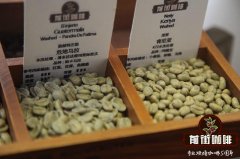
Both Kona and Kau grow the Typica variety. Under Hawaii's specific geographical conditions, the native Typica variety has gradually mutated. Compared with Jamaican Blue Mountain coffee, also of Typica variety, Kona green beans are slightly larger than Blue Mountain in appearance. Moreover, EF-grade Kona beans all reach 18 mesh or above, displaying overall fullness, uniformity, and a waxy texture. Washed green beans possess rich grassy aromas, while natural processed beans exhibit caramel, fermented wine, and other aromas. Kona currently primarily uses only washed and natural processing methods, while Kau's coffee farmers are more willing to experiment with diverse processing methods such as natural, semi-washed, honey, wet-hulling, and innovative methods like Pepsi and seawater processing. Hawaiian Kona green beans are divided into three grades: Extra Fancy, Fancy, and Number One, with hand-selected Peaberry beans accounting for about 5% of production.
In 1873, Kona coffee grown by Henry Nicholas Greenwell was awarded a "Certificate of Excellence in Quality" at the Vienna World Exposition, instantly establishing Kona coffee's international reputation. Greenwell's residence remains a historic landmark on the Big Island today, and the Greenwell Estate he operated is currently a heavyweight coffee plantation in Kona.
Kona initially made its name through early cultivation of Brazilian Typica, but farmers discovered that after the coffee cherries matured, they easily fell off when exposed to wind and rain, causing losses. Additionally, yields showed cyclical fluctuations with high-yield years followed by sharp reductions the following year. Later, Judge Widemann, a German serving in the Hawaiian Kingdom, introduced improved Guatemalan Typica. After trial cultivation, it yielded stable production and cherries were less prone to dropping. Consequently, farmers abandoned Brazilian Typica and switched to Guatemalan Typica.
Market and Tourism
Kona's popularity in mainland China far exceeds that of Kau, although in terms of flavor, Kau is by no means inferior to Kona. In the Chinese market, the renowned Greenwell Estate, Hula Daddy Estate, and Kai Farm coffees are rarely seen. Instead, Queen's Farm, due to Shanghai-based Keying's promotion, holds a relatively high market share. In the Kona region, there are approximately 600 independent coffee farms, the vast majority of which are small-scale family farms with coffee cultivation areas typically between 18-42 mu (approximately 3-7 acres). Tourists visiting Hawaii can tour coffee farms, witness or personally participate in various processes such as coffee harvesting, bean processing, roasting, and grinding, and create a truly personalized cup of coffee.
On Kona Island, only about 1,400 hectares produce coffee. Due to Hawaii's world-renowned tourism, numerous visitors, and high income levels, retail prices in both Hawaiian and mainland American markets are extremely expensive. Even "Kona blends" (with Kona content not less than 10%) have their market. However, in recent years, neighboring islands such as Maui, Kauai, and Molokai have also begun commercial coffee cultivation.
Hawaiian Coffee Bean Brand Recommendations
Hawaiian coffee [Kona coffee beans] roasted by FrontStreet Coffee offer full guarantees in both brand and quality. More importantly, they provide excellent value-for-money. A 100-gram package costs only 120 yuan. Calculating at 15 grams per cup, one package can make 6 cups of coffee, with each cup costing only about 20 yuan. Compared with cafés selling cups for dozens of yuan, this represents a conscientious recommendation.
FrontStreet Coffee: A Guangzhou-based roastery with a small shop but diverse bean varieties, offering both famous and lesser-known beans, along with online store services. https://shop104210103.taobao.com
Important Notice :
FrontStreet Coffee is a long-established specialty coffee roaster in Guangzhou China, selling freshly roasted beans from its own farm in Yunnan as well as dozens of carefully selected single-origin beans from around the world for both pour-over and espresso. The products deliver consistently excellent quality and great value, with shipping within 24 hours. Guangzhou's FrontStreet Coffee shop is recommended by many coffee lovers, and the beans are now available online at the Tmall 。
前街咖啡 FrontStreet Coffee has moved to new addredd:
FrontStreet Coffee Address: 315,Donghua East Road,GuangZhou
Tel:020 38364473
 Scan and follow the En Gafei WeChat official account. Please indicate that the reprint comes from "En Gafei".