How to Drink Yemen Mocha Coffee Beans? Yemen Coffee Characteristics and Varieties
Introduction to Yemen Coffee
Yemen was the first country to use coffee as a cash crop. Legend has it that in the 6th century, Islamic Sufi pilgrims introduced coffee there from Ethiopia. The most correct spelling of its name should be Al-Mahka, the Arabic form. The coffee grows on steep terrain with little rainfall, poor soil and insufficient sunlight - unique and harsh conditions that seem unfavorable for cultivation, yet they nurtured the irreplaceable Yemen Mocha. Wild Yemen coffee is mostly unmanaged: it grows, matures, falls and dries naturally, and the farmers' only work is gathering. The overall style is "wild" or "natural," with earthy flavors and extremely high complexity. For some people the spicy aroma is pungent, but either way, you owe it to yourself to try it. Should you fall deeply in love with it, it will be the beginning of a brand new coffee journey.
Yemen Mocha may truly be called the only living relic of the coffee world.
The Origin of "Mocha"
When talking about Yemen coffee, "Mocha" must be mentioned. Everyone has heard of "mocha coffee," but what exactly is "Mocha"?
There are many answers. Some say Mocha is a specific origin, while others picture a sweet chocolate coffee. In fact, authentic "Mocha coffee" is produced only in the Republic of Yemen on the southwestern Arabian Peninsula, growing on steep mountain slopes at altitudes of 3,000 to 8,000 feet. It is also the world's oldest coffee: as early as more than 500 years ago, Yemen was producing coffee in the ancient way. In the early 17th century, the first batch of Yemen coffee sold to Europe was exported through the small ancient port of Mocha, and it amazed Europeans. They called the delicious coffee from Mocha Port "Mocha coffee" - the origin of the term.
Ethiopia, the neighboring country across the Red Sea, also exported its coffee through Mocha Port, which is why Ethiopian natural-processed coffee is often called Mocha as well (such as Mocha-Harrar, from Ethiopia's Harrar). Today the old port of Mocha has long been abandoned due to sediment deposition (it is now called Al Makha), and exports are handled by the northwestern port of Hodeida. But people have long been accustomed to the name, and Mocha resonates far and wide. Dark-roasted Yemen coffee often shows chocolate-like bittersweet flavors, which is why today's chocolate-sauce flavored drinks also borrow the "Mocha" label. So when you see "mocha coffee," it may refer to pure Yemen coffee, to neighboring Ethiopian coffee, or simply to chocolate-flavored coffee. For discerning connoisseurs, however, only true Yemen coffee deserves the name.
The word "Mocha" has multiple spellings: Moka, Moca and Mocca are all common, and on Yemeni coffee sacks and documents I have counted as many as four local spellings - "Mokha," "Makha," "Morkha" and "Mukha" - all meaning the same thing.
Yemen Mocha's Historical Significance
Yemen Mocha is the originator of the world coffee trade and made indelible contributions to spreading delicious coffee across the globe. In the 17th century, Yemen Mocha - then called "Arabia Coffee" (also the origin of the later name "Arabica"!) - crossed the sea to Italy and other European Catholic countries. For more than 150 years thereafter, Yemen was the only coffee origin sold to Europe. In ancient times, in conservative Catholic countries, extraordinarily wonderful things were often considered evil, and coffee once bore an inexplicable guilt. Not until the Pope in the Vatican, himself a coffee lover, declared coffee a Catholic beverage and blessed those who drank it did coffee begin to spread widely through Europe. Although Ethiopia was the first country to discover coffee, it was Yemen that made coffee flourish.
Traditional Yemen Coffee Production
To this day, Yemeni coffee farmers still produce coffee the same way they did 500 years ago. Coffee berries grow naturally on the trees without any fertilizer or pesticides. In summer they take moisture from the slopes' small amount of rain and mist, flowering and setting fruit. In the dry winter, mature cherries are left to hang on the trees and naturally air-dry - a very unique and rare practice, possible only in Arabia's extremely dry climate and intense sun; in other origins the same practice would rot the cherries on the branch. Ripe or dried cherries fall naturally or are shaken down and picked. Yemeni coffee farmers, who make up nearly a quarter of the country's population, spread the cherries with their pulp on rooftops, in low sheds in front of their homes, or even directly on the mud ground, exposed to the intense dry winter sun. Once the peel and pulp have dried, old-fashioned stone mills - two stones stacked together - are used to grind away the dried husks and pulp, and the beans are ready. It is precisely this traditional processing that gives Yemen coffee its touch of wildness. FrontStreet Coffee's Yemen Mocha is exactly like this: those who like it love it dearly, and those who don't, dislike it intensely.
Brewing Recommendations
FrontStreet Coffee suggests these brewing parameters for Yemen Mocha:
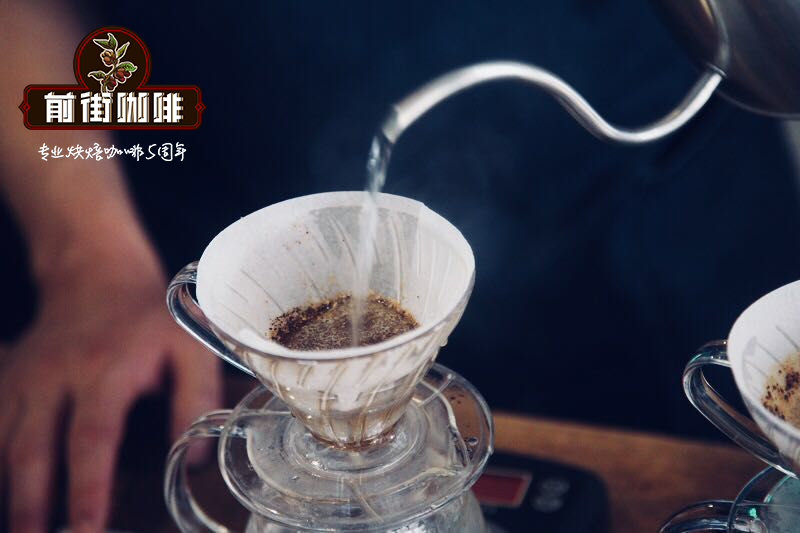
V60 / 1:15 / 89°C / time: 1 minute 50 seconds
Flavor notes: spices, chocolate, grapes.
FrontStreet Coffee Recommendation
If the wild, natural-processed character of Yemen Mocha appeals to you, its closest cousins are the natural-processed coffees of Ethiopia, the birthplace of coffee just across the Red Sea. The FrontStreet Sun-Dried Hua Kui, from the Hambella region of Guji in Sidamo, dries whole cherries on raised beds for 21 days, with workers turning the fruit constantly and hand-sorting out defective beans every three to five days before hulling and a final selection. Because the beans dry inside their fruit, a medium-light roast reveals a light fermented winey aroma, florals, citrus and mango - much richer and more complex, with honey sweetness, cocoa and a whisper of spice over a thick body and long finish, echoing the "wild" profile of Yemen Mocha.
For a cleaner take on Ethiopian naturals, the FrontStreet Sun-Dried Red Cherry removes damaged fruit first, sun-dries for two weeks until the moisture drops to 12%, then hulls, density-grades and hand-sorts the beans - yielding a pristine cup of peach, cocoa, honey and lemon. And if you prefer the washed style, the FrontStreet Yirgacheffe Guodingding Cooperative - independent since 2012, run by about 300 member farmers from the Worka region - shows citrus, lemon and elegant white florals with a light, tea-like body, the refined counterpoint to Yemen's rustic charm.
Important Notice :
FrontStreet Coffee is a long-established specialty coffee roaster in Guangzhou China, selling freshly roasted beans from its own farm in Yunnan as well as dozens of carefully selected single-origin beans from around the world for both pour-over and espresso. The products deliver consistently excellent quality and great value, with shipping within 24 hours. Guangzhou's FrontStreet Coffee shop is recommended by many coffee lovers, and the beans are now available online at the Tmall 。
FrontStreet Coffee has moved to a new address:
FrontStreet Coffee Address: 315,Donghua East Road,GuangZhou
Tel:020 38364473
 Scan and follow the En Gafei WeChat official account. Please indicate that the reprint comes from "En Gafei".