What Are the Characteristics of Yemeni Coffee and Yemen Mocha Coffee Beans? How to Drink Yemeni Coffee?
Yemen Mocha: The Coffee Behind the Name
Most people who order a mocha picture hot chocolate - chocolate syrup or powder stirred into coffee. To a coffee connoisseur, that is roughly the equivalent of a counterfeit designer bag: pleasant enough, but not the real thing.
Genuine Yemeni coffee sells for around $173 a pound in the United States. Or you could travel to the war-torn Yemeni coastal city of Mocha and hunt down the hard-to-find mocha coffee at its source.
Mokha is remembered as the heart of Yemen's 200-year monopoly on the coffee trade. It was from this port - coffee's original point of departure - that the chocolate-coffee drink popular in the West and beyond eventually took its name.
Yemen exported all of its coffee through the port of Mokha, and from there it traveled the world as "mocha coffee." The port's fortunes were bound tightly to the one product it shipped.
According to World Coffee Research, the earliest archaeological evidence of coffee being consumed as a beverage was found in the Yemeni city of Zabid.
The Origins of Coffee Cultivation
Coffee began to be cultivated within Yemen in the 15th century to meet local demand. In 1450, Yemeni Islamic Sufi practitioners first drank coffee to stay awake during late-night prayers. That practice turned hillsides into terraced slopes and gave rise to the agricultural techniques for growing coffee.
Yemeni coffee is full of wildness and rusticity, with a truly captivating body. Yemen differs sharply from other producing countries. Its scarcity of water, arid climate, and barren land have left the coffee varieties that survive here unlike the carefully tended cultivars of the major coffee nations.
Unique Growing Conditions
Measured against Arabia Felix, the climate of Central and South America looks like a fully equipped greenhouse. Yemen's harsh conditions gradually eroded its coffee industry - yet those same conditions are why Yemeni coffee tastes so untamed. Traditionally, no chemicals were used in growing coffee here. The coffee is said to be wild, usually rich, with an intense wine-like acidity.
What sets Yemeni coffee apart is its dry processing. Also known as the natural process, it is the oldest method and the one considered the simplest and most organic.
Some believe the drying process gives the coffee a sweet, rich fruity aroma. The flavor is often described as complex, earthy, and deep, with a distinctive character all its own.
World Coffee Research notes that although Arabica coffee originated in Ethiopia, the genetic base of the Bourbon variety comes from coffee trees in the city of Mocha. Bourbon is prized for rich buttery chocolate flavors, sweetness, and very light fruit notes.
Yemen Mocha: A Coffee Legend
Yemen was the first country to treat coffee as a cash crop. Legend holds that in the 6th century, Islamic Sufi pilgrims brought it from Ethiopia. The most accurate spelling is Al-Mahka, the Arabic form. The trees grow on steep terrain with little rainfall, poor soil, and insufficient sunlight - conditions that are unusual, difficult, and unfavorable for coffee, yet they have produced an irreplaceable Yemen Mocha. Most wild Yemeni beans go unmanaged, ripening naturally and falling to dry, with farmers doing little more than gathering them. The overall style is wild and natural, earthy, and extremely complex. Some find it pungent with spice, but either way, it is worth finding the time to try. If you fall deeply in love with it, that will be the start of a whole new coffee journey.
FrontStreet Coffee's Yemen Mocha
FrontStreet Coffee's Yemen Mocha is exactly this kind of coffee: those who like it love it deeply, and those who do not tend to feel strongly the other way.
Brewing Recommendations
FrontStreet Coffee suggests the following brewing parameters for Yemen Mocha.
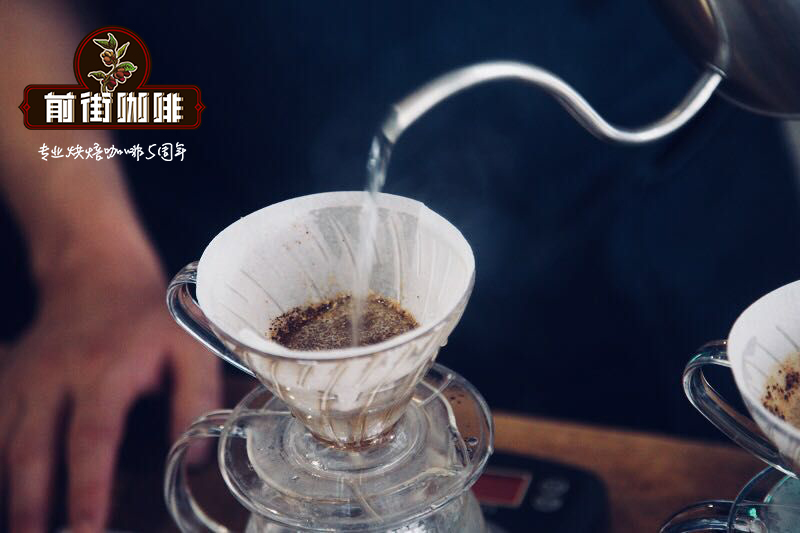
V60 / 1:15 / 89°C / Time: 1 minute 50 seconds
Flavor: spices, chocolate, grapes
FrontStreet Coffee Recommendation
FrontStreet Coffee's Yemen Mocha is the direct way to taste this ancient, wild profile - earthy and deep, with the spice, chocolate, and grape notes that make the cup so memorable. Because its flavors are so concentrated, FrontStreet keeps the brew focused on the V60 at a 1:15 ratio, 89°C water, and a total extraction time of 1 minute 50 seconds, which lets the wine-like acidity and layered spice come through without tipping into harshness.
If the earthy, chocolatey side of Yemen Mocha is what you enjoy most, FrontStreet's nutty-chocolate range makes a natural next step. The Specialty Blend - led by Brazilian coffee with Colombian beans in support - layers almond, walnut, and other nut notes over a gentle bittersweet balance and a milk-chocolate smoothness, giving it a rounded, well-judged profile that latte drinkers find especially comfortable. For a single-origin take on the same theme, FrontStreet's Brazil Queen's Estate is a Yellow Bourbon with understated acidity, a balanced body, and clear notes of nuts, cream, roasted peanut, and caramel cookie, sweet and clean with a long finish.
Those who want a heavier, spicier cup can turn to FrontStreet's Indonesian Lintong Mandheling, an entry-level Sumatran bean at Indonesia's top G1 grade. Wet-hulled and dark-roasted, it leans fully into Mandheling's dark-sugar, spice, herb, nut, and dark-chocolate aromatics - thick, intense, and low in acidity - and suits a pour-over, a moka pot, or a clever dripper alike. For a milk-chocolate variation, FrontStreet's Black Cocoa espresso blend combines Brazilian nuttiness and smoothness with the ripe-plum tang and mellow character of Yunnan beans, producing a fine, even crema. And if you like the creamy-cocoa register, FrontStreet's Papua New Guinea Paradise Bird - nicknamed "Little Blue Mountain" and roasted medium for toasted bread and nut sweetness balanced by soft grapefruit acidity - is a smooth, layered option.
Important Notice :
FrontStreet Coffee is a long-established specialty coffee roaster in Guangzhou China, selling freshly roasted beans from its own farm in Yunnan as well as dozens of carefully selected single-origin beans from around the world for both pour-over and espresso. The products deliver consistently excellent quality and great value, with shipping within 24 hours. Guangzhou's FrontStreet Coffee shop is recommended by many coffee lovers, and the beans are now available online at the Tmall 。
FrontStreet Coffee has moved to a new address:
FrontStreet Coffee Address: 315,Donghua East Road,GuangZhou
Tel:020 38364473
 Scan and follow the En Gafei WeChat official account. Please indicate that the reprint comes from "En Gafei".