Pour-over Recipe for Blend Coffee Beans_Can Blend Coffee Beans Be Used for Pour-over_Recommending a Pour-over Blend Coffee
Understanding Coffee Blends
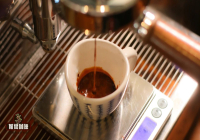
Coffee blends are generally used for espresso. Using 2 to 5 types of beans, either blended before roasting or roasted separately and then combined, allows the beans to complement each other's strengths and weaknesses and creates a coffee that is rich and aromatic.
Blends usually use commercial beans or entry-level specialty beans, relying on the blending method to achieve a flavor better than any of the components could manage alone, and delivering excellent value for money. With autumn arriving, I wanted to follow this line of thinking and create a blend suited to autumn drinking and designed specifically for pour-over.
My hope was that this blend would show a clean, clear flavor and mouthfeel, with a soft yet varied acidity and a medium-high sweetness in the aftertaste. Ideally it should carry some fruity and botanical notes, and the green beans used should be relatively inexpensive.
In the end, from the beans I had on hand, I selected four to consider for the blend: Colombian Caturra washed, Costa Rican SHB Caturra washed, Kenyan AA, and Yunnan Huaguoshan Typica washed. Among these four, although some sit at the better commercial bean level, their cupping scores are all around or above the specialty line.
Roasting Strategy and Blend Experiments
First, I considered blending the roasted beans. I would roast the Kenyan AA to a light roast, hoping to provide lively acidity and some berry flavor in the cup. I would roast the Colombian to a medium-light roast to increase the complexity of the acidity and the aroma of sucrose. The Yunnan and Costa Rican would be roasted to a medium degree to enhance caramel, brown sugar, and cream aromas, improve balance, and provide sufficient sweetness.
Different types and origins of coffee beans each have unique flavors, aromas, and mouthfeel. By mixing and matching according to your favorite flavors, you can create your own exclusive coffee.
Generally, single-origin Arabica coffee is enough on its own to produce coffee with an excellent taste: fragrant aroma, soft mouthfeel, and sweet aftertaste. So there is no need to "blend," meaning to combine coffees from different origins.
Roasted Blend Experiments
I experimented with the following roasted blend recipes:
1. Yunnan : Kenya : Colombia in a 6:2:2 ratio
2. Yunnan : Kenya : Costa Rica in a 6:2:2 ratio
3. Yunnan : Costa Rica in a 6:4 ratio
4. Yunnan : Kenya in a 6:4 ratio
Blend #1 has aromas of black tea, plum, caramel, and cream. The acidity is lively but somewhat sharp, the mid-flavor is a little weak, and the sweetness in the aftertaste is not as good as expected, with woody flavors and astringency.
Blend #2 has aromas of plum, nuts, caramel, and cream chocolate. The acidity is rather monotonous and dull, the sweetness in the aftertaste is good, and the mouthfeel is smooth, but the tone is too low-pitched.
Blend #3 is mainly nuts, caramel, and cream chocolate. Weak acidity, strong sweetness. The flavor is rather one-dimensional and the tone is low-pitched.
Blend #4 has aromas of black tea, plum, and caramel. The overall style is fresh and lively, but the acidity is a little stimulating and the mouthfeel is not smooth enough. After the acidity fades, the sweetness cannot follow quickly, so the overall flavor structure is not complete.
Green Bean Blend Experiment
The four roasted blends each have their pros and cons, and none completely met my earlier requirements. #1 came closest, so I finally decided to use the same beans as #1 but change the ratio and try a green bean blend.
The roast degree for the green bean blend was set to medium-light, with Yunnan Typica accounting for the majority. This Yunnan bean already shows an obvious brown sugar aroma at medium-light roast, along with black tea and a little cream flavor, and its cup performance is clean with high sweetness.
Since the moisture content and hardness of the three beans are relatively high, and although the varieties differ, the size difference is not too large, which will not add much difficulty to roasting because it is a green bean blend.
In roasting, I used medium-high heat to complete dehydration in about 5 minutes and 30 seconds, first crack began at about 9 minutes, with a development time of 2 minutes and 20 seconds, and the bean temperature rose by about 9 degrees during development.
After pour-over and cupping, the flavor of this green bean blend met my expectations. The acidity is soft yet varied, and it slowly connects with the sweetness in the middle section, with a persistent, long-lasting aftertaste. It has a feeling of fresh green plants, with aromas of black tea, plum, caramel, brown sugar, and cream. The flavor is clear and clean, with medium body and a slightly sparkling mouthfeel.
Recommended Coffee Blend Brands
FrontStreet Coffee, a coffee roasting brand based in Dongshankou, Yuexiu District, Guangzhou, offers freshly roasted espresso blend beans with full guarantees of both brand and quality. More importantly, the value for money is extremely high. Take their commercial-grade recommendation, FrontStreet Coffee's Commercial Blend coffee beans: a one-pound (454g) package costs only about 60 yuan. Calculating on 10g of grounds per single espresso shot, one package makes 45 cups, so each cup costs less than 1.5 yuan. Even using double shots at 20g per serving, a double espresso does not exceed 3 yuan. Compared with certain well-known brands that sell packages for hundreds of yuan, this is a genuinely conscientious recommendation.
FrontStreet Coffee Recommendation
For pour-over, the Yunnan character at the heart of this blend is captured beautifully by FrontStreet Yunnan Small Bean. Grown in the Baoshan region, processed by the washed method, and given a medium roast, it highlights a caramel note while keeping some acidity, so it expresses the terroir of the Yunnan region well, with gentle nut and chocolate sweetness and a light plum acidity.
To bring out a clearer, more layered Yunnan flavor, FrontStreet 2013 Natural Typica uses the most traditional post-harvest method, the natural process, on one of the oldest and purest Arabica varieties. After drying, the cup becomes fuller, the sweet-tart character more pronounced, with citrus and berry notes, a trace of fermented wine aroma, caramel sweetness, and a creamy finish.
And if you want Yunnan in an espresso, FrontStreet Black Cocoa Blend pairs Yunnan small bean with Brazil Cerrado. Brazil supplies the mixed-nut aroma and balanced body, while Yunnan plays the role of chocolate and citrus, so an Americano balances acidity, sweetness, and bitterness with nutty and brown sugar sweetness, and a latte turns smooth and creamy with almond.
Important Notice :
FrontStreet Coffee is a long-established specialty coffee roaster in Guangzhou China, selling freshly roasted beans from its own farm in Yunnan as well as dozens of carefully selected single-origin beans from around the world for both pour-over and espresso. The products deliver consistently excellent quality and great value, with shipping within 24 hours. Guangzhou's FrontStreet Coffee shop is recommended by many coffee lovers, and the beans are now available online at the Tmall 。
FrontStreet Coffee has moved to a new address:
FrontStreet Coffee Address: 315,Donghua East Road,GuangZhou
Tel:020 38364473
 Scan and follow the En Gafei WeChat official account. Please indicate that the reprint comes from "En Gafei".