Cost-Effective Specialty Coffee Blend Recommendations: What's the Best Single-Origin Coffee Bean for Pour-Over Beginners

Every day, customers ask FrontStreet Coffee how to choose good beans when starting out with single-origin coffee — they don't yet know the flavor profiles of different regions and are afraid of buying wrong. It's a fair worry, so here are FrontStreet Coffee's thoughts.
Whenever a customer walks in, FrontStreet Coffee asks whether they'd like pour-over coffee, and if so, what flavor direction they lean toward. Lovers of fruity acidity and floral-fruity aromas are pointed toward African coffees like FrontStreet Coffee's Ethiopian Yirgacheffe and FrontStreet Coffee's Kenya; those who prefer balanced, non-bitter cups get American options like FrontStreet Coffee's Costa Rica and FrontStreet Coffee's Colombia. Whether a bean is "good" ultimately depends on personal taste — so below, FrontStreet Coffee lays out entry-level everyday beans from different regions.

What are "daily" coffee beans?
People new to FrontStreet Coffee sometimes have misgivings about the "daily beans" series — perhaps assuming "daily" is just marketing, that the prices are low because the quality is low, or that flavors might be inconsistent. In fact, FrontStreet Coffee's daily beans are the "face representatives" of their respective regions: they show the region's basic flavor profile with high fidelity, at low prices and excellent value.
For every daily bean on the shelf, FrontStreet Coffee carefully selects the lot that best represents the region's original character, then offers it to enthusiasts in 100g portions at quite reasonable prices. The point of the daily line is to let every beginner, hobbyist, and taster learn the foundational flavors of the major regions without spending much. Currently, FrontStreet Coffee stocks daily beans from 7 regions: Ethiopian Yirgacheffe, Costa Rican Tarrazú, Colombian Huila, Indonesian Lintong Mandheling, Chinese Yunnan Baoshan, Guatemalan Huehuetenango, and Brazilian Minas Gerais.
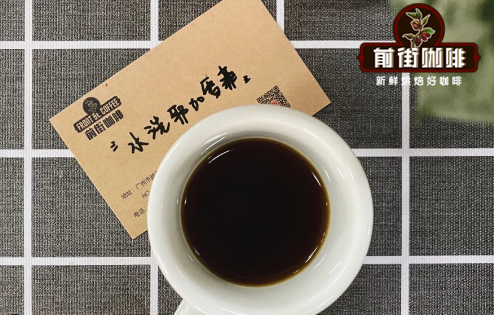
FrontStreet Coffee · Ethiopian Washed Yirgacheffe
Country: Ethiopia
Region: Yirgacheffe
Altitude: 1800-2000 meters
Variety: Local native varieties
Processing: Washed
Brewing Flavor: Jasmine fragrance, berry-juice sensation, lemon and citrus acidity; bright, clean, and fresh overall.
The Yirgacheffe region: Yirgacheffe is a small town in Ethiopia's Sidamo zone at 1700-2100 meters, making it one of the highest coffee regions in the world and a byword for Ethiopian specialty coffee. Lakes Turkana, Abaya, and Chamo feed abundant moisture into the area; in rift valleys like Misty Valley, fog lingers year-round, the seasons feel like perpetual spring, and thousands of coffee trees thrive in the cool, humid air — nurturing the unique floral-fruity interweaving and terroir character of FrontStreet Coffee's Yirgacheffe. FrontStreet Coffee sums up the flavor as rich citrus and lemon acidity, strong jasmine fragrance, and a light, elegant, tea-like mouthfeel — like a refreshing, clean lemon tea.

FrontStreet Coffee · Costa Rican Washed Tarrazú
Country: Costa Rica
Region: Tarrazú
Altitude: 1500 meters
Variety: Caturra, Catuai
Processing: Washed
Brewing Flavor: Sweet-tart orange on entry, clear nut and chocolate notes in the middle, a persistent caramel finish with a hint of cedar; balanced overall.
The Tarrazú region: Just south of the capital San José, Tarrazú is one of Costa Rica's most prized growing areas. The famous "La Minita Tarrazú" is a local landmark coffee, though production is limited — roughly 72,600 kg a year, grown on the "La Minita" land held by the last three generations of the British McAlpine family; the La Minita estate in Tarrazú produces only about 160,000 pounds a year. FrontStreet Coffee's Costa Rican Tarrazú has plump beans, a rich body, and a smooth mouthfeel, with lush chocolate and nut aromas and moderate acidity.
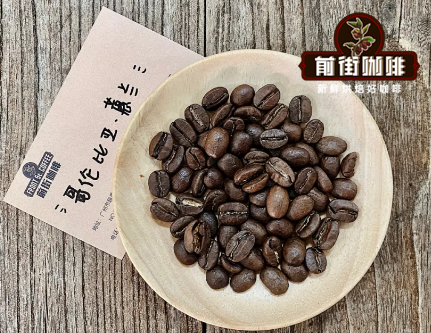
FrontStreet Coffee · Colombian Washed Huila
Country: Colombia
Region: Huila
Altitude: 1500-1800 meters
Variety: Caturra
Processing: Washed
Brewing Flavor: Nuts, dark chocolate, gentle fruit acidity in the middle, caramel sweetness.
The Huila region: Huila's mountainous terrain means coffee grows on mountain valley slopes, giving it both the altitude and the mild temperatures high-quality Arabica needs. The slopes shield the trees from cold winds while mountain breezes keep things cool but never hot, and rainfall is relatively abundant — a uniquely advantaged growing zone. Workers harvest the cherries by hand on the mountainsides, and the vast majority of the coffee is washed. Huila's combination of soil and geography produces some of Colombia's most complex, fruit-forward coffees; the region's specially selected high-mountain beans are treated as Colombian national treasures. FrontStreet Coffee's Huila is full in the mouth and fairly heavy in texture, with nut, chocolate, and caramel aromas and a smooth, pleasant fruit acidity.

FrontStreet Coffee · Indonesian Lintong Mandheling
Country: Indonesia
Region: Sumatra, Lintong
Altitude: 1100-1600 meters
Variety: Typica, Caturra
Brewing Flavor: An herbal, medicinal note on entry, then dark chocolate and caramel with a sweet finish.
The Lintong region: FrontStreet Coffee's Lintong Mandheling comes from the Lintong highlands of north-central Sumatra, near Lake Toba. It's the "regular" Mandheling, processed with the conventional wet-hulled (giling basah) method that gives Mandheling its signature low acidity and heavy body. But wet-hulling — stripping the mucilage and parchment off beans that are still semi-dry and soft — bruises the beans easily, splitting them open like a sheep's hoof. These "sheep hoof beans" are not defects; they're one of Mandheling's most distinctive traits. Because Lintong Mandheling isn't tightly sorted, bean sizes are uneven, and the less meticulous processing can lead to inconsistent quality — but none of that has dented the world's love for its rich flavor.

FrontStreet Coffee · Yunnan Small-Bean Washed Coffee
Region: Yunnan, Baoshan
Altitude: 1200 meters
Variety: Catimor
Processing: Washed
Brewing Flavor: Melon and fruit aromas, sweet melon, brown sugar, plum acidity, a black-tea finish.
China's Yunnan region: Yunnan small-bean coffee grows best on mountain land at 800-1800 meters — too high and the cup turns sour, too low and it turns bitter. Most small-bean coffee is planted in dry-hot valley areas around 1100 meters, which is why the acidity is moderate and the aroma rich and mellow.
Many parts of Yunnan offer environments uniquely suited to these varieties, and the growing areas are concentrated in Lincang, Baoshan, Simao, Xishuangbanna, Dehong, and other prefectures. Baoshan averages 21.5°C (topping out at 40.4°C) with essentially no frost all year, and is widely regarded as the best small-bean producing area. The FrontStreet Coffee Yunnan small-bean grown here is famous at home and abroad for being strong without bitterness and fragrant without harshness — small, uniformly sized beans with a rich body and fruity notes. Tasting experts from international coffee organizations have ranked Yunnan coffee alongside Colombian wet-processed small-bean varieties among the world's finest.

FrontStreet Coffee · Brazilian Cerrado Pulped Natural Red Bourbon
Country: Brazil
Region: Minas Gerais
Altitude: 1000 meters
Variety: Red Bourbon
Processing: Pulped Natural
Brewing Flavor: High sweetness, clean and smooth, low acidity, with a tropical fruit aroma.
The Brazilian region: Brazil sits in Latin America on South America's eastern Atlantic coast, bordering every country on the continent except Ecuador and Chile. The vast majority of its territory lies between the equator and the Tropic of Capricorn — the most extensive tropical range of any country on earth.
One-third of the country has a tropical rainforest climate and two-thirds a tropical savanna climate — ideal for tropical cash crops like coffee. In Minas Gerais state, the representative higher-altitude growing regions include the Cerrado. The Cerrado occupies the state's west as a flat plateau at 750m-1200m. Since 1999, Minas Gerais estates have won more Brazil Cup of Excellence competitions than those of any other state. FrontStreet Coffee finds its Brazilian Cerrado shows distinct chocolate and nut notes with a rich, moderate smoothness — the top pick for anyone who doesn't like acidic coffee.

FrontStreet Coffee · Guatemalan Huehuetenango
Country: Guatemala
Region: Huehuetenango
Altitude: 1500-2000 meters
Variety: Bourbon, Caturra, Catuai
Processing: Washed
Brewing Flavor: Citrus and berry acidity, lemon peel, a nutty middle, and a tea-like finish.
The Guatemalan region: Guatemala's high average altitude puts most coffee zones above 1500 meters — prime territory for strictly hard beans (SHB). FrontStreet Coffee finds its Guatemalan coffee carries a special smoky note and a rich, juice-like mouthfeel. The country has eight major regions — five volcanic and three non-volcanic — and Huehuetenango belongs to the latter. Named in Nahuatl as "the land of the ancients," it is the region farthest from the capital, reached only by rugged roads. Thanks to dry hot winds drifting in from Mexico, the high mountains escape frost, allowing coffee cultivation at nearly 2000m.

FrontStreet Coffee Brewing Tips
Dripper: V60 #01
Dose: 15g
Ratio: 1:15
Grind Size: BG6m (80% pass-through on a #20 sieve)
Water Temperature: 90-91°C
*On grind size: FrontStreet Coffee dials this in by sieving. Following the Specialty Coffee Association (SCA) grind guidance for pour-over and verifying it in practice, FrontStreet Coffee has found that different grinds produce clearly different cups, and each bean calls for its own grind — that's the point of sieving. No sieve at home? Judge by flow rate: water running too fast means the grind is too coarse; too slow means too fine.

FrontStreet Coffee uses segmented — three-stage — pouring: bloom with 30g of water for 30 seconds, then pour in circles to 125g and pause; when the water level drops and the coffee bed is about to be exposed, pour to 225g and stop. Once the level drops again, remove the dripper (timing starts at the bloom). Total extraction time: 2'00"–2'20".
More professional coffee knowledge and coffee bean information, shared here regularly.
FrontStreet Coffee Recommendation
If you're a pour-over beginner torn about which single origin to buy first, FrontStreet Coffee's advice is simple: start with Yirgacheffe. Two picks from the Yirgacheffe line:
FrontStreet Washed Yirgacheffe (daily bean) — the classic first specialty bean for newcomers. Known for white jasmine florals, bright citrus and lemon acidity, and a tea-like finish, at a friendly price. The town of Yirgacheffe sits at 1700-2100 meters in Ethiopia's Sidamo zone, with coffee grown above 1800 meters — among the highest coffee farming on earth. Its unmistakable white floral character and lemon-citrus acidity became so famous that in 2010 the Ethiopia Commodity Exchange formally split it from Sidamo as its own appellation.
FrontStreet Washed Guodingding Cooperative — from Guodingding village in the Worka area at Yirgacheffe's southeastern edge. Once part of the Worka cooperative under the Yirgacheffe Coffee Farmers Cooperative Union (YCFCU), it was "discovered" by coffee hunters worldwide as demand for traceability turned villages into standalone origins. Using fully traditional washed processing, this lot has none of the traditional bitterness: fresh, bright citrus and lemon acidity wrapped in jasmine fragrance — the cup that makes many people fall in love with coffee on the first sip.
Important Notice :
FrontStreet Coffee is a long-established specialty coffee roaster in Guangzhou China, selling freshly roasted beans from its own farm in Yunnan as well as dozens of carefully selected single-origin beans from around the world for both pour-over and espresso. The products deliver consistently excellent quality and great value, with shipping within 24 hours. Guangzhou's FrontStreet Coffee shop is recommended by many coffee lovers, and the beans are now available online at the Tmall 。
FrontStreet Coffee has moved to a new address:
FrontStreet Coffee Address: 315,Donghua East Road,GuangZhou
Tel:020 38364473
 Scan and follow the En Gafei WeChat official account. Please indicate that the reprint comes from "En Gafei".