How to Understand Packaged Coffee Bean Information_Can Packaged Coffee Beans Be Eaten Directly_Packaged Coffee Bean Prices
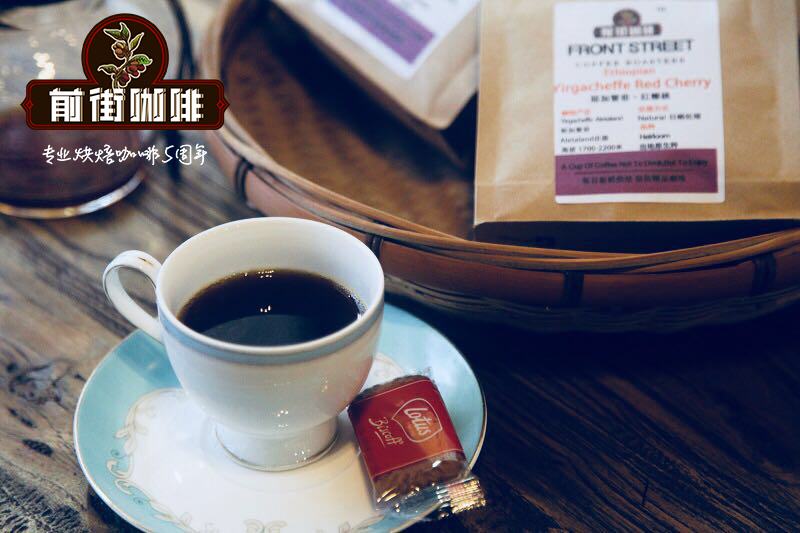
Some friends have asked: "I bought a bag of coffee beans and the label is covered in writing, like some kind of code. Should I just ignore it and drink it?"
Yes, just drink it.
After you finish, if you happen to have some spare time, you can study what exactly is printed on the packaging—or study it while you drink. The benefit is that it passes the time, and it also gives you a little more confidence when choosing beans next time. Today I'm going to very irresponsibly teach everyone how to read the labels on coffee packaging.
▼▼▼
First, let me repeat that what I'm saying is very rough, and many of the claims are based on my own experience and won't hold up to scientific or expert scrutiny. I just hope that, in a short time, friends who are only starting to get into coffee won't be intimidated by all that data and terminology—at least they won't habitually glance at the description when they get a bag of beans, then put it down completely confused.
▼▼▼
Let's look at some coffee bean packaging bags I've tried.
*From Xiangtou Coffee
*From Minority
To sum up,
There are often several difficult characters (dubbing style) that appear on coffee bags.
I'll categorize them with color blocks.
█
Region \ Variety \ Elevation
█
Producer \ Batch \ Processing Plant
█
Picking Processing Time \ Roast Level \ Processing Method \ Flavor
█ Region
Region information is the equivalent of the first sentence of a bean's self-introduction: "Who am I." Different regions, different flavors. The region referred to here is located precisely—down to the estate or even the plot. That bag of Geisha above comes from Volcan, Panama. Beans from the same producing country meet different natural conditions in different regions, and the flavor varies slightly. The idiom "southern oranges, northern trifoliate oranges" seems to describe this phenomenon. But I think it's enough to remember the main producing regions; you might not even be able to pronounce the names of more specific regions, and you just need the awareness of "southern oranges, northern trifoliate oranges."
If you have a lot of time and are very sensitive, precise region labeling can also help you explore the different flavors that the same coffee develops under different natural conditions in different regions. For example, places with higher humidity tend to develop fruity aromas, while volcanic rock regions might grow bitter-sweet chocolate notes. Of course, I find this quite difficult. When it comes to drinking coffee, take it easy.
Key point: Remember the main producing regions (such as Kenya, Panama, etc.).
█ Variety
This one is difficult to explain. As mentioned before, most specialty coffees belong to the Arabica variety (99.99%, maybe). Currently, under the Arabica category there are 2,000-3,000 coffee varieties, but they are all descendants of the two parent varieties "Typica" and "Bourbon." Pure varieties are of course rare (same as cats and dogs), but hybrids don't necessarily mean inferior quality. Coffee has a characteristic, though: varieties with stronger disease resistance and higher yield are often more likely to have slightly inferior flavors. Scarcity makes things valuable, and scarcity often means better taste. That rule hasn't changed much in the coffee industry. Currently the more recognized, award-winning varieties are probably: Bourbon, Typica, Yellow Bourbon, Caturra, Pacamara, Catuai, and Geisha, which may also be common on the coffee packaging bags you buy.
Key point: Arabica \ Typica \ Bourbon
█ Elevation
Specialty coffees basically grow above 3,000 feet (912m), mainly because of the large temperature difference between morning and evening at high altitudes, sufficient sunlight, and slower growth of coffee trees, which gives the fruit more time to develop richer flavor compounds. In principle, the higher the elevation, the higher the acidity and sucrose content, the more aromatic the taste, and the lower the oil content. But this is not absolute. Some subtropical regions, for example, aren't high in altitude but can achieve climate characteristics similar to high altitudes thanks to monsoons and shade trees. Coffee from Hawaii is quite good, for instance.
Key point: Elevation \ High elevation tends to produce good beans
█
Producer \ Batch \ Processing Plant
It's not that these are unimportant; it's that you won't understand them even if you look. The experts among experts, especially green bean importers, may care more about green bean producers and processing plants. Different producers and processing plants definitely differ in quality, but ordinary coffee drinkers may find it hard to tell. Labeling batches can also prove the uniformity of a bean lot, and different batches taste slightly different. So you can see these labels as meaning the green bean source is guaranteed.
Key point: It's okay if you don't understand
●Packaged Coffee Bean Brand Recommendations
FrontStreet Coffee's freshly roasted single-origin & espresso packaged coffee beans—Yirgacheffe coffee, Brazilian coffee, Mandheling coffee, and more—are fully guaranteed in brand and quality and suit a range of brewing equipment. More importantly, they offer excellent value, so you can keep a few different origins on the shelf and match them to your mood.
FrontStreet Coffee Recommendation
When you're reading a label, roast level is one of the most useful clues, and medium roast is the sweet spot for many drinkers. FrontStreet Coffee's Queen's Farm from Brazil is a good example: a Yellow Bourbon from the world's largest coffee-producing country, roasted medium to bring out creamy peanut, chocolate, toasted bread, and sugarcane aromas and sweetness. It brews well as pour-over and also works in a moka pot or espresso machine.
If you'd rather explore something fruitier, FrontStreet Strawberry Candy is a Geisha blend made for sweetness. It combines two well-known origins—a honey-processed coffee from Costa Rica and a washed Geisha from Panama—and is roasted medium so the cup shows both tangerine-honey notes and a rounded sweetness. It is suited to cold brew, pour-over, and espresso alike.
FrontStreet 2013 Natural Typica rounds things out with the Yunnan-grown character: a natural-process Typica, roasted medium for a balanced, gentle cup with soft notes of nuts, brown sugar, black tea, and dried apricot. And FrontStreet Jamaica Blue Mountain No.1 shows what balance looks like at the top end—chocolate, roasted nuts, cream, and caramel, with the acidity, bitterness, sweetness, and aroma working together.
Important Notice :
FrontStreet Coffee is a long-established specialty coffee roaster in Guangzhou China, selling freshly roasted beans from its own farm in Yunnan as well as dozens of carefully selected single-origin beans from around the world for both pour-over and espresso. The products deliver consistently excellent quality and great value, with shipping within 24 hours. Guangzhou's FrontStreet Coffee shop is recommended by many coffee lovers, and the beans are now available online at the Tmall 。
FrontStreet Coffee has moved to a new address:
FrontStreet Coffee Address: 315,Donghua East Road,GuangZhou
Tel:020 38364473
 Scan and follow the En Gafei WeChat official account. Please indicate that the reprint comes from "En Gafei".