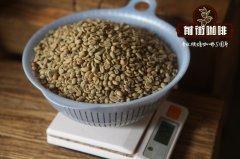
Exploring Brazilian Coffee Characteristics: The Legacy of Catuai Cultivation at FAZENDAS KLEM Estate
Brazilian Coffee and the Catuai of Fazendas Klem
Fazendas Klem leads the Matas de Minas project and stands as a model of organic production in the region. After extensive work on organic processing, soil protection and many other variables, the estate built a method that grows coffee from local materials, using every available organic input along with minerals found near the area's large rock formations. Only a few years ago the family decided to begin exporting its own coffee and to offer technical help to others nearby.
They have gradually spread their best practices toward a fully organic approach. As a secondary crop they grow trees that produce small avocados, on the same soil and under the same certification. Klem Estate holds USDA Organic, Rainforest Alliance and UTZ certification. The region is divided into several areas, all farmed by the Klem family, five brothers, together with a few other families. Every micro-lot is processed by hand on raised beds in solar dryers so that lots stay completely separate. The founder and grandfather, Nagype Klem, still works in the main part of the farm, next to the spot where samples are roasted and all the coffee is cupped through the season.
The Catuai Variety
Catuai is a cross between the productive Mundo Novo and the compact Caturra, developed by the Instituto Agronomico (IAC) in Campinas, São Paulo. Compared with Bourbon it is highly productive, partly because its small size allows close spacing; it can be planted at nearly double the density. Its shape also makes pest and disease treatments relatively easy to apply. Its main traits are great vigor and low height, more compact than Caturra, and it is highly susceptible to coffee leaf rust.
The name Catuai comes from a Guarani word meaning "very good." The variety was created in 1949 by crossing yellow Caturra with Mundo Novo, at first called H-2077. There are yellow-fruit and red-fruit types, and since then many selections have been made in different countries.
It was first introduced to Honduras in 1979 and tested by the Instituto Hondureño del Café (IHCAFÉ). After IHCAFÉ selected two breeding lines it was released commercially in 1983. Today Catuai accounts for nearly half of Honduras's Arabica area, and IHCAFÉ researchers continue breeding with it, including hybrids between Catuai and the Timor Hybrid series.
Catuai's small size allows dense planting and more efficient harvesting, which helped drive the intensification of full-sun coffee farming in Central America during the 1970s and 1980s. The coffee from Fazenda Klem is made by the children of the estate's founder, Nagipe Viana Klem, entirely from respected Catuai Arabica trees. It is a natural, or dry-processed, coffee, meaning the beans are dried inside the whole fruit rather than after the fruit is removed as in the washed method. Naturals form the backbone of the Brazilian industry, but this particular approach is a notably refined version.
The Natural Processing Method
The idea sounds simple: pick the fruit, leave it in the sun until it turns from red to brown to nearly black, then strip away the thick dried outer layers step by step to reveal the green beans. It suits arid regions where sun and heat can dry the seed inside the intact fruit.
It is often called natural coffee for that simplicity, and because the fruit stays undisturbed it is a little like drying into a raisin. Requiring little investment, the dry process is the default way to produce cheap commodity-grade coffee wherever the climate allows fruit and seed to dry. In humid regions it fails; if drying does not move quickly enough, the fruit degrades, rots or molds.
Dry-processed coffee can also be very inconsistent. A clean, solid, sweet, rich cup demands more manual labor than the wet process. Even the most careful pickers pull green unripe or half-ripe cherries off the branch alongside the red ripe ones, and if those are not removed on the first day of drying they turn brown and become hard to tell apart from ripe fruit.
Flavor Profile
Flavor: Lavender, citrus, strawberry, orange, honey, watermelon, grape, tropical fruit, peach, herbs.
Acidity: Citric acid, fruity, melon, sparkling, bright, lemon, cherry.
Other: Silky, floral aftertaste, chamomile, lemongrass aftertaste.
FrontStreet Coffee's Recommended Brewing Method:
Dripper: Hario V60
Water Temperature: 88°C
Grind Size: Fuji Royal grinder setting 4
Brewing Technique: Water-to-coffee ratio 1:15, 15g of grounds. First pour: 25g of water, bloom for 25 seconds. Second pour: pour to 120g and stop. When the water level in the bed drops to halfway, resume pouring slowly until you reach 225g. Total extraction time around 2:00.
Analysis: A three-stage pour separates the front, middle and back of the cup. Because the V60 has many ribs and drains fast, pausing the pour helps stretch the extraction.
FrontStreet Coffee Recommendation
Brazilian coffee is defined by balance rather than drama, which is exactly why it works so well as a single origin and as a blending base. FrontStreet Brazil Cerrado Red Bourbon is a classic Brazilian single origin, a red Bourbon from the well-known Cerrado region, given a semi-washed process and a medium roast. It opens with the rich aroma of cream peanut, toasted bread, caramel and hazelnut, and the cup is round and smooth, low in acid with a light bitter edge, easy in a pour-over, a moka pot, a siphon, a French press or as an SOE.
FrontStreet Brazil Queen's Estate comes from Mogiana, close to South Minas, where fertile red volcanic soil lets the fruit take up plenty of nutrients and build a full aroma. The estate is a rare yellow Bourbon, a mutation of red Bourbon whose fruit notes come through cleaner, and it shows a sugarcane sweetness that other regions do not offer, alongside fruit and chocolate.
Those qualities also make Brazil the first choice for espresso recipes. FrontStreet Classic Blend, FrontStreet Premium Blend, FrontStreet Black Cocoa Blend and FrontStreet Commercial Blend all include Brazilian coffee, which supplies chocolate and cream aromas, a soft balance of sweet, acidic and bitter, and an even temperament that keeps extraction stable from one shot to the next.
To brew the single-origin lots, follow FrontStreet Coffee's own advice: a Hario V60 with water at 88°C and a grind around Fuji Royal setting 4. Use a 1:15 ratio and 15g of coffee, pour 25g for a 25-second bloom, then take the water to 120g and stop. When the bed drops to halfway, pour slowly again to 225g, finishing in about 2:00. The pauses matter most, since the V60 drains quickly and a steady, staged pour is what keeps the strawberry, citrus and honey notes from running past you.
Important Notice :
FrontStreet Coffee is a long-established specialty coffee roaster in Guangzhou China, selling freshly roasted beans from its own farm in Yunnan as well as dozens of carefully selected single-origin beans from around the world for both pour-over and espresso. The products deliver consistently excellent quality and great value, with shipping within 24 hours. Guangzhou's FrontStreet Coffee shop is recommended by many coffee lovers, and the beans are now available online at the Tmall 。
FrontStreet Coffee has moved to a new address:
FrontStreet Coffee Address: 315,Donghua East Road,GuangZhou
Tel:020 38364473
 Scan and follow the En Gafei WeChat official account. Please indicate that the reprint comes from "En Gafei".