Jamaica Blue Mountain Wallenford Estate No.1 | Blue Mountain Coffee | Best Coffee Beans for Pour-Over Coffee
Professional coffee knowledge exchange, more coffee bean information, please follow Coffee Workshop (WeChat public account: cafe_style)
Pour-over Coffee Recommendation | FrontStreet Coffee Premium Coffee Beans --- Jamaica Blue Mountain No.1
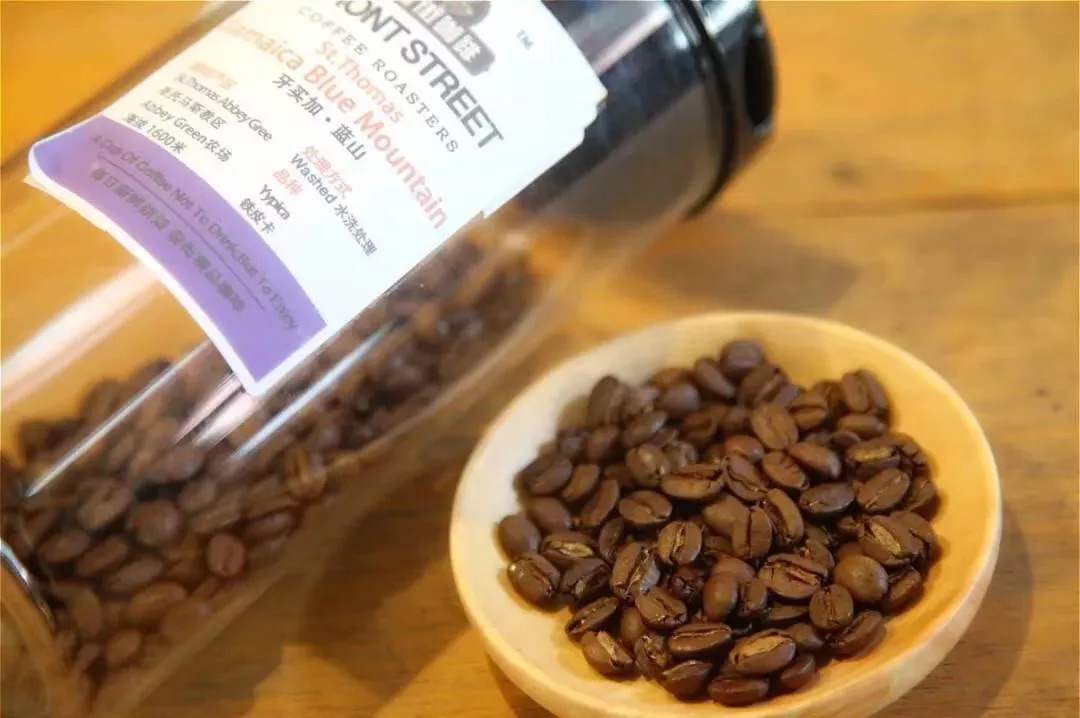
Product Name: Jamaica Blue Mountain Wallenford No.1 (Whole bean)
Roast Level: Medium-light ●●○○○
Processing Method: Washed
Origin: Jamaica
Region: Blue Mountain
Estate: Wallenford Estate
Altitude: 1850-2000 meters
Variety: Typica
Grade: No.1
Flavor Description: Very rich aroma with persistent fruit notes
Introduction
Blue Mountain Coffee
Coffee drinkers have probably heard of Blue Mountain Coffee and know that Jamaica Blue Mountain is excellent coffee. But is the Blue Mountain we drink truly Blue Mountain?
'Blue Mountain Flavor' - This only says that the coffee tastes like Blue Mountain, not necessarily that it really does, and it may not contain a single genuine Blue Mountain bean.
'Jamaica Coffee' - Blue Mountain Coffee is produced in Jamaica, but Jamaica Coffee is not necessarily Blue Mountain Coffee.
'Jamaica Blue Mountain Coffee' - This is Jamaica Blue Mountain Coffee, but to be called Jamaica Blue Mountain No.1, further conditions must be met.
Why is it called 'Blue Mountain Coffee'?
The Blue Mountain Range lies in eastern Jamaica, surrounded by the Caribbean Sea. On clear days, when sunlight falls directly on the azure water, the peaks reflect the brilliant blue light of the sea, which is where the name comes from. The range has fertile volcanic soil, fresh air, a humid climate, and fog and rain year-round. These conditions created the world-renowned Jamaica Blue Mountain Coffee and, with it, the world's highest-priced coffee.
Coffee from the Blue Mountain Range is divided into three grades: Jamaica Blue Mountain, Jamaica High Mountain, and Jamaica Low Mountain or Jamaica Supreme. Coffee grown below 1500 feet is called Jamaica Coffee, coffee between 1500 and 3000 feet is called High Mountain Coffee, and only coffee between 3000 and 5000 feet may be called Blue Mountain Coffee. In price terms, Blue Mountain Coffee is several times more expensive than High Mountain Coffee. Blue Mountain Coffee is further divided into No.2 and No.1, with No.1 the highest grade.
Several estates currently produce top-grade Jamaica Blue Mountain No.1, among them Wallenford, Mavis Bank, Silver Hill, and Moy Hall. Of these, Wallenford is the only special Jamaican state-owned processing facility. The legal production area for Blue Mountain Coffee is 3000-5000 feet, and Wallenford Estate selects only beans grown above 4000 feet for processing. Its Blue Mountain Coffee is acclaimed as "Superior Quality," and among connoisseurs' evaluations of all Jamaica Blue Mountain estates, Wallenford performs best in quality management, stability, reputation, and flavor.
How does Wallenford Blue Mountain No.1 taste? General evaluations cite acidity, sweetness, a mellow and non-bitter cup, and excellent quality with an unforgettable aftertaste.
Wallenford Estate Jamaica Blue Mountain Coffee
The subtly fragrant, sweet notes of Jamaica Blue Mountain, with a wine-like mellow texture, have long been a favorite among Japanese coffee connoisseurs. Its limited production marks it as specialty coffee and makes it one of the most expensive coffees in the world. Not every coffee produced in Jamaica may carry the Blue Mountain label, however. It must be certified by the Jamaica Coffee Industry Board and come from specific administrative regions of the Blue Mountains at certain altitudes. This product comes from the traditional Wallenford washed processing facility and shows the elegant sweetness typical of Blue Mountain; barrel-aged and roasted medium-light, it is perfectly balanced and flawless, with a refreshing texture and a lingering aftertaste.
In 1728, coffee was first introduced to Jamaica for cultivation. Jamaica's suitable soil, climate, and sunlight made for outstanding quality, and cultivation gradually expanded from St. Andrews to other areas.
In 1737, Jamaica's coffee production reached 83,000 pounds per year.
Over the following 40 years, numerous private estate owners emerged. By 1800, Jamaica had 686 coffee-growing estates.
Because of the slave trade, labor costs rose sharply and estate owners could not bear the burden. By 1850, coffee-growing estates had fallen to 186.
By 1900, the Jamaican government established its first coffee quality standard, but many private estate owners resisted it and it was never implemented.
With no quality standard in place, Blue Mountain Coffee export quality became inconsistent and its international reputation suffered badly. By 1943, Canada, then a major importer, refused to import Blue Mountain Coffee.
In 1944, the Jamaican government recognized the need to regulate the Blue Mountain Coffee industry and set out three regulatory recommendations:
1. Centralized processing of Blue Mountain Coffee beans,
2. Establishing Blue Mountain Coffee quality standards,
3. Establishing the CIB to organize and manage the market and serve as export supervisor.
In 1948, the world-renowned Jamaica Coffee Industry Board (CIB) was officially established, and the Jamaican government enacted the "Jamaica Blue Mountain Coffee Industry Management Regulations." The CIB's main responsibility is to improve Blue Mountain Coffee quality through management and supervision and to restore its global reputation.
At that time, the definition of Blue Mountain Coffee was strictly set out in the regulations:
1. Granting four legal coffee estates, including Wallenford, centralized processing rights for Blue Mountain Coffee beans to protect quality.
2. Grown in the 3000-5000 feet Blue Mountain region.
3. Blue Mountain Coffee export grades: No.1/No.2/No.3/Peaberry.
Starting in 1960, some management functions were assigned to the oldest and only state-owned Blue Mountain estate, Wallenford Estate. Wallenford became synonymous with the CIB, shouldering the mission of improving Blue Mountain Coffee quality, setting management rules, and innovating coffee industry management. Estate managers were appointed by government departments. All Blue Mountain Coffee exported from Jamaica was also named Wallenford Estate Jamaica Blue Mountain Coffee, representing the highest grade of Blue Mountain Coffee.
Since 1827, in the eyes of connoisseurs worldwide, Wallenford Estate has built a history of nearly 300 years and is Jamaica's oldest Blue Mountain Coffee estate. The earliest Blue Mountain Coffee cultivation in Jamaica took place at Wallenford, which has been crowned with the national treasure title "Wallenford Blue Mountain Coffee," representing the highest grade of Blue Mountain Coffee. Its limited production is typically chosen by royalty and nobility and commands a premium price. Today, Wallenford is Jamaica's most stable and trustworthy Blue Mountain Coffee processing estate, renowned worldwide for its exceptionally high-quality coffee.
Jamaica is known worldwide for producing Blue Mountain Coffee. At the same time, sitting on the Caribbean coast, it frequently suffers hurricane attacks. Hurricanes in the 1940s and 1950s caused devastating damage to most Blue Mountain estates, and the losses to coffee trees, estate facilities, and roads were more than owners could bear. To boost Blue Mountain Coffee production, the government decided to support and sell Blue Mountain estates. Coffee investors from Japan, the United Kingdom, and elsewhere were fortunate to obtain management rights for most of Jamaica's Blue Mountain estates. Even so, the Jamaican government did not completely give up its power to preserve Blue Mountain Coffee, the country's national treasure. While selling and privatizing most estates, WALLENFORD ESTATE was the only estate retained under direct Jamaican government management and operation. Its quality control processes are the strictest, without an excessive pursuit of commercial operations, because it carries the responsibility of maintaining Jamaica Blue Mountain Coffee's reputation.
1. Jamaica Coffee Industry Board official registered Logo, used for certification and inspection of exported Jamaica Blue Mountain Coffee.
2. Jamaica Coffee Industry Board (CIB) official registered BLUE MOUNTAIN COFFEE® trademark, identifying authentic Jamaica Blue Mountain Coffee packaging.
3. WALLENFORD COFFEE COMPANY registered trademark, identifying WALLENFORD Blue Mountain Coffee packaging.
With the globalization of Jamaica Blue Mountain Coffee's reputation and the worldwide spread of its cultivation, numerous counterfeit Blue Mountain-flavored coffees have appeared, seriously damaging the reputation of the genuine article. In recent years, the Jamaican government has strongly advocated that Jamaica Blue Mountain Coffee be roasted and exported in original packaging from Jamaica rather than exported as green beans, to avoid the impact of counterfeit Blue Mountain-flavored coffee. The value of this measure is that the Jamaica Coffee Industry Board can monitor every aspect of Blue Mountain Coffee export, ensuring its purity and high quality.
WALLENFORD's unique special Jamaican state-owned status allows the Jamaican government to entrust it with more missions, including:
1. Jointly undertaking management and regulation of Jamaica Blue Mountain Coffee quality with the CIB (Coffee Industry Board).
2. Guiding all Jamaica Blue Mountain estates in advancing management innovation.
In fact, some of the CIB's regulatory functions for Blue Mountain Coffee quality are located at WALLENFORD. There is a consensus within the coffee industry, for example, that obtaining WALLENFORD's import quota for Blue Mountain No.1 is equivalent to the CIB's quota indicator for that country or company.
Wallenford Estate selects only the best Blue Mountain cherries for processing, with particularly strict quality process control. Among connoisseurs' evaluations of all Jamaica Blue Mountain estates, Wallenford performs best in quality management, stability, reputation, and flavor.
In the Blue Mountain region, the legal production area for Blue Mountain Coffee is 3000-5000 feet, and Wallenford selects only cherries grown above 4000 feet. Among Jamaica's four legal Blue Mountain Coffee processing facilities, Wallenford, Mavis Bank, Silver Hill, and Moy Hall account for 90% of Jamaica Blue Mountain Coffee exports. The Blue Mountain Coffee produced by Wallenford and Moy Hall is particularly acclaimed as "Superior Quality."
FrontStreet Coffee: A roastery in Guangzhou with a small shop but diverse coffee bean varieties, where you can find various famous and lesser-known beans. They also provide online shop services at https://shop104210103.taobao.com
FrontStreet Coffee Recommendation
Wallenford No.1 is the estate-level name to look for, and FrontStreet Coffee's own Blue Mountain No.1 comes from the historic Clifton Estate, which began growing and processing coffee around 1750. Its growing and processing sites sit at an average of 4,300 feet (1,310.64 meters), where sufficient altitude, gentle afternoon clouds shading the mountain forests, ample sunlight, and mineral-rich soil give the trees excellent conditions and slow the ripening of the cherries. Traditional Blue Mountain ships in 15, 45, and 70 kilogram barrels, each carrying detailed green bean batch information, which is one of the clearest ways to confirm an authentic bottle or bag.
FrontStreet roasts its Blue Mountain No.1 medium-dark, the style that brings out the coffee's mellow body. For brewing, FrontStreet recommends a Kono dripper to build body, 15g per serving rested 4 to 7 days from the roast date, a 1:15 coffee-to-water ratio, a grind slightly coarser than a light roast, about the texture of granulated sugar, and water at 87-88°C; water that is too hot is the usual cause of a scorched, bitter cup. Use a three-stage pour, 30g of water for a 30-second bloom, then water to 120g with a steady vertical stream and slow circles, then water to 225g with a slightly faster stream and circles to keep the bed from clogging and over-extracting. In the cup you get a cup that is very clean, complex, and gentle, with chocolate sweetness, a strong body, perfectly balanced acidity, bitterness, and sweetness, and a lingering fruit finish.
Important Notice :
FrontStreet Coffee is a long-established specialty coffee roaster in Guangzhou China, selling freshly roasted beans from its own farm in Yunnan as well as dozens of carefully selected single-origin beans from around the world for both pour-over and espresso. The products deliver consistently excellent quality and great value, with shipping within 24 hours. Guangzhou's FrontStreet Coffee shop is recommended by many coffee lovers, and the beans are now available online at the Tmall 。
FrontStreet Coffee has moved to a new address:
FrontStreet Coffee Address: 315,Donghua East Road,GuangZhou
Tel:020 38364473
 Scan and follow the En Gafei WeChat official account. Please indicate that the reprint comes from "En Gafei".