Understanding Blue Mountain Coffee|Blue Mountain Coffee Prices| Authentic Blue Mountain Coffee Flavor Characteristics
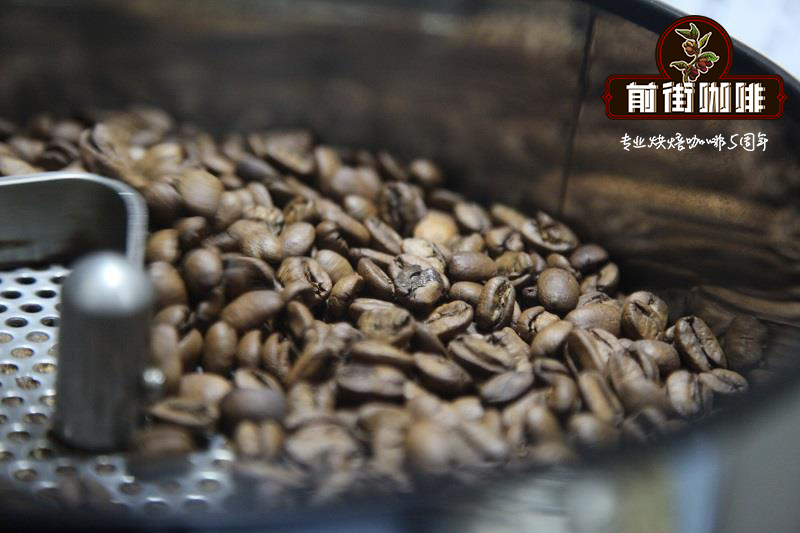
Single Origin Pour-Over Coffee Recommendation | FrontStreet Coffee Premium Coffee Beans --- Jamaica Blue Mountain No.1
Understanding Blue Mountain Coffee
Introduction to Blue Mountain Coffee
Blue Mountain coffee comes from Jamaica, named for the Blue Mountains ringed by the Caribbean Sea.
With a near-perfect balance of acidity, sweetness, and bitterness, and excellent flavor and aroma, it is a natural single-origin coffee, best suited to a medium roast.
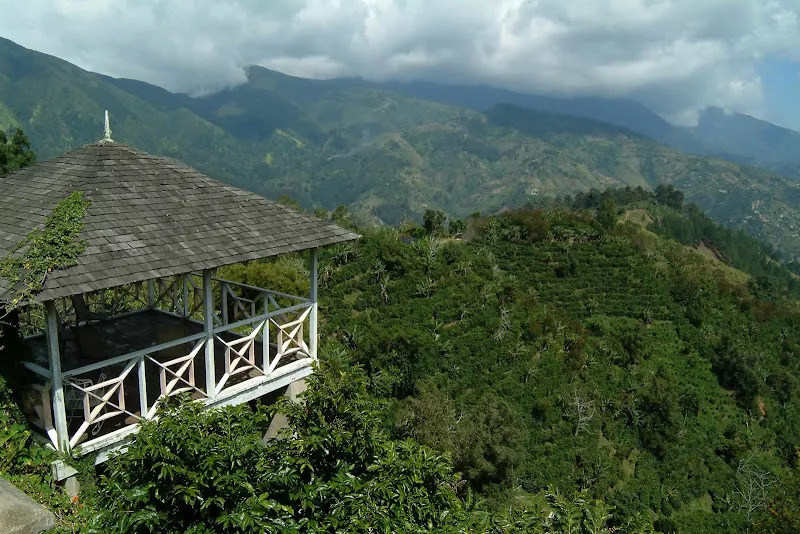
The Blue Mountain Range occupies eastern Jamaica. On clear days, sunlight reflects off the azure Caribbean and bathes the peaks in a brilliant blue glow — hence the name. Its highest summit reaches 2,256 meters, the tallest peak in the Caribbean and a famous tourist destination. The region sits squarely in the coffee belt, with fertile volcanic soil, clean unpolluted air, and a humid climate of year-round fog and rain (average precipitation of 1,980mm and temperatures around 27°C). These conditions created the world-renowned Jamaica Blue Mountain Coffee — and the world's highest coffee prices. The coffee has every virtue of a great one: rich and mellow, with sweet, acidic, and bitter notes in such perfect proportion that it shows no harsh bitterness, only moderate, polished acidity. It is normally drunk as single origin, but because production is tiny and prices stratospheric, lookalike coffees are routinely passed off on the market.
The "secret" behind Blue Mountain's pure flavor is labor. The trees grow on rugged mountain slopes where harvesting is brutally difficult — only experienced local pickers, mostly women, can do it. Selecting properly ripe cherries is critical; underripe or overripe fruit ruins quality. Beans must be hulled the same day they are picked, then fermented for 12-18 hours, washed, and screened. Drying follows, on concrete floors or thick mats, until moisture falls to 12%-14%, after which the beans rest in dedicated warehouses until roasting and grinding. Every step is tightly controlled — a single lapse shows in the cup.
History of Blue Mountain Coffee
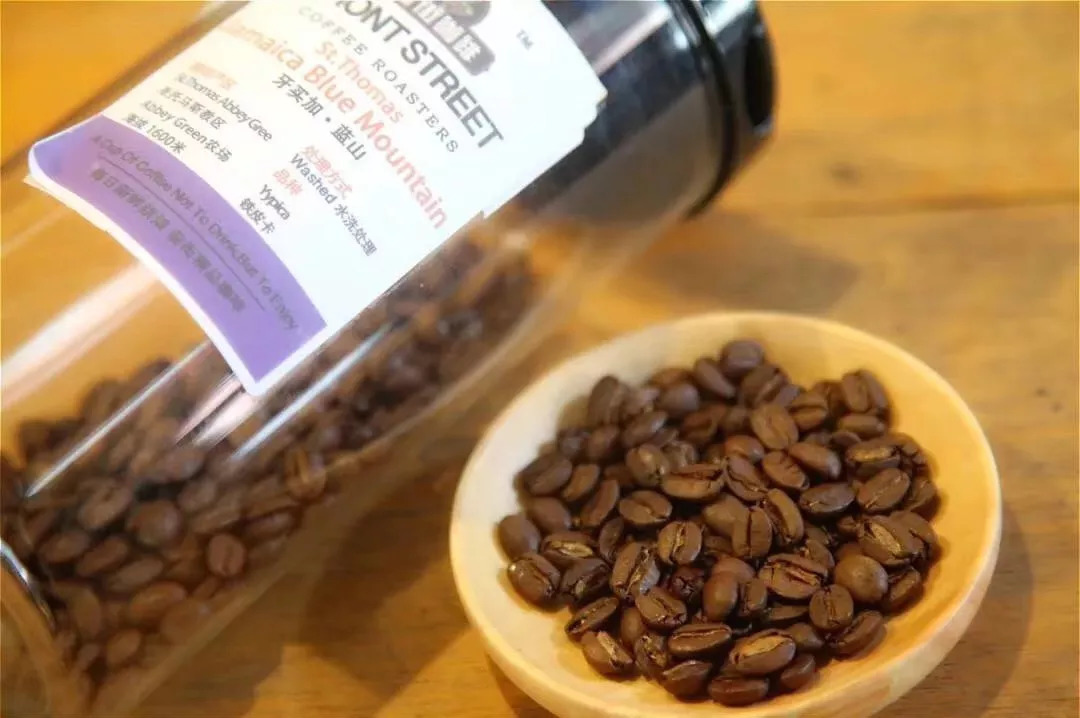
Blue Mountain Coffee Beans
In 1717, France's King Louis XV ordered coffee planted in Jamaica. In the mid-1720s, Governor Sir Nicholas Lawes imported Arabica seedlings from Martinique and began promoting cultivation around St. Andrew — still one of Jamaica's three Blue Mountain producing parishes, alongside Portland and St. Thomas.
Within 8 years, Jamaica was exporting over 375 tons of pure coffee.
In 1932, production peaked, with harvests exceeding 15,000 tons.
In 1950, the Jamaican government established the Jamaica Coffee Industry Board, which sets and enforces quality standards for the nation's coffee — the highest-level national coffee institution anywhere. The Board stamps official seals on exported Jamaican green and roasted coffee. Six certifications can represent Blue Mountain Coffee's origin: Mavis Bank Central Factory (MBCE), M.H.C.C.T., Portland Blue Mountain Coffee Cooperative (P.X.X.S.H.), Coffee Industry Board (Wallenford), Coffee Industry Board (St. John's Peak), and J.A.S.
By 1969 things had turned around, as Japanese loans helped raise production quality and secured market access. Today the coffee enjoys near-reverent status.
By 1981 Jamaica had planted roughly 1,500 additional hectares of coffee, followed by investment in another 6,000 hectares. In fact, the true Blue Mountain region remains a small area of just 6,000 planted hectares — which is why not all coffee labeled "Blue Mountain" can possibly have been grown there.
A further 12,000 hectares grow the two other Jamaican grades: High Mountain Supreme Coffee Beans and Jamaica Prime Coffee Beans.
Geography
Premium Blue Mountain Coffee Beans
Blue Mountain Coffee is among the world's finest, with Jamaica's weather, geology, and topography combining into an ideal terroir. The mountain ridge running across Jamaica rises in the east, where the Blue Mountains exceed 2,100 meters. The weather is cool and foggy with frequent rain, nourishing the fertile soil.
Coffee here is grown in mixed cultivation, planted on terraces alongside banana and avocado trees; some small estates grow coffee as well. Even the region's largest estate owners count as small-scale by international standards — many are smallholders whose families have worked the same land for two centuries. The industry's challenges are structural: hurricanes, rising labor costs, and the near-impossibility of mechanizing terrace farming. Many small estates struggle to make cultivation economical.
Thanks to Japan's sustained investment in the Jamaican coffee industry, most Blue Mountain Coffee is controlled by Japanese buyers, who hold priority purchasing rights.
In 1992, Jamaica sold 688 tons of Blue Mountain Coffee to Japan, 75 tons to the United States, and 59 tons to the United Kingdom. Today, 90% of Blue Mountain Coffee is purchased by the Japanese. With the rest of the world competing for the remaining 10%, the coffee is perennially scarce at any price.
Classification
Coffee from Jamaica's Blue Mountain region comes in three tiers: Blue Mountain Coffee, Jamaica High Mountain Supreme Coffee Beans, and Jamaica Prime Coffee Beans.
Blue Mountain and High Mountain each split into two grades. Ranked from highest to lowest quality: Blue Mountain No.1, Blue Mountain No.2, High Mountain No.1, High Mountain No.2, and Jamaica Prime Coffee.
Only coffee grown between 457 to 1,524 meters may be called Blue Mountain Coffee; coffee from 274 to 457 meters is Jamaica Prime. Blue Mountain commands several times the price of High Mountain. The zone is spread across five peaks: John Crow, St. John's Peak, Mossman's Peak, High Peak, and Blue Mountain Peak.
Characteristics of Blue Mountain Coffee
True Blue Mountain Coffee is made from the region's finest green beans — that is where the connoisseur's pleasure lies. Its flavor is rich, balanced, fruity, and gently acidic, satisfying nearly every preference. High-quality fresh Blue Mountain also has an exceptionally lasting flavor, the coffee equivalent of a wine's endless finish. The finest of all are No.1 peaberries — "pearl beans," the carefully selected small round beans from plots at 2,100 meters, the best of the best: an extremely rich aroma with lasting fruit notes.
The beans are relatively full and plump, and a medium roast is recommended. Blue Mountain's caffeine content is very low — less than half that of other coffees — which suits modern health-conscious drinkers. Plant the same variety in similar climates — Hawaii, Kenya, Papua New Guinea, anywhere — and it simply will not taste like Blue Mountain.
Pure Jamaica Blue Mountain blends coffee's four notes — acidity, bitterness, sweetness, and richness — into a strong, captivating elegance no other coffee matches.
Blue Mountain enthusiasts call it "the coffee beauty that combines every advantage of good coffee." Jim, general manager of the famed American coffee and tea company Peet's, put it this way: "Its aroma is fragrant, smooth, and rich — it feels as precious as gemstones to me. Because Blue Mountain Coffee's flavor is moderate and perfect, it's typically consumed as black coffee." The brew glows golden in sunlight and drinks silkily; as the coffee books say, Blue Mountain is the only coffee in the world that makes acidity and bitterness enjoyable at once. Drink it and you'll understand.
Blue Mountain Coffee Harvesting and Sales
The harvest runs from June to November each year, all by hand-picking. After picking, the cherries go through washing, pulping, fermentation, dehydration, drying, hulling, and roasting to become Blue Mountain coffee beans — and every step of green processing has dedicated personnel supervising quality.
For its precious coffee, Jamaica uses unique packaging and transport: while other coffees ship in 60kg bags, Blue Mountain travels in wooden barrels holding a standard 70kg each.
Jamaica is the last country still using traditional wooden barrel packaging for coffee. Every export batch must be certified by the Jamaica Coffee Industry Board, the only institution authorized to issue such certificates, with quality-supervision experts sampling, roasting, grinding, and brewing each lot before ruling on whether it meets standard. Given the price, the customer base is fixed: sales concentrate in Japan first, then parts of Europe and America. The beans are full and slightly larger than average, with a very subtle flavor — balanced, intense acidity, aroma, richness, and sweetness, faint bitterness, harmonious mouthfeel — ideal as single origin. A medium roast preserves the coffee's original character while extending its aftertaste. As China's coffee market has matured, many cafés have begun serving "Blue Mountain Coffee" at a small fraction — often one-tenth — of authentic Blue Mountain's price.
In 2005, guided by Taiwanese coffee merchants, Chinese media began investigating the authenticity problem. Even now, authentic Blue Mountain's price and scarce supply keep it out of reach for most mainland consumers. Its premium status owes much to local policy. In 1932, Jamaica encouraged coffee production to reduce the island's dependence on sugar exports — and unlike most producers, which chased volume with high-yield, low-quality varieties, Jamaica chose quality over quantity, sacrificing yield to guarantee it. Hence Jamaica's small output: Brazil, the world's largest exporter, produces 30 million bags annually, while Blue Mountain produces only about 40,000 bags a year. Few "Blue Mountain-style" coffees on the market contain genuine Blue Mountain beans; one called "Jamaican Blend Blue Mountain" mixes 30% Blue Mountain with 70% of the finest Jamaican High Mountain Coffee. These imitations gesture at Blue Mountain but never reach its perfection.
Blue Mountain Coffee's "Cold Reception" in America
From the 1970s onward, flavored coffee boomed — spices added to beans, or creamer added to the cup, in hundreds of varieties, most built on inexpensive beans. When Blue Mountain costs about $80 per pound, Maxwell coffee costs $3.
Special Characteristics of Blue Mountain Coffee
True Blue Mountain is one of the most meticulously cultivated coffees on earth, and Jamaica's weather, geology, and topography jointly provide an exceptionally ideal location. Certified Jamaican Blue Mountain Coffee may only be grown in the designated Blue Mountain region of eastern Jamaica, at elevations up to 1,800 meters (about 6,000 feet) — very high for Coffea arabica. The terrain is rugged, so harvesting is extremely difficult, and the pickers are almost entirely women.
The trees are mainly the Arabica Typica variety. Seed has been exported to Hawaii, Kenya, Papua New Guinea, and elsewhere, but nowhere has it ever recreated the flavor of Blue Mountain beans.
Cultivated and harvested with care on steep, high mountains, all Jamaican Blue Mountain Coffee is processed, cupped, and distributed under the Jamaica Coffee Industry Board. The cup is very clean and among the sweetest coffees in the world — described by Jim Reynolds of Peet's Coffee and Tea: "The finest example of Jamaica's Blue Mountain Coffee has an aromatic, smooth, and rich character — it feels like gemstone quality to me. It's as precious as a gemstone. It's complex but very gentle, sweet, with very strong body. You must taste it to know what I'm talking about." Unique growing conditions and meticulous care at every stage made Jamaican Blue Mountain famous.
Jamaica is one of the world's smaller producers, harvesting approximately 40,000 bags of 60kg each annually (the coffee actually ships in 70kg wooden barrels — Jamaica is the last country still using them — but production is counted in 60kg bags, the international measurement standard). By comparison, Brazil, the world's largest exporter, produces 30,000,000 bags of 60kg each year.
Japanese capital has invested heavily in the growing regions and secures 90% of annual production; the rest of the world competes for the remaining 10% — about 3,500 barrels. That scarcity, plus the singular flavor, makes true Blue Mountain the world's most expensive coffee, with demand that persistently outruns supply.
The exceptional growing conditions place Blue Mountain among the world's "premium coffees." Global 100% pure Blue Mountain Coffee refers specifically to coffee grown within the designated range of Jamaica's eastern Blue Mountain region, with every step from cultivation to processing meeting the Jamaica Coffee Industry Board's strict standards before it can be certified "Pure Jamaican Blue Mountain Coffee."
The region's abundant rainfall, year-round fog, low temperatures averaging around 20°C, and fertile young volcanic soil make superb growing conditions. The high-altitude location — between 2,500 to 5,000 feet — creates a unique subtle acidity that never turns harsh. Seedlings spend about 2 years in nurseries; organic fertilizers are used during growth; and picking is done bean by bean, by hand. All processing, roasting, and packaging must comply with the Board's high standards.
The scarce but superb Typica is the finest Arabica variety. Most producing countries prefer higher-yielding, lower-quality varieties; Jamaica prioritizes quality, willing to sacrifice Blue Mountain's yield to guarantee the best cup.
100% pure Jamaican Blue Mountain Coffee has a strong, captivating elegance no other coffee can match. Ground, brewed, and tasted, it peaks — filling the room with intoxicating aroma. Its caffeine content is very low, less than half that of other varieties, meeting modern health expectations.
FrontStreet Coffee Recommendation
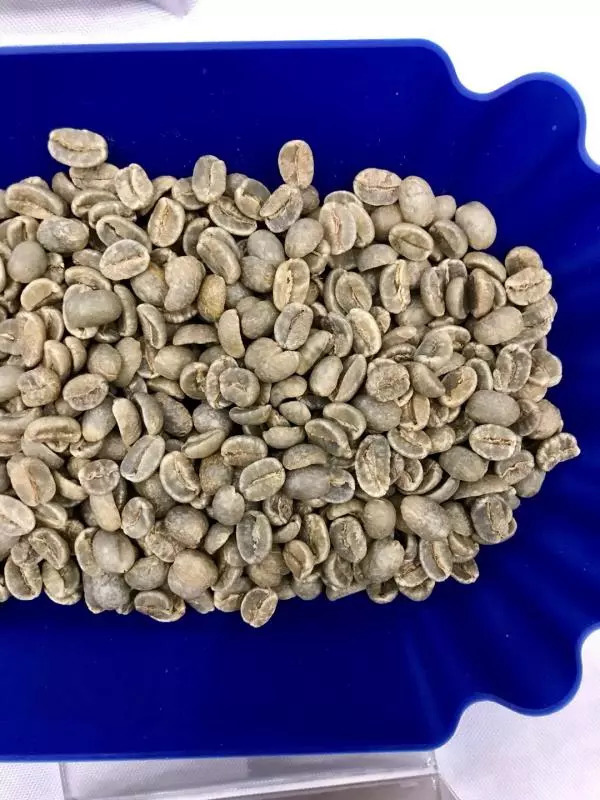
If this primer has you craving the real thing, buy with the certification system in mind. Strictly speaking, only coffee grown in the designated zone of Jamaica's Blue Mountains and certified by the Jamaican government may be called Jamaica Blue Mountain Coffee, and legitimate importers hold complete export certification and origin documents. Two physical markers also give the game away: traditional Blue Mountain ships in wooden barrels — in 15, 45, and 70kg sizes, each barrel printed with detailed lot information for the green beans inside — and the genuine green beans themselves are uniform, plump, slightly upturned at both ends, and green in color. In the cup, real Blue Mountain is intensely aromatic yet dense, clean, and quiet, with no off-flavors whatsoever — fakes simply cannot produce that depth. FrontStreet Coffee's Jamaica Blue Mountain No. 1, the top grade of all, comes from the historic Clifton Mount estate, which has grown coffee since roughly 1750 at an average of 4,300 feet (1310.64 meters), where high altitude, gentle afternoon cloud cover, ample sunshine, and mineral-rich soil extend the cherries' ripening. The beans are roasted within 5 days of shipping, rested 4-7 days, and roasted medium-dark to bring out the classic balance. For brewing, FrontStreet recommends a Kono dripper to amplify the body: 15g of coffee per cup, ground slightly coarser than a light roast — about white-sugar texture — at 87-88°C (water too hot is the usual cause of a scorched, bitter cup) and a 1:15 ratio, in three pours: 30g to bloom for 30 seconds, then to 120g with a slow, tight spiral, then to 225g with a slightly faster pour to keep fines from clogging the dripper and over-extracting. What you get is the coffee's famous equilibrium — nuts, dark chocolate, cream caramel, and soft sweetness unfolding layer by layer, with sweetness, acidity, bitterness, and aroma moving as one, and a long, clean, fruity finish.
Important Notice :
FrontStreet Coffee is a long-established specialty coffee roaster in Guangzhou China, selling freshly roasted beans from its own farm in Yunnan as well as dozens of carefully selected single-origin beans from around the world for both pour-over and espresso. The products deliver consistently excellent quality and great value, with shipping within 24 hours. Guangzhou's FrontStreet Coffee shop is recommended by many coffee lovers, and the beans are now available online at the Tmall 。
FrontStreet Coffee has moved to a new address:
FrontStreet Coffee Address: 315,Donghua East Road,GuangZhou
Tel:020 38364473
 Scan and follow the En Gafei WeChat official account. Please indicate that the reprint comes from "En Gafei".