Is the Quality of Blended Coffee Stable? Which is Better: SOE or Blended Coffee?
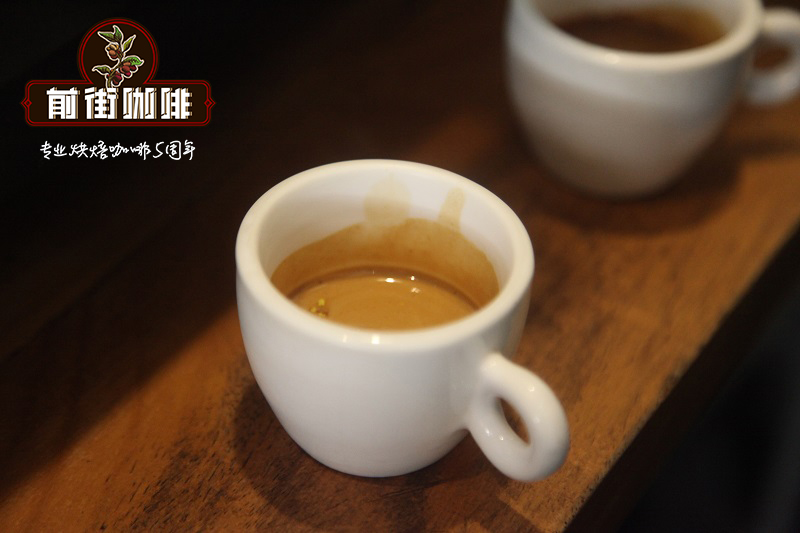
Baristas live by time scales of 25 seconds or 3 minutes, always hoping to work with the minimum amount of time.
The Vast World of Coffee
The coffee world is as vast as the wine world. Different origins, estates, cultivation and processing methods, along with roasting and blending, all bring forth different flavors.
The Traditional Italian Espresso Era
In the old Italian espresso era, espresso was made from blends of many different origins. The blending formulas were "secret recipes," so naturally no one would reveal which origins were inside. Even today, many coffee shops are reluctant to disclose the origins of their blend beans.
The Art of Coffee Blending
A blended coffee is made by mixing several types of coffee beans. Through different proportions, and by combining beans with similar or contrasting taste profiles, component coffees can develop a distinctive character of their own. Blending is also an art form, requiring repeated experimentation and inspiration to create a good recipe. These well-balanced blends are typically used for espresso, extracting a rich, mellow concentrate under high temperature and high pressure.
Traditional Italian Blends
Traditional Italian coffee beans are blends of multiple components. In Italy, a single bag of beans can contain several - even dozens - of different varieties. Many people assume blended coffee tastes bad, imagining a mishmash of anonymous beans, but the reality is that blends can be built entirely from specialty-grade beans and can be exceptionally delicious.
The biggest advantage of blending is flavor stability. When a particular component changes in quality, declines in production, or rises in price, the roaster can substitute a similar bean without affecting the overall flavor. When selecting components and designing a recipe, roasters first decide which flavors they want to present - acidity, sweetness, bitterness, even the expected body. Most coffee shops create their own "Signature Blend," and its flavor can absolutely rival that of single-origin beans.
The Rise of Single Origin Espresso
SOE stands for Single Origin Espresso. Although it is not necessarily equivalent to specialty coffee, if you select single-origin beans with easily identifiable flavors as your SOE, you can pull espressos with unique, typical flavors - Yirgacheffe's signature citrus, for example, or Kenya's fruity character. Because espresso amplifies coffee flavors, these specific notes stand out even more than in pour-over. However, just as SOE's strengths are amplified, so are its flaws: coming from a single origin, it is more sensitive to roasting and grind size, so it is not automatically better than a blend.
Is SOE Better Than Blended Coffee?
Many factors determine whether a cup of coffee is good: the beans, the roast, the machine, the brewing process, and personal taste. SOE simply means espresso made from a single-origin bean, and that bean is not inherently better than what goes into a blend. All the other factors matter just as much, so no blanket verdict can be issued about which is better!
FrontStreet Coffee blends [Colombia] and [Brazil] to create an espresso with bright but gentle fruit acidity, a captivating nutty middle, and a persistent caramel aftertaste. When milk is added, the sweetness deepens, taking on an almost cookie-like quality.
FrontStreet Coffee Recommendation
If you want to explore SOE, FrontStreet Coffee offers single-origin espressos across the flavor spectrum. The FrontStreet Hua Kui SOE, medium-roasted, expresses red berries, delicate florals and orange with citrus-scented crema - refreshing and elegant, perfect as a Hua Kui Americano or flat white. The FrontStreet Sidra SOE from Colombia's famous Huila region, grown near volcanic soil and processed as a double anaerobic natural, pours with distinct blueberry juice, passion fruit and ripe grape flavors plus apricot sweetness. For a low-acid, full-bodied cup, the FrontStreet PWN Golden Mandheling SOE - triple hand-sorted to minimize defects and roasted medium-dark - delivers spice, herbal, sandalwood and caramel notes with a dark chocolate finish, while the Brazil Fazenda Rainha SOE shows rich crema with dense nuts, cream and peanut aromas and a sweet chocolate aftertaste that carries beautifully into milk drinks.
Prefer a gentler citrus profile? The FrontStreet Yirgacheffe Red Cherry SOE, roasted medium, gives a soft, lemony fruit acidity with creamy chocolate richness and a cookie aroma, finishing clean with no harsh bitterness - a lovely bridge between the bright single-origin world and the comfort of a classic blend.
Important Notice :
FrontStreet Coffee is a long-established specialty coffee roaster in Guangzhou China, selling freshly roasted beans from its own farm in Yunnan as well as dozens of carefully selected single-origin beans from around the world for both pour-over and espresso. The products deliver consistently excellent quality and great value, with shipping within 24 hours. Guangzhou's FrontStreet Coffee shop is recommended by many coffee lovers, and the beans are now available online at the Tmall 。
FrontStreet Coffee has moved to a new address:
FrontStreet Coffee Address: 315,Donghua East Road,GuangZhou
Tel:020 38364473
 Scan and follow the En Gafei WeChat official account. Please indicate that the reprint comes from "En Gafei".