Professional Guide to Selecting and Operating Commercial Coffee Grinders_How to Grind Commercial Coffee Beans
No one serious about espresso underestimates the grinder. Its quality feeds directly into the quality of the cup. For anyone new to commercial grinders, the first thing to understand is that a professional commercial grinder does not crush coffee beans—it cuts them uniformly into fine particles. Whatever the model, the last thing you want is excess heat during grinding. The less heat produced, the smaller the grinder's influence on the final cup; the more heat, the more the coffee's flavor shifts. Friction always generates some heat, of course, but careful design can keep it to a minimum, and that is exactly what many manufacturers work toward.
Before buying a commercial grinder, we suggest first understanding its capacity. Below we explain in detail how to select and operate a professional commercial grinder, covering burrs, adjustment mechanisms and dosers.
1. Material of Grinding Blades
To begin with, grinders generate excess heat for two reasons: the volume being ground exceeds the grinder's original capacity, or the burrs are worn or dull. Grinders on the market commonly use three burr materials—ceramic, steel and titanium alloy.
1. Ceramic Blades
Ceramic burrs absorb heat effectively and are highly durable. Grinders fitted with ceramic burrs are not common and are mostly found in single-serve grinders such as the La Marzocco Swift. Some fully automatic espresso machines also ship with ceramic burr grinders, for example the Evolution ASP designed by Franke Coffee Systems. The one drawback of ceramic is fragility: if any non-coffee impurity enters the grinder, the consequences can be disastrous.
2. Steel Blades
Because production costs are low, steel burrs are the most common. When overused they heat up easily. Some manufacturers use hardened steel to extend lifespan and reduce heat during grinding, and some high-capacity grinders use extra-large steel burrs to improve efficiency. Steel burrs have a shorter lifespan than burrs made from other materials.
3. Titanium Alloy Blades
Titanium alloy burrs last three times as long as ordinary steel burrs, dissipate heat easily and resist breakage. Their cutting threads are also more durable than those of other materials. As you would expect, these burrs cost a great deal to produce: only a few grinders on the market, such as the Nuova Simonelli Mythos Plus and Mythos Clima Pro, use them.
2. Shape of Grinding Blades
Burr shapes generally fall into two categories: flat and conical.
1. Flat Blades
Flat burrs cost less to produce and are more widespread. When buying, note that larger-capacity grinders should be fitted with larger flat burrs.
2. Conical Blades
Conical burrs are mostly made of steel, and their shape is designed to extend the burr's working life. Low-speed grinders mostly use conical burrs. As with flat burrs, larger-capacity grinders should be paired with larger conical burrs.
3. Grinding Parameter Adjuster
At different points in the day you need to adjust your grinding parameters to match the coffee's changing characteristics, tightening or loosening the grind so the cup stays consistent. Morning temperatures and humidity are lower, but as the day goes on both rise, so the grinder needs timely adjustment to keep quality steady. Heat generated by the grinder itself also affects the coffee.
Use brief lulls in service to adjust your grinder to your taste preferences. There are three types of parameter adjusters on commercial professional grinders:
1. Micrometer Adjustment Knob
This adjuster is the simplest to operate. The micrometer knob rotates freely, and once it turns, the gap between the lower and upper burrs changes. There are exceptions—the La Marzocco Swift's adjuster uses a special set of linkage gears that allow free adjustment of the upper burr. The micrometer knob lets you control the degree of grinding precisely.
2. Adjustment Knob
The adjustment knob looks similar to the micrometer knob but adjusts the upper burr. Grinders fitted with this type of adjuster, such as the Kryo produced by Rancilio, typically use small linkage gears to move the burrs. Many people consider it very precise, but the catch is that it does not rotate freely: a positioning pin must be inserted to complete the adjustment. Even so, compared with the two more traditional adjusters that follow, the adjustment knob offers greater precision, and the small linkage gears allow extremely fine changes.
3. Smooth Adjustment Collar
The smooth adjustment collar is extremely common and, like the micrometer knob, rotates freely. A set of springs sits between the upper and lower burrs; turning the collar changes the distance between them and therefore the coarseness of the grind. Compared with the advanced micrometer knob, however, this adjuster is somewhat clumsy and inconvenient to use.
4. Traditional Adjustment Collar
This is the most traditional adjuster of all. Using it means first pulling out the positioning pin, turning the adjuster to the right position, then reinserting the pin to lock the setting. Its precision is very limited, and grinding parameters are preset by the manufacturer, so users cannot adjust the grind as freely as they might wish.
4. Doser
Next, the grinder's doser. There are two kinds: electronic and manual.
1. Manual Doser
Ground coffee enters the dosing chamber after grinding, then is dosed by hand into the filter basket before tamping and brewing. Manual dosers usually come with a lever, and each pull dispenses a certain amount of coffee from the chamber. Generally one pull suits one cup of coffee, while two pulls suit two cups. Manual dosers are usually adjustable to change the amount dispensed per pull. The maximum single dose from a typical manual doser is 9 grams.
When using a grinder with a manual doser, make sure the dosing chamber always holds at least 1/2 capacity of coffee. At the end of each day's brewing, discard any unused coffee. The drawback of this type of doser is that air gaps can sometimes form between coffee particles, making the dispensed amount very hard to control.
2. Electronic Doser
An electronic doser dispenses a preset amount, so the operator gets a fixed dose of coffee every time. Modern electronic grinders typically come with this type of doser. The control panel can store 2-3 different settings, and if baristas have special needs they can also dispense manually. Most electronic grinders have LCD displays and control panels that make programming simple and convenient. Usually an electronic doser adjusts the dose by controlling dispensing time. Again there are exceptions: the Swift grinder from La Marzocco adjusts dose by controlling the height of the coffee in the chamber—the operator simply places the portafilter in the predetermined position and the doser dispenses. Grinders from Mazzer require the operator to press a button to dispense.
● Commercial Coffee Bean Brand Recommendations
Single-origin and espresso commercial coffee beans roasted by FrontStreet Coffee—Yirgacheffe coffee, Kenya AA coffee, Panama Geisha coffee and others—offer excellent guarantees in both brand and quality, and they suit brewing on a wide range of equipment. More importantly, they offer exceptional value: half a pound (227 grams) costs only about 80-90 RMB. Calculated at 15 grams of powder per cup of pour-over coffee, one bag makes 15 cups, putting each cup of specialty coffee at only about 6 RMB. For coffee shops that normally sell a cup for 30-40 RMB, that is remarkable value.
FrontStreet Coffee Recommendation
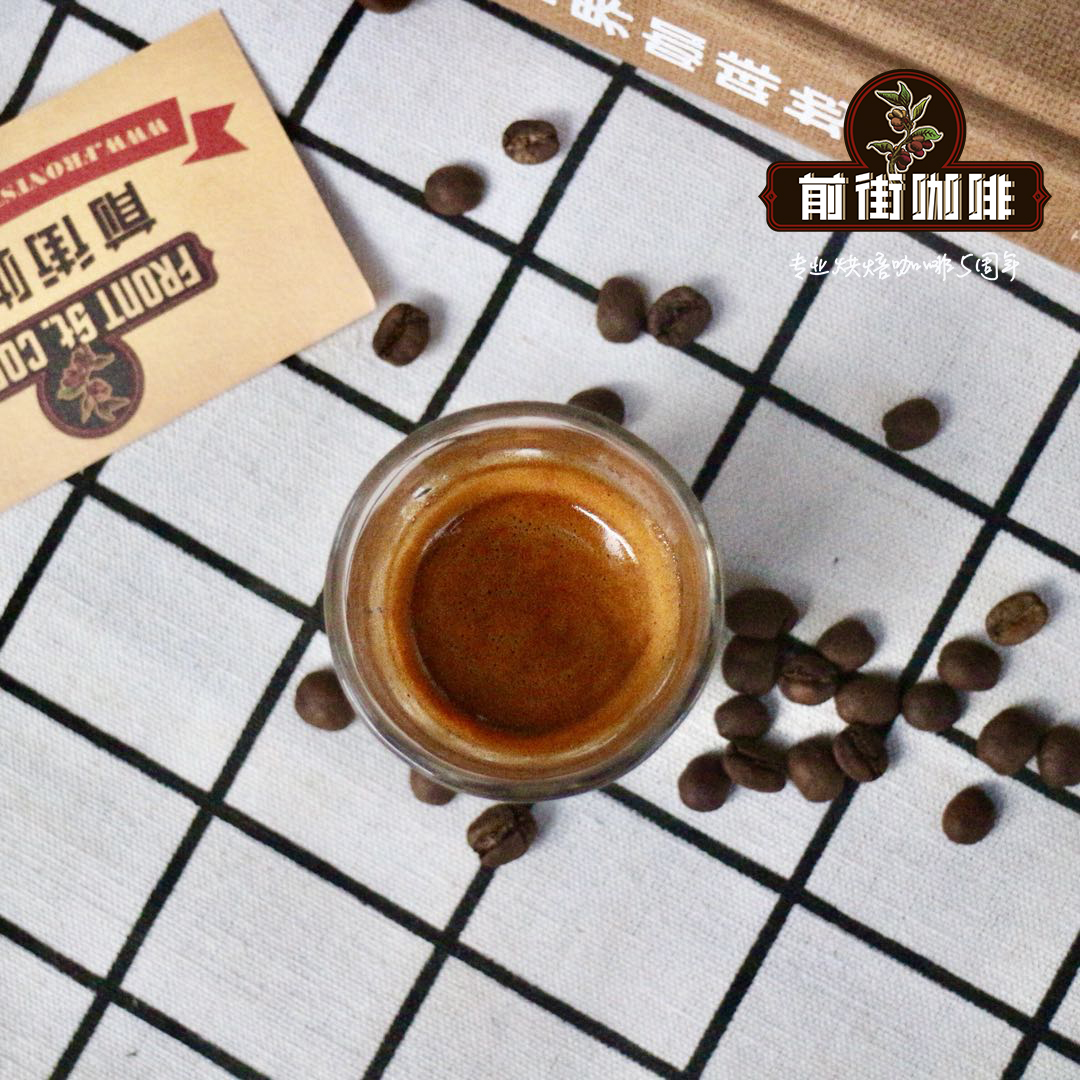
A grinder only reaches its potential when the beans behind it are worth the effort, and espresso in particular rewards a well-built blend. FrontStreet Coffee's Classic Blend is designed for exactly that job. Made with the traditional Mamba recipe and intended for espresso machines and moka pots, its strongest point is crema: even a beginner on a non-professional home machine can pull a dense, fine layer of it. That crema is what carries a latte, a cappuccino or a Dirty, and the blend itself is full-bodied and gentle enough for newcomers and experienced drinkers alike. For a more budget-conscious option, FrontStreet Coffee's Dark Cocoa Blend uses 100% Arabica, pours ample crema and stays mellow and full, which makes it an easy choice for a café watching costs. FrontStreet Coffee's Commercial Blend plays a similar role, priced below the House Blend while keeping the flavor optimized for everyday service.
FrontStreet Coffee's House Blend, meanwhile, has held down the shop's Americanos and lattes for nearly ten years, built from Brazil Cerrado and Colombia Huila beans for the espresso flavor most people recognize instantly. If you prefer single-origin espresso, the Brazil Queen's Farm SOE is a distinctive Yellow Bourbon with a clean, sweet profile; roasted medium-dark, it pulls as butter cookie, macadamia and toasted bread. The Costa Rica Blackberry SOE is a honey-processed bean, roasted medium, that turns out tangy and refreshing as an Americano or cranberry cookie, raisin and nut as a latte. And the naturally processed Ethiopia Huakui SOE, from Guji Hambella at 2,300 meters, brings cream, cocoa, berry and a light floral note to an espresso. With any of these, the grinder settings above are the variable worth mastering first.
Important Notice :
FrontStreet Coffee is a long-established specialty coffee roaster in Guangzhou China, selling freshly roasted beans from its own farm in Yunnan as well as dozens of carefully selected single-origin beans from around the world for both pour-over and espresso. The products deliver consistently excellent quality and great value, with shipping within 24 hours. Guangzhou's FrontStreet Coffee shop is recommended by many coffee lovers, and the beans are now available online at the Tmall 。
FrontStreet Coffee has moved to a new address:
FrontStreet Coffee Address: 315,Donghua East Road,GuangZhou
Tel:020 38364473
 Scan and follow the En Gafei WeChat official account. Please indicate that the reprint comes from "En Gafei".