Why is Yemen Coffee Production So Low? What Are the Flavor Characteristics of Yemen Coffee?
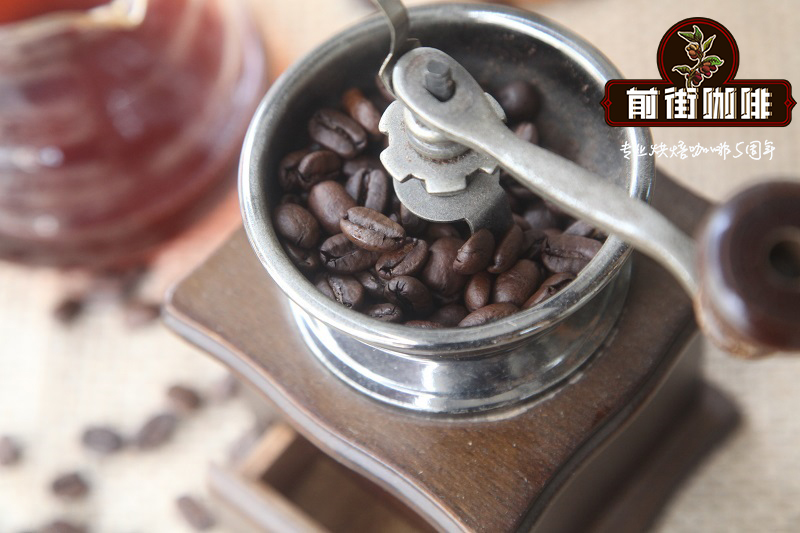
Mocha and Mocha Coffee — many coffee beginners find themselves confused by the distinction between these two terms. Is Mocha the same as Mocha Coffee, or what connection exists between them? Mocha is actually an export port in Yemen, in Africa. Coffee exported from this port came to be known as Mocha Coffee, and both the quality and the flavour profile of Mocha coffee were exceptional. Let FrontStreet Coffee guide you through this fascinating topic.
Yemen is located in Western Asia, just a stone's throw from the African continent. If Islamic scholars had not promoted coffee on the Arabian Peninsula, coffee might still be a wild plant growing in Ethiopia today. According to legend, coffee was introduced to Yemen in the sixth century, when it was under Ethiopian rule, and was named "Qahwa," meaning "wine" in Arabic. Later, when the Ottoman Empire invaded in 1536, they took control of the coffee trade. To protect export profits, the authorities strictly prohibited the export of raw beans — seeds had to be boiled in water before leaving the country.
The History of Yemeni Coffee
Yemen, famous for its trade in frankincense and spices, is the world's earliest coffee-growing region and the birthplace of Mocha coffee.
If we trace back further, this is also said to be where Noah built his ark in biblical times.
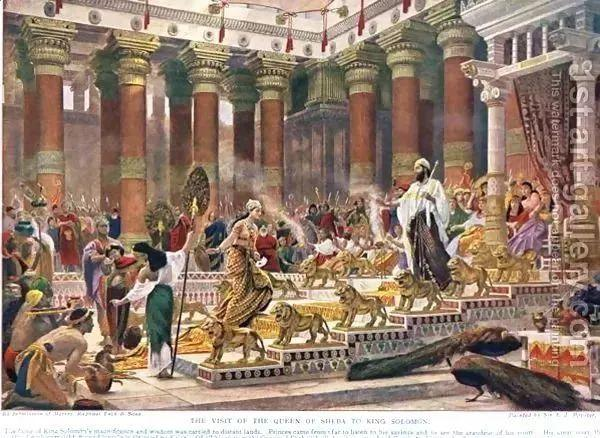
This was also the domain of the legendary Queen of Sheba, who 3,000 years ago led a large delegation carrying gold and spices to Jerusalem to meet King Solomon and bore him a son. (It is rumoured that this son became Ethiopia's first king.)
Regardless, perhaps because of this ancient history, the people of this land are said to possess strong self-respect and a fierce independence.

Yemen continues a lifestyle preserved from thousands of years ago, and there are reportedly many areas the central government's authority cannot reach. Ethiopia, separated from Yemen by the sea, also used the port of Mocha to export coffee, which is why Ethiopian natural process coffees are often called Mocha (such as Ethiopia Harrar Mokka). Yemeni Mocha is the originator of the world coffee trade, and Yemen's contribution to spreading delicious coffee worldwide cannot be overstated. It was known as "Arabian Coffee" (Arabia), which later gave rise to the name "Arabica."
It is said that in the 17th century Europeans first imported coffee and spread it to the world from the world's largest coffee port — the Port of Mocha. Today's "Port of Mocha" has not kept its former prosperity; it is a historic port with only white sandy beaches remaining. Nevertheless, its name lives on through coffee, "famous far and wide."
Although Ethiopia was the first country to discover coffee, Yemen was actually the first country in the world to cultivate coffee as an agricultural crop on a large scale. In the early 17th century, the first batch of Yemeni coffee was exported to Europe via the ancient small port of Mocha, astonishing Europeans. Because all exported coffee bags had to be stamped with "MOCHA" to prove they had been transported from the Port of Mocha, Europeans began calling the delicious coffee from Mocha port "Mocha Coffee." This is why "Mocha" became synonymous with coffee early on.
Coffee Rooted in Dramatic History
Coffee represented trade, social interaction, and even religious focus, while also ushering in the coffeehouse era, promoting Yemen's export trade, and even becoming a sacred medicine for Muslim monks' prayers. But coffee did not bring Yemen only positive effects — Yemeni coffee also suffered from controversial bans and became a victim of war.
From Al-Makha to Mocha
For its dramatic contribution to world history, Yemeni coffee originated from the port city of Al-Makha. Under the protection of the Ottoman Empire, Yemen carefully managed its caffeine products. By insisting on never selling live coffee trees or seeds, they awakened this sleeping port and established a global coffee monopoly.
Coffee from Al-Makha began to be called Mocha coffee, though today this name often refers to a chocolate-flavoured coffee drink. Mocha is also one of the coffee varieties from Yemen. In cupping, the SCA defines it as "generally similar in mouthfeel and flavour to Bourbon."
Yemen could not keep the secret for long, however: Dutch traders eventually obtained live coffee trees through other means. Within decades, coffee trees were being planted outside the Ottoman Empire and Yemen. The connection between Al-Makha port and Indonesia's Java island also created what is known as the world's oldest coffee blend — Java Mocha coffee.
As global coffee cultivation increased, Yemen's coffee monopoly empire declined.
One of the World's Driest Countries
Yemen is one of the driest countries in the world. Economically, the country relies on oil exports for three-quarters of its income, but the World Bank predicts that reserves will be depleted around 2017. This once self-sufficient agricultural nation now imports 80% of its agricultural products. The reasons include population growth and water shortages caused by local people over-cultivating "Qat" (also known as Arabian tea), a crop with as long a history as coffee.
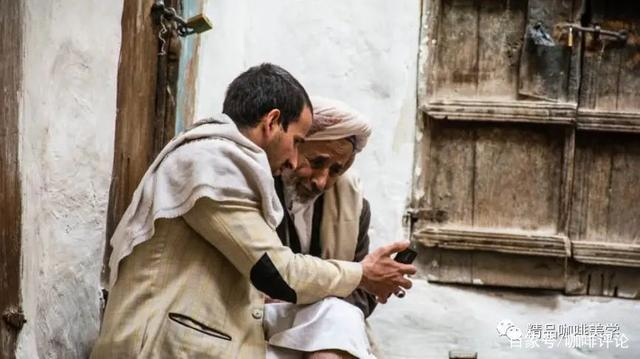
Qat is a common social drug among residents of the Arabian Peninsula. Yemenis enjoy welcoming guests in dedicated rooms in their homes, chewing Qat while chatting with friends. It contains the stimulant cathinone, with effects similar to mild amphetamines that refresh the mind; when the effects wear off, users feel depressed. Although the World Health Organization (WHO) has not classified it as a drug, many Western countries have already banned its import.
On the other hand, Yemen has long suffered from drought. Its major cities rely on underground water sources, with agriculture consuming 90% of the drinking water, and Qat cultivation alone consuming significant water resources. Authorities predict that underground water reserves in the capital Sana'a will be depleted by 2017. Most Yemeni cities are built on high mountains, with residents depending on government or private wells. The country has between 40,000 and 70,000 wells, some reaching 600 meters underground. Pumping water uphill is also expensive, with the government spending up to $7 billion annually on drilling and pumping. In recent years, locals have therefore decided to ban Qat, which both wastes water and cannot satisfy hunger, replacing it with other crops. Coinciding with the rise of specialty coffee, the Yemeni government is now encouraging farmers to switch to coffee, which consumes half as much water as Qat.
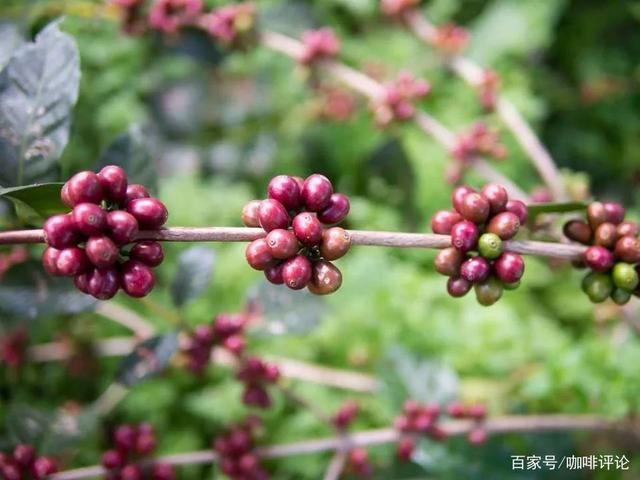
Using the Most Primitive Production Methods
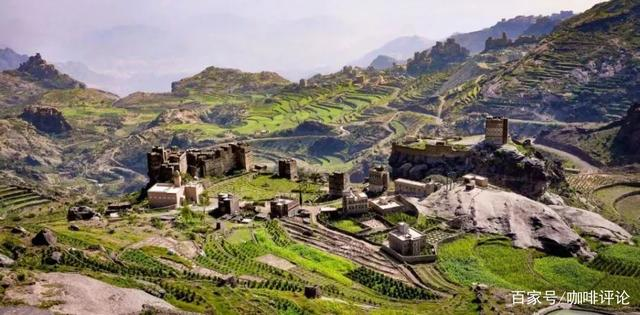
Authentic Yemeni coffee is quite rare. Farmers hand-pick the fruit when it ripens on the trees and dry it on the roofs of stone houses built along mountainsides. Pulp removal and hulling rely entirely on simple stone grinding equipment. Because transportation is poor, coffee typically changes hands multiple times, mixing beans of varying sizes and ages. Combined with numerous defects and improper processing, Yemeni coffee struggles to meet specialty grade standards by modern cupping criteria. High-quality Yemeni coffee, however, offers unique flavours: complex Middle Eastern spices, cured meat, ripe fruits, wine notes, and cocoa, with a rich mouthfeel and a strong sweet aftertaste. Like durian and stinky tofu, it elicits extreme reactions — people either love it or hate it.

Coffee Cultivation
Because the mountain slopes, valleys, and lowlands available for cultivation are so narrow and steep, coffee farmers adopt a distributed cultivation method — planting a few trees wherever suitable land is found, whether wilderness, cliff, or barren valley. Experts point out that the diversity of growing environments and microclimates creates the myriad aromas and fruit acids of Yemeni coffee. Some joke that in the same bag of Yemeni coffee you cannot find two beans with the same flavour, making it a truly "wild" specialty coffee.
This is because Yemeni coffee is scattered across cliffs, valleys, lowlands, wilderness, terraces, plateaus, and mountains. Even the same variety can develop different aromatic characters due to different microclimates and soil conditions, not to mention the numerous varieties of Yemeni coffee. Experienced Yemeni coffee farmers can identify varieties and flavour characteristics simply by knowing which mountain, steep slope, terrace, village, or region the coffee comes from. In contrast, Brazil's monotonous flavour, resulting from large-scale cultivation of single varieties on the same plains or hills with uniform terroir, cannot compare.
Yemen is dry and water-scarce, resulting in relatively small, pale green or light yellow coffee beans. After harvesting the red fruits, farmers place them on farmhouse roofs to dry in the sun for two to three weeks until the cherries naturally harden.
During this time the essence of the fruit pulp seeps into the beans inside the pods, enhancing flavour. After three to six weeks, depending on the hardness of the dried fruit, farmers use traditional grinding stones to crush the dried pulp and pods and extract the coffee beans. (Yemeni coffee beans, besides being smaller, often appear broken or chipped because of the grinding stones.) Yemeni beans are also harder and more brittle than regular coffee beans, and collisions during transport can cause breaks or damage. Pre-roasting bean selection therefore cannot be skipped — these broken beans must be removed to prevent spoilage that would affect flavour.
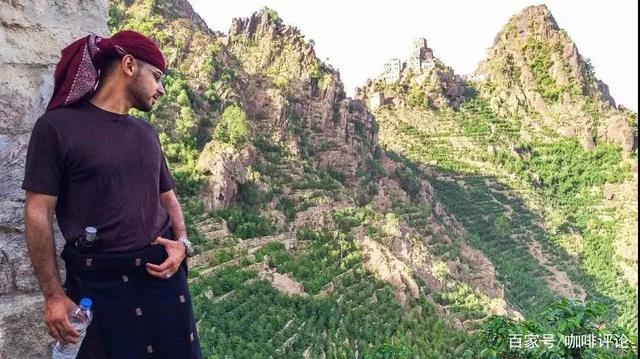
Cultivation Varieties
Mainly Ismaili, Typica, and Matari varieties. The true variety of Yemeni Mocha coffee is called Udaini. It is not only an ancient Typica variety but also one of the most common and oldest coffee varieties in Yemen. The beans are very small, and some call them "small Mocha." Mocha is a flat bean, not a round bean — small but aromatic and rich.
Coffee Growing Regions
Mokha Mattari
A famous coffee market name from the Bani Mattar (also spelled Bany Mattar) province west of Yemen's capital Sana'a. It is high-altitude coffee, typically exhibiting a good red wine aroma, dried fruit flavours, a full body, and often a chocolate bittersweetness when dark roasted. High-quality Mattari beans are small, with a prominent sweet wine fragrance and appropriate ripe-fruit fermentation notes in their raw state. It always emerges a winner for its more distinct Yemeni style. Altitude: approximately 2000-2400 meters.
Mokha San'ani
A broad market name for coffees from growing areas west of Yemen's capital Sana'a. It is a blend from tens of thousands of small farms on mountain slopes near the capital. Cultivated at slightly lower altitudes than Mattari, it generally has a lighter body than Mattari and lower acidity, but good fruit aromas, often with better ripe-fruit and wild characteristics than Mattari. Altitude: approximately 1650 meters.
Mokha Ismaili
One of the traditional ancient tree varieties; some also say it is a region. A market name for a famous coffee from central Yemen, also described as a traditional botanical classification of Yemeni coffee with high beverage quality. Planted at very high altitudes in rugged mountainous areas above 1981 meters, it is characterised by rounder beans with more inconsistent sizes, smaller than Mattari beans, with a full body and high complexity. It often outperforms Mattari. This is the least produced and most expensive Yemeni Mocha (Yemeni Mocha is already not cheap). High-quality Mokha Ismaili is produced on the high mountain slopes of the Hirazi region (less famous than Bani Matar but the best-regarded growing region locally in Yemen). The highest altitude in Hirazi reaches 2438 meters.
Mokha Rimi
Produced in the Djebel Remi (also known as Raimi, Rayma) region, with quality similar to San'ani. Mokha Rimi typically has slightly heavier fermentation notes, occasionally displaying surprisingly rich raisin sweetness. When properly roasted, the beans smell like opening a bottle of rich fruit jam.
Mokha Yafeh
Produced in the southern Yafeh (also known as Yaffe) province of Yemen, this is an uncommon Yemeni Mocha and the only "southern flavour" in Yemen. Production is also limited, with most exported to the neighbouring United Arab Emirates, making it rarely seen on the international specialty coffee market.
Arabian Mocha
A single-origin coffee from the mountainous regions of Yemen on the southwestern Arabian Peninsula bordering the Red Sea. One of the world's finest cultivated coffees, known for its high viscosity and distinctive rich wine-like acidity.
Yemeni Mocha achieves different styles depending on the growing region, just as Mattari represents chocolate and acidity while San'ani Mocha represents wildness and fragrance.

Confusing Nomenclature
Yemeni coffee naming still lacks universal standards, and there is no official grading system. Local residents have their own classification system with hundreds of coffee codes and names for internal use, but these are not applicable to the commercial market (for export). In the commercial market, Yemeni Mocha typically adopts one of two naming approaches: "origin name" or "variety name."
Yemeni Mokha Mattari and Yemeni Mokha San'ani use the "origin naming method," indicating production from Bani Matar province and the mountain slopes near the capital Sana'a respectively. Yemeni Mokha Ismaili uses the "variety name method," with its production location in Hirazi, southwest of Bani Matar.
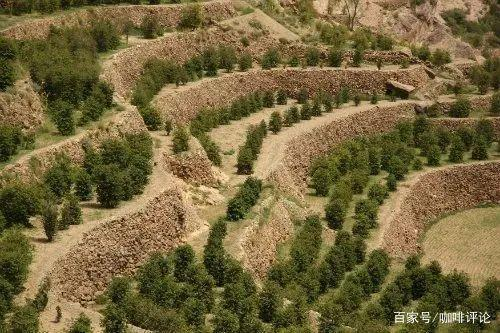
Processing Methods
Ancient Natural Processing
Yemen is the classic example of ancient natural processing and the world's only entirely natural-processed coffee-producing country. The traditional water-free processing method has remained unchanged since the 17th century, when Europeans first became captivated by wild Mocha. This relates to Yemen's extremely dry climate — coffee is mainly grown in the central highlands with annual rainfall of only 400-750mm, far below the optimal 1,500-2,000mm for Arabica.
Yemeni coffee grows on rugged terrain with little rainfall, poor soil, and insufficient sunlight — uniquely difficult conditions unfavourable to coffee cultivation, yet these conditions have produced the irreplaceable Yemeni Mocha of the coffee world. The main coffee-growing regions are Sanani, Matari, and Ismaili.
The Matari region is located in the highlands west of the capital, at altitudes of 2000-2400 meters, making it the highest-altitude growing region in Yemen but also the most remote, with poor transportation. After harvesting, farmers often have to wait a considerable time before they can transport the coffee out.
The water-scarce environment prevents farmers from introducing more advanced washed processing methods. The wild flavour surpasses Harar coffee, making Yemen the best choice for experiencing ancient flavours.
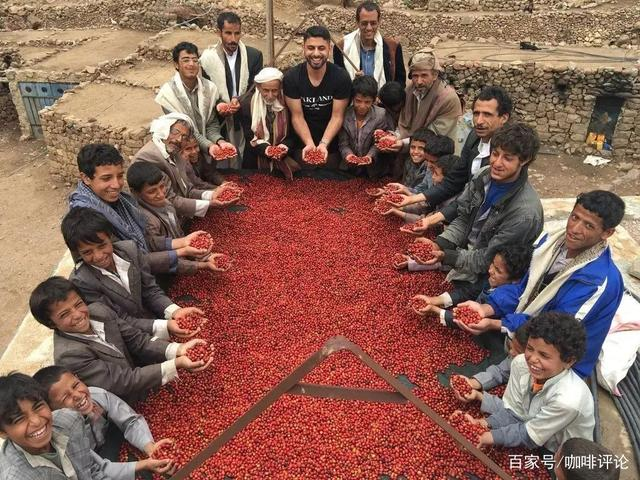
The central highlands of Yemen feature undulating, rugged, and treacherous terrain. Small farmers mostly adopt a distributed cultivation method — a few plants on steep slopes, dozens on terraces or cliffs, each with different terroir and microclimates, resulting in different aromatic components.
Yemeni farmers' natural processing is rougher than Ethiopia's — they dry it directly on rooftops. This differs from the refined natural processing of Yirgacheffe or Sidamo, where red cherries are spread on raised African beds, and is the main reason for Yemen's particularly wild flavour.
Yemen's ancient natural processing involves hand-harvesting fully ripe coffee beans, then placing the freshly harvested beans directly in dedicated coffee drying areas or compacted earthen front yards to sun-dry. During the drying period the beans are typically raked with wooden tools to ensure even drying. After about twenty days, once the coffee is dry, the outer pulp and skin are removed to extract the coffee beans.
Yemeni coffee offers rich, complex, wild, full-bodied flavours with strong fermentation characteristics and lower acidity. Yemeni coffee also often contains an unpredictable factor (the timing of seasonal rainfall) that makes it elusive, making it truly one of the world's most special coffees.
Refined Natural Processing
Mokhtar Alkhanshali has also enhanced the beans from the Port of Mocha with more refined natural processing, and the beans from the Port of Mocha speak for themselves through flavour.
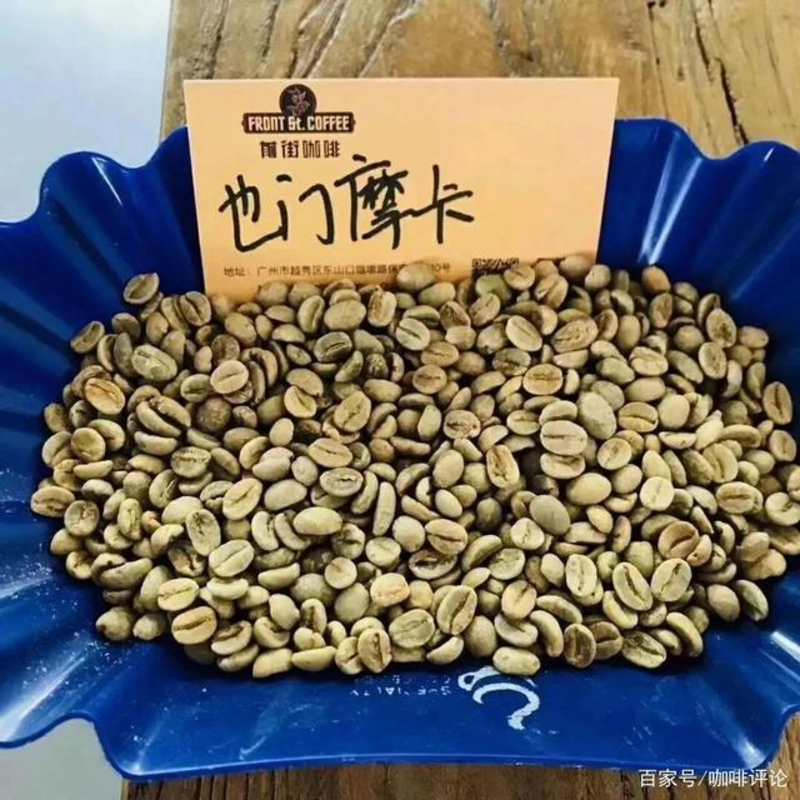
Representative Coffee: Yemen Mocha Mattari
Country: Yemen
Region: Mattari
Altitude: 1,300~1,900m
Varietal: Typica, Bourbon
Process: Natural / Sundried
FrontStreet Coffee Yemen Mocha Coffee Beans
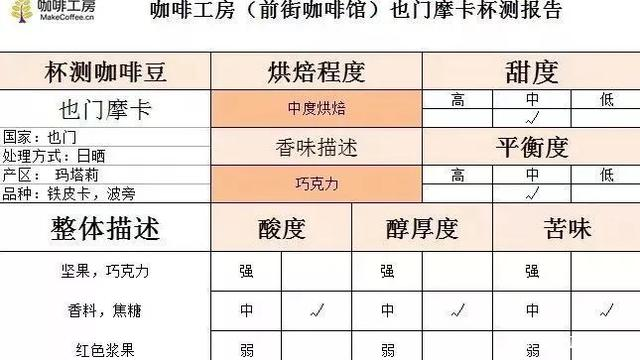
Cupping Report:
Medium Roast City (Caramel Aroma): Before grinding, the beans emit a peanut fragrance; after grinding they reveal caramel aroma. During cupping, complex layers unfold with a hint of grape acidity appearing toward the finish. The spicy aftertaste is long-lasting, with a sweet, mouth-watering, rounded quality reminiscent of Middle Eastern milk tea that persists for a considerable time. The cup bottom residue shows malt sweetness. Medium-roasted Yemeni Mocha continues to evolve — we recommend brewing 7-14 days after roasting, when the complex, wild fermentation flavours are at their best.
Filter: V60
Water Temperature: 88°C
Grind: Medium-coarse
Roast Level: Medium roast

Brewing Recommendations:
15g coffee, ground with a Fuji Mountain "ghost tooth" grinder at setting 4, V60 dripper, water temperature 88-89°C. First pour 30g of water for a 25s bloom, then pour to 104g and stop. Wait until the water level drops to halfway, then continue pouring slowly until reaching 220g. Avoid the last 5g. Water-to-coffee ratio 1:15, extraction time approximately 2:00 (counting from the completion of the bloom pour).
Flavor: Balanced, chocolate, persistent caramel sweetness in the finish.
FrontStreet Coffee Recommendation
Yemen and its neighbour Ethiopia are the two poles of ancient, wild natural coffee, and if Yemen's big, fermented, spice-driven cup appeals to you, FrontStreet Coffee's Ethiopian naturals are the closest everyday companion. Start with FrontStreet's washed Yirgacheffe, the classic entry point to the country: jasmine florals, bright citrus acidity, a light, elegant body with tea-like character, and a clean lemon-tea freshness. FrontStreet's Gedingding Cooperative, located in the Worka area at the southeastern edge of Yirgacheffe, was originally part of the YCFCU's Worka Cooperative before being identified as a single-origin lot in 2012, when about 300 member farmers formed it independently; because the fruit is pulped before drying, its inherent aromas come through unusually clearly, with citrus and lemon tones under an elegant white floral.
For a natural processed Ethiopian that leans toward Yemen's fruit-and-ferment character, FrontStreet's Yirgacheffe Red Cherry is a good match. Only fully ripe fruit is selected, dried in the sun for two weeks until moisture falls to 12%, then density- and colour-sorted, machine-depulped, and hand-picked for any remaining defects; the cup shows peach, cocoa, honey, and lemon. FrontStreet's Hambella Flower Queen takes the natural style further: the 200-hectare farm in Guji's Hambella, Sidamo, spreads ripe cherries on raised beds for 21 days, turning constantly and hand-sorting defects every three to five days, then roasted medium-light to reveal a gentle fermented wine note, florals, citrus, and mango, with honeyed sweetness, cocoa, a hint of spice, a thick body, and a long finish.
For something from a different Ethiopian terroir, FrontStreet's Hamacho 74158 comes from a Sidamo washing station known for the JARC 74-series disease-resistant varieties; the 74158 strain has smaller beans and a bold floral-fruit profile, with perfumed lemon, strawberry, and starfruit aromas and a sweet strawberry, starfruit, and green-grape entry followed by gentle florals. And FrontStreet's Kaffa Forest represents the wild side — trees grown at 1,400-2,100 meters under shade, roasted medium-light, with a clear white floral after grinding, bright lemon acidity, sweet orange and bergamot, and a green-tea-like body with melon and nut in the aftertaste.
Important Notice :
FrontStreet Coffee is a long-established specialty coffee roaster in Guangzhou China, selling freshly roasted beans from its own farm in Yunnan as well as dozens of carefully selected single-origin beans from around the world for both pour-over and espresso. The products deliver consistently excellent quality and great value, with shipping within 24 hours. Guangzhou's FrontStreet Coffee shop is recommended by many coffee lovers, and the beans are now available online at the Tmall 。
FrontStreet Coffee has moved to a new address:
FrontStreet Coffee Address: 315,Donghua East Road,GuangZhou
Tel:020 38364473
 Scan and follow the En Gafei WeChat official account. Please indicate that the reprint comes from "En Gafei".