How to Brew Hawaiian Coffee | Hawaiian Coffee | What are the Coffee Regions in Hawaii?
Introduction to Kona Coffee
Coffee drinkers have all heard about Kona's acidic and fruity characteristics. The term "Kona," however, can only represent coffee produced in Hawaii, and its quality and taste vary greatly between products, so it can't be described precisely. Different estates and companies may grow or purchase different varieties, so the products themselves represent different plant fruits. Harvest times may differ, and the processing and screening steps after harvest may vary too — screening, especially, determines the grade of the beans, whether extra fancy, fancy or estate. Most importantly, the roasting method and degree will each bring different flavors.
Higher-quality Kona is usually found from smaller local companies or farm direct-to-consumer websites. Although Kona from these estates and small companies sometimes costs twice as much as supermarket products, the quality is much better.
The Unique Growing Conditions of Kona
The volcanoes on the Big Island are a goddess local residents both fear and love. They fear her anger, which could reduce their homes to ashes in an instant, yet they love the tears she leaves after that anger — high-temperature, thick lava that, once cooled, forms the special soil that is one of the unique growing conditions for Kona coffee. Plant growth can't lack sunlight, but coffee also needs appropriate shade. Hawaii, surrounded by the sea, has its climate regulated by seawater. Morning sunlight becomes gentle through water vapor, and by noon, the vapor in the mountains condenses into fog that protects the trees.
The island has no high mountains or steep ridges to block it, and white clouds surge with the wind, forming a sunshade that automatically opens and closes on nature's rhythm. In the coffee world, Kona coffee is like a girl from a noble family, receiving the gentlest care from nature.
History and Characteristics of Kona Coffee
"KONA coffee" is not native to the Big Island. The earliest record can be traced back to 1813, when the Spanish planted the first coffee tree, but it truly flourished in the 19th century. Its lineage comes from Arabica, one of the world's three major coffee varieties. It is not as strong as Italian coffee, nor does it have the rugged taste of Central and South American coffee. The combination of acidity and sweetness is very gentle, and the aftertaste reveals fruit aroma. Those who don't care for it find Kona too light, but this fresh, natural flavor is something only Kona embodies in the coffee world.
In Hawaii, a 4oz bag of 100% pure Kona coffee costs about $12, which is considered medium-high priced compared with general coffee. What you buy in Hawaii is generally 100% single-origin beans. Some coffee farms' exhibition stores provide tastings, giving you peace of mind when purchasing after trying.
Coffee Tree Cultivation
Coffee beans grow in segments. The parts that grew this year won't grow again next year, so the branches become longer and longer, growing one segment at a time. When they grow very long, they will touch the ground. Therefore, approximately every five to six years, the entire tree is cut down but the roots are preserved so it can regrow once.
Coffee trees actually don't require much care. The reason Kona is famous is that only a certain mountainous area in Kona is particularly suitable for growing coffee. This is partly due to Hawaii's volcanic soil and partly because Kona's weather is wonderful — strong sun during the day, but after noon it starts to rain, so these coffee trees almost never need watering to grow well. Kona coffee also uses the same Arabica variety as Blue Mountain coffee, but different climate, altitude and soil give it a completely different flavor.
Hawaii's coffee production season runs from July and August to January each year. A single coffee tree, however, can only produce about one pound of coffee, making it quite rare.
The Unique Qualities of Kona Coffee
Like other places in the Hawaiian Islands, Kona provides ideal climate conditions for coffee cultivation. The beans produced there are distinctive, though, and have earned a good reputation as world-class coffee. This is likely because Kona Island is rich in volcanic black mud, which has moderate acidity, rich mineral content and appropriate moisture. Every afternoon, a cloud drifts over Kona Island to block the sunlight, protecting the fragile coffee seedlings.
What's also special about Kona is that every bean is hand-selected and harvested to ensure only the highest quality coffee goes into production. In fact, 100% pure Kona is very rare and sometimes even difficult to find. The rarest Kona beans are peaberries — round beans with one bean per cherry — whose annual production accounts for only 4%-5% of all Kona production. The special thing about peaberry beans is that each coffee fruit contains only one bean, while other types of Kona coffee fruit contain two.
FrontStreet Coffee's Hawaiian coffee comes from the Kona region, and we particularly love the special flavor of Kona.
Brewing Recommendations
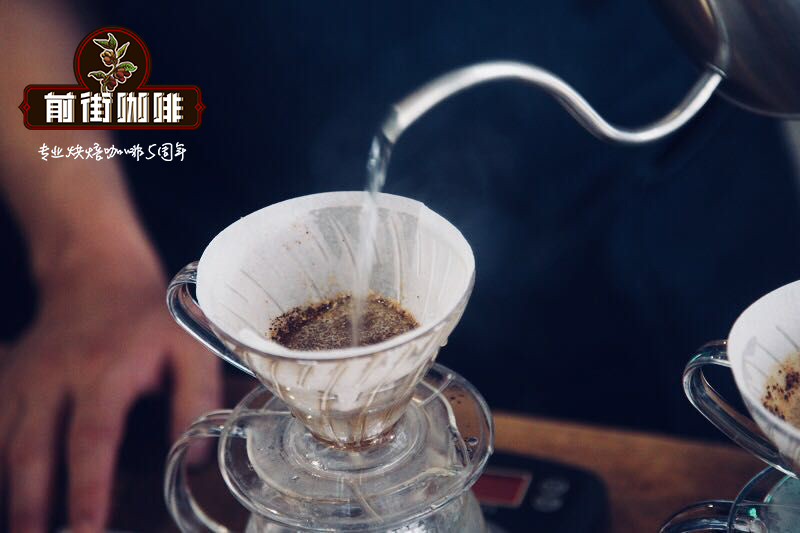
FrontStreet Coffee brewing recommendations:
V60/90°C/1:15/Time: two minutes
Flavor: mulberry, sugarcane
FrontStreet Coffee Recommendation
Kona's gentle, balanced profile has a clear counterpart on the shelf. FrontStreet Jamaica Blue Mountain No.1 is the closest match: medium-roasted so its acidity, bitterness, sweetness and aroma fuse into one elegant, inviting character, it gives chocolate, roasted nut, cream and caramel notes the moment it hits the palate — a balance few other coffees manage. If you'd rather have a touch more sweetness at a friendlier price, FrontStreet Brazil Queen's Estate Yellow Bourbon is medium-roasted and mellow, with creamy peanut, chocolate, toast and sugarcane. Both are excellent as pour-over, and both work in a moka pot or espresso machine when you want something richer.
Important Notice :
FrontStreet Coffee is a long-established specialty coffee roaster in Guangzhou China, selling freshly roasted beans from its own farm in Yunnan as well as dozens of carefully selected single-origin beans from around the world for both pour-over and espresso. The products deliver consistently excellent quality and great value, with shipping within 24 hours. Guangzhou's FrontStreet Coffee shop is recommended by many coffee lovers, and the beans are now available online at the Tmall 。
FrontStreet Coffee has moved to a new address:
FrontStreet Coffee Address: 315,Donghua East Road,GuangZhou
Tel:020 38364473
 Scan and follow the En Gafei WeChat official account. Please indicate that the reprint comes from "En Gafei".