Which Hawaiian Coffee Is Best? Why Is Hawaiian Coffee Popular? How Should You Drink Hawaiian Coffee?
The Origins of Coffee Consumption
The story of coffee drinking is said to begin with Kaldi, an Ethiopian shepherd. One day he noticed that his usually lethargic flock suddenly grew excited, bleating around some transported goods. After several experiments with neighboring monks, they discovered that the red, magical fruits in the sacks could produce a divine beverage that refreshed the spirit. After coffee reached the Middle East, and thanks to the local love of spices, people there began adding spices or nuts to their coffee hundreds of years ago.
Hawaiian Coffee: A Comparison with Jamaica's Blue Mountain
Coffee experts often compare Hawaiian Kona with Jamaica's Blue Mountain. Both offer mild, well-suited acidity and delicate fruit sweetness. However, Kona's rigorous quality control keeps it at a consistently high standard with virtually no negative reviews - unlike Blue Mountain, which occasionally draws some criticism.
Hawaii's Two Famous Coffee Regions
Hawaii has two relatively famous producing regions: KONA and KAU.
KONA Region
When people think of Hawaiian coffee, Kona comes to mind first. In 1828, the missionary Samuel Ruggles planted the first coffee in the Kona district of the Big Island. Today Kona accounts for about half of Hawaii's total coffee production, with roughly six hundred independent farms across northern and southern Kona. The coffee grows mostly on the western slopes of Mauna Loa and Hualalai at medium-to-low altitudes, around 2,000-3,000 feet. The volcanic region is famous for its black soil - moderate in pH, rich in minerals, and good at holding moisture. Kona enjoys plenty of morning sunshine, with clouds and fog rolling in around noon to shield the trees from the harsh afternoon sun - a climate ideal for pollination and flowering, and for letting the cherries develop fully.
The American writer Mark Twain wrote in his "Letters from Hawaii" in July 1866: "Kona coffee has a richer flavor than any other, be it grown where it may and call it by what name you please." Legend has it that Kona became his favorite from then on. Experts rank Kona alongside Jamaica's Blue Mountain: an elegant, mellow taste with a light fruity acidity, able to become either a clear tea with a sweet aftertaste or a delicious fruit juice depending on the roast.
What makes Kona special is that every bean is hand-selected and hand-picked, ensuring only the highest quality cherries enter production. Even so, 100% pure Kona is quite rare and sometimes hard to find. The rarest Kona beans are peaberries (round beans, one per cherry), making up only 4-5% of total Kona production each year. A peaberry cherry holds a single rounded bean, while ordinary Kona cherries hold two.
KAU Region
In recent years, Hawaiian KAU coffee has begun attracting attention across the United States. It is grown on the eastern slopes of Mauna Loa at about 2,000-3,000 feet, with award-winning estates concentrated around the town of Pahala at the northernmost tip of the KAU region on the Big Island. KAU's terrain is diverse, with coffee planted on the sunny slopes. Ample morning sun followed by afternoon clouds and fog, plus the mineral-rich black soil of the world's largest volcano, Mauna Loa - moderate in pH and porous enough to hold the right moisture - create an optimal environment for coffee.
KAU originally focused on sugarcane, planting small amounts of coffee from 1894. Only in 1996, when sugar prices collapsed, did the region actively transition from sugar back to coffee. Through the farmers' efforts - excellent soil and intensive cultivation - it caught up rapidly and entered regional and national cupping competitions, winning consistent praise. In the 2011 SCAA cupping competition, KAU coffee not only took the top prize for Hawaii but was honored as world-class. Experts praise KAU coffee as rich and full-bodied with a unique aroma, "like strolling through a garden," silky smooth on the palate - a rising star among Hawaiian specialty coffees that world-renowned brands rushed to buy.
FrontStreet Coffee's Hawaiian Coffee
FrontStreet Coffee's Hawaiian coffee comes from the KONA region - we simply love the special character of Kona.
Brewing Parameters Recommended by FrontStreet Coffee
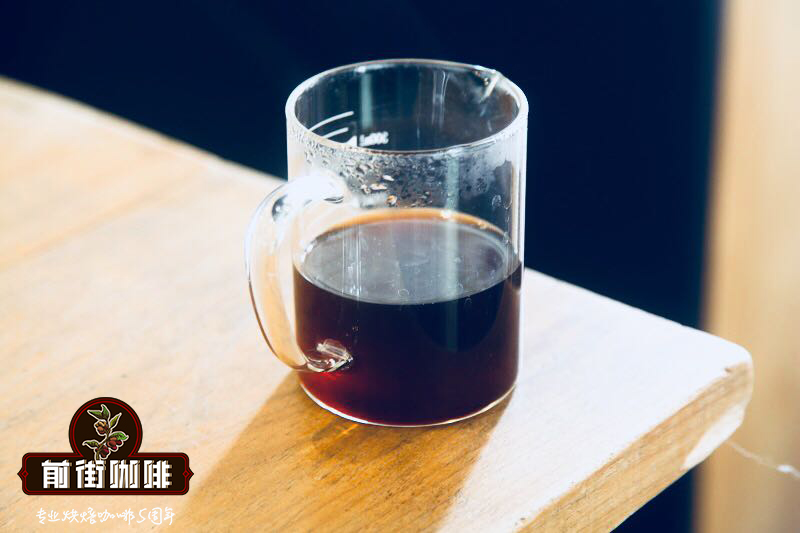
V60 / 90°C / 1:15 ratio / 2 minutes
Flavor Profile
Mulberry, sugarcane
FrontStreet Coffee Recommendation
Since experts place Kona side by side with Jamaica's Blue Mountain, FrontStreet Coffee's Jamaica Blue Mountain No. 1 is the perfect comparison cup. It comes from the historic Clifton Estate - growing coffee since around 1750 at an average of 4300 feet (1310.64 meters) - with government certification, proof of origin, and the traditional wooden shipping barrels (15kg, 45kg, and 70kg) that mark genuine Blue Mountain. Remember: only coffee grown between 457 and 1524 meters in the defined zone may be called Blue Mountain; 274-457 meters is Jamaica Prime, and genuine Blue Mountain costs several times more than High Mountain - so beware of bargains.
Blue Mountain's charm is perfect balance - clean, mild, and complex, with chocolate sweetness, cream and caramel, moderate acidity without harsh bitterness, and a persistent fruity finish. Roast it medium to medium-dark and brew it like FrontStreet does: Kono dripper, 15g at 1:15, water at 87-88°C, grind about white granulated sugar, three pours of 30g (30-second bloom), 120g, then 225g - letting the beans rest 4-7 days from roast first.
For the Hawaiian side of the comparison, keep the same gentle approach with our Kona: V60, 90°C, 1:15, about 2 minutes, for a cup of mulberry and sugarcane sweetness with elegant, tea-like clarity. Tasting the two side by side is the best way to understand why both islands' coffees earned their legendary reputations.
Important Notice :
FrontStreet Coffee is a long-established specialty coffee roaster in Guangzhou China, selling freshly roasted beans from its own farm in Yunnan as well as dozens of carefully selected single-origin beans from around the world for both pour-over and espresso. The products deliver consistently excellent quality and great value, with shipping within 24 hours. Guangzhou's FrontStreet Coffee shop is recommended by many coffee lovers, and the beans are now available online at the Tmall 。
FrontStreet Coffee has moved to a new address:
FrontStreet Coffee Address: 315,Donghua East Road,GuangZhou
Tel:020 38364473
 Scan and follow the En Gafei WeChat official account. Please indicate that the reprint comes from "En Gafei".