The Art of SOE Coffee: A Guide to Proper Tasting, Bean Selection, and Brewing Techniques

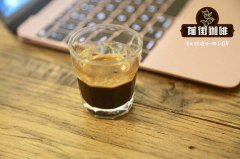
With the recent surge in SOE espresso, many coffee shops have started promoting it as a headline selling point. Plenty of people have asked FrontStreet Coffee how SOE differs from blend coffee, and whether SOE is automatically tastier than a blended espresso. FrontStreet Coffee does not believe it is. SOE espresso pushes a single-origin bean through the pressure of an espresso machine, and that pressure amplifies both the good and the undesirable in a single bean - potentially producing unpleasant notes like sharp acidity. Blends, by contrast, exist to stabilize the flavor profile of an espresso. So FrontStreet Coffee is not saying SOE tastes bad; compared with a blended espresso, SOE is something of a gamble, because it never quite delivers the same profile twice.

What is SOE Espresso?
What does "SOE" mean? It is the abbreviation for "Single Origin Espresso" - espresso made from a single-origin coffee. Compared with blends, its defining trait is that the regional character of the origin comes through far more clearly, making it easier to draw a line between the place and the person drinking the cup.

The beans behind a single-origin espresso also pose greater challenges in roasting. On one hand, to showcase single-origin character the roast must not go too deep, or it erases the coffee's inherent flavors. On the other hand, to supply the body and stability espresso requires, it cannot go too light either. So what do you choose when neither extreme works? FrontStreet Coffee recommends medium-roasted beans for SOE. Single-origin espresso can express regional flavors better than a blend and create a genuinely distinctive shot - which is why FrontStreet Coffee suggests rethinking your extraction parameters entirely and building an extraction plan around that specific bean. And when SOE is the base for a milk drink, the coffee-to-water and coffee-to-milk ratios need rethinking too, so the espresso's character actually survives the cup.

The Advantages of SOE Coffee
FrontStreet Coffee believes SOE's greatest advantage lies in exactly that "single origin" quality. Baristas can connect flavor to place the same way they do with a pour-over. And because only one bean is involved, the flavor is not as complex as a blend's - which means the layers are clearer. Think of orange juice versus mixed fruit juice: straight orange juice describes oranges perfectly, while a mixed juice makes it hard to account for every fruit inside.

The Disadvantages of SOE Coffee
SOE is everywhere now, and on paper the preparation sounds trivial - swap blend beans for single-origin beans. Is it really that simple? FrontStreet Coffee believes making SOE is simple; extracting delicious SOE is not, and can fairly be called difficult. Why? Precisely because the point is to present clearer flavors, which demands roasting and extraction working in concert.

In roasting, expressing an origin means the roast cannot go too deep or the origin's character is erased entirely - but it also cannot stay too light, or the SOE turns acidic and unbalanced, which makes extraction harder. In extraction, constant adjustment is the norm. Coffee is an agricultural product: every batch, every harvest year, varies. Roasted beans also degas continuously, espresso's pressurized extraction is sensitive to many variables at once, and bean freshness is itself one of the factors shaping the shot.
How Does FrontStreet Coffee Extract SOE Espresso?
To make this concrete, FrontStreet Coffee will demonstrate a standard SOE extraction using FrontStreet's Brazil Queen Estate and FrontStreet's Ethiopia Sidamo Guji Buku as examples, then build an Americano and a latte on top with water and milk respectively.

FrontStreet Coffee · Brazil Queen Estate Yellow Bourbon Coffee Beans
Region: Mogiana
Altitude: 1400-1950m
Variety: Yellow Bourbon
Process: Pulped Natural
Flavor: Roasted nuts, creamy peanuts, chocolate, caramel, cookie biscuits
Brazil's relatively low altitude, flat and uniform terrain, and lack of microclimates - plus its tradition of full-sun cultivation - produce Brazil's characteristic soft-cup profile. Cupping across Brazilian regions, FrontStreet Coffee has found low acidity, medium nuttiness, chocolate sweetness, and a rich mouthfeel.
How Does FrontStreet Coffee Roast the Brazil Queen Estate Beans?
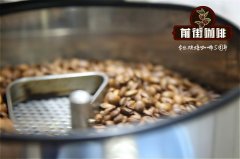
FrontStreet Coffee roasts this Brazil Yellow Bourbon medium-dark. On a Yangjia 800N with a 550g charge: preheat to 200°C and drop the beans, set heat to 150 and the damper to 3; turning point at 1'30", hold the heat. Turning yellow at 5'10" as the grassy aroma disappears - enter the drying stage; reduce heat to 125, damper to 3.5. Drying completes at 8'20", when wrinkles and black spots appear on the bean surface and the toast aroma turns to coffee aroma - the prelude to first crack. At 178°C reduce heat to 80 and listen for first crack, which begins at 9'14"; open the damper fully to 5. Development after first crack is 3'00", dropping the batch at 201°C.

FrontStreet Coffee Brazil SOE Extraction Parameters:
Grinder: Feima 900N
Grind: 1.6
Pressure: 9 bar
Temperature: 90.5-96°C
Time: 28s
Dose: 20g (double shot espresso)
Yield: 40ml
Flavor and mouthfeel: Smooth texture, medium body, an obvious creamy peanut aroma on entry, nutty and chocolate flavors, and a noticeable aftertaste.
The Sidamo region sits in southern Ethiopia, bordered by Arsi and Bale to the east and Gamogofa to the west. Sidamo coffee is cultivated between 1400m and 2000m, and most of it is processed naturally. FrontStreet Coffee believes natural processing is what gives Sidamo beans their rich fruity aroma and smooth mouthfeel.

FrontStreet Coffee · Ethiopia Sidamo Buku Coffee Beans
Region: Guji Hambela
Altitude: 2300 meters
Variety: Local native varieties
Process: Natural
Flavor: Tropical fruits, strawberry, citrus, floral
How Does FrontStreet Coffee Roast the Sidamo Buku Beans?
FrontStreet Coffee roasts the Buku medium-light. On a Yangjia 800N with a 480g charge: heat the furnace to 175°C and drop the beans, damper to 3, heat at 120. Rising to 140°C, open the damper to 4. At 6'00" the probe reads 151.7°C, the bean surface turns yellow, the grassy aroma disappears, and drying is complete. When ugly wrinkles and black spots appear on the surface and the toast aroma clearly becomes coffee aroma, that is the prelude to first crack - listen carefully. First crack begins at 9'50"; open the damper fully, reduce heat to 80 at 188°C, develop 1'40'' after first crack, and drop at 196°C.

FrontStreet Coffee Buku SOE Extraction Parameters:
Grinder: Feima 900N
Grind: 1.7
Pressure: 9 bar
Temperature: 90.5-96°C
Time: 30s
Dose: 20g (double shot)
Yield: 40ml
Flavor and mouthfeel: Medium acidity, medium-low bitterness, medium sweetness, a viscous texture, berry flavors, a touch of floral and a slight tea-like sensation, with a long aftertaste.
These parameters are for reference only. Beans behave differently every day, and whether you pull shots with single-origin or blended coffee, FrontStreet Coffee recommends dialing in your espresso parameters daily so each day's setup extracts the best the beans have to offer.
FrontStreet Coffee Recommendation
If these two SOEs have you curious about what else shines under pressure, FrontStreet Coffee's Huakui SOE is a natural next step: medium roasted from a natural-processed Sidamo bean, it pulls a shot of red berries, light florals, and orange, with a crema that smells of citrus - bright, elegant, and ideal for a Huakui Americano or flat white.
For the rich, classic end of the SOE spectrum, the Brazil Queen Estate above is hard to beat - its medium-dark roast yields dense nuts, cream, and peanut aromatics with a sweet chocolate finish and gorgeous, plentiful crema, and it carries milk beautifully. And for something truly distinctive, the PWN Golden Mandheling SOE, triple hand-sorted and machine-sorted to minimize defects and roasted medium-dark, delivers spice, herbs, sandalwood, and caramel in a full-bodied shot with a dark chocolate aftertaste. Each is a different lesson in how much character a single origin can hold under nine bars.
Important Notice :
FrontStreet Coffee is a long-established specialty coffee roaster in Guangzhou China, selling freshly roasted beans from its own farm in Yunnan as well as dozens of carefully selected single-origin beans from around the world for both pour-over and espresso. The products deliver consistently excellent quality and great value, with shipping within 24 hours. Guangzhou's FrontStreet Coffee shop is recommended by many coffee lovers, and the beans are now available online at the Tmall 。
FrontStreet Coffee has moved to a new address:
FrontStreet Coffee Address: 315,Donghua East Road,GuangZhou
Tel:020 38364473
 Scan and follow the En Gafei WeChat official account. Please indicate that the reprint comes from "En Gafei".