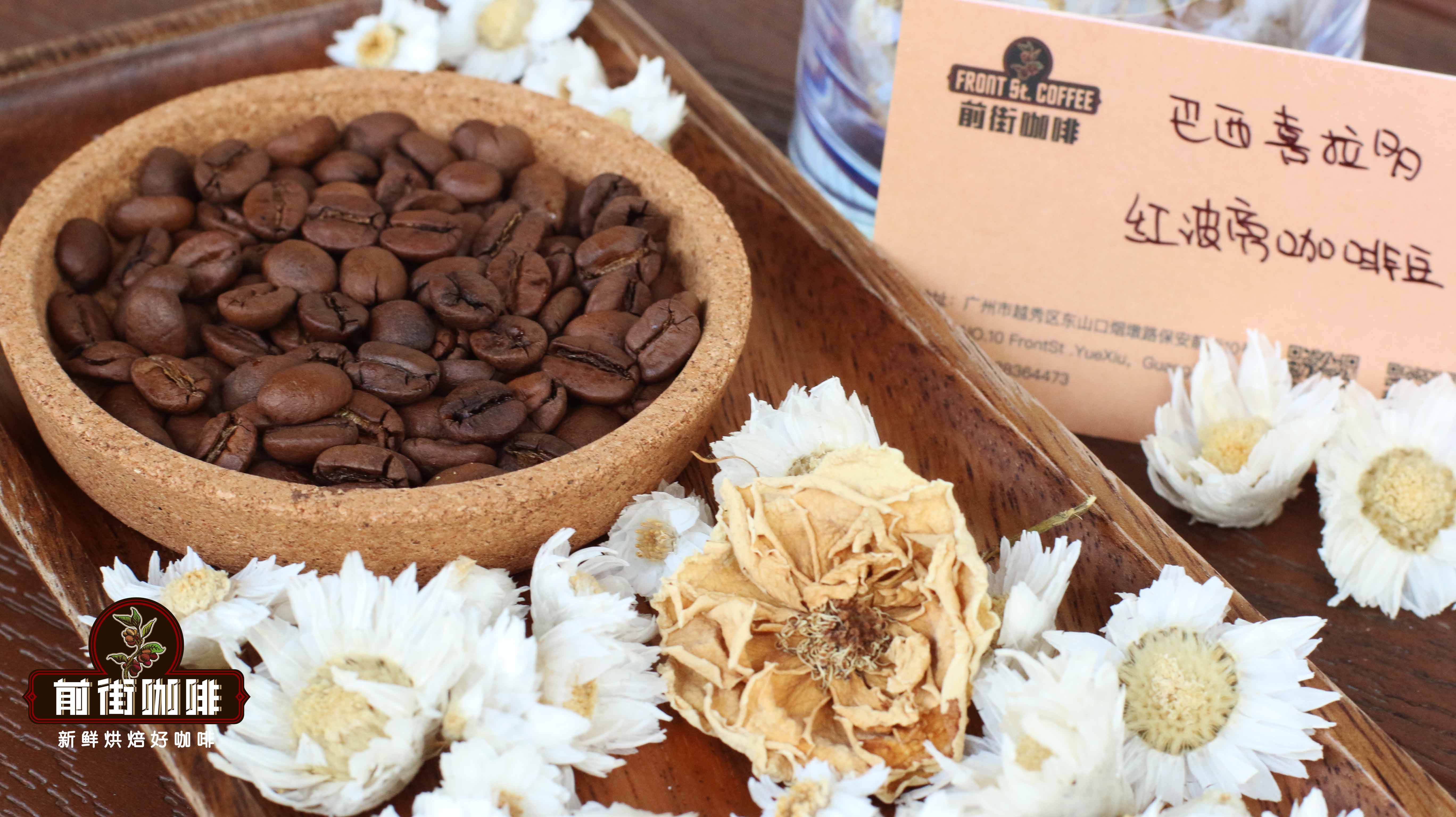
Coffee Knowledge | What is the Brazilian Coffee Grading System? What are the Highest Grade Brazilian Coffee Beans?

For more specialty coffee knowledge, follow FrontStreet Coffee.
Brazil: The Coffee Kingdom
Brazil is famous worldwide for coffee that is high in quality, aromatic and mild. As the largest coffee producer and exporter on the planet, the South American country has earned the nickname "Coffee Kingdom." FrontStreet Coffee believes that Brazilian coffee is not only abundant but remarkably consistent: its balanced flavor profile makes it a natural fit in espresso blends, and all three of FrontStreet Coffee's espresso blend beans contain Brazilian coffee.
Brazilian Coffee Regions
Lying in the tropics, Brazil has relatively flat terrain and few high-altitude mountain forests. Most coffee is grown at low elevations, on non-volcanic soil, with little shade. The consequences are easy to see in the cup: Brazilian beans tend to grow quickly, run large, have a soft density and show limited flavor variation. On top of that, large-scale machine harvesting pulls in cherries at every stage of ripeness, which is another reason Brazilian beans are not always outstanding in quality.
As the specialty coffee idea took hold, however, competitions multiplied and the higher-altitude regions of southern Brazil began to focus on quality. Growers improved varieties, cultivation, harvesting and green-bean processing alike.
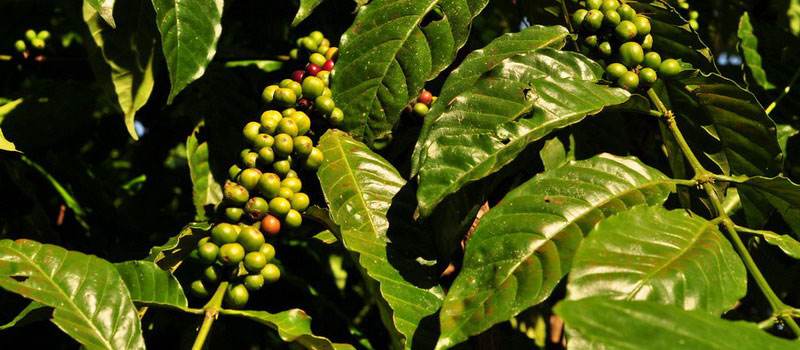
Brazilian coffee is grown mainly across seven states, with Minas Gerais and São Paulo in the southeast producing the highest-quality lots. Within Minas Gerais, Cerrado was the first Brazilian coffee region to earn origin certification and grows mostly superior-quality Arabica. As a mature coffee region, Cerrado was also the first in Brazil to commercialize coffee, and many exporters built large-scale plantations here. The Brazilian daily bean coffee launched by FrontStreet Coffee is sourced from the famous Cerrado region.

FrontStreet Coffee's Daily Bean Selection
FrontStreet Coffee originally introduced the daily bean range to help beginners understand how origin, processing method and variety shape a cup. By tasting a representative flavor from each region, drinkers build up their coffee knowledge piece by piece. Since Brazil is such a coffee powerhouse, FrontStreet Coffee naturally includes it in the daily bean lineup.
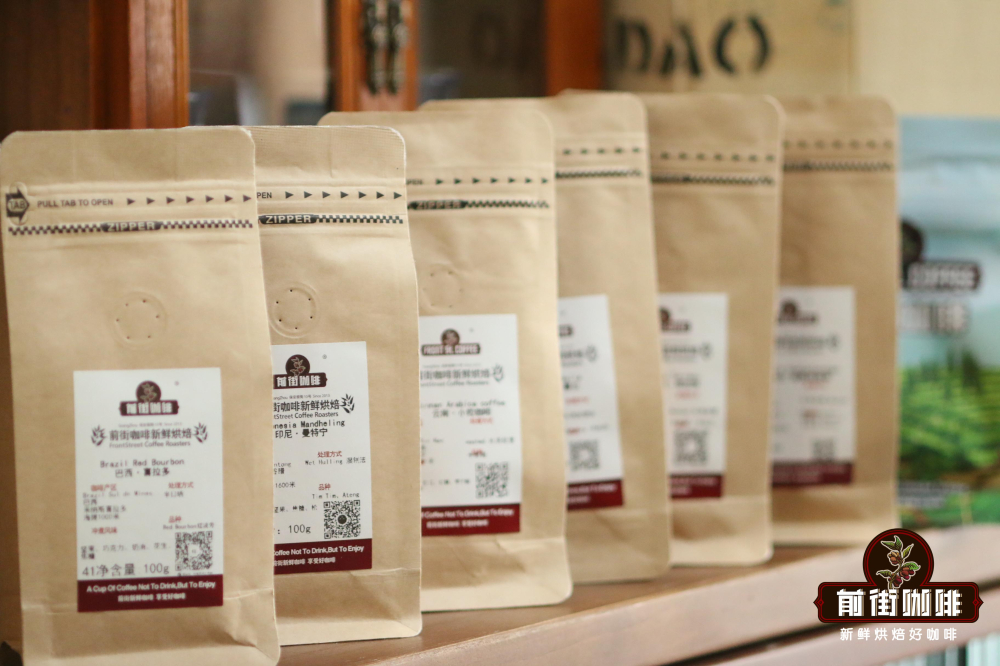
Brazilian Coffee Varieties
Brazil grows a great many varieties. Early cultivation centered on the ancient Typica, but its low yield drove many farmers to abandon it for more productive plants. In the mid-19th century, Bourbon was introduced from Réunion Island and began to be widely planted.
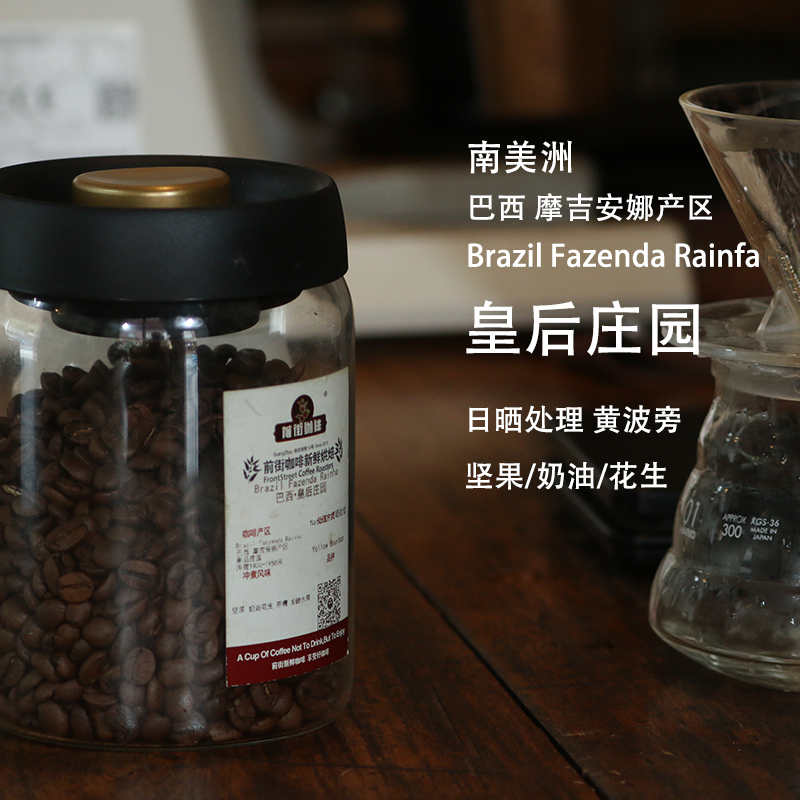
Like Typica, Bourbon is an old variety, but it has broader leaves, grows more densely and yields about 30% more than Typica. The beans are rounder and shorter, with rich berry acidity, noticeable creamy and sweet aromas and strong acidity. It shares Typica's weakness, though: poor disease resistance. FrontStreet Coffee's Brazilian Cerrado daily bean is made from red Bourbon, which turns red when ripe. FrontStreet Coffee's Queen Estate coffee from Brazil's Mogiana region, meanwhile, uses the delicate Yellow Bourbon variety, offering mellow flavors with black chocolate and creamy peanut notes.
Processing Methods
Brazil's local harvest season coincides with its dry season, which makes natural drying an obvious choice. Traditional natural processing spreads every bean on the ground, which can give the coffee earthy and woody off-flavors and inconsistent quality. After 1990, Brazil promoted the pulped natural method, also called semi-washed: defective and floating beans are removed in water channels, machines peel off the skin, pulp and some mucilage, the beans are washed, then dried in the sun or in drying rooms. Compared with the washed method, pulped natural saves water and labor, markedly improves Brazilian coffee quality and delivers a cleaner flavor profile.

Brazilian Coffee Grading System
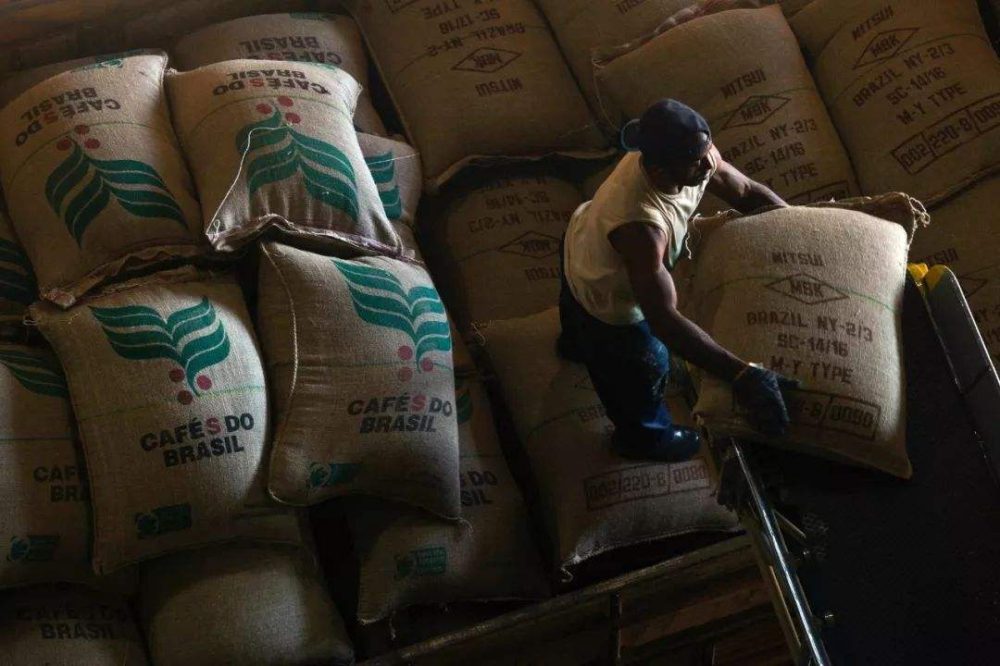
As FrontStreet Coffee noted earlier, Brazil's emphasis on volume, its huge geographical span and its sheer output mean a single standard would leave exported batches wildly inconsistent. Brazilian green coffee is therefore graded on three main fronts: defect percentage, bean size and cupping quality.
1. Grading by Defect Percentage
This is determined by counting defective beans per 300 grams under a "point deduction" system. Brazil uses the New York (NY) grading standard, which sorts coffee by defect percentage into NY2, NY2/3, NY3, NY3/4 and so on. The smaller the number, the lower the defect rate and the higher the grade, with batches scoring below 4 points classified as NY2, the highest grade. Because NY.1 describes beans with no defects at all, such meticulously sorted lots could never be supplied consistently, so Brazil sets NY.2 as its top grade.

2. Coffee Bean Size (Screen Size)
Size is measured by screening through sieves sized in 1/64-inch increments, ranging from 14 to 20. The screen size corresponds to the short side, or width, of the bean. The largest screen size for Brazilian coffee is 19, but production is limited, so 17/18 is treated as the highest practical grade.
3. Cupping Flavor Profile
Once Brazilian green beans are graded by defects and size, they are roasted and classified against Cup of Excellence cupping scores, split into two families: mouthfeel and flavor. By mouthfeel they fall into five types: Strictly Soft (very smooth), Soft (smooth), Softish (somewhat smooth), Hardish (harsh) and Rioy (iodine-like taste). Cupping flavor grades run from Fine Cup (FC), Fine, Good Cup (GC), Fair Cup, Poor Cup to Bad Cup; Fine Cup (FC) and Good Cup (GC) are the most common.
Put the three together and the bag of FrontStreet Coffee's Brazilian Cerrado green beans reads "Brazil NY.2SC – 17/18 FC Cerrado" — coffee from Brazil's Cerrado region, 17-18 screen size, fine cupping quality, very smooth mouthfeel and NY.2 defect grade.
Brewing Brazilian Coffee
Many friends ask FrontStreet Coffee how to brew medium-dark roasted Brazilian beans for the best cup. FrontStreet Coffee's view is that before you set any parameter you have to understand the coffee itself, then work out the recipe from there. FrontStreet Coffee's approach is a good reference.
To coax out the flavors printed on the bag, freshness matters more than anything. Coffee has an optimal flavor window after roasting, and once the peak aroma period has passed, those flavors are hard to extract. Every bean FrontStreet Coffee ships is freshly roasted within five days, so customers can enjoy the full optimal window.
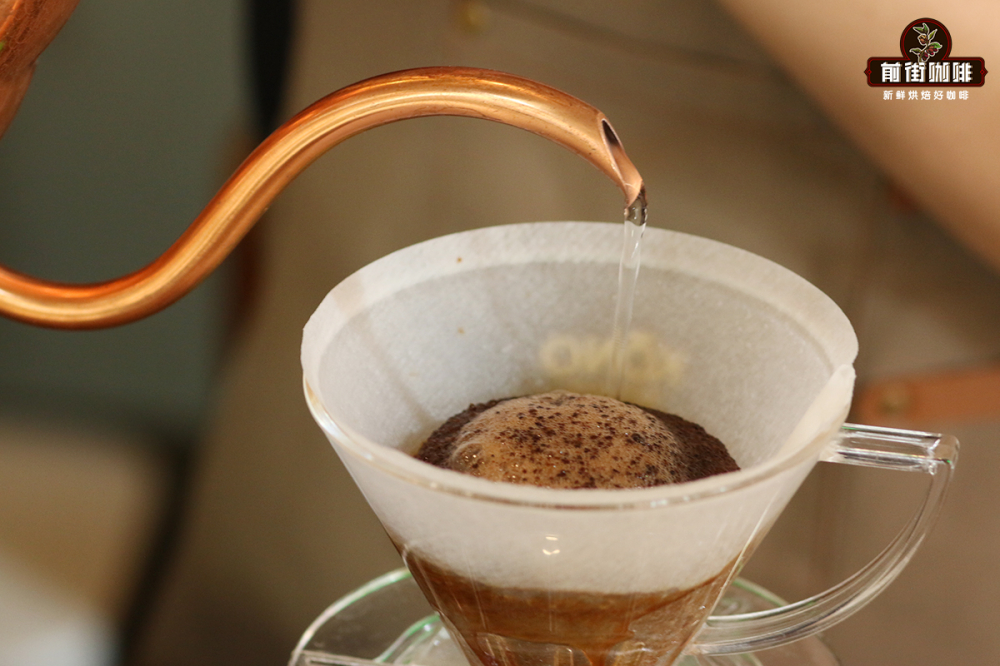
For medium-dark beans FrontStreet Coffee typically reaches for the KONO dripper. Its smooth, curved upper surface lets the filter paper seat better; compared with the V60, extraction is more immersion-based, which raises the coffee's overall concentration and boosts body. Besides KONO, slow-flow devices such as the Kalita wave dripper and cloth filters work well too.
Because medium-dark beans have already been roasted to a certain degree, their internal structure is more porous than light roasts and absorbs water more readily. To avoid over-extraction, FrontStreet Coffee chooses a grind of 75% pass-through on a #20 standard sieve, an 88°C water temperature and its customary three-stage pour.

Hand Brew Parameters:
88°C water temperature, coarse-sugar grind size (75% pass-through on a #20 standard sieve), 15g of coffee beans, a 1:15 coffee-to-water ratio and a three-stage extraction.
First stage: gently pour 30g of water to bloom, blooming for 30 seconds. Second stage: pour to roughly 125g, circling evenly and steadily outward. Wait for the coffee to drop; when it reaches halfway, pour the final stage to 225g. Once all the coffee has dripped through, total extraction time is typically around 2 minutes.
Brewing Flavor:
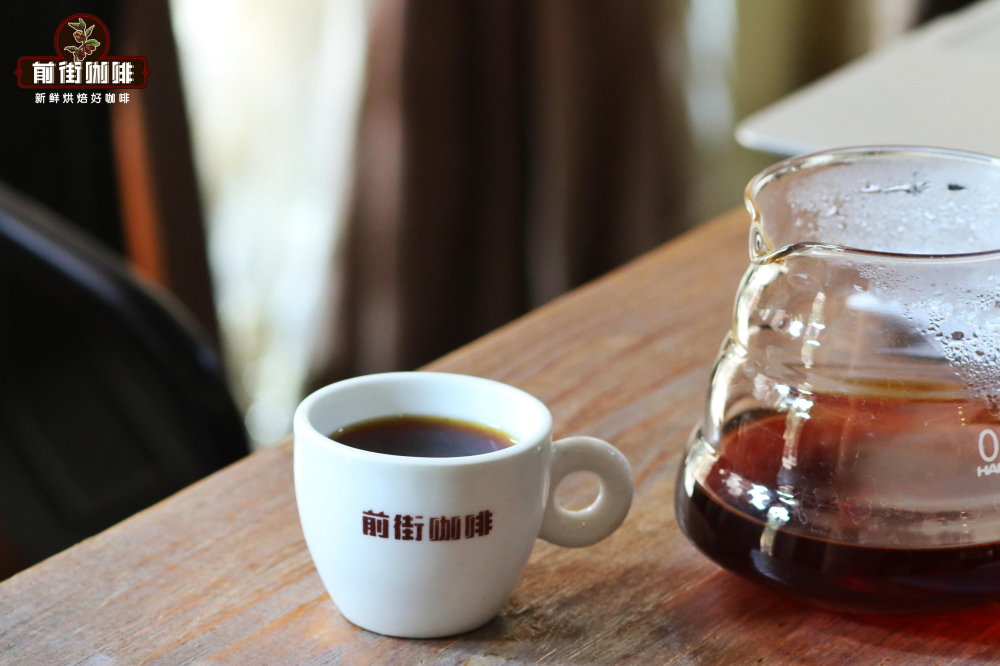
FrontStreet Coffee's Brazilian Cerrado daily bean has aromas of nuts, chocolate and caramel, a noticeable sweet aftertaste and an overall rounded mouthfeel. The chocolate note is stable and persistent.
FrontStreet Coffee Recommendation
As the largest coffee producer in the world, Brazil offers a huge range of coffees. Brazilian beans carry moderate acidity, and the balance of sweetness, bitterness and body is excellent, which makes them an ideal fit for medium roasting: out comes a nutty aroma, a smooth and full taste and a light acidity. They work beautifully as a single origin or in a blend.
If you simply want an introduction to Brazilian flavor, start with FrontStreet Coffee's Cerrado Red Bourbon, a very classic Brazilian single-origin lot. Cerrado is a well-known local region noted for high-quality beans, and this coffee is the common red Bourbon variety of South America. Roasted medium, it shows rich aromas of creamy peanut, toast, caramel and hazelnut, with a rounded body, no acidity and a light bitter finish. It is not only for pour-over: it also shines in a moka pot, as an espresso SOE, in a siphon and in a French press.
FrontStreet Coffee's second Brazilian single origin, Queen Estate, comes from Mogiana near South Minas, where fertile red volcanic soil lets the cherries take up plenty of nutrients and develop a full aroma. Its rare Yellow Bourbon mutated from Red Bourbon and has a cleaner fruit character. Brewed by pour-over, moka pot or home espresso machine, it reveals a sugarcane sweetness found in no other region, alongside fruit and chocolate notes. Brazil's low acidity, balanced cup and friendly price also make it a first choice in espresso recipes: the rich, oily FrontStreet Coffee Classic Blend, the nutty Premium Blend, the balanced FrontStreet Coffee Dark Cocoa Blend recommended by many baristas, and FrontStreet Coffee's Commercial Blend made for coffee shops all contain Brazilian beans. Beyond chocolate and cream aromas, Brazil contributes a soft sweet-sour-bitter balance that makes extraction more stable.
Important Notice :
FrontStreet Coffee is a long-established specialty coffee roaster in Guangzhou China, selling freshly roasted beans from its own farm in Yunnan as well as dozens of carefully selected single-origin beans from around the world for both pour-over and espresso. The products deliver consistently excellent quality and great value, with shipping within 24 hours. Guangzhou's FrontStreet Coffee shop is recommended by many coffee lovers, and the beans are now available online at the Tmall 。
FrontStreet Coffee has moved to a new address:
FrontStreet Coffee Address: 315,Donghua East Road,GuangZhou
Tel:020 38364473
 Scan and follow the En Gafei WeChat official account. Please indicate that the reprint comes from "En Gafei".