How to Brew Tropical Fruit-Flavored Nicaragua Prometido Farm Natural Java Variety by Pour-Over

How to Brew Tropical, Fruit-Forward Natural Java from Nicaragua's Prometido Farm
Java actually descends from the Abyssinia variety of Ethiopia. Its distinctive flavor and intense aroma made this natural-process bean, roasted by Hatch, a favorite among many friends at the cupping table of the Taiwan Coffee Exhibition. In the history of specialty coffee's spread, Java from Ethiopia may be a variety as legendary as Geisha. Nicaragua, troubled by civil war, actually obtained this rare variety as early as the 1980s and 1990s, but it lay buried in experimental farms and was not passed on to farmers in time. It was only after the Mierisch father and son happened to buy a bag of Java seeds that it took root and entered Nicaraguan farmers' coffee plantings.
Despite the name, this is absolutely not an Indonesian variety. Java originates in Ethiopia. As early as the 19th century, the Dutch introduced the variety from Ethiopia to Indonesia and named it Java. In the mid-20th century, the seeds were collected in Indonesia by the famous breeder Porteres and sent to Cameroon in Africa. There another breeder, Pierre Bouharmont, found that Java had partial resistance to coffee berry disease, which was troubling African growers, and that it yielded quite well without requiring much fertilizer. After 20 years of optimized selection, Cameroon released the variety to farmers between 1980 and 1990. It features passion fruit, mango, and jasmine flavors.
Although this is the first Java we've put on our shelves, we had already cupped many Javas from different producing regions in our master classes this year. Updated genetic research shows that Java may be one of the most historically complex coffee varieties of all, Geisha aside.
Through genetic fingerprinting with molecular markers, research institutions have determined that Java descends from the local Ethiopian variety Abyssinia. Grown at high altitude, Java can achieve excellent quality, even comparable to Geisha.
In 1991, Java was sent to Costa Rica through the breeder Benoit Bertrand and offered to small coffee farmers, giving them a new variety that needed less fertilizer and could resist berry disease — even though serious berry disease outbreaks had not yet reached Central America. On that reasoning, seeds were sent to every country in the PROMECAFE alliance, but they were never truly promoted and planted in those countries. The first Central American country to actually release Java was Panama.
Nicaragua should also have obtained the variety in the 1990s, but it was not promoted to farmers. The Nicaraguan Java known today is also called Javanica locally. According to Erwin Mierisch of the Mierisch family, his father "rescued" a batch of Java seeds from a research institution. At the time, the institution had obtained some African seeds and was experimenting in its garden nursery, but years of war in Nicaragua meant it could no longer operate. The father and son met a person selling a 20-pound bag of seeds at the closed research site, labeled "Variedad Java." Out of curiosity they bought the batch, and after several years of experimental planting they finally produced Java successfully.
Java beans are distinctive, similar to Ethiopian Longberry. The tree shape resembles a Geisha tree, with main branches forming right angles to the trunk. The bean shape is also similar to Geisha, and the cup shows floral aromas rarely seen in Central and South American beans. In 2008, the Mierisch family won the COE runner-up with Java, and today more and more Nicaraguan farms grow Java, making it an important producing region in Central America.
Nicaragua Prometido Farm Natural Java Batch
Coffee farmer Luis Alberto Balladarez is a renowned figure in Nicaragua. His farms and washing station have won multiple Cup of Excellence awards. When Luis first won the Cup of Excellence, he donated all the auction income to the local municipal government as funding for community housing — a noble and excellent farmer.
He has three farms: La Esperanza (Hope), Un Regalo de Dios (A Gift from God), and Lo Prometido (The Promise). The names show he is a devout Christian. Un Regalo de Dios won 3rd place in the 2010 COE and 13th place this year, while La Esperanza took 19th place in 2010. Even rarer, not only do his own farms have brilliant records, but his washing station, Beneficio Las Segovias, also processes cherries from local coffee farmers, teaching processing techniques and achieving outstanding results. The 4th-place finishes in both 2014 and 2015 came from his washing station. Un Regalo de Dios's 2010 winning score was 91.31 points.
Luis Alberto Balladarez's farms and washing station are located in the Nueva Segovia region. This coffee comes from Prometido Farm, in the Dipilto-Jalapa mountain range, at an altitude between 1500 and 1670 meters, with a cloud-shrouded microclimate. The residents come from the La Soledad community in Mozonte, between Mozonte and Dipilto. Prometido covers 28 hectares, 12 of them planted with coffee, while the northern 16-hectare area is entirely holly and pine forest.
Prometido is divided into sections that produce different variety batches, among which Java is perhaps the rarest:
- La Entrada batch – Red Catuai
- Las Calas batch – Red Catuai
- Las Minas – Maracaturra and Java
- El Caracol – Maracaturra and Pacamara
- El Africano – SL28 and Red Catuai
- El Java – Java
Nueva Segovia, near the Honduran border, is Nicaragua's best producing region. Almost all of the top five places in each Cup of Excellence go to Nueva Segovia.
Coffee Information
Region: Mozonte, Nueva Segovia
Farm: Lo Prometido
Owner: Luis Alberto Balladarez
Washing Station: Beneficio Las Segovias
Altitude: 1500-1670 meters
Variety: Java
Processing: Natural
Recommended Brewing Method
Recommended by FrontStreet Coffee: Pour-over.
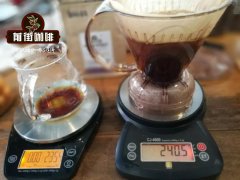
V60 dripper, 15g of coffee, water temperature 89°C, Fuji grinder setting 4, water-to-coffee ratio close to 1:15. Use 30g of water for the bloom, blooming for 30s. Then pour in segments: pour to 130 grams, stop the flow, wait for the water level to drop by 1/3, then pour again to 225 grams.
FrontStreet Coffee Recommendation
If Java's complex, floral-leaning natural profile appeals to you, FrontStreet's Geisha Village Gold Label offers a parallel experience. It is the Geisha 1931 variety, roughly 10% of the village's total production, and the estate's top coffee outside its auction lots. The refined natural process yields complex, layered florals, and both the dry aroma and the sip, texture, and finish are memorable.
FrontStreet's Grana Geisha from Ethiopia is another naturally processed high-altitude coffee worth exploring. The Grana station sits where the Kochore and Grana Abaya areas meet and was established in 2014, with coffee plantings spread across up to 700 hectares, much of it uncultivated, fertile land under tree shade. Cherries are hand-picked fully ripe and dried on raised beds for 14–20 days depending on the weather. A medium-light roast brings out bright citrus acidity, elegant ginger-lily florals, and full ripe-fruit sweetness, with a delicate, silky body and a refined Geisha finish.
For the classic washed comparison in the same floral register, FrontStreet's Panama Boquete Geisha comes from Panama's most representative specialty region with sound variety genetics. The washed processing lets the orange-blossom honey character come through clearly, with oolong-tea body, delicate fruit acidity, and distinct layers — a clean counterpart to the more fruit-driven natural coffees.
Important Notice :
FrontStreet Coffee is a long-established specialty coffee roaster in Guangzhou China, selling freshly roasted beans from its own farm in Yunnan as well as dozens of carefully selected single-origin beans from around the world for both pour-over and espresso. The products deliver consistently excellent quality and great value, with shipping within 24 hours. Guangzhou's FrontStreet Coffee shop is recommended by many coffee lovers, and the beans are now available online at the Tmall 。
FrontStreet Coffee has moved to a new address:
FrontStreet Coffee Address: 315,Donghua East Road,GuangZhou
Tel:020 38364473
 Scan and follow the En Gafei WeChat official account. Please indicate that the reprint comes from "En Gafei".