What Coffee Beans Are Suitable for French Press? Starbucks French Press Features, Brewing Taste, Water-to-Coffee Ratio, and Usage Methods
Introduction to Coffee Brewing Methods
Coffee is no longer an unfamiliar term, and people's pursuit of it has grown ever more refined. From first meeting coffee in a café to brewing it at home, it's been quite a journey. Yet with so many brewing devices on the market, which ones actually deliver? FrontStreet Coffee believes that while pour-over requires attention to many small details during brewing, there is one device - the so-called "lazy brewing method" - that might be perfect for beginners. That device is the French press.
Why Is It Called a "Lazy" Device?
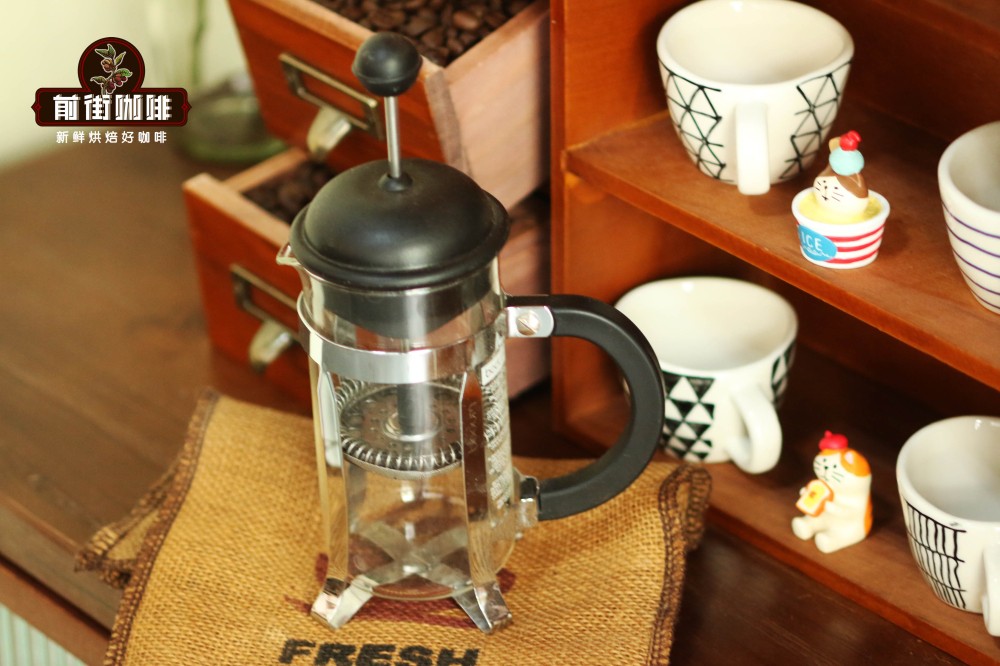
FrontStreet Coffee explains: the French press is simple to use, yet it's also one of the methods that best showcases high-quality beans. Its structure is extremely simple - just two parts, the pot body and the filter screen. No auxiliary tools are needed. Think of the pot body as a container for water and grounds, while the filter screen is the part that most affects the final taste (though bean quality and water temperature remain crucial). That simplicity is why the French press has always been regarded as the best representative of lazy coffee.
Versatility of the French Press
It can brew coffee - and it can also make tea. Known in English as the French Press, it originated in France around 1850. It is a simple brewing device made up of a heat-resistant glass body and a metal filter screen attached to a plunger rod.
Coffee Bean Requirements for French Press
We know coffee comes in dark roast, light roast, and medium-dark roast. Whatever the roast level, pour-over can showcase its best qualities. But is that true of the French press too - or does it have specific bean requirements? FrontStreet Coffee believes that for French press brewing, bean quality directly affects the taste, so it's best to use premium specialty-grade beans. What sets the French press apart from other devices is that it needs no filter cloth or paper. Its screen has larger pores that filter out coarser particles while retaining a large amount of coffee oil, which increases body and lets the beans express their most original flavors. Put another way: the darker the roast, the lower the acidity, the stronger the bitterness, and the faster the extraction. Theoretically the French press can brew any roast level, but in practice it suits medium-dark and dark roasts best.
Because oils determine a coffee's aroma and full-bodied flavor, this also shows, from another angle, that with a French press, dark-roast beans give better aroma and a richer mouthfeel.
Starbucks French Press Experience
What about the French press coffee from Starbucks, the chain we all know or visit? What are its characteristics? FrontStreet Coffee invites you to learn along and brew a pot to taste for yourself.
Step-by-Step French Press Brewing Guide
Step 1: Boil Water
Step 2: Grind Coffee Beans
The French press needs coarse particles (a medium grind). FrontStreet Coffee recommends a coffee-to-water ratio of 1:15 to 1:16.

Step 3: Initial Water Addition
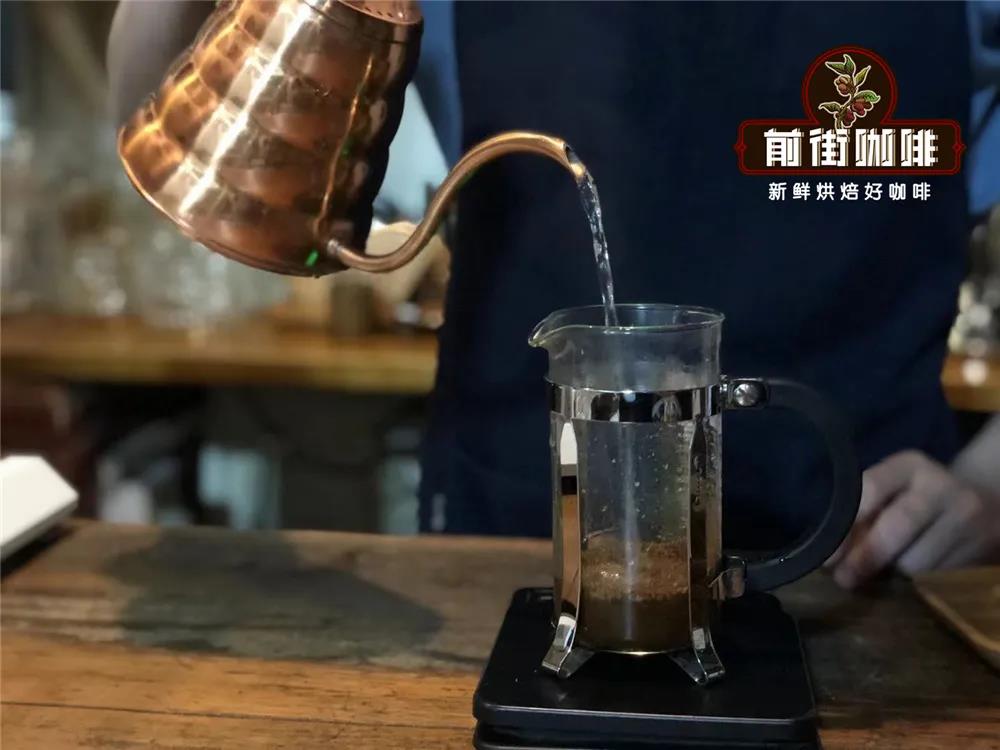
Place the French press on a digital scale, pour in 120 grams of hot water (and start timing), pouring directly into the center.
Step 4: Stir and Bloom
Gently stir the grounds back and forth with a wooden spoon or chopsticks, as if rowing a boat. The grounds will begin to expand during this step, which takes about 30 seconds - meaning you bloom for 30 seconds.
Step 5: Add Remaining Water and Wait
Once the grounds have expanded, add the remaining water and cover with the lid. Do not press the filter screen down yet; wait four minutes - no less.
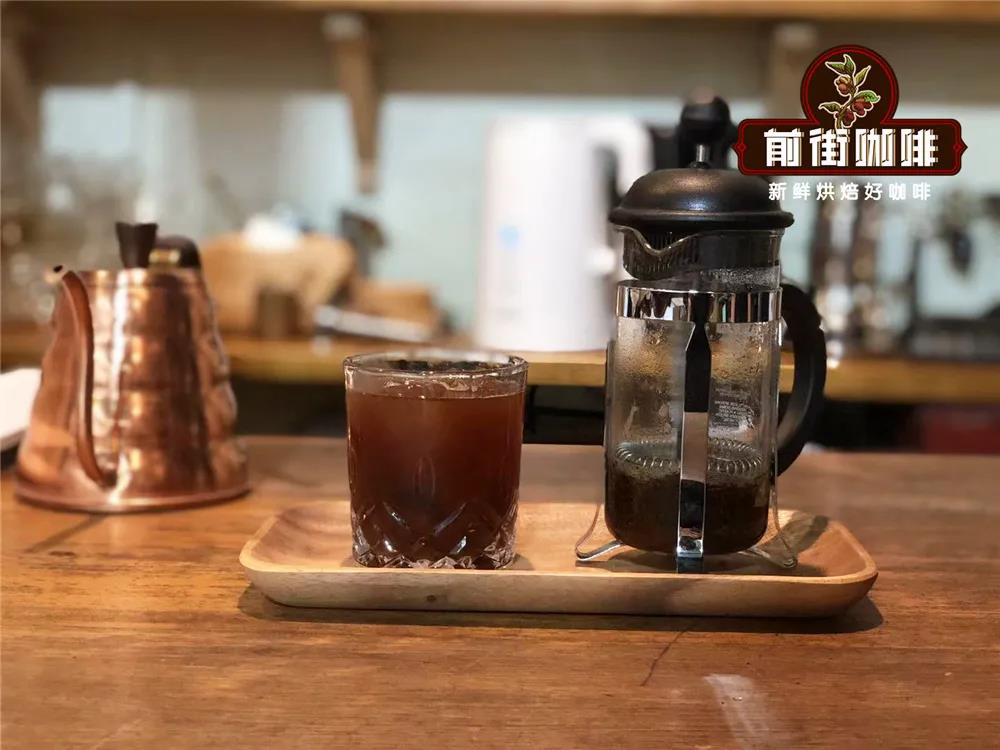
Step 6: Press and Serve
Move the French press off the scale, then slowly press the filter screen down. You should feel about 7-9 kilograms of pressure. Too little resistance means the grounds are too coarse; too much means they're too fine. Once the screen reaches the bottom, pour the coffee out immediately - otherwise it will over-extract.
Step 7: Enjoy Your Coffee
Now enjoy it. Pour the coffee into a pre-warmed mug. Remember to rinse your mouth before drinking so you taste the coffee at its original flavor. The optimal drinking window for French press coffee is 20 minutes. So if you can finish it within 10 minutes, either roast level works; if you plan to take 20 minutes, we recommend dark-roast beans.
Conclusion
That is the full French press process. If anything is still unclear, drop by FrontStreet Coffee and ask the baristas - FrontStreet Coffee carries over 50 different single-origin coffees from regions around the world, enough to satisfy any curiosity and appetite for exploration.
FrontStreet Coffee Recommendation
For a French press, FrontStreet Strawberry Candy is a lovely light, aromatic choice. Blending a honey-processed Costa Rican coffee with a washed Panamanian Gesha, it releases rose, citrus, grape, and raisin aromas when steeped, and with milk it turns into the scent of strawberry gummy candy.
If you want a low-acid, oil-rich black coffee, reach for FrontStreet PWN Golden Mandheling. One of Asia's best-known specialty coffees, it is sorted three times by hand plus once by machine, giving large, uniform, translucent beans. Medium-dark roasted, it brings dense spice, caramel, cedar, and dark-chocolate aromas, and produces a full, oily cup in the press.
Two practical settings for the press: grind to a coarse-sugar consistency - about 10.5 on an EK43s or 26 on a hand grinder - so the grounds look a little like small gravel rather than fine sand, and steep with a 1:15 ratio (15g of coffee to 225g of water), which lands around 1.1-1.2% strength. Water should sit near 90°C, roughly 1-2°C hotter than you'd use for pour-over because the press gives no stirring to help extraction. Aim for a 4-minute steep: a dark roast can turn bitter and astringent past 5 minutes, while a light roast may need closer to 3-5 minutes to open up.
Important Notice :
FrontStreet Coffee is a long-established specialty coffee roaster in Guangzhou China, selling freshly roasted beans from its own farm in Yunnan as well as dozens of carefully selected single-origin beans from around the world for both pour-over and espresso. The products deliver consistently excellent quality and great value, with shipping within 24 hours. Guangzhou's FrontStreet Coffee shop is recommended by many coffee lovers, and the beans are now available online at the Tmall 。
FrontStreet Coffee has moved to a new address:
FrontStreet Coffee Address: 315,Donghua East Road,GuangZhou
Tel:020 38364473
 Scan and follow the En Gafei WeChat official account. Please indicate that the reprint comes from "En Gafei".