Recommended Coffee Beans for Siphon Brewers_How Much Coffee to Use in Siphon Brewing_Siphon Coffee Price
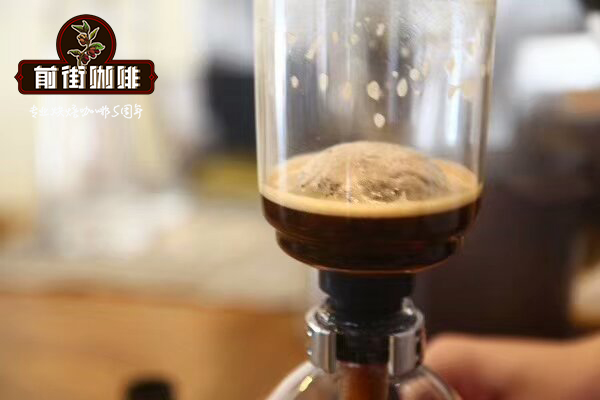
Siphon Brewing: A Technical Challenge in Coffee Extraction
Brewing with a siphon pot tests your technique, demanding strict control of time and water temperature. Just as siphon coffee can be stirred in different ways, how you add the grounds also deserves thought. The most common approaches are pre-adding and post-adding grounds — also called bottom-add and top-add. Neither is absolutely right or wrong; they simply offer advantages at different control points. Let's brew a pot each way, using Yirgacheffe Woka as the example.
Working Principle
Siphon extraction works mainly through a pressure difference. Heat the water in the lower chamber until it boils, then insert the upper chamber, which creates a high-pressure state in the lower pot. Because of the pressure difference between the two chambers, hot water rises to mix with the grounds in the upper chamber for extraction. When extraction ends, remove the heat from the lower pot and the pressure difference drops instantly; the siphon effect then draws the coffee back down into the lower pot. To speed the return, wipe the lower pot with a damp cloth, which lowers the pressure difference further and accelerates the flow.
Preparation
1. Add water to the lower chamber of the siphon pot. For two servings, fill the water 5mm above the 2-cup mark. Since the grounds will absorb water, add a little extra if you want two full servings of coffee.
2. Grind the beans for siphon brewing. Prepare 25 grams of grounds (about 15g for a single cup). Use a medium grind, with particles between the size of white sugar and brown sugar.
3. After adding the water, wipe the outside of the lower pot dry with a soft cloth. Don't leave water residue, which could crack the pot during heating.
4. Fill the lower pot with hot water and heat on a gas stove. Generally a single cup uses about 180 grams of water, while a double uses 300 grams (coffee-to-water ratio 1:12).
5. With all the preparation done, start heating the water.
When the water reaches brewing temperature, install the filter cloth in the upper chamber. Be sure to hook it in place as shown below — otherwise, when the water rushes up from the lower pot, the filter will be pushed open.
Pre-Adding Grounds
Pre-adding means placing the grounds in the upper chamber first, then letting the water rise to meet them. This method demands tighter control of heat: as the water rises, adjust the flame to the right size immediately, so no large bubbles form and disrupt the bloom. It's also best, with pre-adding, to brew a pot of plain water first to check that the filter screen is centered; if it isn't, continuous large bubbles will still form. The advantage of pre-adding is a gradual wetting process for the grounds, which reduces the number of stirring cycles needed for the first stir and helps the bloom. Temperature control, however, is poorer, so timing the insertion of the upper chamber into the lower pot matters a great deal. In other words, pre-adding may look simple, but it actually takes more hands-on experience than post-adding.
Technique: Using Washed Yirgacheffe Woka
(1) When the lower pot's water reaches 90°C, pour in the grounds and straighten the upper chamber.
(2) Once the water fully saturates the grounds, perform the first stir and start timing. Adjust the flame to the right size as the water rises into the upper chamber.
(3) After 30 seconds of blooming, perform the second stir.
(4) Around 50 seconds, perform the final stir, then remove the heat source to let the coffee return.
Post-Adding Grounds
Post-adding is the reverse: wait until all the water from the lower pot has risen into the upper chamber before adding the grounds. That gives you ample time to reduce the heat to just enough to hold the water in the upper chamber without letting it fall back, then center the lower filter screen, and finally wait a few minutes for the water to cool slightly. Generally, when the water first rises to the upper chamber its temperature is around 90–95°C, so you can let it drop by about 2–5 degrees before adding the grounds. Higher temperatures usually bring more bitter flavors and can even produce a burnt taste, while lower temperatures emphasize acidity and aroma. Too low, though, and extraction is insufficient, reducing body and making the acidity overly sharp — so choosing the right temperature for the coffee at hand is crucial.
Technique: Using Washed Yirgacheffe Woka as Example
(1) When the water temperature reaches 90°C, straighten the upper chamber. When the water rises into the upper chamber, pour in the grounds, stir, and start timing.
(2) Adjust the flame to the right size. After 30 seconds of blooming, perform the second stir.
(3) Around 50 seconds, perform the third stir. When stirring is done, remove the heat source to let the coffee return.
Conclusion
Pre-adding grounds emphasizes high clarity and abundant, long-lasting aroma, with distinct lemon acid, citrus, and white grape juice flavors. It does, however, demand high precision, and poor handling easily causes under- or over-extraction with large deviations.
Post-adding grounds produces a richer mouthfeel, with more prominent mid-palate caramel and honey flavors. Clarity is relatively weaker, and the aroma is less prominent and elevated. Temperature control is especially important here.
Try both methods. Once you've built up some experience, you can even choose between them based on the character of different beans or different extraction goals.
Recommended Siphon Coffee Bean Brands
FrontStreet Coffee's freshly roasted single-origin siphon beans — such as Yirgacheffe and Mandheling — offer full guarantees in both brand and quality and suit a range of brewing methods. More importantly, they offer excellent value: a half-pound (227-gram) bag costs only around 70–90 yuan, and at 200ml per cup with a 1:15 coffee-to-water ratio, one bag makes 15 cups of specialty coffee — about 5–6 yuan a cup. Against café prices that often reach tens of yuan per cup, that is exceptional value.
FrontStreet Coffee Recommendation
The Washed Yirgacheffe Woka used above is a fine illustration of why Yirgacheffe earns its reputation. Yirgacheffe is a small town in the Sidamo province of southern Ethiopia; the area sits at roughly 1,700–2,100 meters, with the coffee trees planted above 1,800 meters, making it one of the highest coffee regions anywhere. In 2010, with the Yirgacheffe name carrying so much weight, Ethiopia's commodity exchange separated it from Sidamo as its own designation. The FrontStreet Washed Yirgacheffe daily-drinker gives you that character at an accessible price — white jasmine, bright citrus and lemon acidity, and a tea-like body that comes through beautifully in a siphon.
FrontStreet also bottles two more expressions of the same terroir. The FrontStreet Gudingding cooperative sits in the Worka zone at Yirgacheffe's southeastern edge, originally part of the Woka cooperative under the YCFCU and independent as a single origin since 2012, when its roughly 300 member farmers formed their own cooperative; because the fruit is stripped before drying, its flavor is especially clear, showing citrus and lemon tones with elegant white florals. The FrontStreet Red Cherry, meanwhile, is a natural made entirely from ripe, undamaged cherries, spread on raised beds, turned every 2–3 hours over the first days, and sun-dried for three to five weeks — giving citrus acidity alongside berry juice, honey sweetness, and creamy smoothness. All of them reward careful brewing; for a filter method, FrontStreet suggests a V60 at 90–91°C with 15g of coffee at a 1:15 ratio, ground to fine-sugar size (about 80% through a #20 sieve).
Important Notice :
FrontStreet Coffee is a long-established specialty coffee roaster in Guangzhou China, selling freshly roasted beans from its own farm in Yunnan as well as dozens of carefully selected single-origin beans from around the world for both pour-over and espresso. The products deliver consistently excellent quality and great value, with shipping within 24 hours. Guangzhou's FrontStreet Coffee shop is recommended by many coffee lovers, and the beans are now available online at the Tmall 。
FrontStreet Coffee has moved to a new address:
FrontStreet Coffee Address: 315,Donghua East Road,GuangZhou
Tel:020 38364473
 Scan and follow the En Gafei WeChat official account. Please indicate that the reprint comes from "En Gafei".