Origins of Geisha Coffee and How to Distinguish Blue, Green, and Red Label Geisha Beans from Panama's La Esmeralda Estate
The Rise of Geisha Coffee in International Competitions
In recent years, Geisha coffee has made its presence felt at major coffee competitions around the world. Enthusiasts know that the most famous Geisha comes from Panama's Hacienda La Esmeralda. FrontStreet Coffee also carries Geisha beans from Geisha Village in Ethiopia, the variety's original home. Still, even though Geisha Village is the birthplace of the variety, its cup falls slightly short of the Geisha grown at Hacienda La Esmeralda in Panama. In this article, FrontStreet Coffee shares the story of Panama Geisha.
The Historical Spread of Geisha Coffee
The Geisha variety was collected in the forests near Gesha, Ethiopia, in 1931. It was then sent to a Coffee Research Institute in Kenya; in 1936 it reached Uganda and Tanzania, in 1953 Costa Rica, and finally Panama in 1970.

Through all those decades, though, Geisha drew little attention. The trees yield poorly, are hard to cultivate, and offer weak economic returns, so nobody paid them much mind.
That changed when the owner of Hacienda La Esmeralda and his son noticed that certain beans carried unique flavors strikingly different from the rest of Panama's coffee. In 2003 they began cultivating the Geisha trees separately, and in 2004 they entered Geisha beans in the Best of Panama (BOP) competition—and won first place. Overnight, Geisha was famous, thrust before coffee lovers worldwide and igniting a Panama-wide planting boom. Next, FrontStreet Coffee tells the story of Hacienda La Esmeralda, the benchmark estate of the Geisha world.
Hacienda La Esmeralda
The estate's history begins in 1964, when American banker Rudolph Peterson retired, moved to Panama, and bought Hacienda La Esmeralda near Boquete. At first the farm focused on dairy. Coffee cultivation only started once his son Price left his medical practice to help manage the farm. In 1987 they planted two varieties, Caturra and Catuai; in 1994 they built a washed processing plant and formally entered specialty coffee production; and in 1996 they acquired the nearby Hiramio estate, with its excellent location and high-quality established varieties, folding it into La Esmeralda.

According to FrontStreet Coffee's research, what first caught the Petersons' attention about the Hiramio land was precisely those existing coffee trees, whose beans carried delightful citrus and floral-fruit aromas unlike the typical taste of Panamanian coffee. After cupping beans from different corners of the estate, they traced the source to unknown coffee trees growing at its highest point. Because yields were so low, the previous owner had used them merely as windbreaks. Those trees, of course, are what coffee lovers now know as Geisha.
The Geisha the Petersons found made a stunning debut by winning the 2004 Panama BOP green bean competition; expert identification confirmed the trees were the Geisha variety from Ethiopia. The family then poured most of their energy into infrastructure supporting strict batch separation and meticulous processing. The result is what you see today at FrontStreet Coffee: Red Label Geisha, Green Label Geisha, and Blue Label Geisha.

Grading Standards for Esmeralda's Red, Green, and Blue Labels
As noted above, Hacienda La Esmeralda classifies every bean it produces with unusual strictness, which sets its marketing apart from other estates. The classification rests on cupping performance, variety, and growing plot, divided into five major brands. Of these, Geisha comprises three: Esmeralda Special (Red Label), Private Collection (Green Label), and Geisha 1500 (Blue Label). Below, FrontStreet Coffee breaks down the differences among these three Geisha tiers.
Esmeralda Estate Red Label Geisha
Esmeralda Special, commonly known as Red Label, is the estate's premium Geisha outside of auction batches. It is grown above 1,600 meters and cups at no lower than 91 points. Each micro-batch carries full traceability—plot, altitude, latitude and longitude, tree age, harvest date, processing method, and more.

For example, the latest Red Label batch acquired by FrontStreet Coffee was selected from the Sugar Cane plot, with fruit harvested on February 13th of this year. After 25 days of slow natural drying, it brought rich aromas to the coffee—jasmine, cranberry, passion fruit, citrus, and cinnamon.
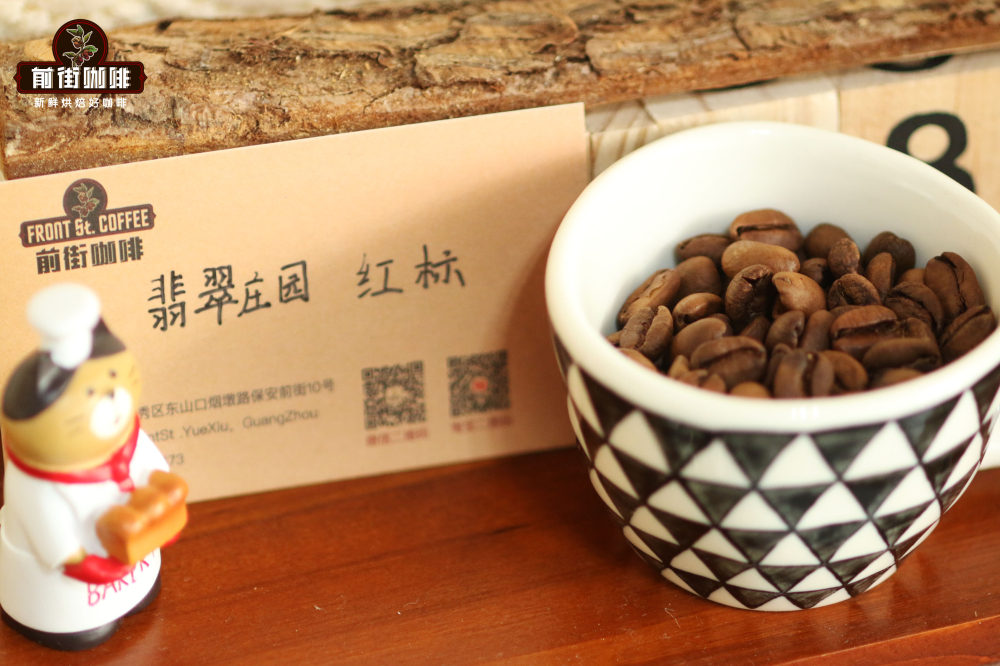
FrontStreet Coffee: Panama Hacienda La Esmeralda Red Label Geisha Coffee Beans
Country: Panama
Region: Boquete (Hacienda La Esmeralda)
Altitude: 1700 m
Variety: Geisha
Processing: Natural Process
Flavor: Citrus, Complex Fruits, Rose Tea, Honey
Esmeralda Estate Green Label Geisha
Private Collection, commonly known as Green Label, was originally the non-auction tier of excellent-quality Geisha. It is harvested from a blend of Geisha lots across the estate's two main farms at 1,600–1,800 meters. With its classic citrus-and-honey sweetness, it has become the preferred choice for budget-conscious Geisha lovers. Starting in 2022, Hacienda La Esmeralda began indicating which sub-estate this grade comes from.

Because it is blended without detailed plot specification, Green Label sometimes tastes remarkably close to Red Label. And although it ranks below Red Label, it still delivers the classic Geisha character—signature florals and fruit, citrus acidity, and a thick, juicy mouthfeel. FrontStreet Coffee considers Green Label the best value of the three labels.
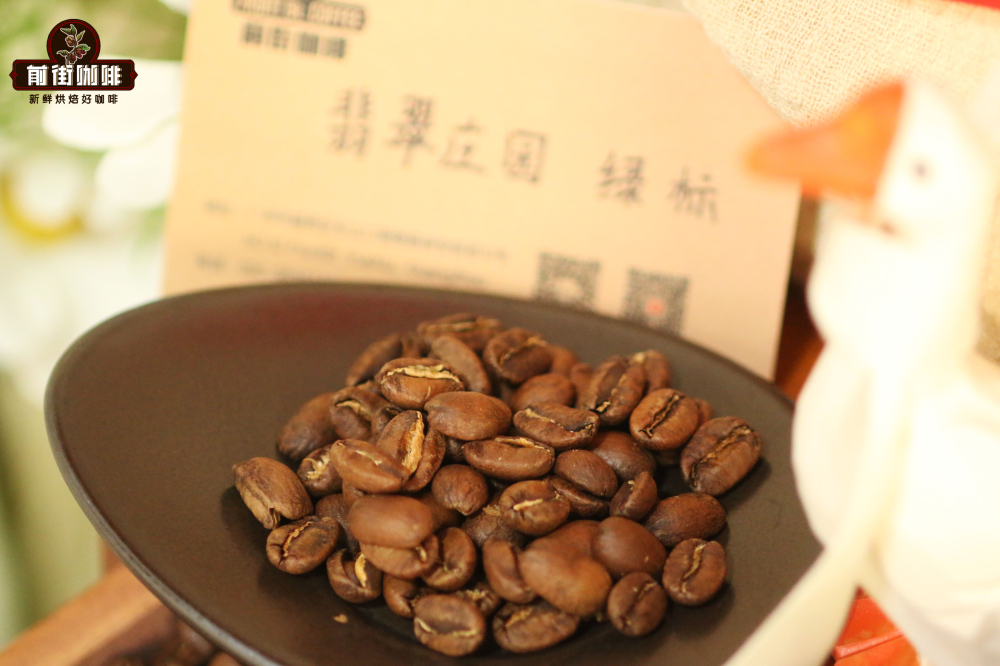
FrontStreet Coffee: Panama Hacienda La Esmeralda Green Label Geisha Coffee Beans
Country: Panama
Region: Boquete (Hacienda La Esmeralda)
Altitude: 1700 m
Variety: Geisha
Processing: Natural Process
Flavor: Jasmine, Citrus, Honeydew Melon, Berries
Esmeralda Estate Blue Label Geisha
Geisha 1500, commonly known as Blue Label, is grown at 1,400–1,500 meters and blends Geisha from three plots: Jaramillo, Canas Verdes, and El Velo. In previous years Blue Label was only available washed, but this year's batch added a natural process option.

Worth noting: Hacienda La Esmeralda discontinued the Blue Label series starting in 2021, selling Geisha from this zone externally as Volcanic Rock Geisha beans. The flavor profile remains the same as the original Blue Label. FrontStreet Coffee notes that Volcanic Rock Geisha comes only in washed processing, with lighter floral aromas, fruit sweetness and acidity, and a less full mouthfeel than the other two labels.
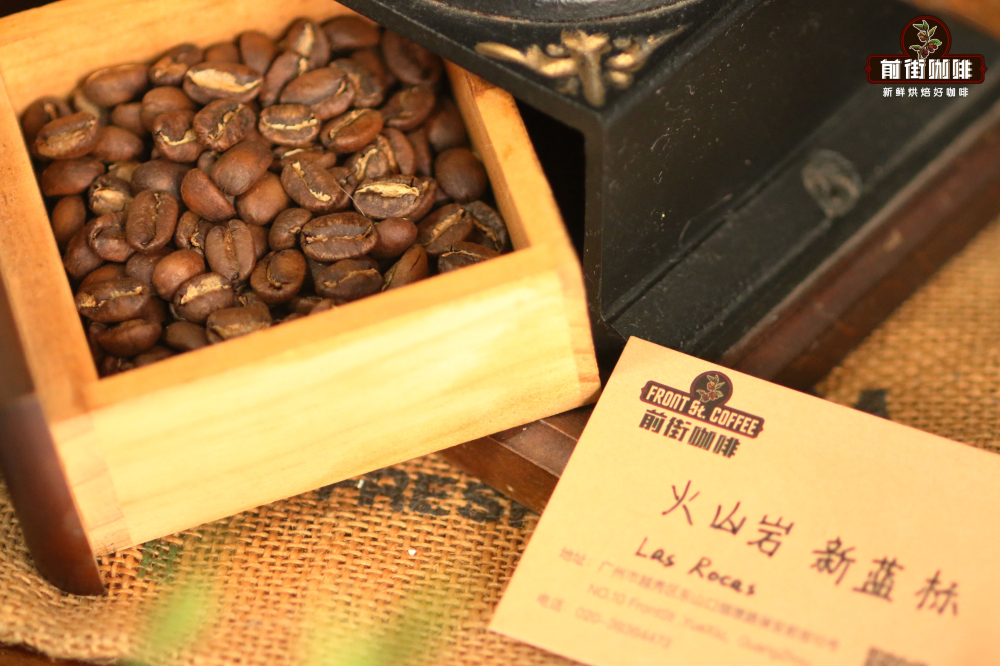
FrontStreet Coffee: Panama Hacienda La Esmeralda Washed Blue Label Geisha Coffee Beans
Country: Panama
Region: Boquete (Hacienda La Esmeralda)
Altitude: 1400-1500 m
Variety: Geisha
Processing: Washed Process
Flavor: Lemon, Oolong Tea, Cane Sugar, Peach
Plot Division of Esmeralda Estate
As mentioned, Hacienda La Esmeralda's Geisha comes from three main plots, and the labels themselves are built around them. Here's what characterizes each.

Hacienda La Esmeralda has four main coffee-growing areas, three of which grow Geisha: Jaramillo, Canas Verdes, and El Velo. Each is further subdivided into smaller plots.
Jaramillo
The earliest estate the Petersons purchased, Jaramillo is where Geisha was discovered. The average age of its coffee plants is 15 years or more. The terrain is relatively low—an average maximum altitude of only 1,700 meters—but the slopes are steep, which makes harvesting challenging.

Jaramillo is named after the Jaramillo mountains east of Boquete. Annual rainfall is 4,000mm, with average daytime temperatures of 19–25°C and nighttime temperatures of 11–15°C; the air is humid and cool. Jaramillo is subdivided into 6 Red Label plots: Mario, Noria, Reina, Bosque, Buenos Aires, and Caballeriza, which was added last year.
Canas Verdes
Canas Verdes translates from Spanish roughly as "green reeds" or "green fields." Half of it was purchased together with Jaramillo in 1967. After Geisha's breakout in 2004, the Petersons gradually bought up surrounding small farms. The whole growing area sits on the eastern slopes of Baru Volcano, spanning altitudes from 1,500 to 2,050 meters.

Annual rainfall in Canas Verdes is 3,500mm, with average daytime temperatures of 16–23°C and nighttime temperatures of 10–15°C. The highly complex terrain, volcanic soil, and pronounced day-night temperature swings shape Geisha's aromatic profile. The Canas Verdes Geisha area currently includes 11 small plots: Lino, Coronado, Fundador, León, Montaña, Trapiche, Jacinta, Cabaña, Tumaco, Nido, and Colga.
El Velo Estate
El Velo ("The Veil") is the estate's newest acquisition, purchased in 2012. It is the highest on average and the only area to have undergone detailed land surveying. Besides producing Geisha, El Velo cultivates more than 400 coffee varieties bought from CATIE—including Laurina, Pacamara, Mocha, and SL28—for long-term development and exploration. Compared with the other two areas, El Velo's altitude runs from 1,650 to 1,900 meters up the mountain. Average annual rainfall is 4,000mm, with daytime temperatures of 16–25°C and nighttime temperatures of 11–16°C.

The area covers 50.25 hectares of coffee cultivation, of which 37.9 hectares are dedicated to Geisha, divided into 7 detailed plots: Guabo, Portón, Durazno, Mural, Higo, Buena Vista, and Águila.
Esmeralda Estate Geisha Brewing Recommendations
That's the background on Esmeralda Estate Geisha from FrontStreet Coffee. Before listing any coffee bean, FrontStreet Coffee runs extensive cupping and brewing tests to nail down optimal brewing parameters for its customers. Here are the parameters for these three Esmeralda Geishas.

FrontStreet Coffee Panama Hacienda La Esmeralda Coffee Bean Brewing Recommendations:
FrontStreet Coffee recommends brewing with freshly roasted beans to fully experience their rich flavors. Beans ship within 5 days of roasting, because freshness profoundly affects flavor. FrontStreet's roasting philosophy is "Freshly Roasted Good Coffee," so every order arrives fresh; the resting period is about 4–7 days, meaning the beans are at peak flavor when you receive them.
Dripper: Hario V60
Water Temperature: 90°C
Coffee Amount: 15 grams
Coffee-to-Water Ratio: 1:15
Grind Size: Medium-fine grind (80% pass-through rate on China #20 standard sieve)

FrontStreet Coffee Brewing Method: Multi-stage extraction
Use 30g of water for a 30-second bloom. With a small water flow, pour in circles to 125g, then pause. When the water level drops and is about to expose the coffee bed, continue pouring to 225g and stop. When the level drops again, remove the dripper (timing starts from the bloom). Total extraction time: 2'00".
Panama Hacienda La Esmeralda Geisha Flavor Descriptions

[Red Label] Bright rose and citrus aromas, brown rice, berries, apricot, complex fruits, honey, with a thick juice-like mouthfeel, rich flavor layers, and noticeable sweetness.
[Green Label] Rich jasmine on the entry, high sweetness, citrus, berries, juice-like mouthfeel, cream, green tea, orange peel, cantaloupe—rich layers overall, with a persistent floral and citrus aftertaste.
[Blue Label] Gentle lemon and grapefruit acidity on the entry; as it cools slightly, oolong tea, honey, and cane sugar sweetness emerge, with a clean, bright mouthfeel.
For professional coffee knowledge exchange and more coffee bean information, please follow Coffee Workshop (WeChat public account: cafe_style)
For more specialty coffee beans, please add FrontStreet Coffee's private WeChat: kaixinguoguo0925
FrontStreet Coffee Recommendation
Geisha translates the legend of Arabica into a cup: beloved for its unmistakable florals and superb sweet-tart balance, yet priced high because of low yields, weak disease resistance, and demanding cultivation. To enjoy great Geisha without paying auction prices, it helps to know the range. If you're new to the variety, FrontStreet Coffee's go-to entry point is the Panama Boquete Geisha—an approachable Geisha that delivers the classic Panamanian signature of orange-blossom and honeyed tea, oolong-like texture, delicate fruit acidity, and clearly defined layers at a friendly price. Stepping up, the Esmeralda Red Label and Green Label showcase those intoxicating aromas at their finest when brewed as pour-over.
Ethiopia, the variety's birthplace, offers its own take with brighter fruit acidity. FrontStreet Coffee's Genlana Estate Geisha comes from a washing station founded in 2014 at the border of Kochere and Genji Abaya in Yirgacheffe, run by Mr. Israel Degefa, where coffee grows across 700 hectares of largely uncultivated, shaded, fertile land. Fully ripe cherries are hand-picked and dried on raised beds for 14–20 days depending on weather; a medium-light roast yields bright citrus acidity, elegant ginger-flower aromatics, full ripe-fruit sweetness, and a silky cup with Geisha's signature refined finish. For estate-level Ethiopian Geisha, try FrontStreet's Geisha Village Gold Label (the Geisha 1931 variety, just 10% of the village's output, its top non-auction coffee, meticulously natural-processed with complex depth) or Red Label (Gori Gesha, 15% of output, scoring 88+ on the SCA 100-point scale as part of the Single-Terroir line with full traceability—farm block, variety, and processing date on every batch).
As for brewing, Geisha is a light-medium roasted, floral-fruit coffee with a dense bean that can sink and clog the filter, so FrontStreet Coffee recommends a coarser grind—78% pass-through on a China #20 sieve (about fine-sugar texture)—with 91°C water: 15g of coffee in a small Hario V60 at a 1:16 ratio, three pours of 30g bloom (30s), then to 125g, then to 225g, for a total extraction of roughly 2:10–2:20. Geisha also shines as an SOE: the medium-roast Genlana Estate Geisha SOE pulls espresso with apricot, caramel, and nut notes (20g dose, 1:2 brew ratio, 25 seconds, 40g out), and an Americano at 1:5 with 200g hot water tastes of orange, nuts, and blueberry. For a budget-friendly homage, the FrontStreet Strawberry Candy blend—Panama Geisha plus Costa Rican honey process—works as pour-over, moka pot, espresso, or a refreshing cold brew with flavors of grape juice, rose, sweet orange, and fruit wine.
Important Notice :
FrontStreet Coffee is a long-established specialty coffee roaster in Guangzhou China, selling freshly roasted beans from its own farm in Yunnan as well as dozens of carefully selected single-origin beans from around the world for both pour-over and espresso. The products deliver consistently excellent quality and great value, with shipping within 24 hours. Guangzhou's FrontStreet Coffee shop is recommended by many coffee lovers, and the beans are now available online at the Tmall 。
FrontStreet Coffee has moved to a new address:
FrontStreet Coffee Address: 315,Donghua East Road,GuangZhou
Tel:020 38364473
 Scan and follow the En Gafei WeChat official account. Please indicate that the reprint comes from "En Gafei".