The Story of Colombian Huila Pink Bourbon Coffee Beans: Hand-Brewing Guide, Flavor Characteristics, and Varietal Origins
Introducing Colombian Coffee
Colombia is the world's third-largest coffee exporter and grows primarily Arabica. FrontStreet Coffee's everyday line includes a coffee from the Huila region of Colombia that captures the most classic Colombian flavor — rich nuts, chocolate and excellent sweetness. Huila is one of Colombia's most important producing regions. Alongside that classic daily bean, FrontStreet Coffee also offers a Colombian Pink Bourbon, a coffee that new and returning customers alike have fallen for thanks to its rarity and its outstanding cup.
Colombian Coffee at a Glance
Colombia lies in the northwest of the South American continent, bordering Panama in Central America. In 1808, a priest first brought coffee to Colombia from the French Antilles by way of Venezuela. Today Colombia is the world's third-largest coffee exporter, growing primarily Arabica, and it is also the country that exports the most Arabica beans. Colombia is rich in natural resources, and coffee, flowers, gold and emeralds are known as its "four treasures."

Colombian Coffee Regions
Colombia's specialty coffee regions lie mainly in the south, at altitudes above 1500 meters, and include San Agustín in Huila Province, Popayán in Cauca Province, Nariño Province and Tolima Province.
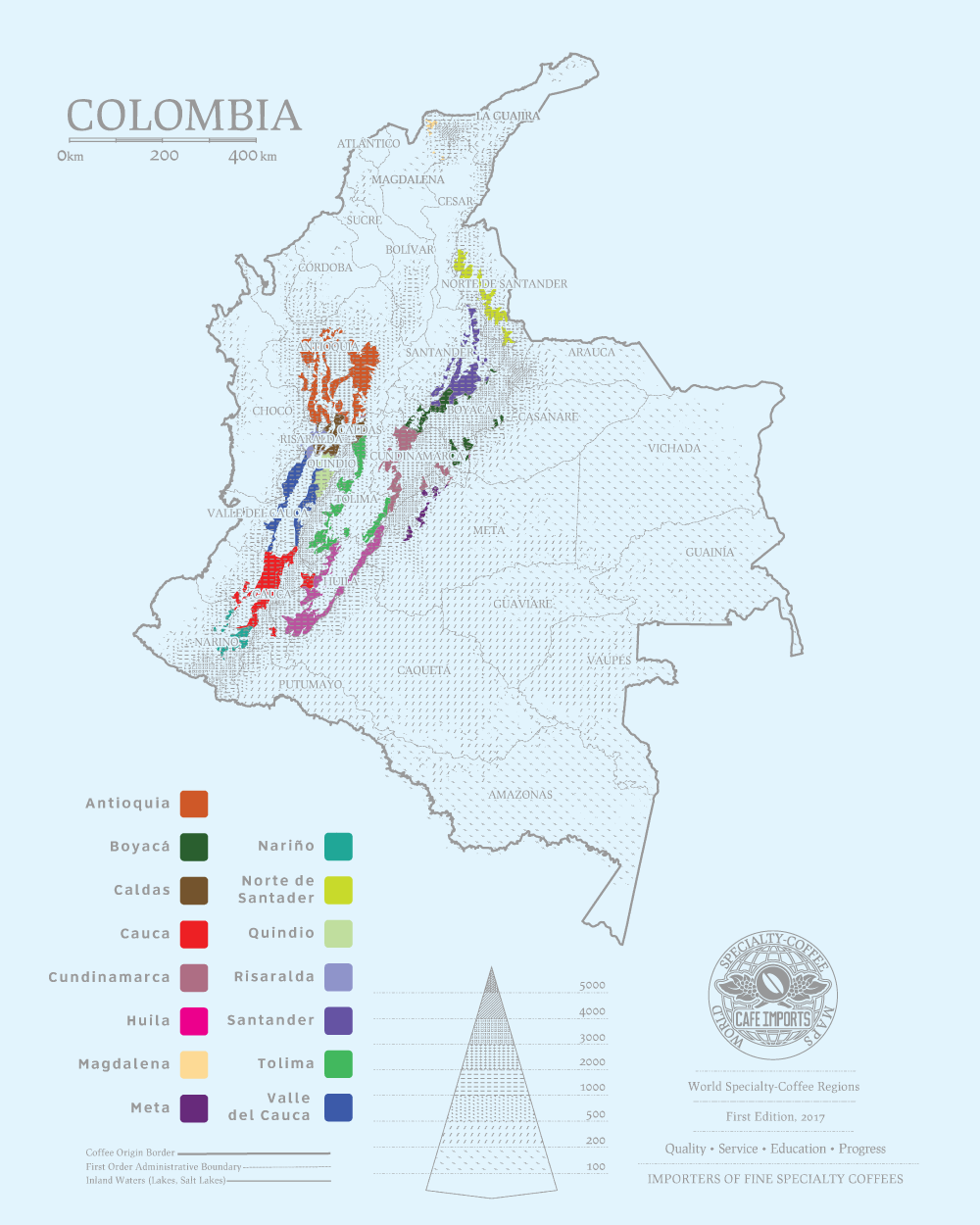
From north to south, Colombia's main producing regions are:
Santander and North Santander: in northern Colombia, bordering the Magdalena River to the west, with cultivation altitudes of roughly 1400-1600 meters. Beans from this region are known for intense flavor, a long aftertaste and a distinctive herbal freshness.
Antioquia: in north-central Colombia, with 126000 hectares of coffee cultivation producing 18% of Colombia's output, second only to Huila Province. Most of the province is high mountain terrain belonging to the Andes, but it is influenced by warm Caribbean sea breezes. The provincial capital, Medellín, is Colombia's second-largest city and an important coffee region in its own right.

Tolima: bordering Huila and Cauca provinces, this area features the north-south-running Andes and Cordillera ranges, with the Magdalena River flowing from south to north between the two.
Huila: in the southern part of Colombia's central mountain range, it is the country's most famous specialty coffee region. The area consists of hills surrounded by mountains, with cultivation above 1500 meters. Colombia's most important rivers converge here, bringing abundant water and humidity.
Cauca: a producing region with Colombian Designation of Origin certification, with an average altitude of 1758m and maximum altitudes reaching up to 2100m. The topography, rainfall, temperature and volcanic soil suit coffee well. 80% of the area is mountainous, with parallel ranges in the east and center that belong to the Andes, and the central range includes two main volcanoes, Sotara and Petacas.
Nariño: bordering the Pacific Ocean to the west and Ecuador to the south, with the Andes running through the province. Many rivers flow southward through the area, which belongs to Colombia's high-altitude coffee zone and supports many smallholder specialty growers. Nariño was also Colombia's first coffee region named after its origin.

Colombian Coffee Varieties
Beyond the varieties common across the Americas — Caturra, Bourbon, Typica and Pacamara — Colombia has three disease-resistant varieties of its own: Castillo, Tabi and the Colombia variety, named after the country. There are also rare and precious types such as Gesha, small-bean Mocca, Rume Sudan, Eugenioides, Laurina, Maragesa and Pink Bourbon.
Today FrontStreet Coffee focuses on Pink Bourbon. It is a hybrid developed from Red Bourbon and Yellow Bourbon, first planted in the Huila region. Initially it was mixed in with other Bourbon and Caturra trees, and only later was it harvested and processed separately. When the cherries ripen they show a romantic pink color. Holding onto that pink is extremely rare, because the final color of a cherry is determined by recessive genes in the pollen grains. The pollen used for hybridization carries both yellow genes leaning toward Yellow Bourbon and red genes leaning toward Red Bourbon, all recessive and easily interfering with one another. Pink Bourbon is therefore an extremely rare variety, found mainly in Colombia and Guatemala.
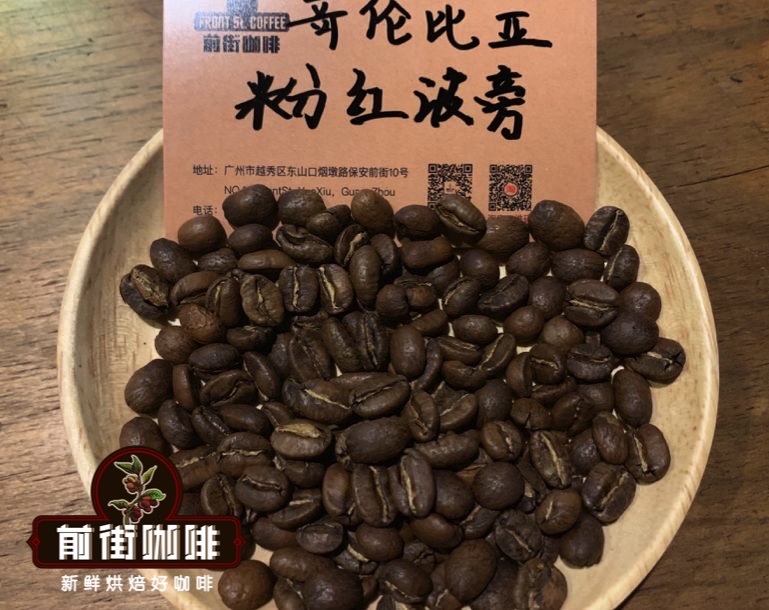
FrontStreet Coffee: Colombian Huila Semi-Washed Pink Bourbon
Country: Colombia
Region: Huila
Altitude: 1760m
Variety: Pink Bourbon
Processing: semi-washed
Flavor: citrus, berries, cherry tomato, honey, floral notes

Semi-Washed Processing
Semi-washed processing is an improved method that uses less water than traditional washed processing. The first steps — floating off defective beans and removing the pulp — are the same as in wet processing, but the mucilage is removed directly by machine scraping, skipping the water-soaking fermentation and the final rinse. Drying then uses natural sun or mechanical dryers until moisture reaches 12%. Semi-washed coffee sits between natural and washed beans in flavor: not as acidic as washed, not as sweet as natural.
Roasting Recommendations

Brewing Recommendations
FrontStreet Coffee's specific brewing parameters are: a V60 dripper, water at 90°C, a water-to-coffee ratio of 1:15, 15 grams of coffee, and a grind size with 80% pass-through on a Chinese #20 standard sieve.
FrontStreet Coffee uses segmented extraction. The bloom water is twice the weight of the grounds, meaning 30 grams of water for a 30-second bloom. After blooming, pour in a small circular motion to 125 grams, then pause. When the water level drops and is about to expose the coffee bed, continue pouring to 225 grams and stop. The whole extraction takes 2 minutes.

Pour-Over Flavor
The cup opens with citrus, berries and cherry tomato. As the temperature changes, a honey sweetness emerges, and the aftertaste carries floral notes. The mouthfeel is smooth and clean.

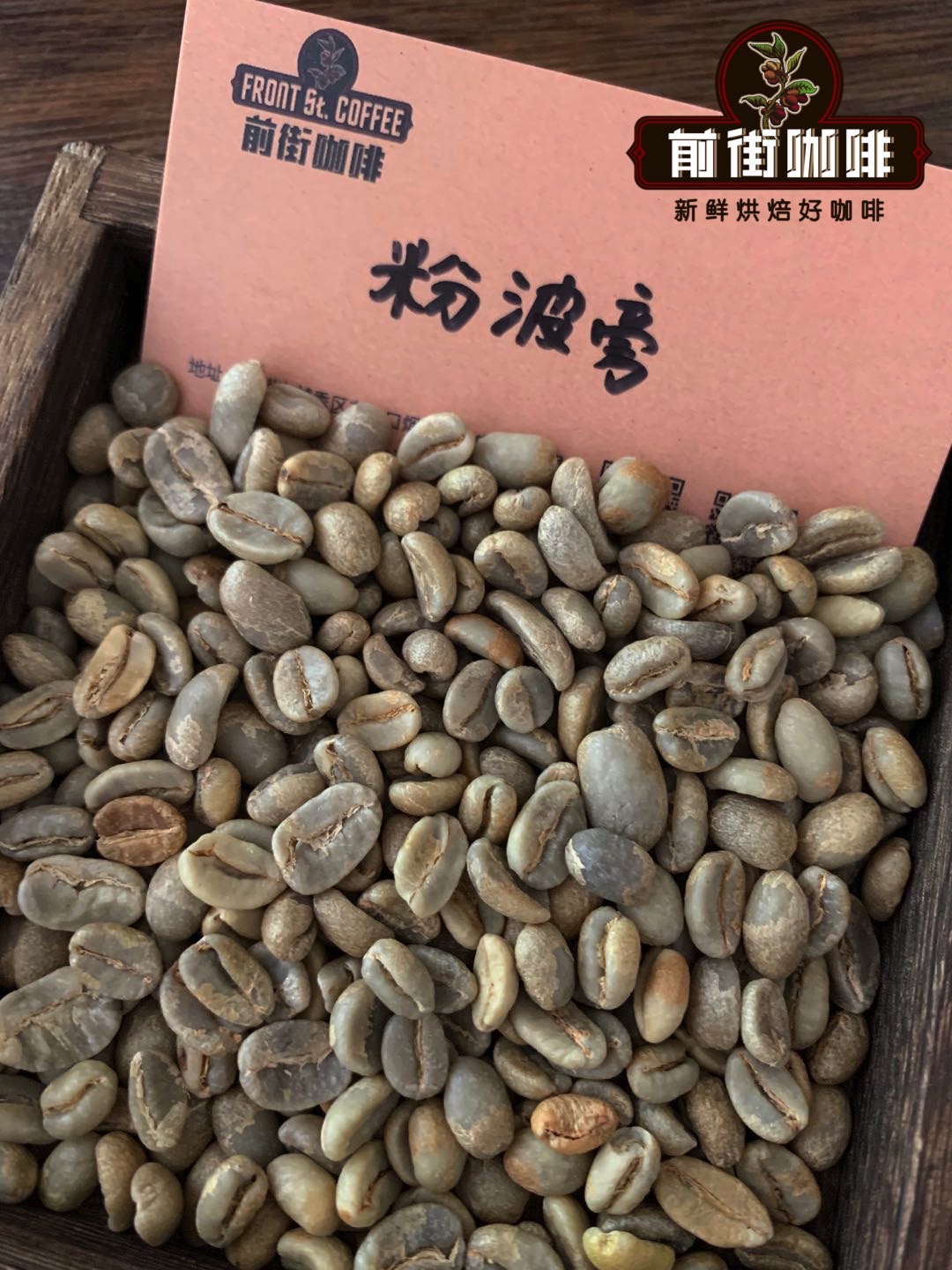
FrontStreet Coffee: Colombian Huila Anaerobic Washed Pink Bourbon
Country: Colombia
Region: Huila
Estate: Esperanza Estate
Altitude: 1900 meters
Variety: Pink Bourbon
Processing: anaerobic washed
Flavor: dried plum, blackberry, citrus, black tea, cocoa

Anaerobic Washed Processing
Here the beans are fermented in oxygen-free containers. After the ripe cherries are harvested, they undergo 12 hours of dry fermentation directly inside polypropylene woven bags. After that step, the coffee is depulped and made ready for its second fermentation round.

In the second round the beans ferment in an anaerobic environment for 24 hours. They are transferred into plastic tanks and sealed to ferment, preventing any oxygen circulation. After these two steps the coffee is dried slowly on drying beds for 20 to 25 days, until moisture drops to between 10% and 12%. Anaerobic processing is extremely challenging for the producer, because it is easy to over-ferment, and over-fermented coffee tastes more like vinegar than fruit.
Roasting Recommendations
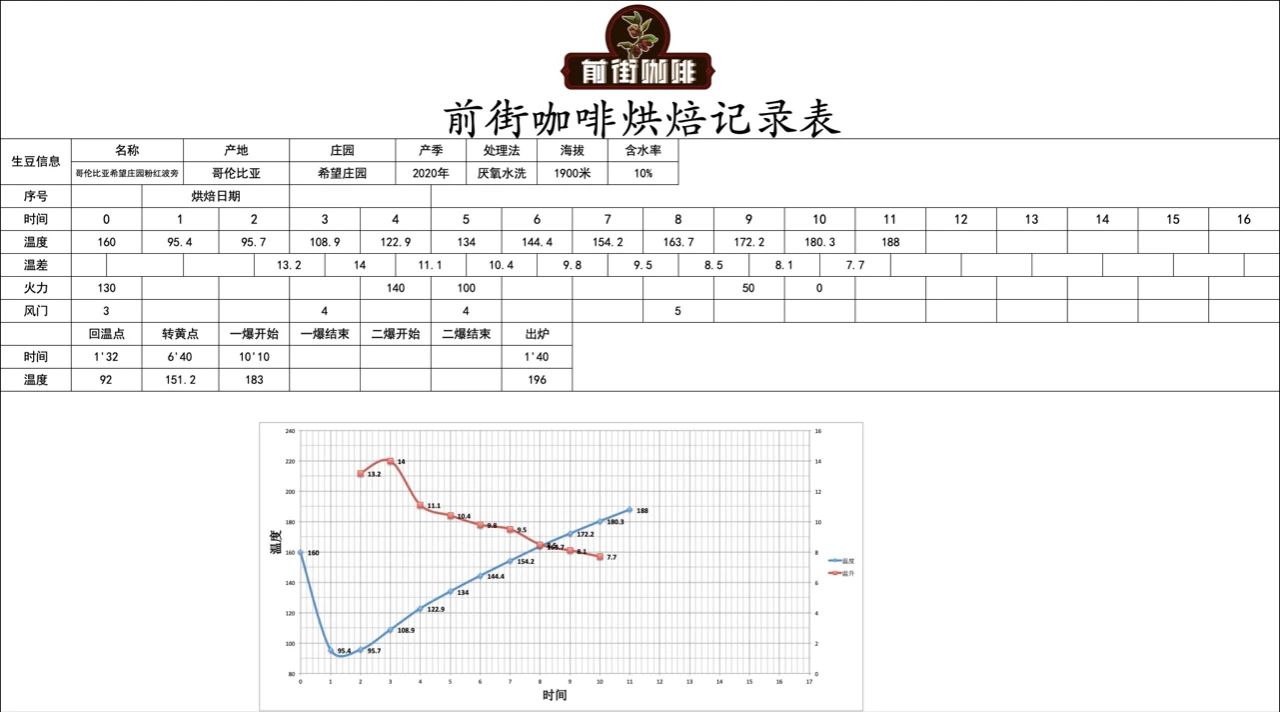
Brewing Recommendations
FrontStreet Coffee's specific brewing parameters are: a V60 dripper, water at 90°C, a water-to-coffee ratio of 1:15, 15 grams of coffee, and a grind size with 80% pass-through on a Chinese #20 standard sieve.
FrontStreet Coffee uses segmented extraction. The bloom water is twice the weight of the grounds, meaning 30 grams of water for a 30-second bloom. After blooming, pour in a small circular motion to 125 grams, then pause. When the water level drops and is about to expose the coffee bed, continue pouring to 225 grams and stop. The whole extraction takes 2 minutes.

Pour-Over Flavor
Berry flavors reminiscent of dried plum and blackberry, with a bright, refreshing citrus acidity. The mid-palate brings a honey sweetness, with black tea and cocoa in the aftertaste.

FrontStreet Coffee Recommendation
If Pink Bourbon's rare, layered character appeals to you, FrontStreet Coffee's Colombia line is the place to explore it. Our washed Huila coffee is the ideal introduction to the region — Colombia's most famous specialty area — roasted medium-dark to emphasize dark chocolate and nutty sweetness with moderate crema and a full body. It works in a pour-over or French press and equally well in a moka pot or espresso machine, making an easy Americano or latte.
For a more modern, fruit-driven expression, our Colombia Finca El Diviso Sidra comes from a competition-winning lot. Grown at 1650-1800 meters, it is processed with a double anaerobic natural method and roasted medium-light to preserve its native fruit, and it shows jasmine and citrus on the nose with passion fruit, blueberry, grape and apricot on the palate, a bright yet gentle acidity, a faint spice note mid-cup and a lasting cocoa finish. It suits pour-over, single-origin espresso and cold drip alike, and an iced pour-over highlights a clean, smooth grape-juice character.
If you brew on a home espresso machine or with a moka pot, our Premium Blend is the barista's recommendation: a coffee built for cafés that combines Brazil's creamy, nutty sweetness with Colombia's dark chocolate bittersweetness, pulling a fine golden crema. It is excellent with milk in a rich, smooth latte, forgiving for beginners, and a reliable base for Americanos, cappuccinos and mochas.
Important Notice :
FrontStreet Coffee is a long-established specialty coffee roaster in Guangzhou China, selling freshly roasted beans from its own farm in Yunnan as well as dozens of carefully selected single-origin beans from around the world for both pour-over and espresso. The products deliver consistently excellent quality and great value, with shipping within 24 hours. Guangzhou's FrontStreet Coffee shop is recommended by many coffee lovers, and the beans are now available online at the Tmall 。
FrontStreet Coffee has moved to a new address:
FrontStreet Coffee Address: 315,Donghua East Road,GuangZhou
Tel:020 38364473
 Scan and follow the En Gafei WeChat official account. Please indicate that the reprint comes from "En Gafei".