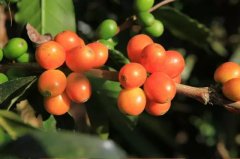
Three Major Types of Arabica Coffee Beans - History, Flavor Characteristics, and Taste Differences Between Typica and Bourbon Varieties
How often do you drink coffee? Have you ever paused to consider how many different types of coffee beans exist in the world, and where they all come from? Today, FrontStreet Coffee will walk through the basics of coffee varieties. Regular readers already know that commercially available coffee beans worldwide fall into three main species: Arabica, Robusta, and Liberica.
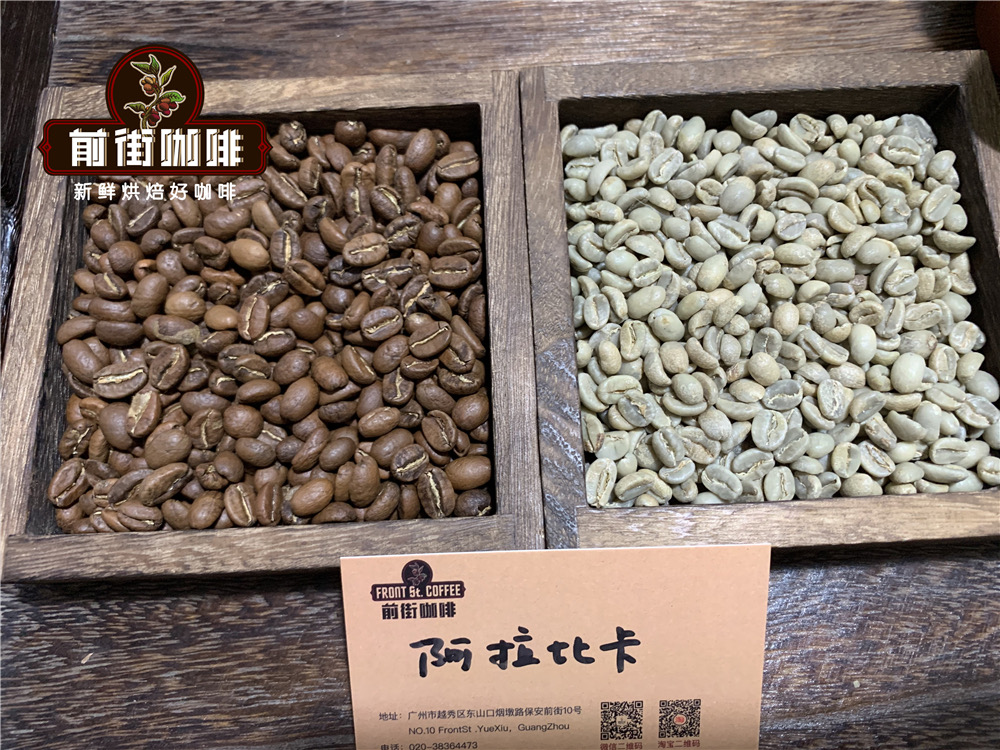
Arabica
As the most popular and famous coffee species, Arabica is the most widely produced and is considered the higher-quality bean. In fact, over 60% of the world's coffee production is Arabica. These beans grow at high altitude and need regions with stable rainfall and cool shade. Arabica beans are oval-shaped, slender and flat, with moderate acidity and bitterness and a gentle aroma.
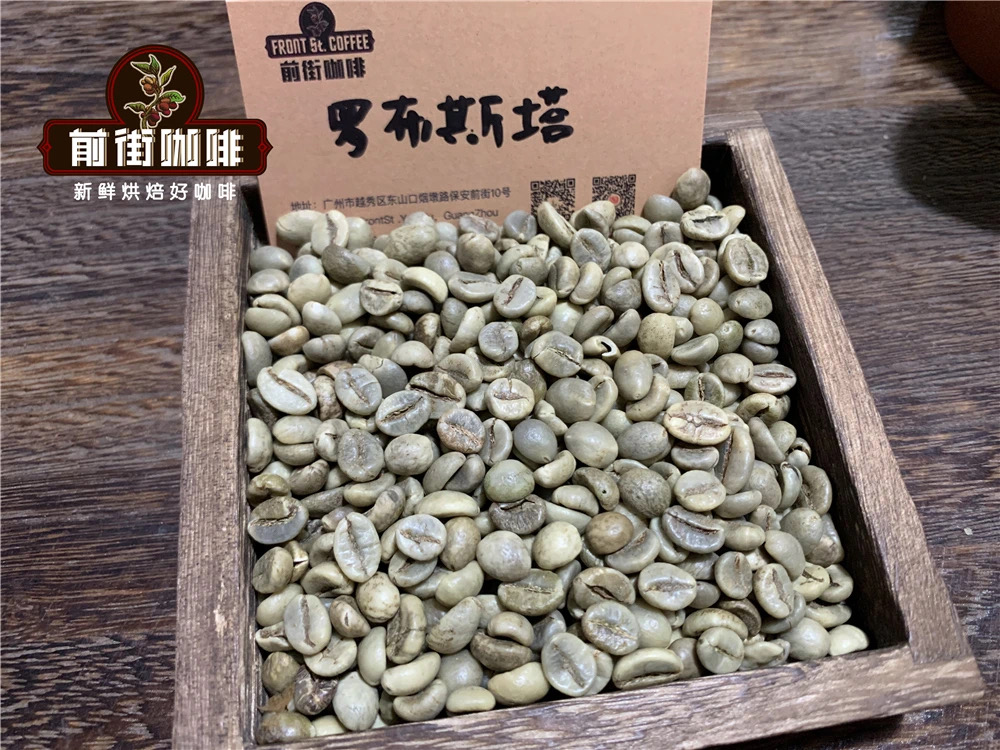
Robusta
Robusta is the second most produced coffee species in the world. Robusta plants tolerate cold and resist many diseases, grow best in hot climates with irregular rainfall, and thrive across a wide range of altitudes. Compared with Arabica, Robusta beans carry twice the caffeine — an excellent choice when you truly need to wake up. The beans are oval but shorter, with more pronounced bitterness and less aroma than Arabica.
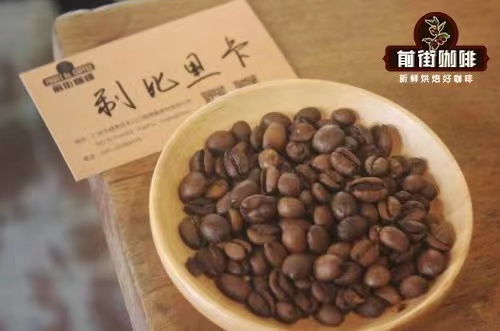
Liberica
Liberica beans are among the hardest to obtain. They are larger than other varieties and are the only irregularly shaped beans in the coffee world. Their aroma is unique, too — some describe a smoky quality alongside fruity and floral notes.
Having briefly covered the three species, FrontStreet Coffee now wants to zoom in on two Arabica subvarieties: Typica and Bourbon. Together they form the most culturally and genetically important group of C. arabica coffees. Historical records show that coffee seeds were first carried from the coffee forests of southwestern Ethiopia to Yemen, where they were cultivated as a crop.

Recent genetic testing has confirmed that Bourbon and Typica descended from the seeds transported from Ethiopia to Yemen, and their descendants spread from Yemen across the world, laying the foundation of modern Arabica cultivation.
The History of Typica and Bourbon Coffee
Like all Arabica coffees, the Typica group originated in southwestern Ethiopia. At some point in the 15th or 16th century it was brought to Yemen, and by 1700 seeds from Yemen were being cultivated in India. In 1696 and 1699, coffee seeds were sent from India's Malabar coast to Batavia (present-day Java) — and it was these few seeds that gave rise to the unique Typica variety we know today.

Records show that the French made three attempts — in 1708, 1715, and 1718 — to introduce this coffee from Yemen to Bourbon Island (now Réunion Island), a story confirmed by recent genetic studies. Only a few plants from the second introduction and some from the third survived. It was not until the mid-19th century that Bourbon coffee finally left the island, spread across Africa by French missionaries of the Spiritan order.
Appearance and Cultivation Characteristics of Typica and Bourbon Coffee Trees
Typica is a tall plant, reaching 3.5–4 meters, with a conical shape: the main vertical trunk and secondary vertical trunks are slightly inclined, and the lateral branches form 50–70 degree angles with the vertical stems. Typica yields are very low, but the cup quality is excellent.
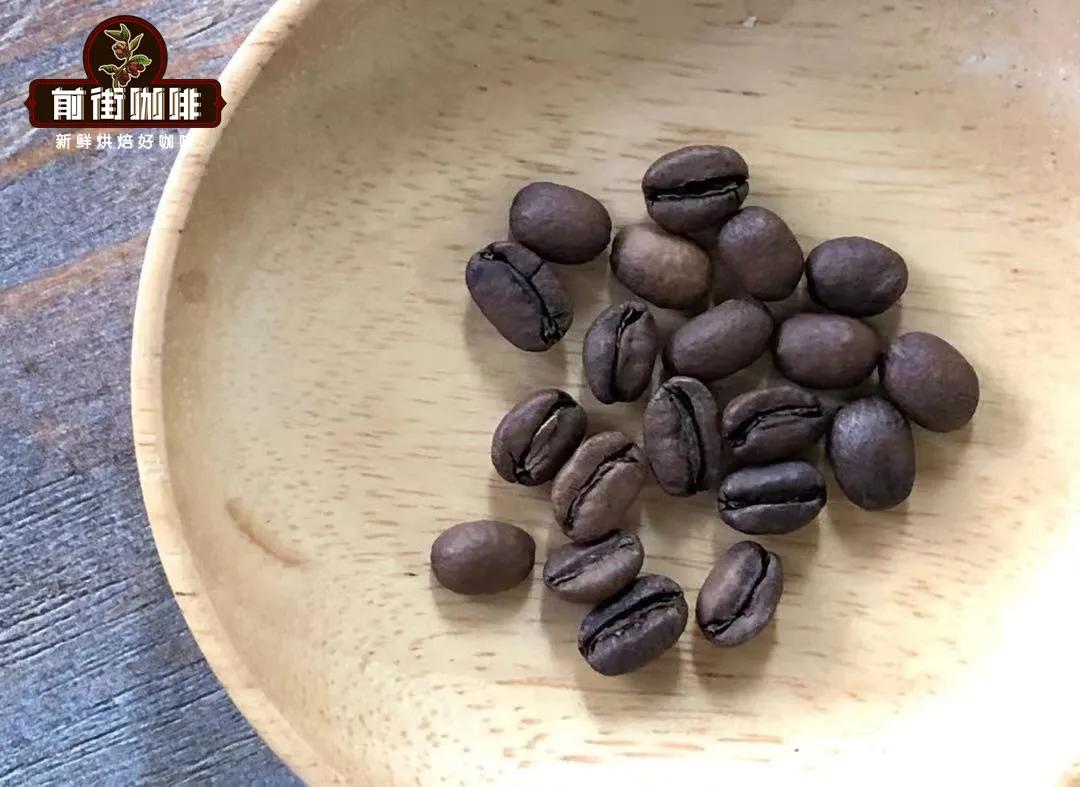
Bourbon plants produce 20–30% more coffee than Typica, though still less than most modern varieties. Bourbon trees are less conical than Typica but carry more secondary branches, which attach to the main stem at a narrower angle and closer together. The leaves are broad with wavy edges, the fruit relatively small and dense. The cherries ripen quickly and risk dropping in wind or rain. Bourbon performs best at 3,500–6,500 feet, and its cup quality is very good — similar to Typica.
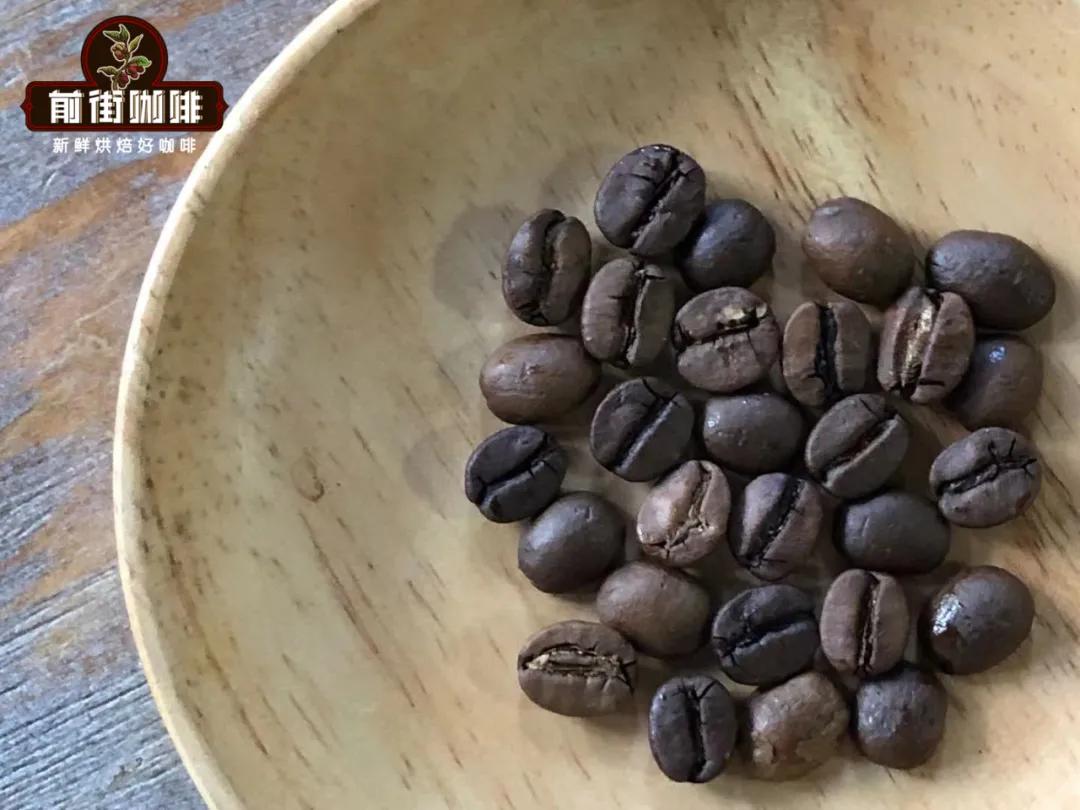
Flavor Differences Between Typica and Bourbon
Broadly speaking, Typica coffees show elegant floral and fruity notes. A classic example is FrontStreet Coffee's Clifton Estate Blue Mountain, a pure Typica coffee. FrontStreet's baristas brew it with a Kono dripper at 88°C and a medium-coarse grind: a first pour of 30 grams of water with a 30-second bloom, a second pour to roughly 125 grams, then, once the coffee level drops to half, a final pour up to 225 grams. In other words, 15 grams of coffee to 225 grams of water — a 1:15 ratio.

The cup is smooth and rich with excellent balance: a touch of citrus acidity, a silky mouthfeel, nutty notes through the middle, and a dark chocolate finish.
FrontStreet Coffee also considers Brazil's Bourbon especially representative, since Brazil was Bourbon's first stop in South America. The Red Bourbon from southern Minas is natural processed; brewed with the same parameters as the Blue Mountain, it is balanced in the classic Brazilian style, with prominent nut and chocolate flavors, relatively low acidity, a smooth body, and a light tropical-fruit aroma.
After comparing Typica and Bourbon, you may well wonder what notable varieties exist within each family. FrontStreet Coffee introduces a few of the most important ones below.
Famous Coffee Varieties in the Typica Family
Maragogype: with its unusually large beans and tall plants, Maragogype is sometimes called the "elephant bean." It tends to adopt the flavor characteristics of the soil in which it grows.
Pache Comum: a smaller plant that can be planted more densely for higher yields, with a smooth, flat-tasting cup.
SL34: selected in the late 1930s at Scott Agricultural Laboratories in Kenya, SL34 offers complex lemon acidity, a rich body, and a clean, sweet aftertaste.
Bourbon Family Has a Series of Natural Mutations
Caturra: first discovered in Brazil, it has become one of the most economically important coffees in Central America and is often the benchmark against which other cultivars are measured. It lacks Bourbon's clarity and sweetness but shows bright acidity and a medium-to-low body.
Villa Sarchi: a Caturra-derived variety — and thus a more direct descendant of Bourbon — originally discovered in Costa Rica in the 1950s, with elegant acidity, rich fruit aroma, and excellent sweetness.
Gesha: originating from the village of Gesha in Ethiopia, it produces a richly flavored cup of florals and sweet, melon-like notes. It is one of the most expensive coffees in the world, with auction prices reaching up to $600 per pound, and is a frequent choice in barista competitions.

Some Famous Typica-Bourbon Hybrid Varieties
Mundo Novo: a natural Typica × Bourbon hybrid first discovered in Brazil in 1943 and since spread to Peru, Guatemala, and Malawi. A quality Mundo Novo cup shows rich sweetness and lower acidity.
Pacamara: a cross between Maragogype and Pacas developed in El Salvador, characterized by a medium-to-full body, smooth texture, and flavors running from chocolate and caramel to sweet citrus.
Catuai: a high-acidity hybrid of Mundo Novo and Caturra. It is high-yielding, and its cherries cling firmly to the branches — a real advantage in areas with strong winds or heavy rain.
FrontStreet Coffee Recommendation
Arabica's diversity is easiest to grasp by tasting its landmark varieties side by side, and FrontStreet Coffee's lineup covers the classics. The FrontStreet Jamaica Blue Mountain No. 1 is grown from Typica, the archetypal Arabica variety: exceptionally balanced, mild, and silky, with a soft, rounded acidity that FrontStreet's cupping team has found no other origin can quite replicate — and after more than two centuries on the island, Blue Mountain Typica has even developed better disease resistance, particularly against cherry rot, than Typica elsewhere.
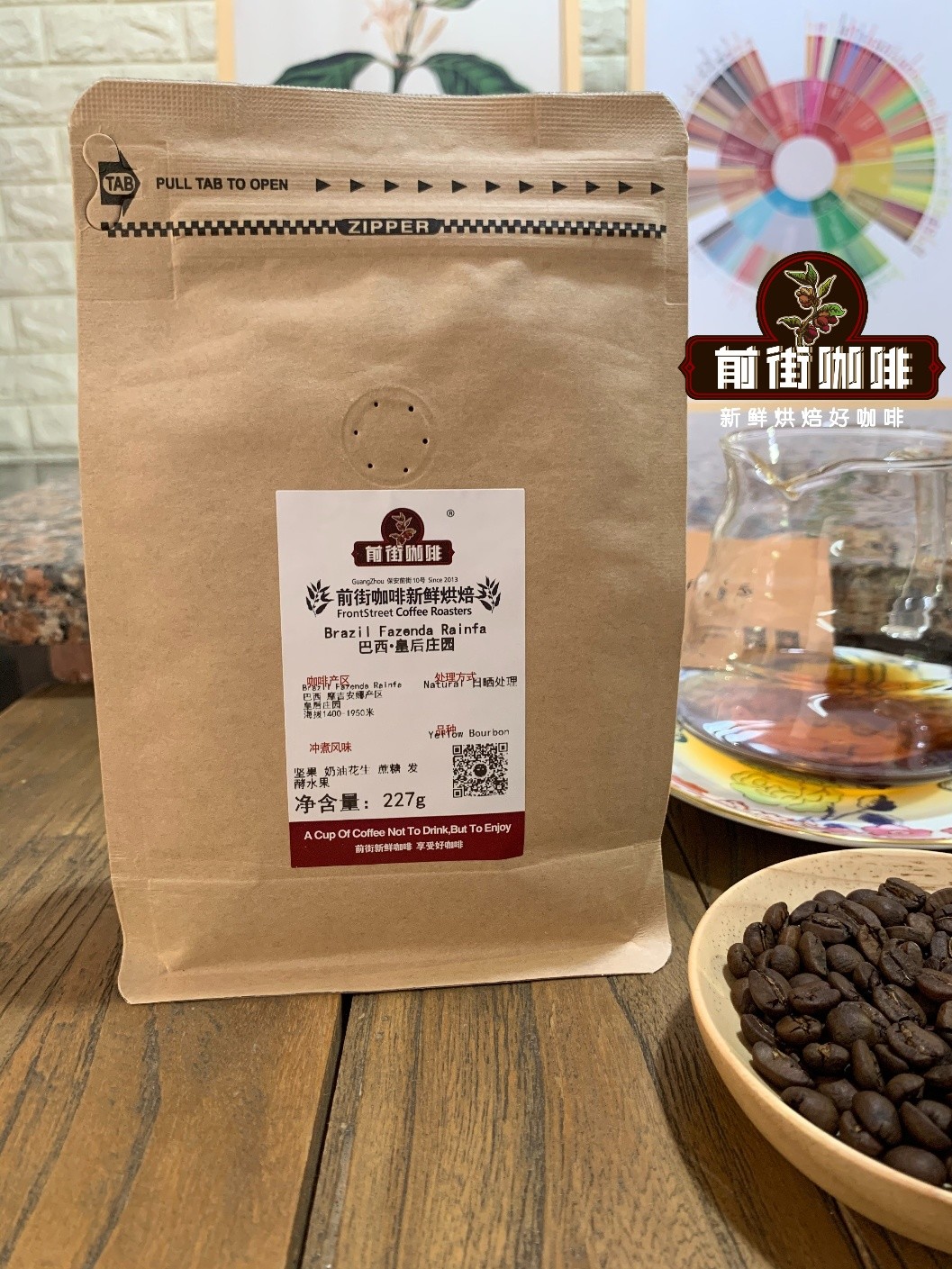
On the Bourbon side, the FrontStreet Brazil Queen Estate grows the rare Yellow Bourbon mutation — the original Yellow Bourbon discovery — yielding about 30% more than Typica and showing compound nut aromas of butter, melon seeds, macadamia, and almond with a sugarcane-like sweetness, whether brewed black or with milk. For the pinnacle of Arabica, the FrontStreet Panama Red-Label Geisha from Esmeralda estate in Boquete, Chiriquí — where fertile volcanic soil, old forest, mist, and abundant rain create near-perfect growing conditions — delivers florals, citrus, peach, and mixed-fruit acidity with a silky, oolong-sweet finish. And the FrontStreet Colombia Sidra, whose genetics resemble Ethiopia's heirloom varieties, offers florals, tropical fruit, grape, dried fruit, and passion fruit in a juice-like body after a medium-light roast.
Important Notice :
FrontStreet Coffee is a long-established specialty coffee roaster in Guangzhou China, selling freshly roasted beans from its own farm in Yunnan as well as dozens of carefully selected single-origin beans from around the world for both pour-over and espresso. The products deliver consistently excellent quality and great value, with shipping within 24 hours. Guangzhou's FrontStreet Coffee shop is recommended by many coffee lovers, and the beans are now available online at the Tmall 。
FrontStreet Coffee has moved to a new address:
FrontStreet Coffee Address: 315,Donghua East Road,GuangZhou
Tel:020 38364473
 Scan and follow the En Gafei WeChat official account. Please indicate that the reprint comes from "En Gafei".