Starbucks Sumatra Coffee Bean Varieties Origin Characteristics How to Brew Sumatra Mandheling Coffee
Professional Coffee Knowledge Exchange
A professional space for sharing coffee knowledge and exploring Sumatra Mandheling.
01
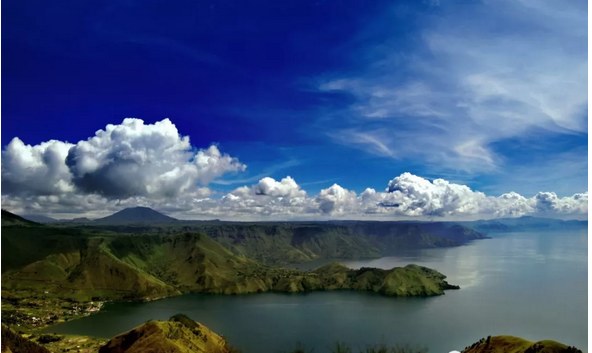
Lake Toba
Lake Toba is a lake in the Barisan mountain range of north-central Sumatra. It is 100 kilometers long, 30 kilometers wide, and reaches a maximum depth of 505 meters. Excluding Samosir Island, which is about 50 kilometers long and 15 kilometers wide in the center of the lake, the area covers approximately 1,140 square kilometers. It is also the world's largest volcanic lake, formed by a massive eruption of the Toba volcano 70,000-75,000 years ago that created today's Lake Toba.
Its unique geographical and climatic conditions are extremely well suited to coffee cultivation.
Indonesian Coffee History
In the 17th century, the Dutch first transplanted Typica seedlings to Indonesia. Around the 1880s, a large-scale rust disease destroyed almost all Arabica trees, leading to a massive shift toward planting Robusta beans from Africa. To this day, Robusta still accounts for 90% of Indonesia's total production, with high-quality Arabica cultivated only in the high-altitude areas of northern Sumatra, Sulawesi, and Java.
02
Lindong Growing Region
The Lindong growing region lies on the southwestern shore of Lake Toba in Sumatra, at an altitude of 1,200-1,800 meters. Previously, because demand had increased greatly, coffee farmers switched to planting the higher-yielding Catimor and Linie varieties. However, the significant decline in cup quality that followed led to an increase in Typica production.
Starbucks Reserve Sumatra Lake Toba Mandheling represents the dedication and effort of 200 coffee farmers.
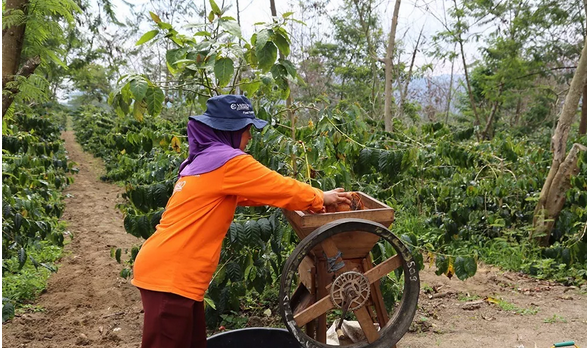
The unique climate and terroir of the Lake Toba Lindong region enabled locals to create a very distinctive semi-washed process, the wet-hulling method. Coffee farmers transport the harvested fully ripe cherries to workshops after noon to remove the pulp and skin, then ferment the parchment beans for 12-36 hours before drying them to the appropriate moisture content. Next, the beans are bagged and transported to processing plants for hulling. After hulling they undergo additional drying, followed by machine sorting by particle size, and then another manual selection to ensure no defects before bagging.
"This is the perfect processing method for these coffee beans," said Chris von Zastrow, Starbucks Director of Agronomy.
03
Coffee Bean Information
Origin: Asia Pacific · Sumatra · Lindong
Variety: Bourbon
Altitude: 1,200-1,400 meters
Processing Method: Semi-washed (wet hulling)
Flavor: Herbal, fresh earthy notes, with syrupy sweetness
Gravitas Blend No. 3
On March 20, 2017, the Seattle Roastery launched Gravitas Blend No. 3, a blend of three beans: Sumatra Lake Toba, Nicaragua Maracaturra, and natural Brazil Barinas.
The word "Gravitas" means "dignity" and "seriousness." The simple herbal and earthy flavors of Lake Toba certainly add to its character.
FrontStreet Coffee is a roastery in Guangzhou with a small shop but diverse coffee bean varieties, where you can find both famous and lesser-known beans. Online store services are also available at https://shop104210103.taobao.com
FrontStreet Coffee Recommendation
When it comes to wet-hulled Mandheling, FrontStreet's top pick is the FrontStreet PWN Golden Mandheling. PWN buys high-quality Mandheling green beans and then applies one machine sort plus manual hand sorting to select only plump, flawless beans, all of which reach specialty grade. Golden Mandheling is the company's flagship. The beans are evenly sized, plump, and translucent with a low defect rate. After medium-dark roasting they carry a rich roasted aroma, and the brewed black coffee has a clean mouthfeel and full body, making it an excellent choice for anyone who dislikes acidic coffee.
For pour-over, FrontStreet suggests 87-88°C water, 15g of coffee, a 1:15 coffee-to-water ratio, and a coarse-sugar grind, poured in three stages. The first stage uses 30ml of water to fully wet the grounds and let them degas; the second pours 100ml to bring out the golden foam and lift the coffee bed; the final, gentler center pour adds 95ml, which lifts the sweetness and rounds out the body, the caramel sweetness, and the chocolate and nut flavors.
For espresso or a moka pot, the FrontStreet Lindong Mandheling brings that same bold profile into a milk-based drink, adding herbal, spice, and sandalwood notes. If you want a creamy, full-bodied latte with plenty of crema, FrontStreet's classic blend layers a medium-dark Mandheling onto Brazilian coffee's creamy nut character, with pronounced butter, roasted chestnut, and caramel notes, plus a small amount of Robusta to boost the crema.
Important Notice :
FrontStreet Coffee is a long-established specialty coffee roaster in Guangzhou China, selling freshly roasted beans from its own farm in Yunnan as well as dozens of carefully selected single-origin beans from around the world for both pour-over and espresso. The products deliver consistently excellent quality and great value, with shipping within 24 hours. Guangzhou's FrontStreet Coffee shop is recommended by many coffee lovers, and the beans are now available online at the Tmall 。
FrontStreet Coffee has moved to a new address:
FrontStreet Coffee Address: 315,Donghua East Road,GuangZhou
Tel:020 38364473
 Scan and follow the En Gafei WeChat official account. Please indicate that the reprint comes from "En Gafei".