How to Roast Sun-Dried Coffee_Changes in Sun-Dried Coffee Beans During Roasting_Process Sun-Dried Coffee Bean Recommendations
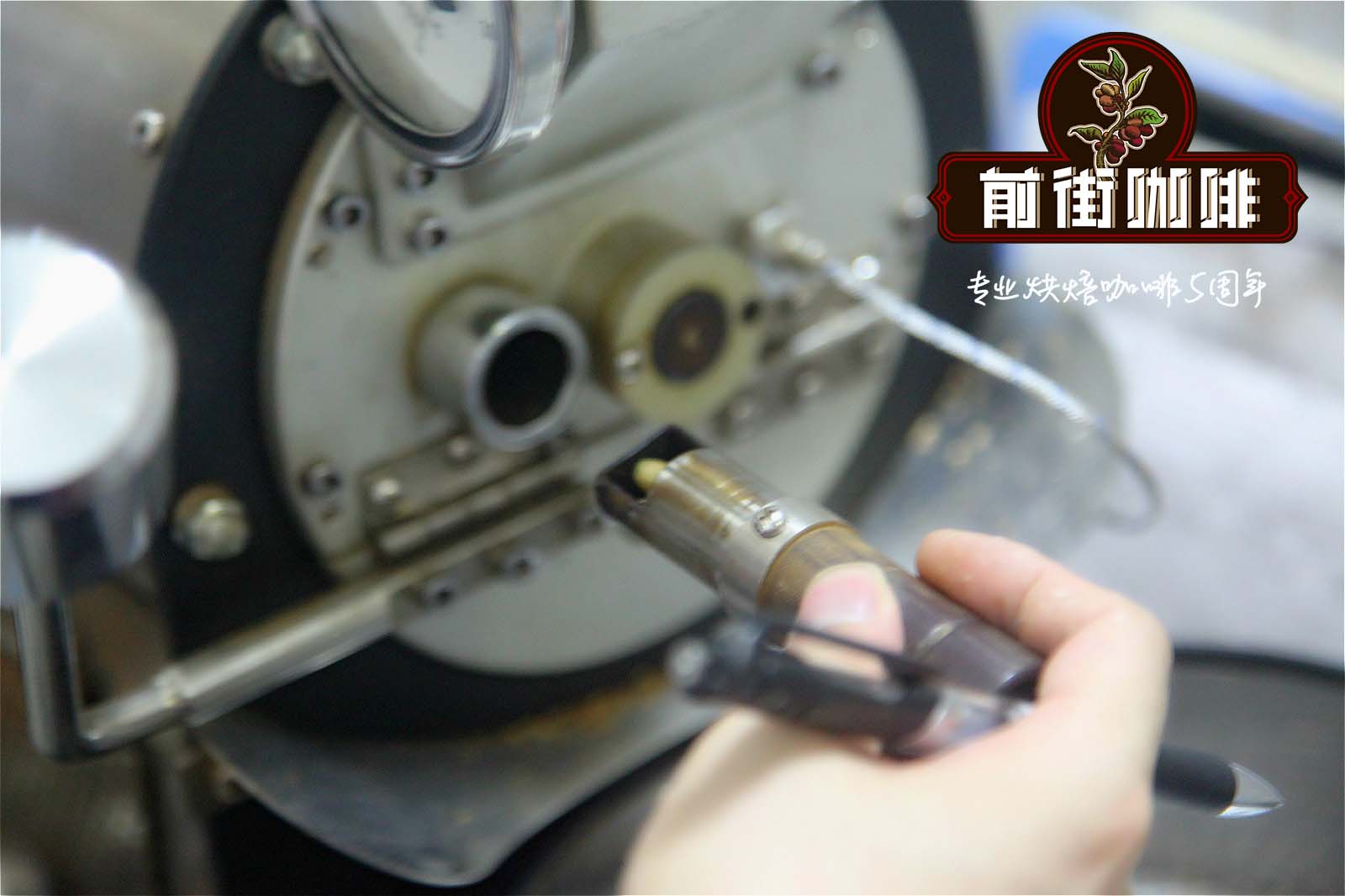
Roasting Natural Process Coffee Beans
*Before 120°C: Open the air damper slightly (smaller than for washed beans). Natural process beans tend to be woody and dry, with silver skin that does not detach easily. Steam the beans to raise moisture content, promote even ripening, and reduce scorching. Keep moisture in the beans higher at 150°C so they do not get steamed.
*120-168°C: Open the air damper about 3/4 (about 1/2 for washed beans) to let moisture evaporate from the beans quickly. If the temperature rises too fast, adjust the heat to slow the climb.
*168-198°C: Keep the rate of heat increase steady, reaching about 198-200°C in roughly 12 minutes. Reduce heat about 30 seconds before first crack.
*215-222°C: During the first crack period. After 30 seconds, assess the situation. If the cracking sounds are too rapid and intense, turn off the heat immediately and coast until the end of first crack. About 1 minute later, when the cracking sounds become sparse, you can drop the beans.
*After dropping, place the roasted beans in a mesh basket and rub them gently to remove silver skin and carbon debris, then pick out any white beans for a cleaner flavor.
Natural process beans, soft beans, and low-altitude beans show similar changes during roasting, so I group them together. Natural process beans spend longer in processing than washed beans, so their moisture content is relatively lower, especially at the bean surface. Surface dehydration, the whole bean turning white, is therefore easily reached during roasting. The photos below feature Tchembe from Ninety Plus, a lightly fermented natural process bean. I will not elaborate on its flavor profile; this is a well-known bean you can easily research online.
The signature trait of natural process beans is that their surface moisture is lower, at least compared with washed beans. White spots therefore form easily on the surface during the steaming phase and spread across the whole bean. As shown in the picture, when the beans reach 127°C during steaming, they turn completely white. In cross-section you can see that only the center core still holds more moisture and remains somewhat green.
Once steaming is complete, the bean surface enters the Maillard reaction phase. Light yellow reactions begin on the surface. Because surface dehydration has been even, the whole bean colors quite uniformly, though in cross-section you can still see some green areas.
When the bean temperature reaches 160°C, the surface Maillard reaction enters its vigorous phase. Thanks to proper steaming, the whole bean colors quite evenly, and the previously green center core begins to turn yellow, a sign that the core is also undergoing the Maillard reaction.
At 172°C the browning reaction is quite even and the internal color gradually deepens. At this point the beans give off popcorn or toast aromas, marking the peak of the Maillard reaction, also called dehydration completion or the bean shrinkage point. Natural process beans dehydrate more thoroughly, so dark wrinkles from insufficient dehydration are barely visible, whereas washed beans show obvious surface wrinkles at this stage. To avoid errors in the later caramelization reaction, I reduce heat and airflow here to prevent an "excessive" temperature increase (not a reduction), which could cause over-caramelization and burnt flavors. That said, I believe caramelization has not officially begun at this stage.
First Crack
First crack begins at 186°C. At this point you hear cracking sounds from only a few beans among many. The rest should still be in a pre-first-crack state, their centers filled with water vapor ready to crack. The Maillard reaction is nearing completion. If you drop the beans now, you get abundant aroma and sucrose sweetness, a simple sweetness rather than a caramelized one. But poor processing can easily leave grassy and astringent flavors, and your mouth and stomach may feel heavy.
After Intense First Crack
More than half the beans have developed first crack, and the water accumulated in the bean core has been fully expelled. From the start of first crack to after intense first crack, about 1% of the water can be expelled. This is the period of most vigorous water loss from the beans. If you measure moisture content, only about 1% remains, with water activity aw=0.2. In short, the beans no longer hold free water. Be aware, though, that if you want to continue roasting into second crack, you must find a way to retain some moisture. Without free water, bound water suffers, and ultimately with no water at all the beans will burn, and the results of reaching second crack would be disastrous.
So how do you retain water for second crack? Unfortunately, second crack is not currently my area of expertise and I cannot answer this. I can confirm, however, that the entire technique has to change. You absolutely cannot use the method described here, extending time after first crack, to roast beans to second crack; it would fail badly and you would end up with intense burnt bitterness.
I know some experts roast to second crack, and their timing is faster than roasting to first crack. Their techniques are naturally different. I believe they also weigh the questions of moisture and burnt bitterness after entering first crack.
There is also a very obvious difference in the internal changes from before to after first crack. At 186°C the bean exterior is darker while the core is lighter. After first crack, the opposite happens: the interior becomes darker. I am still investigating this, but I know the bean core is undergoing caramelization at this time.
My Discoveries
Whenever white spots appear on beans during steaming, it indicates faster moisture loss in those areas. When I slice these areas, they are quite brittle and lighter in color.
Areas on beans without white spots during steaming are quite tough when sliced, requiring some force to cut. During the Maillard reaction phase these areas are also darker. After dehydration completion, they form strong contrast with the faster-dehydrating areas, creating distinct wrinkles, commonly known as the bean shrinkage point.
So: white spot areas become lighter in color and brittle in structure during the later Maillard reaction phase. At this point the Maillard reaction is incomplete. Why? Because excessive dehydration in the white spot areas means that when the temperature reaches the Maillard phase there is not enough water available, so the reaction is incomplete, giving lighter color and weaker aroma.
Aren't White Spots Bad, Then?
I believe that white spots on the bean surface, because of their brittle structure, can create ventilation channels that help release internal moisture. The key to the whole roast is to ensure the entire bean is thoroughly cooked. The formation of white spots helps achieve thorough roasting because once drainage channels have formed, combined with an appropriate rate of temperature increase, they help the bean's internal moisture reach the appropriate aw=0.7 by the time the temperature reaches the Maillard reaction phase.
Of course, internal moisture that is too high or too low produces undesirable results. Balancing dehydration, internal bean temperature through damper and heat settings, and the rate of temperature increase is an art.
What if the Bean Surface Has Too Few White Spots?
This indicates that surface dehydration is appropriate or insufficient. When entering the Maillard reaction phase, because there is enough moisture, a good Maillard reaction can form. However, because the structure is tough, brittle dehydration channels cannot form, so internal moisture accumulates and cannot be expelled. Once the Maillard temperature is reached with excessive moisture, the chlorogenic acid hydrolysis reaction activates, producing undesirable bitterness (vinyl catechol polymers). This is what people generally call insufficient dehydration.
Natural Process Coffee Bean Brand Recommendations
FrontStreet Coffee's freshly roasted single-origin natural process coffees, such as Natural Yirgacheffe and Natural Sidamo, offer full assurance in both brand and quality and suit brewing with a range of equipment. More importantly, they offer extremely high value: a half-pound (227g) bag costs only about 70-90 RMB. At 200ml per cup with a 1:15 coffee-to-water ratio, one bag makes 15 cups of specialty coffee, with each cup costing only 5-6 RMB. Compared with cafes charging dozens of RMB a cup, that is exceptional value.
FrontStreet Coffee Recommendation
Natural process roasting is one thing; tasting the clean counterpart is another, and FrontStreet Coffee's washed Yirgacheffe Gedingding Cooperative shows what the washed method brings. Grown and processed by the Gedingding village team, it is a benchmark washed Ethiopian lot. The washed process, with its flotation, depulping, soak-and-ferment mucilage removal, washing or further soaking, drying, and hulling, is exactly what gives the cup its clarity.
Long soaking drives chemical changes and consumes much of the bean's simple sugar, lowering its sugar content while raising organic acids. The result is a coffee that holds on to more of the bean's own aroma while showing bright fruit acidity, a clean cup, and freshness. Jasmine florals and a bright citrus acidity lead, and a medium-light roast adds green tea and honey underneath.
It is a flexible bean for pour-over, cold brew, or espresso, and a useful reference point to set beside the natural process lots above.
Important Notice :
FrontStreet Coffee is a long-established specialty coffee roaster in Guangzhou China, selling freshly roasted beans from its own farm in Yunnan as well as dozens of carefully selected single-origin beans from around the world for both pour-over and espresso. The products deliver consistently excellent quality and great value, with shipping within 24 hours. Guangzhou's FrontStreet Coffee shop is recommended by many coffee lovers, and the beans are now available online at the Tmall 。
FrontStreet Coffee has moved to a new address:
FrontStreet Coffee Address: 315,Donghua East Road,GuangZhou
Tel:020 38364473
 Scan and follow the En Gafei WeChat official account. Please indicate that the reprint comes from "En Gafei".