Pour-Over Coffee Techniques | What's the Difference Between American and Japanese Pour-Over Coffee? Best Coffee Beans for Pour-Over Brewing
Understanding American Drip Coffee
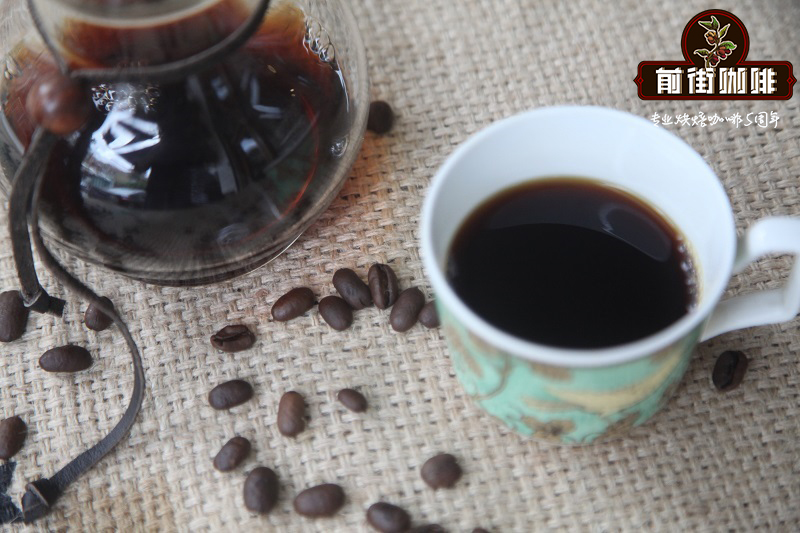
Have you ever compared coffee from an American drip machine with the same beans brewed by hand? The drip-machine version almost always comes out more bitter and astringent. The main culprit is water temperature. American drip makers rely on air pressure to spray water over the grounds, and with constant power and relatively stable ambient conditions, they hold their extraction temperature and flow rate steady. The problem is that this temperature runs too high and the flow too slow, pushing the extraction into over-extraction territory — and that is where the bitterness comes from. It happens to be a bitterness Americans have grown to enjoy.
American vs. Japanese Brewing Styles
The American and Japanese pour-over traditions differ in several ways. Even when they use the same style of dripper, they diverge in roast level, grind, filter paper, water temperature, and technique.
The Key Differences
The biggest difference is agitation. American pour-over involves stirring the coffee bed with a stick as you pour — something like the stirring technique used with siphon brewers. Japanese, Korean, Taiwanese, and Chinese pour-over, by contrast, relies purely on pouring water in circles; the grounds are never stirred with a stick or bamboo paddle.
American-style flavor profiles center on medium and dark roasts: rich flavor, gentle bitterness, and sweetness (FrontStreet Coffee suggests beans like Mandheling or Blue Mountain for this style). The cup combines bitterness and sweetness in one character. For medium roasts, use a medium grind with water at 80-85°C and a moderate pouring speed. For dark roasts, grind finer, use water between 85-90°C, and pour slowly in thin streams for a heavier, more bitter cup. Americans often drink this in the morning to wake up quickly, which is why it is sometimes called "dawn coffee."
How to Brew American-Style Pour-Over
American-style brewing is fairly straightforward:
First, grind the coffee very finely — close to an espresso grind.
Second, use water at about 90°C.
Third, bloom the coffee much as you would in the Japanese method.
Fourth, while pouring slowly in circles, keep stirring the slurry with a wooden spoon or bamboo stick. Stirring styles vary: some stir back and forth horizontally, others in circular motions.
How to Brew Japanese-Style Pour-Over
The Japanese approach favors light and medium roasts with a coarser grind and fast pouring at 86-92°C, suiting East Asian palates that look for balance between acidity and bitterness (FrontStreet Coffee's single-origin suggestion here is the 2018 harvest Flower Queen).
Immersion vs. Drip-Through Filters
Another common point of confusion is the difference between immersion and drip (more precisely, "drip-through") brewing.
What is immersion brewing? Think of small-hole drippers like the Melitta. Whether the dripper has one hole or three, the openings are tiny, so the coffee drains slowly. The grounds are essentially steeped in hot water at a constant temperature, which suits medium-dark and dark roasts.
What is drip-through? Large-hole conical drippers like the V60, along with flannel filters and Swiss Gold metal filters, all fall into this category. Their shared trait is a large, unobstructed bottom opening, so the drain rate is controlled entirely by the brewer's pouring. That flexibility makes them suitable for any roast level.
A Reliable Everyday Recipe
For the most stable, convenient, and balanced result, use 20g of coffee with a 1:15 water ratio.
1. Wet the grounds with about 30g of hot water.
Shake the dripper to level the bed, poke a small hole in the center with your finger, and pour in a zigzag pattern starting from the middle. Keep the water off the filter paper's edges. Once the bed swells into the classic "hamburger" shape, start your timer from the moment you begin pouring.
2. After a good bloom, finish your pour within the next 2.5 minutes.
Around 50 seconds, pour in a zigzag spiral from the center outward, again keeping the stream away from the paper. After the bloom subsides, complete the first pour at about 1 minute 10 seconds. Once the water level drops noticeably, start the second pour; after another strong bloom, pour again. Repeat until you reach your target water weight, then stop immediately. The whole pour should finish in roughly 2 to 2.5 minutes.
FrontStreet Coffee Recommendation
For a bold, American-style cup, FrontStreet Coffee's PWN Golden Mandheling is the bean to reach for. Sourced from Indonesia's Aceh region through the PWN company, it is medium-dark roasted with rich roasted aromas, a clean cup, and a full, syrupy body — and almost no acidity, ideal for anyone who dislikes sour coffee.
FrontStreet's suggested recipe for this bean: use 15g of coffee at a 1:15 water-to-coffee ratio with water at 87-88°C and a grind the texture of coarse sugar. Pour in three stages — 30ml to bloom and degas the grounds, 100ml to lift the bed and draw out the golden crema, then a gentle final 95ml poured at the center to boost sweetness. The result is a thick, velvety body with caramel sweetness and notes of chocolate and nuts.
Important Notice :
FrontStreet Coffee is a long-established specialty coffee roaster in Guangzhou China, selling freshly roasted beans from its own farm in Yunnan as well as dozens of carefully selected single-origin beans from around the world for both pour-over and espresso. The products deliver consistently excellent quality and great value, with shipping within 24 hours. Guangzhou's FrontStreet Coffee shop is recommended by many coffee lovers, and the beans are now available online at the Tmall 。
FrontStreet Coffee has moved to a new address:
FrontStreet Coffee Address: 315,Donghua East Road,GuangZhou
Tel:020 38364473
 Scan and follow the En Gafei WeChat official account. Please indicate that the reprint comes from "En Gafei".