Recommended Espresso Beans with Rich Crema for Coffee Art

Understanding Espresso: Flavor vs. Body
Some people drink espresso for its flavor, while others prefer its rich body. For those who love flavor, there are various SOE (Single Origin Espresso) coffee beans to choose from. But what options are there for those who prefer a rich, full-bodied experience?
The Signature Feature of Espresso: Crema
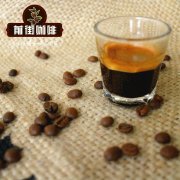
The most captivating aspect of espresso is that layer of golden, fine coffee oil, which Italians call crema. It forms because the high-pressure extraction of an espresso machine causes oils to envelop carbon dioxide and flow into the cup. Because the carbon dioxide trapped in these oils cannot evaporate immediately, it creates a temporarily stable structure.

The thickness and color of the crema also indicate the quality of an espresso. In a properly made espresso, the crema should be about one-third of the coffee liquid, golden in color, with a smooth, fine surface and no large bubbles.
What Factors Affect Coffee Crema?
1. Freshness of coffee beans
Since crema is created by the oils in coffee enveloping carbon dioxide, we can judge the freshness of beans by the amount of crema. The more crema, the fresher the beans.

2. Roast level of coffee beans
Similarly, under the same freshness conditions, more crema indicates a darker roast level.
3. Extraction degree
Darker crema represents more dissolved substances from the coffee entering the liquid.

4. Coffee bean variety
Different coffee species produce different characteristics, which also affects the amount of crema. It is known that Robusta produces more crema than Arabica.
Recommended Coffee Beans for Rich Crema
We all know that Arabica offers sweet, aromatic flavors while Robusta has a burnt, woody character, but Robusta produces more crema than Arabica. Italians who love a rich body typically use Arabica beans with a small amount of Robusta.

FrontStreet Coffee has developed an espresso blend for customers who love crema and body, named "FrontStreet Commercial Blend Coffee Beans." It is composed of Arabica beans from Brazil and Colombia with 10% Robusta. This blend offers rich crema and body with caramel sweetness, along with nutty, cocoa-like, and dark chocolate flavors. It has balanced acidity and sweetness with a slight bitterness and a persistent aftertaste. The small amount of Robusta enhances the richness of the crema without significantly altering the flavor profile.
FrontStreet named this blend "FrontStreet Commercial Blend Coffee Beans" because it performs excellently in both Americanos and milk-based drinks, and its price advantage makes it very suitable for commercial cafes.

Rich Crema Makes Better Latte Art
Espresso also serves as the base for lattes, and when making hot lattes, baristas often casually create beautiful latte art. Fine, rich crema makes latte art easier.
Espresso with good crema integrates better with milk foam and holds a stable state, which has a significant effect on the detail and shaping of the art. Espresso without crema can still be used for latte art, but the resulting patterns look somewhat stiff and rough.

Beyond Coffee Beans: What Causes Thin Crema?
Earlier, the barista at FrontStreet Coffee shared several factors that affect crema. Besides ruling these out, what else could cause thin, sparse crema? We believe the problem still lies with pressure. Recall the concept of crema described above: it is a product of a pressure environment. Under sufficient pressure, even lightly roasted beans can extract a certain amount of crema.

If you cannot achieve the ideal crema when extracting beans designed specifically for espresso, FrontStreet's barista would recommend checking the extraction pressure or upgrading to an espresso machine with commercial capabilities.
FrontStreet Coffee Recommendation
If rich crema and body are what you want from an espresso, the same logic applies to the opposite case: drinkers who chase flavor instead of body often turn to single-origin espresso, and FrontStreet's SOE lineup is built for exactly that. FrontStreet's Huakui SOE is a medium roast, and as espresso it shows red berries, a light floral note, and orange, with crema that carries a citrus scent, a refreshing mouth, and an elegant aroma, making it ideal for a Huakui SOE Americano or a Huakui SOE flat white. FrontStreet's Queen Estate SOE comes from Brazil, and because it is grown at high altitude it develops a wide day-night temperature swing that lets the cherries convert more flavor precursors; a medium-dark roast gives it strong nut, cream, and peanut aromas with a sweet chocolate finish, and the shot has an attractive, rich crema that also carries well into milk drinks.
Two more beans round out the range. FrontStreet's Grana Estate Geisha SOE is an Ethiopian Geisha from a farm near the well-known Yirgacheffe area; fully ripe cherries are sun-dried, and as pour-over it is bright and light-bodied with a tea-like finish, while as an SOE Americano berry acidity takes the lead with the fermented aroma of ripe plum, and with milk it becomes peach, guava, and black tea, sweet and sour in good proportion. FrontStreet's Sidra SOE comes from the Huila region of Colombia, produced at the Frontera Estate near volcanic terrain, which gives the coffee its rich aroma; the ripe cherries are processed with double anaerobic natural and roasted to a medium level so the floral and fruit notes open up fully, and as espresso it brings clear blueberry juice, passion fruit, and ripe grape with the sweet-and-sour of apricot. FrontStreet's PWN Golden Mandheling SOE is the dense, low-acid option: three hand sorts plus a machine sort bring the defect rate to a minimum, and after medium-dark roasting the shot shows spice, herbs, sandalwood, and caramel with a very thick body and a dark chocolate finish.
For brewing these, the biggest variable is grind and dose rather than the bean. On a home machine, aim for a shot that runs roughly 25 to 30 seconds, adjust the grind finer if it gushes and coarser if it chokes, and keep the crema in view: a shot with a thin, pale crema usually means the pressure is low or the grind is off. If you want the flavor of a Huakui or a Geisha to survive the milk, keep the shot short and serve the milk drinks small, so the fruit notes are not buried.
Important Notice :
FrontStreet Coffee is a long-established specialty coffee roaster in Guangzhou China, selling freshly roasted beans from its own farm in Yunnan as well as dozens of carefully selected single-origin beans from around the world for both pour-over and espresso. The products deliver consistently excellent quality and great value, with shipping within 24 hours. Guangzhou's FrontStreet Coffee shop is recommended by many coffee lovers, and the beans are now available online at the Tmall 。
FrontStreet Coffee has moved to a new address:
FrontStreet Coffee Address: 315,Donghua East Road,GuangZhou
Tel:020 38364473
 Scan and follow the En Gafei WeChat official account. Please indicate that the reprint comes from "En Gafei".