Ethiopian Coffee You Must Know: Ethiopian Coffee Bean Stories & Brand Recommendations
Africa is the world's third-largest coffee-producing region, and Ethiopia is the legendary birthplace of coffee. Yirgacheffe is one of Ethiopia's main coffee-producing areas. Located at an altitude of 1,700-2,100 meters, it primarily produces Arabica coffee beans. The region has an excellent microclimate with spring-like conditions year-round, making both natural and washed coffee beans equally outstanding.
The characteristics of Yirgacheffe coffee beans are intense floral aroma, citrus fruit acidity and sweetness, and a fresh tea fragrance. Yirgacheffe beans have rich layers, a delicate body, and a remarkably long aftertaste. That's why Yirgacheffe is a coffee that captivates from name to taste, leaving an endless impression.
What You Must Know About the Homeland of Ethiopian Coffee
☕ Overview
Land area - 1,104,300 sq km
Capital - Addis Ababa
Trading city - Dire Dawa
Population - 102,374,044 (May 2017)
Languages spoken - Amharic (official), Oromo, Somali
☕ Producer Overview
Coffee practitioners - Approximately 700,000
Average plantation area - 1 hectare or less
Annual export volume - 3.5 million bags
☕ Coffee Overview
Producing regions - Sidama (including Yirgacheffe), Harrar, Limu, Djimma, Lekempti, Wallega, Gimbi
Coffee varieties - Ethiopian heirloom varieties including Kudhome, Gesha, Djimma, etc.
Processing methods - Washed, Natural
Grading standards (local) - Grades 1-9 (Gr 1-2 Specialty; Gr 3-9 Commercial)
Coffee bag weight - 60 kg
Harvest period - November-December
Arrival period - May-July
☕ Ethiopian Coffee History
Among coffee-producing countries, Ethiopia holds a legendary status—not only because it is the birthplace of Arabica coffee, but also because, unlike most coffee-growing nations, coffee was not introduced as a colonial cash crop. Instead, cultivating, processing, and drinking coffee has been part of local daily life for centuries. Coffee plants first discovered growing in forests were gradually cultivated for household use and commercial sale.
From an outsider's perspective, Ethiopian coffee has incredibly complex cultural, political, and economic impacts that are difficult to fully comprehend. Ethiopia's genetic coffee diversity is unparalleled globally, with 99% of coffee variety genetics found in Ethiopia. Recent reports indicate that, because of climate change and variety research, the genetic heritage of original Ethiopian coffee varieties is being threatened and should be protected.
Another unique aspect of Ethiopian coffee is its high domestic consumption, as coffee plays a vital role in Ethiopians' daily lives: of the country's annual production of 6.5 million bags, about half is consumed domestically, with approximately 3.5 million bags exported.
Coffee remains part of a traditional "ceremony," a way for family, friends, and partners to gather. The eldest woman in the household roasts coffee in a flat pan, then grinds it, and brews it in a pot called a "jebena." She serves this thick coffee in small cups. Then fresh boiling water is added, and the coffee in the pot is brewed two more times. The process takes about an hour from start to finish and is a regular expression of hospitality.
Most Ethiopian coffee growers are smallholder farmers with less than 1 hectare of land; in many cases this cultivation method should more accurately be called "garden coffee cultivation." There are some large private coffee farms, as well as cooperatives made up of small and medium-sized farms, where growers produce relatively small quantities of commercial green coffee beans.
☕ Coffee Processing Methods and Flavor Overview
Coffee is produced in several ways in Ethiopia. On large private estates, coffee picking, processing, and hulling are typically completed within the estate. At the other end is "garden coffee," where independent farmers send their harvested coffee cherries to the nearest processing station, where the cherries are sold at a set price and mixed with other farmers' cherries for processing according to the station's requirements.
Cooperative members, meanwhile, send their coffee cherries to cooperative-designated processing stations. This method provides better traceability because the coffee comes from fixed cooperative members. As more emphasis is placed on coffee quality and industry transparency, traceability becomes very important.
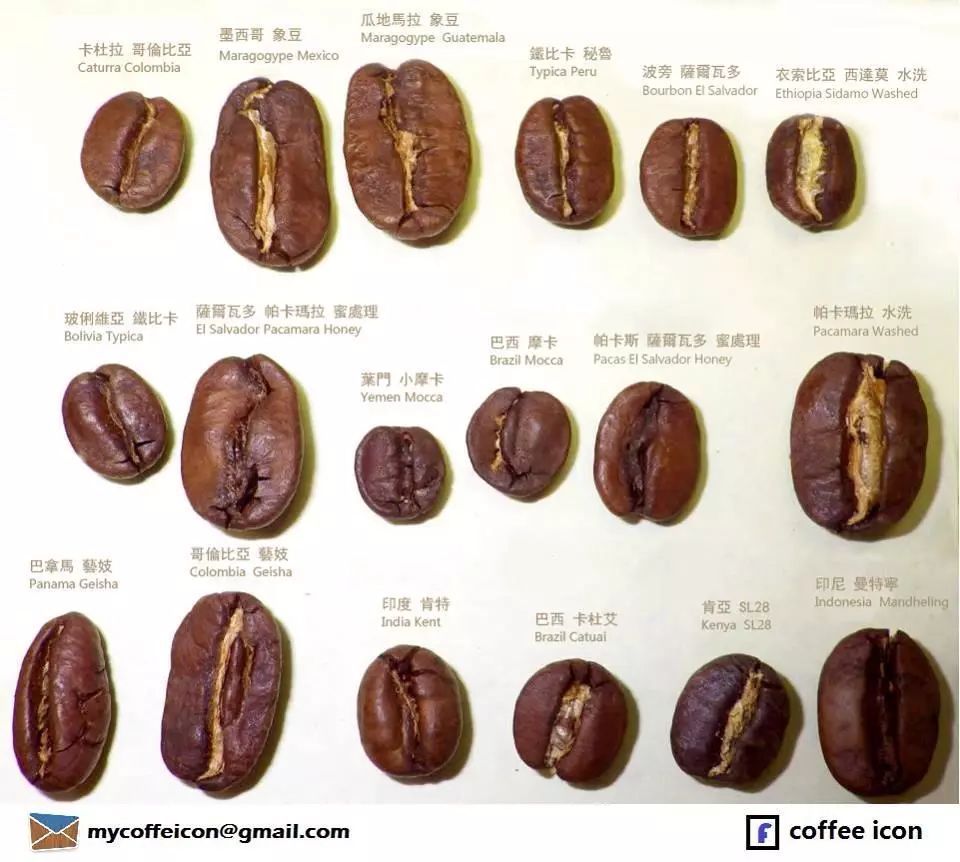
Ethiopian coffee flavors vary because of multiple factors, including variety, processing method, and the unique microclimate of micro-batch plots. The general experience is that naturally processed coffees have more pronounced fruit and dark chocolate flavors, usually with some wine-like characteristics and better body. Washed processed coffees have more pronounced acidity. Harrar: coffee is almost all natural processed, with a unique chocolate and nutty flavor profile reflecting the dry climate where the coffee grows. Sidama: a vast coffee-producing region in the south, including the Guji region and the famous Yirgacheffe region.
☕ Here are some familiar sub-regions in the Yirgacheffe area:
💋ADADO: Delicate stone fruits, citrus, floral notes, balanced structure.
💋ARICHA: Complex, tropical-like, juicy fruit character, sweet sugary and floral notes.
💋BERITI: Prominent floral notes, creamy body, citrus tones.
💋CHELCHELE: Sweet notes resembling toffee or caramel, almonds, plus floral and citrus notes.
💋KOCHERE: Like fruit tea. Citrus, stone fruits.
💋KONGA: Peaches and apricots—more stone fruit aromas—and strong lime notes.
On Ethiopian place-name spelling: there is much confusion and inconsistency in Ethiopian coffee spelling, partly because Amharic does not use Roman letters like English. Spelling this region as Yirgacheffe, Yirgachefe, or even Yirga Chefe is not necessarily incorrect. As for Sidamo and Sidama, note that "Sidamo" is a somewhat derogatory variant in place names, and the more acceptable Sidama should be used.
☕ The Ethiopian Commodity Exchange (THE ETHIOPIAN COMMODITY EXCHANGE)
The Ethiopian Commodity Exchange (ECX) was established by the Ethiopian government in 2008 to give coffee access to the agricultural commodity market alongside soybeans, corn, coffee, and wheat. Since Ethiopian farmers typically have very small plots of land, growing only enough for family needs and selling the surplus for cash, ECX believes standardization is the best way to promote healthy and stable agricultural economic development.
ECX strives to eliminate barriers in trade, giving farmers an open, public, reliable market to sell their products at relatively stable prices. Exchange rules state that any coffee not produced by independent private estates or cooperatives must be sold through the exchange, thus establishing a price and sales guarantee system. However, when the system was designed, the concept of "specialty" was replaced with "commodity," making it difficult to trace detailed coffee information.
Coffee grades are determined by their physical characteristics of uniformity, cleanliness, and defect rate, without considering coffee flavor.
After several rounds of intense negotiations with the specialty coffee industry, new supplementary regulations were added: after coffee is purchased, clear information about the coffee processing station must be provided, but it remains impossible to keep tracking detailed information down to individual producers or growers.
In March 2017, ECX voted to allow direct sales of coffee from individual processing stations, which not only increases coffee traceability but also helps establish repeat-purchase relationships. This change increases the possibility of higher sales prices for coffee farmers. The impact of greater traceability and more direct sales on Ethiopian specialty coffee remains to be seen, but industry insiders are optimistic.
Ethiopian Coffee Bean Brand Recommendations
FrontStreet Coffee's freshly roasted single-origin Ethiopian coffee beans—such as Yirgacheffe and Sidamo—are fully guaranteed in both brand and quality, suitable for brewing with various equipment. More importantly, they offer excellent value, whether you drink them as pour-over or as a daily brew.
FrontStreet Coffee Recommendation
Ethiopia's variety is exactly why it's worth exploring one region at a time. FrontStreet Washed Yirgacheffe is the classic introduction—white jasmine, bright citrus and lemon acidity, and a tea-like body. The Yirgacheffe area sits at roughly 1,700-2,100 meters, with trees planted above 1,800 meters, making it one of the world's highest coffee-growing regions, and its distinctive white florals and lemon-citrus acidity have made the name a byword for Ethiopian specialty coffee.
FrontStreet Gedingding Cooperative, from Gedingding village in the Worka area at the southeastern edge of Yirgacheffe, follows the most traditional washed processing. Originally part of the Worka cooperative under YCFCU, it was later carved out as a single origin as buyers pushed for traceability. The cup has no bitterness, with fresh, bright citrus and lemon acidity and jasmine fragrance.
For a natural-process comparison, FrontStreet Natural Red Cherry is made from fully ripe red cherries only. After sorting, the fruit is dried on raised beds, turned every 2-3 hours in the first days to avoid uneven fermentation, and after three to five weeks the pulp is machine-removed and the beans are stored. Drying with the fruit on gives it both classic Yirgacheffe character and natural tropical fruit, with citrus acidity, a berry-juice body, honeyed sweetness, and a creamy texture.
Important Notice :
FrontStreet Coffee is a long-established specialty coffee roaster in Guangzhou China, selling freshly roasted beans from its own farm in Yunnan as well as dozens of carefully selected single-origin beans from around the world for both pour-over and espresso. The products deliver consistently excellent quality and great value, with shipping within 24 hours. Guangzhou's FrontStreet Coffee shop is recommended by many coffee lovers, and the beans are now available online at the Tmall 。
FrontStreet Coffee has moved to a new address:
FrontStreet Coffee Address: 315,Donghua East Road,GuangZhou
Tel:020 38364473
 Scan and follow the En Gafei WeChat official account. Please indicate that the reprint comes from "En Gafei".