Coffee Beans Suitable for Espresso - What Coffee Beans to Use for Espresso Coffee & Characteristics of Espresso Extraction Ratios
 For more specialty coffee knowledge, please follow the WeChat Official Account: FrontStreet Coffee
As specialty coffee has grown, more and more people have come to love single-origin coffee. Two kinds of beans now sit on the market: single-origin and blended. Single-origin beans are generally used for pour-over, though many specialty shops also pull espresso from them. Blends are generally used for espresso, because they deliver a stable flavor. This time, FrontStreet Coffee looks at the differences between single-origin and blended coffee beans.
Freshness: The Foundation
Before weighing single-origin against blends, FrontStreet Coffee returns to the principle we hold above all others—freshness.
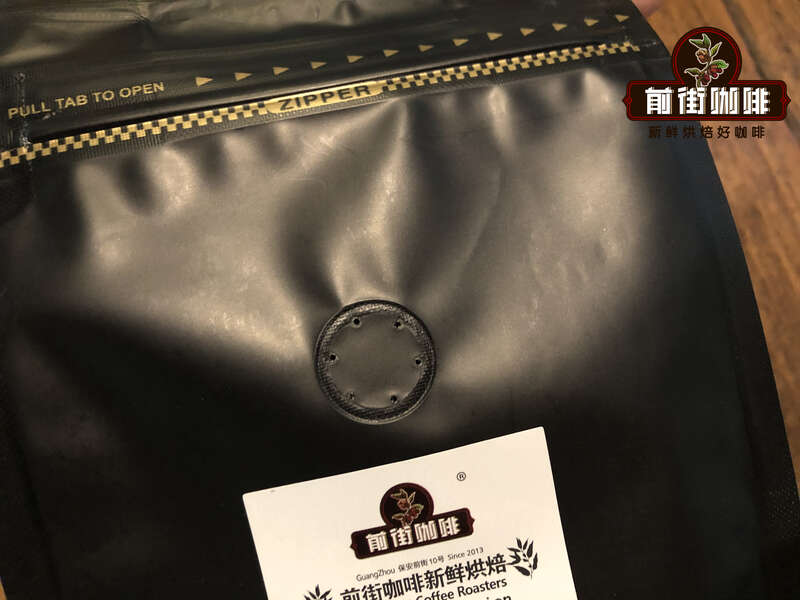
Whichever you choose, the product should carry a clearly marked roast date (not an expiration date or shelf life) and the reputation of the brand behind it, and it should come from a roaster who emphasizes fresh roasting. Good coffee bags also usually feature a "one-way degassing valve"—the small button-like hole on the bag—which lets the beans release the carbon dioxide they produce naturally.

Hold the valve to your nose, squeeze the bag gently, and smell the gas that escapes. A rich, pleasant coffee fragrance means the freshness is fine. If it smells flat, or worse, rancid and oily, that bag deteriorated long ago and should be avoided. Every bag FrontStreet Coffee sells uses packaging with a one-way degassing valve, so the coffee reaches drinkers as fresh as possible. FrontStreet Coffee stresses fresh roasting because, as time passes, coffee roasted more than 50 days ago has essentially no aroma left. Someone might ask whether fresher is always better—not necessarily, since the aroma has not yet stabilized during the first two days after roasting.
Single-Origin Coffee Beans
Single-origin coffee comes from a specific origin, region or plantation, and carries a unique flavor that reflects the local terroir. FrontStreet Coffee's Hawaucha, for example, comes from the Buku processing plant in the Guji region of Ethiopia.

What sets single-origin coffee apart is that, during sourcing, every batch—even every individual green bean—can be inspected. The process is often compared to picking strawberries: "Imagine you can only pick a small bowl of the ripest, most fragrant, softest strawberries." Single-origin coffee works the same way: because quality is monitored throughout, you get more sweetness, floral notes and syrup-like flavor, while defects and off-tastes are avoided. That is why single-origin coffee tends to cost more. Roast level varies from lot to lot, and different roast levels present different flavors from the same bean.
Blended Coffee Beans
Also called mixed coffee or espresso beans, blends combine several single-origin coffees to make the most of each one. Blends are built from beans of different origins to create a more balanced flavor. If one bean is smooth but lacks aroma, for instance, a more aromatic bean can be added to cover for it, so the components complement or enhance each other and yield a coffee with richer new flavors. Sometimes the beans are mixed before roasting—green blending; sometimes after roasting—post-roast blending. Both are acceptable, depending on the character of the coffee in the recipe. Post-roast blending lets each bean be roasted to its own ideal degree so every component performs at its best.

FrontStreet Coffee would remind you that before blending, the roaster must understand how varieties from around the world taste. Beans differ by origin, so the roaster needs a clear grasp of beans from several regions in order to adjust the roast curve accordingly. Different beans have different personalities—subtle differences in acidity, bitterness, sweetness, aroma and body. Single-origin beans, by contrast, tend to focus on expressing the distinct character of one coffee.
Single-Origin Espresso (SOE): Is It Just Using Pour-Over Coffee Beans to Make Espresso?
In principle, pulling espresso from a pour-over single-origin bean is indeed SOE, or single-origin espresso. In practice, though, it is not as simple as it sounds.
Compared with a traditional blended espresso, SOE should be an espresso that highlights flavor more prominently. That shapes bean selection: SOE should use beans with high, strong flavor recognition. Choose a bean with weaker intensity, and the resulting espresso will taste thin and powerless. Imagine an SOE that neither has distinctive character nor keeps the balance and stability of a blend—hardly worth the effort.

Second, the roast level should be neither too dark nor too light. A darker roast noticeably mutes origin flavors, while a lighter roast lets the machine exaggerate the acidity under high pressure, easily making the shot sharp and sour. Lighter roasts also harden the bean, leading to insufficient extraction. Both the loss of origin flavor and the imbalance of excessive sharpness defeat the purpose of showcasing a single origin, so the roast curve for an SOE from a given bean should in theory differ from the curve used for pour-over.
Can Blended Coffee Beans Be Used for Pour-Over Coffee?
A blend simply mixes two or more different coffees. Many people still associate the word with the espresso blends of traditional Italian coffee. In fact, a blend is not the same thing as an espresso bean—it is just the idea of combining different coffees for a reason, not something exclusive to espresso. Pour-over is only an extraction method, and blending is only a category of bean; the two do not determine each other. So can blends be used for pour-over? Yes.

FrontStreet Coffee's Espresso Blend Coffee Beans:
Building a blend from beans of different regions is a long-standing and very common approach.
1. Stable Flavor
Coffee is an agricultural product, so even the same type of bean tastes different from year to year. Mixing several coffees together solves this neatly, keeping the taste essentially consistent year after year.
2. Balanced Taste
Espresso machines have a way of amplifying a bean's most prominent characteristic, which is why we almost never pull a shot from a single variety. If that bean leans bitter, the espresso will be exceptionally bitter; if it leans acidic, it will be very acidic. Blending balances the various flavors.

FrontStreet Coffee's self-roasted Warm Sun Blend is made from beans grown in Honduras and Ethiopia's Yirgacheffe region. FrontStreet's Honduras Sherry brings a rich whiskey aroma and a chocolate-filled liquor aftertaste, with a full fragrance. FrontStreet's Natural Red Cherry adds fermentation and berry notes, with a smooth mouthfeel. Flavor characteristics: obvious fruit acidity, a lingering light berry fragrance, rich wine and chocolate flavors, and a comfortable sweet aftertaste.
Pour-Over Single-Origin Coffee Blends:
This means blending different varieties of coffee from the same production region. As the name suggests, these are blends created by mixing varieties. FrontStreet's popular Panama Mariposa Geisha Blend, for example, is famous for combining about 70% Geisha with 30% Caturra and Catuai, and the recently launched FrontStreet Costa Rica Mirazu Manor Geisha Blend mixes half Geisha with half SL28, ET47 and Maico.

FrontStreet Coffee believes, though, that calling beans made from mixed varieties a "blend" is really a way of highlighting one particular variety rather than blending in the traditional sense.
Interestingly, if we call varietal mixtures "blends," then most of the coffee we see would qualify too—common Kenyan coffees often mix SL28 with SL34, and Ethiopia's local heirloom varieties work the same way.
FrontStreet Coffee Recommendation
For a classic espresso blend, start with FrontStreet's Classic Blend, designed for espresso and the Moka pot. Its greatest strength is outstanding crema: even a beginner on a non-professional home machine can pull a dense, fine layer of it. Built on a traditional Mamba recipe, it is full and rounded, and it is equally at home on the counter or in a café. FrontStreet's Fine Blend, which pairs Brazil Cerrado with Colombia Huila, is the house favourite—nearly a decade in service—and delivers the familiar, classic espresso taste.
If you would rather explore SOE, FrontStreet's Brazil Queen Manor SOE is a good starting point: a rare Yellow Bourbon, roasted medium-dark, giving butter cookie, macadamia and toasted bread notes through an espresso machine. FrontStreet's Natural Huakui SOE brings a cream-strawberry character to Americanos and lattes, while the Costa Rica Blackberry SOE, a honey-processed single origin roasted medium, is sweet and bright as an Americano and shows cranberry cookie, raisin and nut notes with milk.
Important Notice :
FrontStreet Coffee is a long-established specialty coffee roaster in Guangzhou China, selling freshly roasted beans from its own farm in Yunnan as well as dozens of carefully selected single-origin beans from around the world for both pour-over and espresso. The products deliver consistently excellent quality and great value, with shipping within 24 hours. Guangzhou's FrontStreet Coffee shop is recommended by many coffee lovers, and the beans are now available online at the Tmall 。
FrontStreet Coffee has moved to a new address:
FrontStreet Coffee Address: 315,Donghua East Road,GuangZhou
Tel:020 38364473
 Scan and follow the En Gafei WeChat official account. Please indicate that the reprint comes from "En Gafei".