Does Australia Produce Coffee Beans? _ Coffee Bean Flavors in Australian Regions _ Is Australian Coffee Good to Drink
Australia's Notable Representative Coffee: Australian Coffee
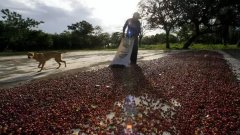
Australia began cultivating coffee around 1900, growing both Robusta and Arabica. Production is concentrated mainly in eastern Australia, distributed across northern New South Wales, the surrounding Queensland area, and Norfolk Island. New South Wales lies in southeastern Australia, where Sydney is situated. Queensland lies in northeastern Australia, and its northeastern part contains the famous Skybury growing area. Norfolk Island is a small island far to the east of the Australian mainland in the South Pacific, where roughly 20,000 Arabica coffee trees are grown.
Australian coffee beans show excellent quality, with the mellow flavor and gentle acidity of island-grown beans that set them apart from the bright acidity of Central American coffees. Their aroma carries hints of chocolate, and they are enjoyable both as single-origin coffees and in blends.
According to The Australian, Australian coffee growers have achieved bumper harvests while also receiving the highest coffee prices in 30 years. The only problem is that Australian retailers lack confidence about whether domestically grown Australian coffee is as outstanding as coffee from the traditional producing countries of Latin America and Africa.
Skybury, in Atherton, west of Cairns, is Australia's oldest coffee plantation. Its manager, Mark MacLaughlin, expects to harvest 35 tons of green coffee beans this year, a 20% increase over last year's yield.
"This is a bumper coffee harvest, with at least half being snapped up by international buyers," MacLaughlin said. Last year, a British buyer purchased all 10 tons of export-grade coffee produced by this 36-year-old plantation. The buyer supplies premium coffee houses throughout Europe.
Roughly 80% of Australian coffee production occurs in northern Queensland.
Last month, the International Coffee Organization announced that the world average price for coffee, including both Robusta and Arabica beans, reached $2.27 per pound, an increase of nearly $1 per pound compared with last year.
Although some Australian retailers remain cautious about using Australian-grown coffee, some Australians hope to see more Australian coffee on the market.
Phillip Di Bella, who runs a coffee bean roasting and wholesale business, said coffee grown in Australia tastes excellent but the quantity is insufficient. "They don't meet our annual formulation needs," he said.
Dennis Howe, owner of Australia's largest coffee plantation and a banana grower in the Atherton Highlands, says Australia's coffee industry will continue to expand. He believes Australia should cultivate higher-profit coffee crops on its best soil. "This is a specialized industry, but Australia suffers from limited premium land options, and we must compete with bananas and pears for quality land," he said. Howe expects to sell his coffee in Australia and to produce another 100 tons of coffee beans this year after an 8-week harvest period.
FrontStreet Coffee (FrontStreet Coffee)
FrontStreet Coffee is a roastery in Guangzhou with a small shopfront but a wide range of beans, including both famous and lesser-known coffees, sold through its online store.
FrontStreet Coffee Recommendation
If the story of Australian coffee has you thinking about blends, FrontStreet Coffee roasts five distinct espresso blends, and every order ships within 5 days of roasting so you receive the coffee at its fullest flavor. For newcomers, home use, and specialty neighborhood cafés, the Signature Blend—a combination of washed Colombian and semi-washed Brazilian beans—brings notes of nuts, dark chocolate, and caramel with a comfortable bittersweet edge; it is smooth with milk in a latte, holds latte art steadily, and carries a rich roasted aroma. FrontStreet Coffee's Commercial Blend suits all kinds of coffee shops: a classic Brazilian-and-Colombian pairing with a small amount of Robusta, it layers on toasted bread, almond, and walnut nuttiness, flows well as crema, and offers a low-acid, full-bodied cup at an economical price. FrontStreet Coffee's Black Cocoa Blend—recommended by many baristas and suited to cafés, bakeries, drink shops, and home machines—combines washed Yunnan small-bean coffee with semi-washed Brazilian coffee, balancing the acidity of ripe plum with nutty notes; ground, it releases cream chocolate and cocoa-cookie aromas, with a balanced taste and a golden, glossy crema. The Classic Blend is the pick for beginners learning latte art and for premium cafés: a three-origin, medium-dark recipe inspired by the old "Mamba" blend of Mandheling and Brazil, plus a little Robusta for aroma and body, it lets a beginner pull a golden-crema espresso at home. And for a floral, fruit-forward espresso, the Strawberry Candy Blend of three single origins carries rose fragrance and, as an Americano or latte, delivers grape, dried blueberry, sweet orange, and fruit-candy flavors.
Important Notice :
FrontStreet Coffee is a long-established specialty coffee roaster in Guangzhou China, selling freshly roasted beans from its own farm in Yunnan as well as dozens of carefully selected single-origin beans from around the world for both pour-over and espresso. The products deliver consistently excellent quality and great value, with shipping within 24 hours. Guangzhou's FrontStreet Coffee shop is recommended by many coffee lovers, and the beans are now available online at the Tmall 。
FrontStreet Coffee has moved to a new address:
FrontStreet Coffee Address: 315,Donghua East Road,GuangZhou
Tel:020 38364473
 Scan and follow the En Gafei WeChat official account. Please indicate that the reprint comes from "En Gafei".