Century-Old Elida Estate - Natural Process Typica Specialty Coffee Flavor Profile and Brewing Parameters
Professional coffee knowledge, shared one article at a time. Read on for more coffee bean information.
FrontStreet Coffee knows Panama's Hacienda La Esmeralda is compelling enough—its superb climate and the Geisha variety have made it world-famous. But if you only drink Esmeralda Geisha when drinking Panama coffee, you will miss out on many great cups, because Panama's famous estates do not begin and end with Esmeralda. Elida Estate is every bit as excellent, and FrontStreet Coffee recommends its Panama Elida Estate Natural Typica. If you wonder why we rate Elida so highly, read on...
FrontStreet Coffee - Panama Elida Estate Natural Typica
Region: Boquete, Panama
Estate: Elida Estate
Altitude: 1,850 meters
Variety: Typica
Processing Method: Natural
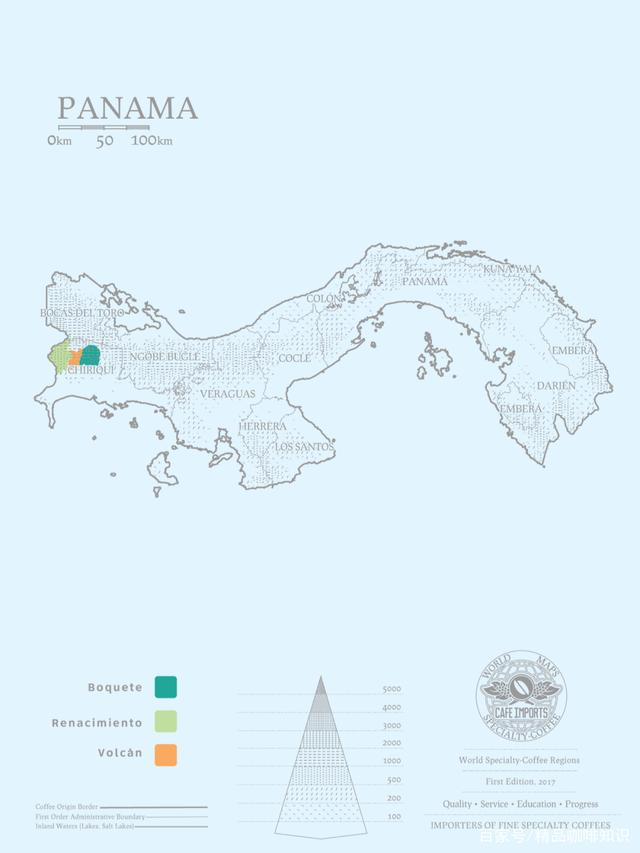
01 | Region Introduction
Boquete Region
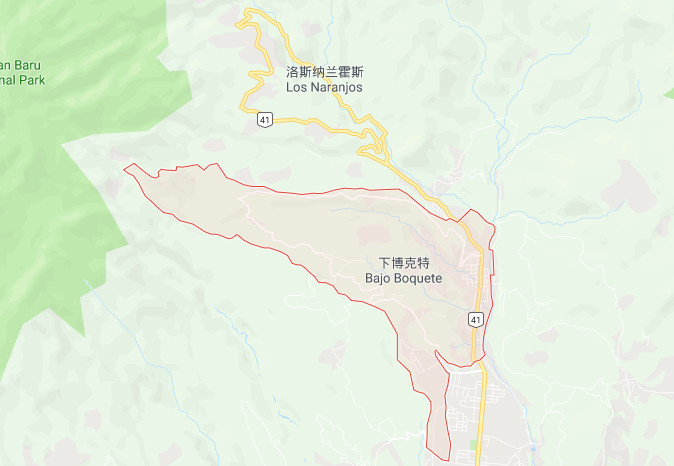
Boquete is a town in Chiriqui province near the Panama-Costa Rica border, close to the famous Baru volcano. With beautiful scenery and fertile, rich soil, its climate and terroir are perfect for high-quality coffee.
The microclimate of Panama's Boquete highlands is a unique and vital resource for the region's specialty coffee. Panama's east-west orientation lets cold air currents converge above 6,500 feet across the central mountains, creating varied microclimates around Boquete with temperatures and rainfall highly favorable to plant growth—so coffee trees here grow in excellent condition.
02 | Estate Introduction
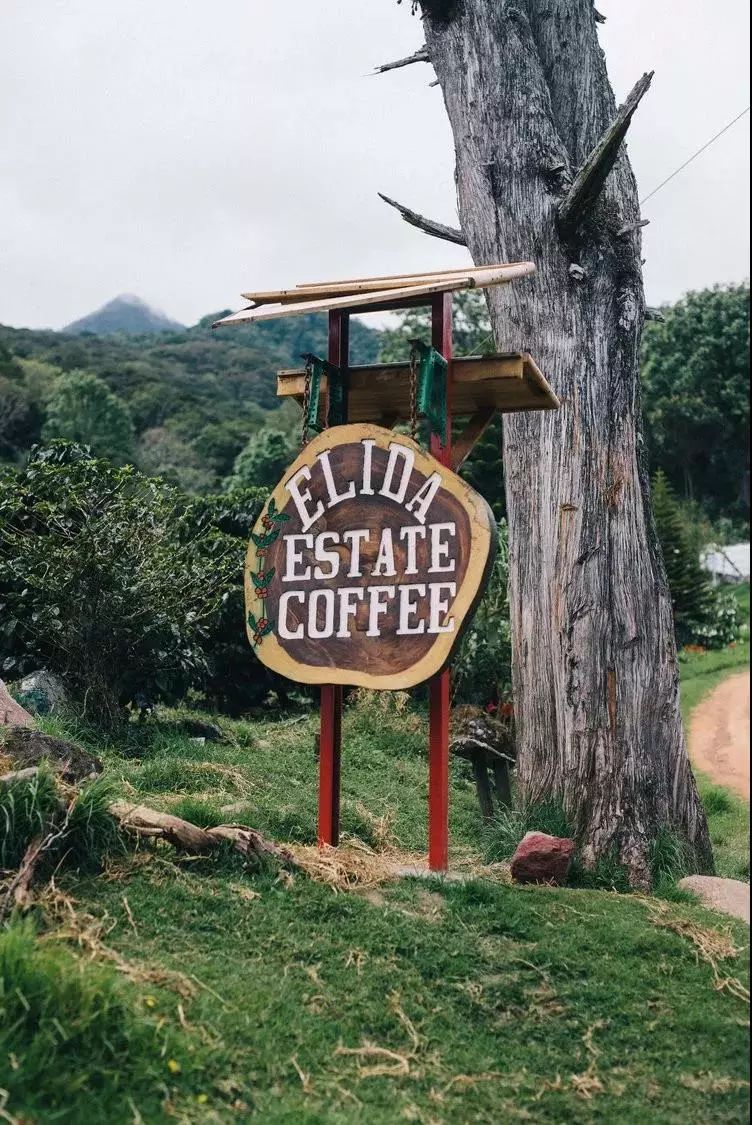
Elida Estate sits in Panama's renowned specialty region of Boquete. The estate covers 65 hectares, more than half of it inside Baru Volcano National Park; only 30 hectares are used for coffee, with the rest left as pristine primary forest.
Coffee grows between 1,670 and 1,850 meters, making Elida one of Panama's two highest coffee estates (the other being Carmen Estate in the Volcan valley). At such altitude, low temperatures delay cherry maturation by about a full month beyond the normal period, while fertile volcanic soil feeds the trees and the microclimate around Baru volcano completes the picture—helping Elida consistently achieve outstanding results in cupping competitions.
Elida mainly grows three varieties: Catuai, Typica, and Geisha. The processing plant sits halfway up the mountainside, so cherries can be moved straight from harvest into processing without quality loss. Elida's environment also suits other temperate crops, especially tree tomatoes and some uncommon high-altitude fruits—and interestingly, the flavors of those fruits often show up in Elida's coffee.
Elida is the most famous estate of the Lamastus family, founded in 1918. From Robert Lamastus planting the first coffee tree, a century has passed and the estate has witnessed specialty coffee's worldwide rise. Today it remains in family hands: estate owner Wilford Lamastus, his father Thatcher, and his son Wilford Jr., the fourth-generation successor. Coffee runs in the family's blood—Wilford was born on a small coffee farm, as were his parents. The family's coffee now comes from Elida Estate, Don Eneas Estate, and Luisito Estate.
Beyond the advantageous altitude and microclimate, owner Wilford invests heavily in harvesting and processing. To the highest standard, Elida's coffee is hand-picked only from the most mature cherries ("Ripe on Pinton"). That high maturity means naturally high pectin sugar content—the foundation of Elida's excellent flavors.
And Wilford is even more rigorous than most in "purifying" the green beans after processing. Panama Elida, for example, rests for more than 5 months at low temperature to strip away any greenness, letting the flavors develop more fully and in balance. (Low-temperature resting is a green bean purification concept championed by coffee master George Howell from 2006 onward. We have found that although green beans from subtropical regions need low-temperature storage, the ideal duration varies with processing method and altitude—for Panama Elida, 5 months is optimal.)
It is Panama's oldest coffee estate and one of the highest in Boquete, growing Geisha at an ultra-high 2,050 meters. It has won multiple BOP championships and holds the BOP cupping score record: in 2018, Elida Green Top Washed Geisha scored an ultra-high 94.66, breaking the 94.15 record set by the same estate's 2016 BOP lot.

03 | FrontStreet Coffee's Elida Estate Green Bean Analysis
Typica is one of the oldest Arabica varieties known today, alongside Bourbon. Arabica originates from Ethiopia, where it still grows wild in the highland rainforests. Typica beans are slender, the trees tall with oval fruits and slightly drooping branches—four slender limbs spreading at a 50-70 degree angle. Yield per tree is very low, but cupping scores are high.
04 | FrontStreet Coffee's Elida Estate Roasting Analysis
Because the beans enter the drum at a lower temperature, the flavor will not be as clean and punchy as a high-charge roast, but the mouthfeel becomes very gentle and smooth. With a short development time after first crack, heat must be sufficient, otherwise the caramelization level at drop won't be reached. This is where coasting comes in—a common point of confusion for beginning roasters. Coasting means reducing or cutting the heat and letting the roaster's stored temperature keep baking the beans. Roasting is overall a heat-absorbing process; only first and second crack are heat-releasing, and during those stages it is best not to add heat, or the beans may develop a spicy bite.
Coasting means turning off the heat and using the roaster's residual warmth, plus the heat the beans generate at crack, to finish the roast slowly and evenly.
Roasting Machine: Yangjia 600g Semi-direct Heat

Charge the beans when the roaster reaches 170°C, damper at 3. After 30 seconds, set heat to 140, damper unchanged. Turning point at 1'25". Hold heat at 140; when the bean surface turns yellow and the grassy smell disappears completely, drying is done—reduce heat to 110 and open the damper to 4.
At 8'45", wrinkles and dark spots appear on the bean surface and the toast smell clearly shifts to coffee aroma—the prelude to first crack; listen carefully from here. First crack begins at 9'07"; reduce heat to 90 and keep the damper at 4 (adjust carefully—don't cut so low that the crack falls silent). 1'45" after first crack, drop the beans at 190°C.
Cupping:
Dry Aroma: Caramel, roasted almonds, floral notes
Wet Aroma: Jackfruit, fermented wine aroma
Mouthfeel: Smooth entry with distinct raisin, peach, orange, melon, cane sugar, and caramel flavors, a green tea sensation, and high cleanliness.

05 | FrontStreet Coffee's Elida Brewing Analysis
Recommended Brewing Methods: Siphon, pour-over
Grind Size: 3.5 (Fuji R440)
V60 dripper, 15g of coffee, water temperature 90°C, grind 3.5, water-to-coffee ratio close to 1:15.
Bloom with 30g of water for 30 seconds.
Segmented pour: pour to 120ml, pause, then pour slowly to 225ml—in short, 30-120-225.
Flavor Profile: On entry you clearly taste peach, raisin, and orange, followed by the sweetness of cane sugar and melon, finishing with grapefruit and green tea notes.

FrontStreet Coffee Recommendation
Elida's Typica is a wonderful alternative to Panama's famous Geisha, but if you want to taste the variety that made Panama legendary, FrontStreet Coffee also offers the Esmeralda lineup: the Red Label (Esmeralda Special) grows at 1,600-1,800 meters, must cup above 90 points, and each batch traces to a single small plot on the estate; the Green Label (Private Collection) blends batches across plots at a friendlier price while keeping the estate's signature high-altitude character. For Geisha on a budget, the FrontStreet Boquete Geisha delivers classic Panama orange-blossom sweetness with oolong tea texture and delicate fruit.
Brew any of them like the Elida lot above: V60 with 15g of coffee, water at 90-91°C, a 1:15-1:16 ratio, and a 30-120-225 three-pour schedule. Geisha is a medium-light, floral-framed coffee with a hard, dense bean that tends to sink and clog, so grind coarser—about 78% pass through a #20 sieve—and expect a total brew time of around 2:10-2:20 for a cup full of florals, juicy fruit acidity, and a tea-like finish.
Important Notice :
FrontStreet Coffee is a long-established specialty coffee roaster in Guangzhou China, selling freshly roasted beans from its own farm in Yunnan as well as dozens of carefully selected single-origin beans from around the world for both pour-over and espresso. The products deliver consistently excellent quality and great value, with shipping within 24 hours. Guangzhou's FrontStreet Coffee shop is recommended by many coffee lovers, and the beans are now available online at the Tmall 。
FrontStreet Coffee has moved to a new address:
FrontStreet Coffee Address: 315,Donghua East Road,GuangZhou
Tel:020 38364473
 Scan and follow the En Gafei WeChat official account. Please indicate that the reprint comes from "En Gafei".